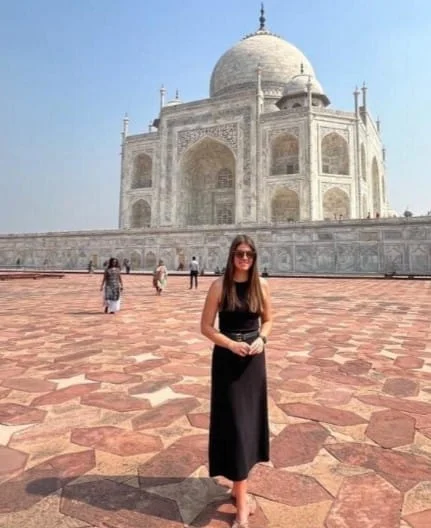
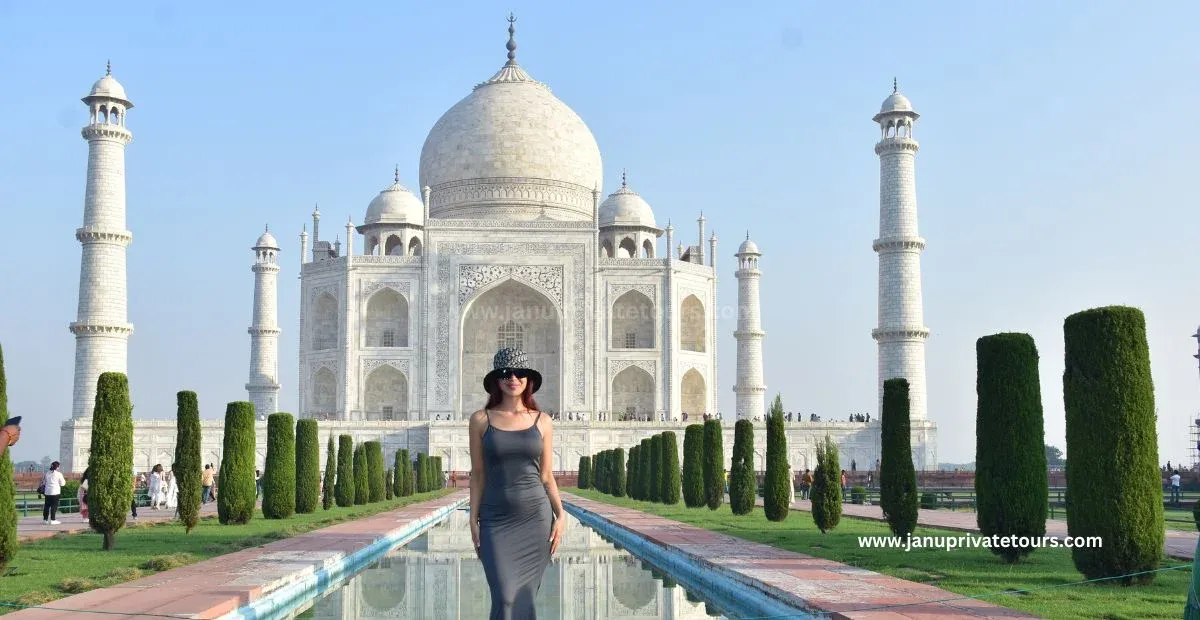
Most of us can recognize the Taj Mahal from photographs. Yet see it for the first time, and most people fall short of words. This is no ordinary monument but a 370-year-old testament to love, built by an emperor who lost everything, engineered by 20,000 artisans, and one that remains almost completely intact to this day. If you're planning a trip, here are 10 facts about India's most-visited site that will transform how you see it.
Taj Mahal at a Glance
| Feature | Details |
| Location | Agra, Uttar Pradesh, India |
| Built By | Emperor Shah Jahan |
| Built For | Mumtaz Mahal |
| Year Completed | 1653 |
| UNESCO Status | World Heritage Site (1983) |
| Primary Material | White Makrana marble |
| Best Time to Visit | Sunrise |
| Closed On | Fridays |
| Entry Fee (Foreign) | Rs. 1,100 per person |
Why is the Taj Mahal so famous worldwide?
The Taj Mahal is located in Agra, Uttar Pradesh, in northern India. Agra is roughly 230 kilometers south of Delhi and 240 kilometers east of Jaipur. That means it's the centerpiece of the Golden Triangle tour, India's most popular travel circuit, which links Delhi, Agra, and Jaipur.
But the Taj Mahal isn't famous simply because it's beautiful. It's famous for what it represents. The Mughal Emperor Shah Jahan built it after his wife, Mumtaz Mahal, died in 1631 while giving birth to their 14th child. Shah Jahan was so heartbroken that he decided to build the greatest monument the Mughal Empire had ever seen, not a palace or a fort, but a tomb. A tomb to keep his beloved wife's memory alive.
And what a monument the world got! The Taj Mahal Tours combines Persian, Islamic, and Indian architectural traditions in a way that has no real parallel anywhere in the world. UNESCO added it to the World Heritage List in 1983, and it is also among the Seven Wonders of the World. Today, over 7 million people visit it annually, making it the most popular tourist site in India.
10 Interesting Facts About the Taj Mahal
Here are 10 interesting facts about the Taj Mahal worth noting:
1. It Was Built as a Symbol of Love
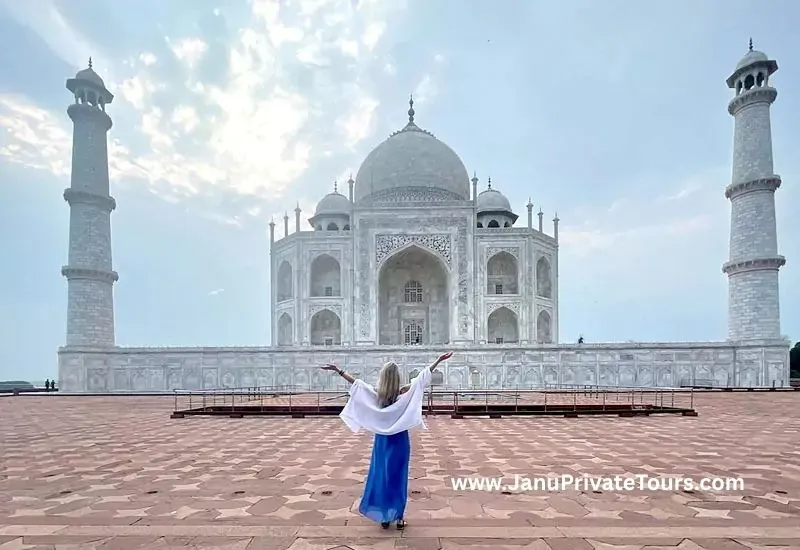
Shah Jahan and Mumtaz Mahal were married in 1612. By all historical accounts, theirs was a genuinely close relationship. When Mumtaz died in 1631, Shah Jahan reportedly went into mourning for two years. Construction of the Taj Mahal began in 1632, just one year after her death, and the emperor is said to have supervised the project personally throughout its construction.
2. It Took Over 20 Years and 20,000 Workers to Complete
Construction began in 1632 and was completed in 1653, taking 21 years in total. At its peak, over 20,000 artisans, craftsmen, and laborers worked on the site simultaneously. Architects and craftsmen were brought in from Persia, Central Asia, and across the Indian subcontinent. The sheer scale of coordination required to build this structure in the 17th century, without modern machinery, is extraordinary.
3. The Marble Changes Color Throughout the Day
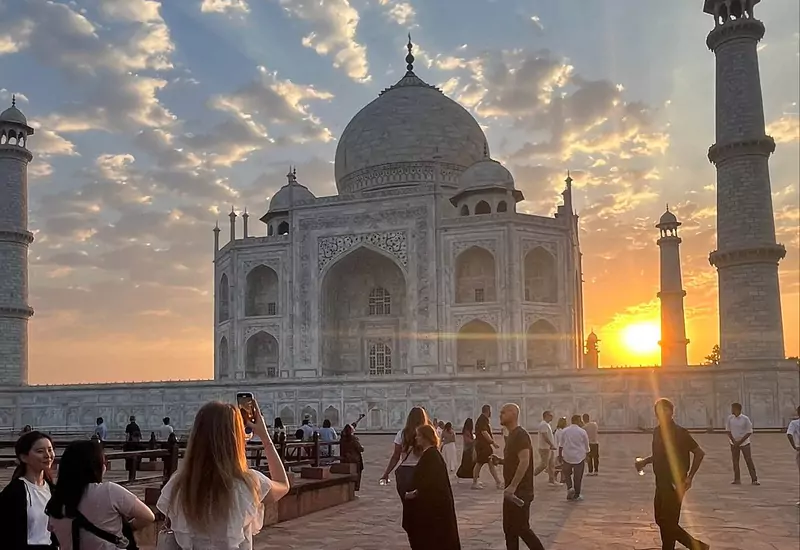
One of the most visually striking facts about the Taj Mahal is that it does not look the same at any two times of day. In the early morning light, the marble takes on a soft pink tone. By midday, it appears brilliant white. At sunset, it shifts to warm gold and amber. On full moon nights, it glows a pale silver. This is not an accident. The white Makrana marble from Rajasthan was specifically chosen for its translucent quality, which interacts with light in this way.
4. The Taj Mahal is Almost Perfectly Symmetrical
Every element of the Taj Mahal complex is mirrored on both sides of a central axis. The gardens, the reflecting pool, the mosque, the guest house, the minarets, all perfectly balanced. Architects and mathematicians have studied the proportions and found them to be extraordinarily precise for a pre-modern structure. There is, however, one deliberate exception.
5. Shah Jahan's Tomb Breaks the Symmetry
Inside the main chamber, the cenotaphs of Mumtaz Mahal and Shah Jahan are placed side by side. Mumtaz's cenotaph sits exactly at the center of the chamber, in perfect alignment with the building's axis. Shah Jahan's cenotaph, added after his death in 1666, sits slightly to the side, making it the only asymmetrical element in the entire structure. It was not planned. Shah Jahan had intended to build a second black marble mausoleum for himself across the river, but he was imprisoned by his son Aurangzeb before it could be built.
6. The Minarets Lean Slightly Outward
Look carefully at the four minarets surrounding the main dome, and you will notice they lean very slightly away from the central structure. This was intentional. The architects designed them this way so that in the event of an earthquake or structural collapse, the minarets would fall outward rather than onto the main tomb. A 17th-century engineering solution that still impresses structural engineers today.
7. Precious Stones Are Inlaid Directly into the Marble
The floral patterns and decorative motifs covering the Taj Mahal's interior and exterior walls are not painted. They are inlaid using a technique called Pietra dura, where semi-precious stones are cut into precise shapes and set directly into the marble. The stones used include lapis lazuli from Afghanistan, turquoise from Tibet, jade from China, carnelian from Arabia, and mother of pearl from the Indian Ocean. Over 28 types of precious and semi-precious stones were used in total.
8. The Calligraphy Gets Larger as You Look Up
The Quranic verses inscribed around the main gateway and the tomb appear to be uniform in size. They are not. The calligrapher, Amanat Khan, deliberately made the letters progressively larger as they go higher up the wall. From ground level, the optical effect makes them appear perfectly uniform. It is one of the most sophisticated examples of visual correction in pre-modern architecture anywhere in the world.
9. It is One of the New Seven Wonders of the World
In 2007, the Taj Mahal was officially named one of the New Seven Wonders of the World following a global vote of over 100 million people. It joined the Great Wall of China, Machu Picchu, the Colosseum, Christ the Redeemer, Chichen Itza, and Petra. Of all seven, the Taj Mahal is consistently ranked among the top three most visited.
10. The Taj Mahal is Closed Every Friday
This is the most practically important fact for travelers. The Taj Mahal is closed to tourists every Friday for afternoon prayers at the mosque within the complex. If your itinerary has you arriving in Agra on a Friday, plan your visit for early morning before the closure or adjust your schedule accordingly. Missing this detail has ruined many a carefully planned trip.
Best Time to Visit the Taj Mahal
| Time | Experience |
| Sunrise | Soft pink light, smallest crowds, most photogenic |
| Morning (8 am to 11 am) | Good light, manageable crowds |
| Midday | Bright white marble, very crowded, hot in summer |
| Sunset | Warm golden tones, beautiful but busier |
| Full Moon Night | Rare ticketed experience, magical silver glow |
Sunrise is the clear recommendation for first-time visitors. Gates open at 6 am, and the first hour offers the best light, the fewest crowds, and the most peaceful experience of the monument.
Entry Fees and Visiting Tips
| Visitor Type | Entry Fee |
| Foreign Nationals | Rs. 1,100, optional ₹200 to enter the main mausoleum |
| Indian nationals | Rs. 50 |
| Children under 15 | Free |
Book tickets online at the Archaeological Survey of India website to avoid queues at the gate. The Taj Mahal has strict security. No food, no tripods, no large bags, and no selfie sticks are permitted inside. Shoe covers are provided free at the marble plinth.
Things You Should NOT Do at the Taj Mahal
- Do not bring food or drinks inside the complex
- Do not use a tripod (confiscated at entry)
- Do not engage with touts outside the gates offering "official" tickets
- Do not wear revealing clothing; modest dress is expected
- Do not visit on a Friday without checking the schedule
- Do not book last-minute guides from outside the gate, use verified operators
How to Visit the Taj Mahal Easily?
From Delhi: The fastest option is the Gatimaan Express train, which covers Delhi to Agra in under two hours. By private car, the journey takes approximately three to four hours, depending on traffic. A day trip from Delhi is possible, but an overnight stay in Agra allows for both sunrise and sunset visits.
From Jaipur: Agra is approximately four to five hours by road from Jaipur. Most travelers on the Golden Triangle route stop in Agra between Jaipur and Delhi, which is the most logical and time-efficient sequence.
Why Visit the Taj Mahal with a Private Tour
Visiting the Taj Mahal independently is possible, but it comes with real friction. Queues at the ticket counter, touts at every entrance, guides with no credentials offering their services, and no one to explain what you are actually looking at.
A private tour removes all of that. Your guide handles tickets in advance, takes you through the less crowded entry points, explains the history and architecture in context, and ensures you are standing in the right spot at the right time for the best photographs. At Janu Private Tours, our Agra specialists have guided first-time foreign visitors through the Taj Mahal and know exactly how to make the experience memorable rather than stressful.
Wrapping Up
The Taj Mahal is one of those rare places that lives up to everything you have heard about it and then goes further. The story behind it, the engineering within it, and the experience of standing in front of it at sunrise are things that stay with travelers long after they leave India.
If you want to experience the Taj Mahal the right way, with expert guidance, pre-booked tickets, and a private driver who knows Agra inside out, plan your visit with Janu Private Tours. We handle every detail so you can simply be present for one of the world's great travel experiences.
Also Read: