

Delhi isn’t only a city. It’s a thousand-year period of history, stacked on top of itself, breathing, expanding and still stunning. Seven different empires have made Delhi their capital. Each left the city with monuments, markets and stories that can still be walked through even today.
For visitors new to the city, deciding where to begin is the biggest challenge. The city is huge. There is traffic. The sheer volume of things to be done can seem overwhelming before even setting foot on the ground.
This guide will help you navigate the complexities of all that. Here are the places to visit in Delhi, from UNESCO World Heritage Sites to bustling street food, holy mosques and tranquil garden tombs. No matter if you’re looking for a Delhi guided tour or planning your itinerary, these places are a must:
Old Delhi is the emotional center, the heart of Delhi. It was constructed in the 17th century by the Mughal Emperor Shah Jahan and it is the region of Delhi that is the most ancient, loudest and alive. It is among the most vital destinations in Delhi and is worth at least half a day. When planning your custom India tour, make sure to include these destinations:
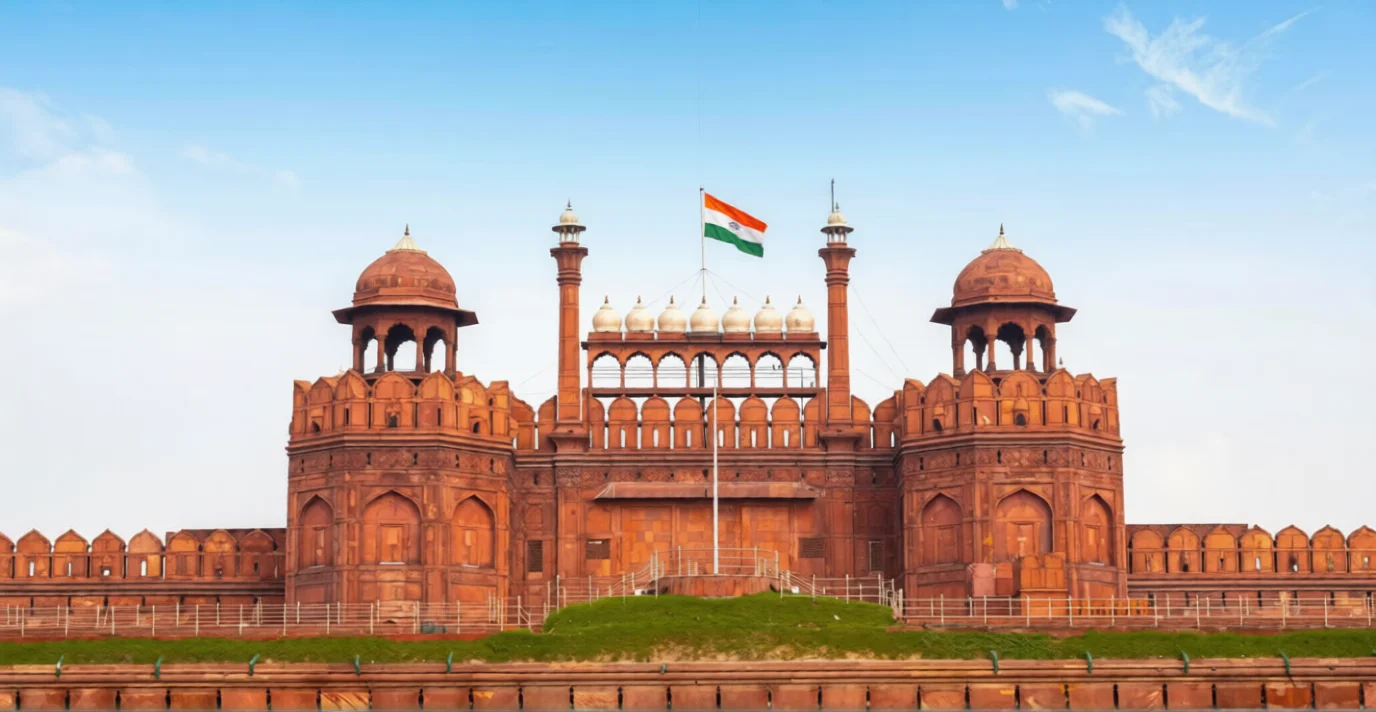
Red Fort is the most famous structure within Old Delhi and one of the most popular places to visit in Delhi for those interested in Mughal culture and history. It was constructed in 1638 by Shah Jahan between 1638 and 1648. This huge red sandstone castle served as the seat of ceremonial Mughal power for two centuries. It is a UNESCO World Heritage Site.
Within the fort, you’ll discover the Diwan-i-Aam, in which the Emperor received publicly issued petitions.
There is also the Diwan-i-Khas, where he held meetings with foreign ambassadors, as well as the Rang Mahal, the Palace of Colors, which was where the queen’s wives resided. The walls, arched galleries and the fort’s size give the impression of Mughal imperial splendor. Each year, during Independence Day, India’s Prime Minister addresses the nation from Lahori Gate.
Enter the Red Fort’s Lahori Gate and you are instantly within Chandni Chowk, one of Asia’s most storied and chaotic markets. Jahanara, the Mughal Princess, created the bazaar. The market has been operating continuously for more than 350 years. It is among the best places to visit in Delhi and is a total sensory experience.
Each lane of Chandni Chowk specializes in something distinct. Dariba Kalan is known as the silver jewelry lane. Khari Baoli is Asia’s largest spice market, filled with large bags of cardamom, turmeric and dried chilies. Kinari Bazaar sells wedding trimmings, ribbons and embroidery. The street food in Kinari Bazaar is delicious. You should try the parathas from Parathe Wali Gali, the jalebi from the Old Famous Jalebiwala and the daulat ki chaat during winter.
Just a short distance from Chandni Chowk stands Jama Masjid, the largest mosque in India. Shah Jahan built it between 1644 and 1656. It can accommodate 25000 worshippers in its huge courtyard. The mosque is constructed of white and red sandstone and its three magnificent domes, as well as its two minarets measuring 40 meters, are the main attractions in the Old Delhi skyline.
Visitors are welcome outside prayer hours. The south minaret offers the most spectacular views of Old Delhi available to visitors. Dress modestly and cover your head before entering.
Delhi is home to three UNESCO World Heritage Sites: Red Fort, Qutub Minar and Humayun’s Tomb. Each site represents a distinct time period in the city’s development and is a distinct peak of Indian architecture. When designing your India day tours itinerary, make sure to include these sites:
Qutub Minar is the tallest brick minaret in the world at 72.5 meters. It is also one of the most ancient and fascinating places to see in Delhi. Construction began in 1193 under Qutb-ud-din Aibak, founder of the Delhi Sultanate, making it the first significant Islamic structure in India.
The minaret’s complex is also wealthy. This Quwwat-ul-Islam Mosque is the first mosque to be built in India following the Islamic conquerors. The Iron Pillar of Delhi, situated in the courtyard, is a 7-meter-tall column dating to the 4th or 5th century CE. It has stood up to corrosion for more than 1,600 years. It is an amazing example of old Indian metalworking. The Alai Darwaza gateway and the Iltutmish tomb are also extraordinary.
Humayun’s Tomb is perhaps the most architecturally significant of all the sites to see in Delhi. It was constructed as early as 1565 and commissioned by the daughter of Mughal Emperor Humayun. It was the very first garden tomb to be constructed in the Indian subcontinent, as well as the first architectural precursor to the Taj Mahal.
The structure, the symmetry, the double dome and the inlay work made of pietra dura all foreshadowed the design Shah Jahan would later create in Agra.
The Tomb is situated at the center of a vast formal Persian garden that is divided into four quadrants, separated by water channels. More than 150 Mughal royals are buried here, which gives the site its nickname the Dormitory of Mughals. Isa Khan’s Tomb near the entrance is stunning and worth a look. The entire complex is tranquil, stunning, beautiful and more peaceful than the Red Fort.
The wide boulevards that were planned, which are the heart of New Delhi, were built by the British as their capital city for the empire from 1911 until the present. Today, they are home to the Indian government, national memorials and several of the most renowned art galleries located in South Asia. These are the places to visit in Delhi for those seeking to understand the current India and also part of the Golden Triangle Tours India:
India Gate is the national war memorial in India and is among the most well-known spots to visit in Delhi. This 42-meter arch of stone was constructed in 1931 to pay tribute to all the 70, 000 Indian soldiers who were killed serving in the British Empire during the First World War. The names of 13300 soldiers are written on the walls.
It is the Amar Jawan Jyoti, the everlasting flame under the arch, that honors the soldiers who have fallen since the independence of India. The sprawling lawns surrounding India Gate are a popular gathering spot for Delhi families in the evening. You can visit at sunset or during the evening, when the monument is illuminated and the gardens surrounding it are at their most beautiful.
The grand boulevard, which runs to India Gate toward Rashtrapati Bhavan, is the home of the President of India. It is one of the most striking city axes found in Asia. The work of British designer Edwin Lutyens inspired the design. Rashtrapati Bhavan comprises 340 rooms and is situated at the top of Raisina Hill. The Mughal Gardens within the complex are open to visitors for a short period each February and are stunning.
The National Museum of India on Janpath is among the most significant places to visit in Delhi for those interested in Indian culture, history, or archaeology. The collection spans more than 5,000 years and includes Harappan artifacts from the Harappan civilization, Mughal miniature paintings, antique sculptures, arms and armor and one of the best collections of Buddhist art anywhere in the world. Plan at least 2 hours.
South Delhi is home to some of the most tranquil and unexplored places to visit in Delhi. It is far from the heaviness of the city’s old town and the formality and majesty of Lutyens New Delhi; this area of Delhi is a great option for tourists seeking a more tranquil experience.
Lodhi Garden is among the most stunning green spaces found in India. It covers 90 acres in the heart of South Delhi and houses the graves of the Lodhis and the Sayyids. Lodhi and Sayyid rulers of the dynasty in the year 15th century. The tombs are set in lush lawns and flowering trees, creating an ambiance like no other in the city. Mohammed Shah’s Tomb, Sikander’s Tomb and the Sheesh Gumbad are the main features of the garden. The garden is open from dawn until sunset.
Hauz Khas Village is one of the most unique spots to explore in Delhi. A reservoir dating to the 13th century, a madrasa and a mosque complex are now among the city’s most trendy areas. It is possible to walk through a shattered medieval gateway into an area lined with clothing boutiques, art galleries and rooftop cafes.
The ruins of the lake are beautiful in the evening. The nearby deer park offers a tranquil retreat. Hauz Khas Village is a perfect spot to spend the afternoon, mixing heritage exploration, good food and shopping.
The Lotus Temple is one of the most impressive architectural sites you can visit in Delhi and one of the most popular places in the world. It was completed in 1986 and designed by Iranian designer Fariborz Sahba. It takes the form of a half-open white marble flower. It is a Baha’i House of Worship open to all religious groups.
The interior is a large prayer hall specifically designed for quiet meditation. No rituals of religious significance or sermons are held. It is among the most tranquil places you can visit while in Delhi. Admission is free. Closed on Mondays.
We at Janu Private Tours help create custom-designed Delhi itineraries that go beyond the typical tourist trails. Our local guides are knowledgeable about the stories behind every monument, the most popular street food stands in Chandni Chowk, the quietest areas of Humayun’s Tomb and the turn-offs to save you time and reveal the real world.
If you’re visiting Delhi for the Golden Triangle or planning an individual city tour, we can handle your private transportation, a hand-picked guide and everything in between. Call us today and let us help you design the best Delhi sightseeing tour.
Hi, I am Janu (Shabbir Khan)
Book a Free Call
+91 99291 52946