

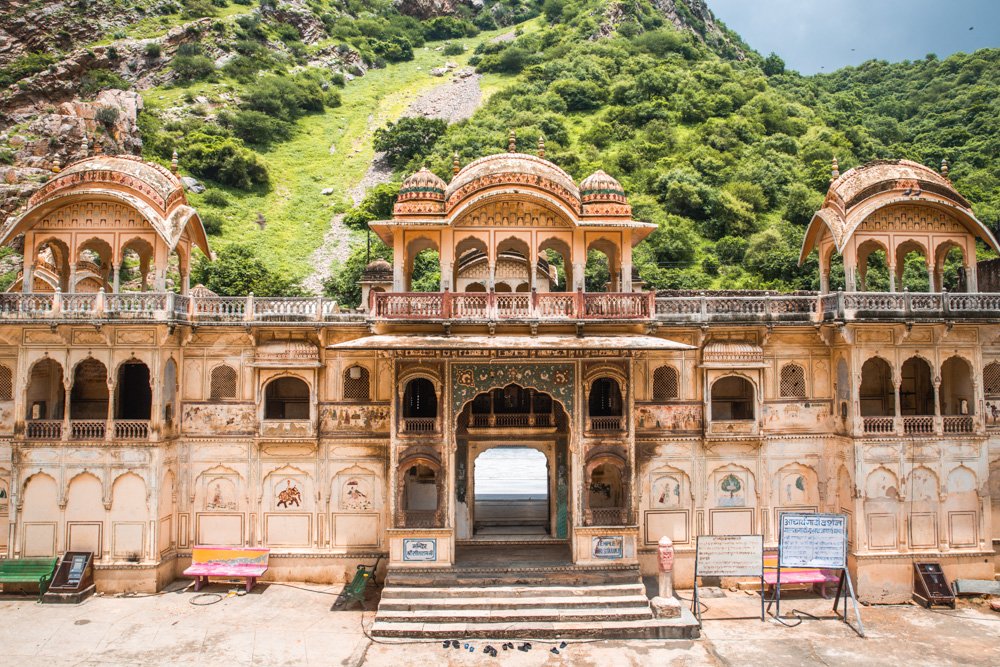
India is home to some of the world’s most impressive temples. The Indian temples offer travelers a deep and unforgettable encounter starting from the gopurams of South India to the Varanasi ghats, and the historic Rajasthan temples. If you are visiting temples in India for the first time, understanding temple etiquette is essential. This guide explains the most important temple etiquette for foreigners in India, including dress code, behavior, photography rules, and cultural expectations, so you can visit respectfully and confidently.
These are the most basic temple etiquette in India everyone must adhere to:
One of the most important Indian temple customs is to remove your shoes before entering any temple complex. This rule applies to all Hindu temples, Sikh gurudwaras, Jain temples, and Buddhist shrines. Visitors must keep their shoes outside because shoes are considered unclean; they must be stored at a shoe rack or with an official shoe attendant. Many devotees choose to walk barefoot, though socks are permitted. The stone floors become extremely hot during summer, so early morning is the best time to visit.
Next on the list of temple rules for visitors is to follow proper dress standards. Both men and women should cover their shoulders and knees before entering a temple. Clothes like sleeveless tops, shorts, and short skirts do not meet the dress code. Many temples provide wraps or scarves at the entrance for visitors who are not dressed suitably, but it is always better to come prepared. The Indian climate requires visitors to wear lightweight cotton clothing, which serves as an appropriate temple-visiting outfit. At Sikh gurudwaras, you will also be required to cover your head, so carry a scarf or bandana.
The Hindu practice of ritual purity serves as the primary temple rule that foreign visitors should observe when visiting Indian temples. Temple rules are designed to preserve the sanctity of these sacred spaces. The inner sanctum of some South Indian temples remains inaccessible to non-Hindu visitors. The practice is a religious custom that has existed for ages, as it shows no disrespect to visitors. People should check whether temples permit public entry before visiting. Our guides at Janu Private Tours will provide you with information about what to expect during your upcoming visit.
Photography rules vary by temple. While photos are usually allowed in outer courtyards, they are often restricted inside the main shrine. Always ask for permission before taking pictures. You should first check with the temple priest or official about using your camera. Avoid photographing worshippers without permission, as it is considered disrespectful. If you are unsure, take the camera down and be present in the experience.
The most important temple etiquette for foreigners in India is to practice quietness and respect when they visit temples. Temples serve as spaces for meditation and prayer, which makes it unacceptable for people to make loud noises through their conversations, laughter, and other disruptive actions. Speak softly and move calmly, as temples are places of prayer and meditation.
Indian culture views feet as the most unclean body part, so you should not direct your feet toward the altar or deity. Instead, sit cross-legged or kneel. Moreover, avoid pointing your feet toward the deity.
One of the less well-known aspects of temple etiquette for foreigners in India is the significance of the circumambulation direction. When visiting Hindu temples, worshippers always walk clockwise around the main shrine, a practice called pradakshina. It is regarded as an act of respect and devotion. Be sure to follow the path of worshippers and avoid taking a shortcut or walking in the opposite direction. In large temple complexes, the route is often clearly marked; however, if you’re not sure, just observe what locals are doing and follow their example.
If you’re given Prasad (blessed foods), the Tilak (forehead mark), or a floral garland, accept it with a smile. Refusing to accept an offer is considered disrespectful. If you are offered prasad, accept it politely. You may choose whether or not to consume it. Don’t throw away Prasad before temple personnel or other worshippers.
It is a delicate subject and a crucial aspect of temple etiquette for all temple visitors. For every woman visitor, please note that entry to the temple during menstruation is restricted. This custom is still followed across most of the temples across India. This is an important etiquette for foreigners visiting temples in India that should be observed and not forgotten. Practices may vary by region and temple. Please confirm with your guide before entering any temple.
If you’re not invited or granted the priest’s permission, don’t touch any temple objects. This is the most basic and frequently ignored temple etiquette rule for foreigners visiting India. Only authorized and trained priests can handle sacred objects, since, according to the temple’s beliefs, God is an actual living entity. Don’t lean against the temple’s walls or pillars, as they are considered sacred spaces. When you visit, pay your respects to each temple.
Many temples are closed between midday and the afternoon, reopening in the evening for Aarti. There are various times, and it is best to inquire before your visit. The most lively traditional culture in India, Aarti, or the ceremony, involves lighting a candle before the God, and then singing Bhajans. For example, the evening aarti ceremonies held at Varanasi or Haridwar temples provide an unforgettable experience that leaves guests with a lifetime of fond memories. The Varanasi Night Ganga Aarti Tour is a great way to witness the aarti in person.
The most popular temples are packed, particularly at weekends and on festivals. It is important to maintain proper manners, follow the queue, and wait for your turn instead of running around. The majority of temples offer a paid fast-track darshan queue when you’re short on time, and it is an excellent option.
A trained local professional guide can make a huge difference when you visit Indian temples. It can help you avoid surprises and understand the significance behind every ritual. When you travel with Janu Private Tours, our guides are local experts and are aware of the ancient traditions prevalent in the places they guide visitors to. We help you prepare for each temple visit, understand why each ceremony is important, and ensure you have an enjoyable, enriching experience.
If you’re thinking of spiritual Tours to India, we are ready to make every moment of your India tour memorable. Let us assist you in exploring the spiritual aspect of India in the utmost comfort and luxury. Get in touch with Janu Private Tours to get authentic temple experiences during your visit to India.
Everyone must observe the basic rules of temples, such as removing shoes, wearing modest clothing, and remaining silent.
A few temples across India prohibit non-Hindus from entering the inner sanctuary. However, the outer courtyards are generally accessible to everyone. Be sure to verify and hire a professional guide to guide you through every temple.
Wear clothing that covers your shoulders and knees. Lightweight cotton trousers and a loose shirt or kurta are ideal. Take a scarf with you to cover your head when visiting Sikh Gurudwaras. Avoid wearing tight, revealing, or casual clothing to respect the sacred site.
Absolutely. We offer a range of Spiritual Tours in India and Custom India Tours that can be tailored to include specific holy locations and temples. Contact us today to start making arrangements for your spiritual journey to India.
Hi, I am Janu (Shabbir Khan)
Book a Free Call
+91 99291 52946