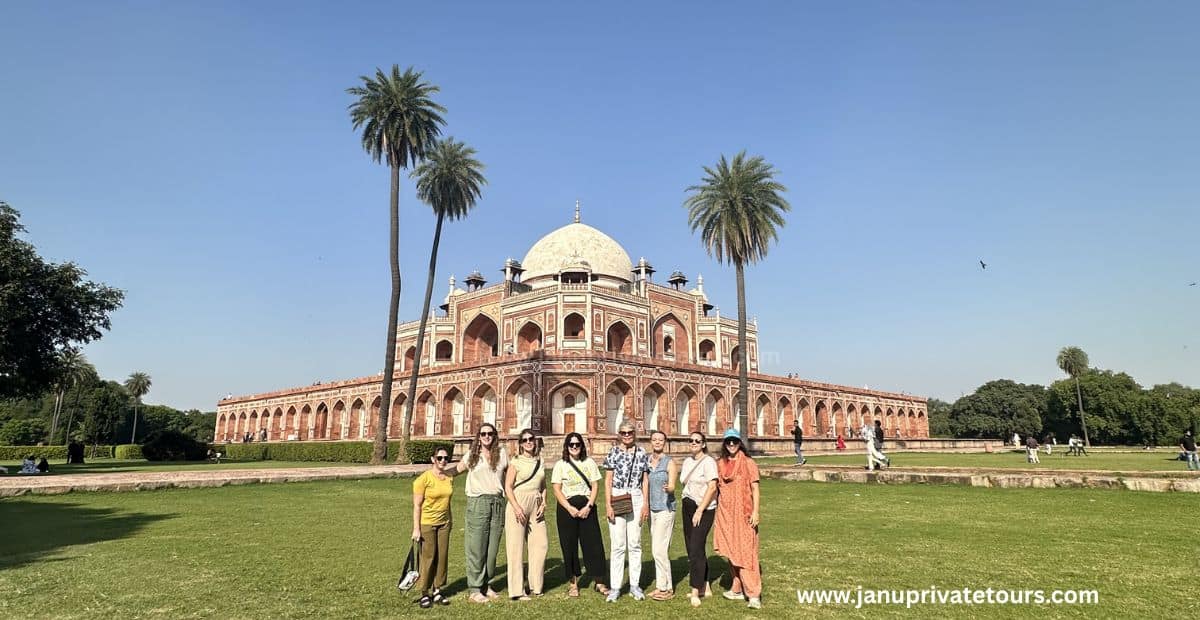
Delhi is among the oldest and most layered cities on earth. Empires have risen and fallen here for more than 1,000 years. Mughal Emperors, Afghan sultans, and British colonial rulers have all left their footprints. This has resulted in a town brimming with magnificent monuments and historic significance.
Three of these landmarks have been awarded the most prestigious recognition that is possible. The three constitute UNESCO World Heritage Sites in Delhi, recognised for their exceptional universal value to human civilisation. Each site tells a distinct story of Delhi.
This comprehensive Delhi travel guide includes detailed coverage of the 3 UNESCO World Heritage Sites in Delhi. It will explain the story of each site, the best places to visit there, helpful information for visitors, and suggestions to maximise your visit.
How Many UNESCO World Heritage Sites Are in Delhi?
Delhi is the home of three UNESCO World Heritage Sites. These include the Qutub Minar and its landmarks, the Red Fort Complex, and Humayun's Tomb. The three are listed on UNESCO's Delhi Heritage Sites list and are included in India's global and national heritage of significance.
The various UNESCO sites in Delhi, India, represent distinct eras and architectural styles. Qutub Minar dates to the early Delhi Sultanate period in the 12th and 13th centuries. Humayun's Tomb is one of the most impressive examples of Mughal architecture, dating to around the year 16th century. The Red Fort is the crowning achievement of Mughal imperial power in the 17th century.
A trip to all three cities when you travel to Delhi will take you on a breathtaking tour through almost 1,000 years of history within one city. This guide will cover each completely.
1. Qutub Minar and Its Monuments
Qutub Minar is the most ancient and architecturally distinctive of the UNESCO World Heritage Sites in Delhi. It was designated a World Heritage Site by UNESCO in 1993 and is recognised as one of the most impressive examples of early Islamic architecture in this region of the Indian subcontinent.
The History of Qutub Minar
Construction began in 1193 under Qutb-uddin Aibak, one of the founding members of the Delhi Sultanate and the first Muslim ruler of Delhi. The tower was designed as a minaret to allow the prayer call to be heard throughout the city. The tower was completed under his successors, particularly by Iltutmish and Firoz Shah Tughlaq.
Qutub Minar is 72.5 meters and is the highest brick minaret in the entire world. It's made of marble and red sandstone. It has five distinct levels, all separated by a projecting balcony. The walls are covered in intricate carvings and passages of the Quran.
What to See at the Qutub Minar Complex
The UNESCO listing encompasses the entire Qutub Minar complex, not just the minaret. Its surrounding areas are filled with impressive structures:
-
Quwwat-ul-Islam Mosque: The first mosque to be built in India following the Islamic conquerors. The screen's intricate design is an impressive mix of Hindu and Islamic art.
-
Iron Pillar of Delhi: A 7-meter-tall iron pillar dating to the 5th or 4th century CE. It has been corrosion-resistant for more than 1600 years and remains one of the earliest metallurgical mysteries.
-
Alai Darwaza: A magnificent gateway constructed by Alauddin Khalji in 1311, which has some of the first real arches found that can be found in Indian architecture.
-
Iltutmish's Tomb: The first garden tomb in India, it is an obvious architectural precursor to Humayun's Tomb and the Taj Mahal.
-
Alai Minar: Alai Minar is an unfinished second minaret that was intended to be twice the size of Qutub Minar. Construction stopped after the death of Alauddin Khalji.
Visitor Information: Qutub Minar
-
Location: Mehrauli, South Delhi
-
Nearest Metro: Qutub Minar on the Yellow Line
-
Entry Fee: INR 35 for Indian citizens, INR 550 for foreign citizens.
-
Hours of operation: from sunrise to sunset, open every day of the week.
-
Duration Required: The time required to explore the entire complex is 1.5 to 2 hours.
-
Best Time: Early in the morning on weekdays, for smaller crowds
2. Humayun's Tomb
Humayun's Tomb is widely considered the most architecturally significant UNESCO World Heritage Site in Delhi. It was designated a World Heritage Site in 1993, alongside Qutub Minar. If you are interested in the history of Indian architecture, it is a must-visit destination.
The History of Humayun's Tomb
Humayun's Tomb was constructed between 1565 between 1565 and 1572 CE. It was ordered from Hamida Banu Begum, the wife of Mughal Emperor Humayun, nine months after the death of his father. This was the very first Tomb in the garden to be constructed in the Indian subcontinent and the first Mughal monument to employ the double-dome design.
The Tomb's Persian architecture, Mirak Mirza Ghiyuath, built a monument of astonishing beauty and symmetry. The Tomb is situated at the heart of a huge Charbagh, a typical Persian garden divided into four quadrants, separated by water channels. The layout of the garden and its double-domed style led to the construction of the Taj Mahal over 80 years later.
The Tomb is constructed of red sandstone, which is inlaid with black and white marble. It's situated on a high platform, visible from some distance. The main chamber contains the cenotaphs of Humayun. The complex also houses the tombs of more than 150 additional Mughal royals, earning the complex the title 'Dormitory of the Mughals'.
What to See at Humayun's Tomb
-
It is the main burial site. Enter through the east gateway for the most stunning first look over the entire garden.
-
Isa Khan's Tomb: a smaller tomb complex located at the entrance, which predates Humayun's Tomb by around 20 years. It is equally stunning as a whole.
-
Barber's Tomb: A unique Octagonal structure, is thought to be the burial place of Humayun's barber royal.
-
Charbagh Garden: The garden has been restored to its Mughal-era appearance. It is one of the finest examples of an official Persian garden in India.
-
Afsarwala Mosque and Tomb: A modest, but beautiful, balanced mosque inside the grounds of the complex.
Visitor Information: Humayun's Tomb
-
Location: Mathura Road, Nizamuddin East, Central Delhi
-
Nearest Metro: JLN Stadium or Hazrat Nizamuddin on the Violet Line
-
Entry Fee: INR 35 for Indian citizens, INR 550 for foreign citizens.
-
Opening hours: From sunrise until sunset, all hours of the day
-
Duration: The amount of time needed is 1.5 to two hours
-
Tips: Combine with a visit to the close Nizamuddin Dargah to enjoy a full experience in the world of culture
3. Red Fort Complex
The Red Fort Complex is the most symbolic of all UNESCO World Heritage Sites in Delhi. It was added to UNESCO's list at the end of 2007. It is where India's Prime Minister speaks to the country on 15 August, India's Independence Day. This makes it more than a historical landmark, but an actual image of modern India.
The History of Red Fort
The Red Fort was commissioned by Mughal Emperor Shah Jahan in 1638 and was completed in 1648. It was constructed as the capital for the Mughal Empire in 1638 when Shah Jahan shifted the seat of power from Agra to Delhi. The fort's name derives from its enormous red sandstone walls, which reach a height of 33 meters.
The fort was the principal residence of Mughal Emperors for more than 200 years up to 1857. It was the centre of power and political influence in the Mughal empire and also the location of extravagant ceremonies for the royal family, public gatherings, and diplomatic conferences. Following the 1857 uprising, British forces took control of the fort and used it as a garrison.
It is now one of the most popular historical sites in Delhi and among the most recognizable in India.
What to See Inside the Red Fort
-
Lahori Gate: The main gate to the fort, with a view of the famed Chandni Chowk bazaar. This is where the nation's flag is raised at the time of Independence Day.
-
Chhatta Chowk: A covered bazaar within the fort that used to sell silk, jewels, and other accessories to members of the court. Nowadays, it is home to craft and souvenir market stalls.
-
Diwan-iAam: The Hall of Public Audiences, in which the Mughal Emperor was able to receive requests from the common people.
-
Diwan-i-Khas: The Hall of Private Audiences, was once home to the famous Peacock Throne. The walls of the hall were famously decorated with the following inscription: "If there's a heaven on earth, it's this this this.'
-
Rang Mahal: The Palace of Colors, was the home of the Emperor's wives and mistresses. It has a magnificent marble pool that is fed by a channel known as The Stream of Paradise.
-
Mumtaz Mahal: This is now a museum of Mughal-era objects, clothing, weapons, art, and other items.
-
Nahr-i-Behisht: The marble water channel, that once flowed through all palace apartments, ensuring that the fort remained cool during Delhi's hot summers.
Visitor Information: Red Fort
-
Location: Netaji Subhash Marg, Chandni Chowk, Old Delhi
-
Nearest Metro: Lal Qila Metro Station on the Violet Line
-
Entry fee: INR35 for Indian citizens, INR 550 for foreign nationals.
-
Hours of operation: 9:30 AM to 4:30 PM. Closed on Mondays.
-
Duration: The time needed is between 2 and 3 hours to properly explore
-
Sound & Light show: The show takes place in the evening within the fort. Make sure to check the current time before you visit.
-
Tips: Combine with a walk through Chandni Chowk and a visit to Jama Masjid nearby for a full Old Delhi day
Essential Tips for Visiting the UNESCO Sites in Delhi, India
-
Purchase tickets online whenever you can. Tickets can be purchased online. Archaeological Survey of India sells tickets online for most major historic sites in Delhi, saving you the wait in line at the gate.
-
Find a local guide for at least one visit. The wealth of history that is at every site is difficult to comprehend without contextual information. A great guide will bring these sites to life.
-
Visit during the weekdays. Weekends at famous historic sites such as the Red Fort can be very busy, especially during the summer season.
-
Bring a refillable water bottle. Delhi is extremely hot, and many of the places require extensive walking on open ground.
-
Put on comfortable shoes. The surfaces at each of the three sites are uneven, and walking distances are long.
-
Dress modestly. The knees and shoulders must be covered when visiting heritage or holy sites. Bring the scarf.
-
Check Red Fort closure days before visiting. The Fort is closed on Mondays and may close during government-organised special events on Independence Day and Republic Day.
Other Historic Places in Delhi Worth Visiting
Besides these three UNESCO World Heritage Sites in Delhi, the city is home to numerous other fascinating historical sites worth a visit. They aren't UNESCO-designated, but they are part of the larger Delhi historic sites listing, which any serious history enthusiast should look into:
-
Lodhi Garden: The park is well-maintained and features monuments to the Lodhi and Sayyid rulers of the dynasty. Entry is free, and it is one of the most tranquil areas.
-
Purana Qila: The Old Fort is one of the oldest forts in Delhi. It is believed to have been constructed on the site of the city of Indraprastha, dating back to the Mahabharata time period.
-
Safdarjung's Tomb: Last grand garden tomb constructed during the Mughal tradition, dating back to 1754. It is often quiet and serene compared to the more crowded UNESCO sites.
-
Tughlaqabad Fort: A massive ruinous fortification constructed by the Tughlaq family in the early 14th century. The fort is impressive but largely unrestored and rarely crowded with tourists.
-
Hauz Khas Complex: A 13th-century reservoir, mosque, and madrasa ruins that lie within a lake, in one of the most affluent South Delhi neighborhoods.
-
Jama Masjid: One of the largest mosques in India that was built in 1644 by Shah Jahan between 1644 and 1656. It can accommodate up to 25000 people who attend the mosque.
Want to Explore Delhi's UNESCO Sites With an Expert Guide?
With Janu Private Tours, we make custom Delhi itineraries that extend beyond the outlines of these amazing monuments. Our knowledgeable local guides are well-versed in Mughal historical background, Delhi Sultanate architecture, and the context that brings each monument alive.
If you're visiting Delhi in the context of a Golden Triangle tour or as an independent trip, we take care of everything from private transportation between destinations to carefully selected accommodations and seamless day-to-day planning. Call Janu Private Tours today and let us take you to Delhi in the way it deserves to be observed.
Also Read: