

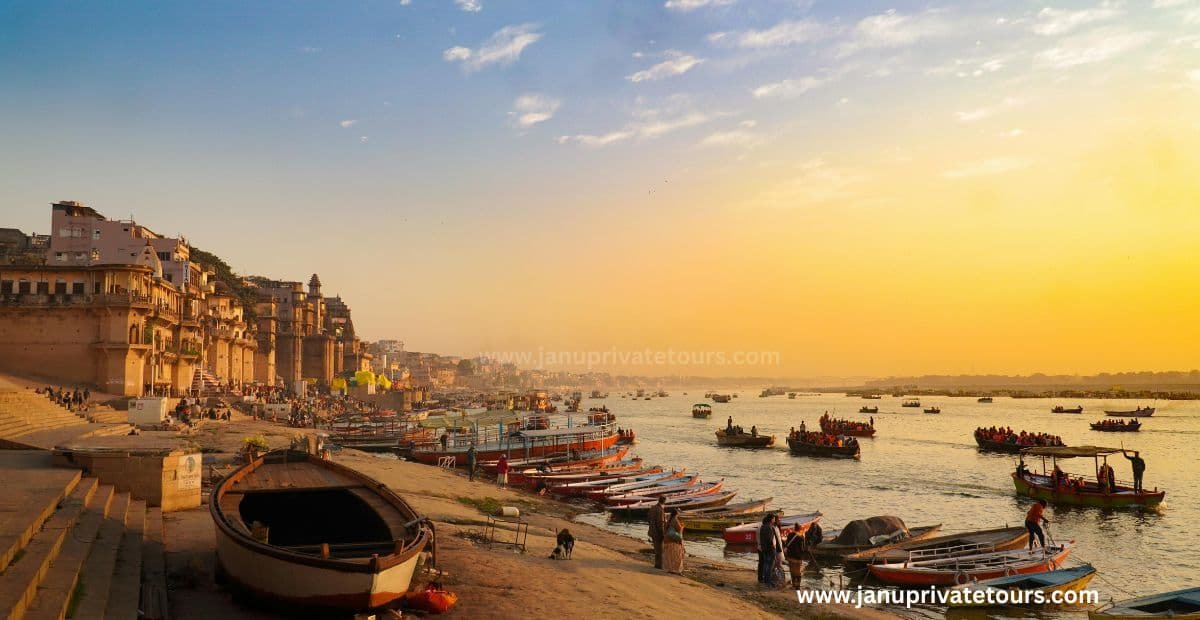
There isn’t a city that is quite like Varanasi anywhere else in the world. One of the most ancient continuously lived in cities around the globe, Varanasi sits on the western bank of the holy Ganga River in Uttar Pradesh and has been an epicenter in Hindu religious fervor, Sanskrit learning, and art for over three millennia. Varanasi is a city where death and life are common themes, where the traditional cremation rituals take place in full view of the ghats, and where sadhus meditate in chai stalls that are bustling with people, and where the ringing of temple bells constantly mingles with the cries of boatmen who are on the river.
For travelers, Varanasi is among the most dramatic and transformative places in India. It requires an open mind, a steady pace, and a desire to be affected by things that you don’t fully comprehend. This comprehensive Varanasi travel guide will cover all the important destinations to see in Varanasi, as well as the rituals that define the city’s spirituality, and practical tips for traveling, and tips for making sure you make the most out of one of the most beautiful cities in the world.
Every Varanasi city tour should start with the ghats, which are the sweeping stone steps that stretch along the west bank of the Ganga for more than seven kilometers across the city. There are a total of 84 ghats, each having its distinct name and history, patron god, and distinctive character. Walking through the ghats starting from Assi Ghat in the south to Raj Ghat in the north is the only essential activity to take part in when visiting Varanasi, and a trip that can take a whole day to accomplish.
The most renowned and frequented of all the Ghats, Dashashwamedh is considered to be the spiritual center of Varanasi. Here is where the epic Ganga Aarti ceremony takes place every night. It is among the most breathtaking Varanasi rituals you can ever experience. The ghat during the day is filled with pilgrims bathing in the ghat, priests performing puja, and boatmen yelling out to the passengers. In the evening, it turns into a stage filled with fire incense, flames, and devotion that attracts thousands of spectators each night. This is the highlight of the Varanasi travel guide.
Manikarnika is Varanasi’s principal cremation ghat and is an important location in Hinduism. Hindus consider that death in Varanasi and then being buried at Manikarnika gives immediate moksha, freedom, and a break from Rebirth. Funeral pyres burn around the clock, all day, throughout the entire year, and without any pause. The visit to Manikarnika is an incredibly emotional and inspiring experience. Be sure to approach it with silence and reverence for all that you see. Photography is not permitted, and you must adhere to the instructions of the guidebook on how to stand and where to look.
Assi Ghat, one of the important parts of the Varanasi travel guide, is located at the southernmost point of the ghat’s stretch. It is among the most accessible and pleasant spots to explore in Varanasi for those who are first-time visitors. It is less crowded and intimidating than Dashashwamedh but still retains the ambiance of a real working ghat. Yoga classes are held in the morning each day. The evening aarti held at Assi, although smaller than Dashashwamedh, is gorgeous and intimate.
It is famous for its submerged Shiva temple, which has slowly fallen into the Ganga over the years, creating a stunning and beautiful image that perfectly captures Varanasi’s relationship to history and Ganga.
Varanasi’s second cremation site is one of the oldest. It is smaller and less frequented than Manikarnika. It offers the same profound experience to those who visit it with respect.
The ghats may be the highlight of any Varanasi travel guide; however, the city has many museums, temples, and old-fashioned areas that merit a more thorough exploration. These are the most important spots to visit in Varanasi beyond the riverfront.
The most revered Hindu Temple in Varanasi is one among the 12 Jyotirlinga temples dedicated to Lord Shiva across India. The temple was reconstructed in 1780 following decades of destruction and rebuilding, and has an imposing gold-covered spire. The road leading to the shrine of Vishwanath Gai is a secluded, fragrant avenue of gold sellers, sweet shops, and traders selling incense that is an experience of its own. Non-Hindus might be denied entry to the sanctuary, but the area around it and its approach are open to everyone.
Just 10 kilometers away from Varanasi, Sarnath is one of the most revered places of pilgrimage in Buddhism, the location in which Gautama Buddha gave his first sermon after achieving his enlightenment. It is home to the Dhamek Stupa, built in 500 CE, which stands majestically above the plain landscape and marks the location of the first teaching. Sarnath Museum holds some of the most impressive Indian Buddhist sculptures, such as the well-known Lion Capital of Ashoka, which became India’s national symbol. A half-day visit to Sarnath is a must in the Varanasi trip guide.
The fort built in the 18th century by the Maharajas of Varanasi is situated on the opposite side of the Ganga and is accessible via an easy boat crossing. The fort has an impressive museum with antique cars, ivory-work royal palanquins, old clocks, and manuscripts that provide a fascinating glimpse into the royal life of Varanasi’s previous rulers. Views of the Varanasi cityscape from the river’s edge are breathtaking.
A striking and moving temple that is not dedicated to gods but Mother India herself. Instead of a god, the inner sanctum houses the largest relief map in marble of the unbroken India and is crafted with great detail. The temple was officially inaugurated by Mahatma Gandhi on the 26th of December 1936, and remains a deeply patriotic, peaceful location.
One of Asia’s most prestigious residential institutions, BHU is a world in its own right, featuring stunning campus grounds as well as the museum of art and archaeology, as well as the stunning Vishwanath Temple that is located within the grounds, a temple accessible to any faith. The campus area is also the appearance of a more tranquil, spacious style that provides a welcome break from the bustle of the city’s old. This is one of the highlights of the Varanasi travel guide.
Varanasi’s spirituality is centered around a variety of rituals and ceremonies that have been practiced for thousands of years. Being aware of the significance of these Varanasi rituals, even if you are not a native, brings an incredible richness to visiting the city. In this Varanasi travel guide, let us discuss rituals that define Varanasi:
A visit to the Varanasi Ganga Aarti held at Dashashwamedh Ghat is one of the most awaited religious events throughout India and is the most memorable part of any Varanasi journey. Every evening, at sunset, a group of young priests clad in saffron-colored robes and matching outfits is able to perform a lengthy 45-minute fire ceremony on the steps of the ghat. Massive brass lamps are tossed in arcs that are precisely choreographed, incense smoke fills the darkness, conch shells ring, and a hymnal is played in the ghat. Hundreds of tiny diyas with flowers and flames float across the river.
The best way to witness Ganga Aarti is to take a boat along the river and watch the entire ceremony unfold on the water, with the glistening Ghats reflecting below you. Start early, as the ceremony starts at sunset, and it varies depending on the time of year. You can book boats through your hotel or a reliable operator to guarantee an ideal spot. A smaller Aarti in Assi Ghat, held before the main ceremony, is an option for a more tranquil and more intimate version of the same ceremony.
The morning ritual of the ghats is equally significant to observe, perhaps more than the evening Aarti. The early rise and going out on the Ganga when the sun rises over its eastern bank is a moment of stunning beauty and spiritual strength. There are pilgrims swimming in the river as well as priests chanting dawn rituals on the steps of the ghat, and sadhus contemplating in the dawn light, and the city waking slowly all along the riverfront. The scene can be Varanasi at its rawest and most authentic.
If you’ve had the fortunate opportunity to visit Varanasi in the month of Dev Deepawali, held on the full moon evening of Kartik month, which is usually November, you’ll be witnessing an event that is among the most stunning celebrations in India. Every ghat is lit up with millions of lamps made of earth that transform every riverfront into a dazzling river of light that reflects the Ganga itself. It’s an experience of incredible beauty and a moment that is impossible to capture in photographs.
In this Varanasi travel guide, let us discuss about the things to do in Varanasi:
Enjoy a sunrise boat cruise on the Ganga. Take a wooden vessel from any ghat and enjoy an hour in the river while the city lights up in front of you.
Explore the city’s old lanes and take a stroll through those narrow streets of old Delhi that lie between Ghats as well as Kashi Vishwanath Temple. The ancient streets are filled with temples, tea shops, silk weaver shops, and the rest of everyday life.
Go to a classical music performance. Varanasi is considered to be one of the great centers for Hindustani traditional music. In the International Music Center Ashram and several ghat-side venues, performances are often staged.
Try Banarasi food tastings. Varanasi’s famed street food is among the most memorable activities to experience in Varanasi. Kachori Sabzi breakfast, a traditional thandai from the Blue Lassi shop, tamatar Chaat on the Ghats, and the city’s most famous malaiyo (a winter-time dessert) are all must-try.
Visit an artisanal silk weaving workshop in Varanasi, which is a world-renowned destination due to its Banarasi silk sarees. Go to a family of weavers in Lallapura or Adampura neighborhoods to observe master weavers work on their looms, creating intricate gold-threaded silk fabric.
Explore Sarnath during the golden hour. Dhamek Stupa and monastery ruins are especially beautiful in the late evening light.
Cycle through the city in the dawn, renting bikes and cycling through the city’s old streets in the morning, just before the streets are crowded with tourists, is one of the most enjoyable ways to experience Varanasi in a more tranquil, slow, and reflective pace.
When discussing the Varanasi travel guide, here are a few tips to keep in mind:
Varanasi is easily accessible by air through Lal Bahadur Shastri International Airport, which has direct flights from Delhi, Mumbai, and many other important Indian cities. Varanasi is also served by Varanasi Junction railway station, one of the most popular railroad stations located in northern India, which has great connections to Delhi, Agra, Jaipur, Kolkata, and Mumbai. There is also the Vande Bharat Express between Delhi and Varanasi, which is swift, comfortable, and recommended.
From October to March is the ideal season to travel to Varanasi. The temperature is comfortable and cool. Festivals such as Diwali, Dev Deepawali, and Diwali coincide with this time, as does the water, which is most accessible and stunning. April and May are hot, but can be managed. From June to September, there are torrential rains from the monsoon, and the Ganga increases dramatically, causing flooding of several of the ghats in the lower regions.
A hotel or guesthouse directly near or directly on the ghats is highly recommended, as this allows you to walk along the river anytime, at any time, and enjoy the city’s rhythms with ease. The areas surrounding Assi Ghat and Dashashwamedh Ghat are the most populated with lodging options for people of the entire range of budgets, from basic traditional guesthouses to luxury hotels that have terraces with views of the ghat.
Two complete nights and three days are necessary to enjoy Varanasi correctly. Three nights is the best. The city is a place where you can rush through in just a day.
Dress modestly when you visit temples. Ghats cover knees and shoulders.
Take off your shoes prior to entering any temples, as well as many ghat areas.
Never photograph cremation ceremonies at Manikarnika or Harishchandra Ghats.
Request permission prior to taking photos of people, especially pilgrims and sadhus.
Don’t accept advice from strangers in temples or the ghats commission. They are quite common.
Varanasi is a destination that will change your life; however, only when you approach it in the right manner. Navigating its quaint streets, understanding its customs, and gaining a true connection with this remarkable city is much easier when you have a knowledgeable local guide. This is precisely the kind of service Rajasthan Tour Expert provides.
We have years of experience in creating customized India itineraries for travelers all over the world. We can blend Varanasi together with the Golden Triangle and Rajasthan to make full northern India trips that encompass all the highlights this remarkable country offers. A Delhi from Jaipur and then Agra to Varanasi circuit, or any destination, can be designed around your preferences, budget, and the dates of your travel.
With Rajasthan Tour Expert, you get:
Local guides with expertise in Varanasi who are familiar with the ghats, temples, and rituals well and can offer cultural context that will transform your experience.
A seamless itinerary that blends Varanasi together with Delhi, Agra, Jaipur, and Rajasthan, all in a well-planned trip.
Select a safe hotel close to the ghats to get the best real Varanasi experience.
Boats are available for sunrise cruises as well as Ganga Aarti watching on the river.
Customized packages that can be made to fit your needs for couples, solo travelers, families, groups, and individuals in any form.
Cost transparency with no hidden fees and 24-hour on-ground assistance throughout your journey.
Varanasi isn’t just about the comforts and pleasures of an ordinary tourist spot. It is a unique and profound destination—an intimate encounter with one of mankind’s most ancient living traditions, where fundamental questions about life, death, and meaning are discussed daily. This Janu Private Tours Varanasi travel guide covers the best places to explore, from the sacred Ganga Aarti and the labyrinthine laneways of the old town to the serene silence of Sarnath. Visit Varanasi with patience, curiosity, and an open mind; with Janu Private Tours, the city will take care of the rest.
Hi, I am Janu (Shabbir Khan)
Book a Free Call
+91 99291 52946