

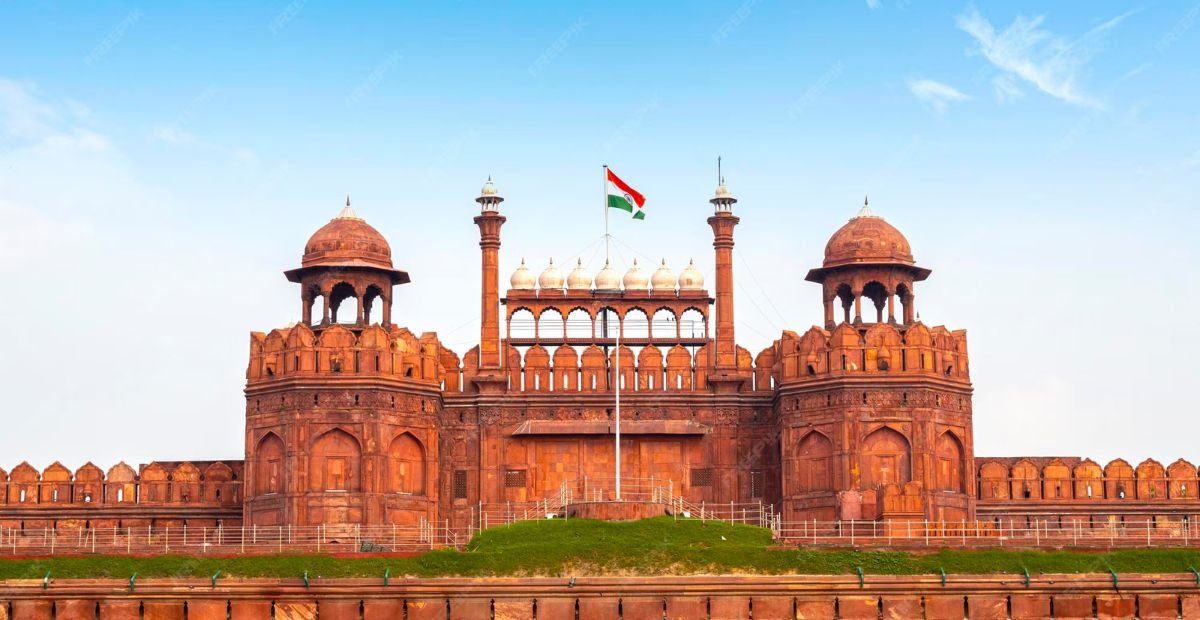
Most people traveling to India for the first time arrive feeling excited and nervous at the same time. You’ve daydreamed over photos of the Taj Mahal at sunrise, the pink streets of Jaipur, the peaceful backwaters of Kerala, but you’re not quite sure what to expect in reality. The fact is that India can overwhelm you or surprise you, and sometimes does. A little information on the essential facts about India before you visit can make all the difference. India rewards travelers who have complete information about the areas they are planning to visit and have planned well.
This guide covers major facts about India from visas and currency to culture, food, transport, and safety. Let us get started.
| Category | Delhi |
| Capital | New Delhi |
| Population | 1.44 billion |
| Official Languages | Hindi + 21 others |
| Currency | Indian Rupee (INR) |
| Time Zone | IST (UTC +5:30) |
| Best Time to Visit | October to March |
| Visa | e-Visa available online |
| Religion | Hindu-majority, multi-faith |
| Emergency Number | 112 |
| Driving Side | Left |
India occupies over 3.2 million square kilometers and has a population of 1.44 billion people. The country requires multiple trips for complete exploration. Each area of the country presents its own unique cultural identity. Rajasthan showcases its desert forts and its royal palaces. Kerala presents its backwaters together with its spice gardens and its tropical coastlines. The northern Himalayan region presents an entirely different experience when compared to the temple towns found in Tamil Nadu. The most common mistake that first-time visitors make involves trying to see all the attractions during their two-week stay.
Traveler tip: Pick a focused region and explore it well. The Golden Triangle tour of Delhi, Agra, and Jaipur is the best starting point for first-time visitors. The route connects three essential cities through a route that highlights North Indian historical sites, architectural wonders and cultural experiences.
International travelers should know that India does not permit visas on arrival for most nationalities. You must apply for an e-Tourist Visa online before departure.
Key visa facts:
The e-Tourist Visa is valid for 30 days, 1 year, and 5 years.
The standard time to process applications requires a 72-hour period so applicants should submit their requests at least one week before their scheduled travel date.
Your passport must remain valid for six months after your planned travel dates.
The Indian government immigration portal serves as the official application platform for the process.
For a full breakdown of the process, read our India e-Tourist Visa guide before you book anything.
The Indian Rupee (INR) serves as the official currency of India. India remains one of the most economical travel destinations. A few cost breakdown of essentials during your travel are as follows
| Expense | Approximate Cost (INR) |
| Budget guesthouse | 500 to 1,500 per night |
| Mid-range hotel | 2,000 to 6,000 per night |
| Street food meal | 50 to 200 |
| Restaurant meal | 300 to 1,000 |
| Domestic flight | 2000 to 10000 |
| Train (sleeper class) | 200 to 800 |
ATMs are widely available in cities but scarce in rural areas. Carry cash when venturing off the main tourist trail. UPI payments via Google Pay and PhonePe are widely accepted in urban areas. Always carry small denomination notes for rickshaws, temple entry, and local markets.
India has 22 officially recognized languages and hundreds of dialects. Hindi is the most widely spoken, but English is an official language and is used extensively in tourism, business, and urban areas. This is one of the most reassuring facts about India for first-time foreign visitors.
In South India, Hindi is less commonly spoken. English or local languages like Tamil, Malayalam, and Kannada are preferred. In major tourist destinations like Delhi, Agra, Jaipur, Kochi, and Mumbai English signage and English-speaking guides are standard.
Learning a few basic phrases goes a long way. Namaste (hello), Dhanyavaad (thank you), and Kitna hai? (how much?) will earn you genuine warmth from locals.
Among the most important facts about India for any visitor is understanding its extraordinary religious and cultural diversity. India is the birthplace of Hinduism, Buddhism, Jainism, and Sikhism, and is also home to one of the world’s largest Muslim populations. This diversity is visible in every city, every market, and every meal.
Cultural etiquette every visitor should know:
Remove shoes before entering temples, mosques, and many homes
Dress modestly at religious sites, cover shoulders and knees
Use your right hand for eating, giving, and receiving
Cows are sacred in Hindu culture and roam freely in many cities, treat them with respect
Public displays of affection are generally frowned upon
India has over 40 UNESCO World Heritage Sites. If you are visiting Rajasthan, our guide to UNESCO World Heritage Sites in Rajasthan is worth reading before your trip.
One of the most searched facts about India among first-time visitors is when to go. India has multiple climate zones and the answer varies by region.
| Season | Months | Best For |
| Winter | October to March | Most of India, ideal for first-timers |
| Summer | April to June | Hill stations only |
| Monsoon | July to September | Kerala landscapes, avoid coastal areas |
October to March is the best overall window. The north is cool and dry, the south is warm but manageable, and wildlife parks are fully operational. For a detailed month-by-month breakdown, read our guide on the best time to visit India for international travelers.
Food is one of the most celebrated facts about India among returning visitors. India has no single national cuisine. Every state has its own distinct food culture, spice profile, and cooking tradition.
| Region | Must-Try Dish |
| Rajasthan | Dal Baati Churma |
| Punjab | Butter Chicken, Sarson da Saag |
| Kerala | Fish Curry with Appam |
| Tamil Nadu | Masala Dosa |
| Mumbai | Vada Pav, Pav Bhaji |
| West Bengal | Rasgulla, Hilsa Fish |
Street food is a cultural institution in India. Chaat, pani puri, samosas, and kachori are eaten at every corner. For a guided introduction to Indian street food culture, check out street food in India that covers the best dishes and where to find them safely.
One practical note: drink only bottled or filtered water. Avoid raw salads and unpeeled fruit from street stalls if you have a sensitive stomach.
Understanding how to get around is among the most practical facts about India for first-time visitors. India has multiple transport options at very different price points.
Trains are the backbone of Indian travel. The rail network is one of the largest in the world, with over 13,000 trains running daily. Book tickets in advance on the IRCTC website as popular routes sell out weeks ahead. Domestic flights are affordable and the fastest way to cover long distances. IndiGo, Air India, and SpiceJet connect all major cities.
A private car with a driver is the most comfortable and flexible option for touring. It allows you to stop at smaller temples, roadside viewpoints, and local markets that trains and buses cannot reach. It also removes the stress of navigating unfamiliar transport systems. Janu Private Tours offers private cab services across India with experienced, English-speaking drivers.
Auto-rickshaws and taxis are ideal for short city trips. Use Ola or Uber in cities for metered, safe rides.
Safety is one of the most frequently searched facts about India among first-time travelers, particularly solo visitors and women. The reality is nuanced but largely reassuring.
India is generally safe in popular tourist destinations. Petty theft, overcharging, and fake guides are the most common issues and not violent crime. Solo female travelers should exercise caution at night and in isolated areas, but millions of women travel India independently every year without incident.
Here is our dedicated guide for solo female travelers in India covers safety tips, recommended destinations, and practical advice in detail.
Recommended safe destinations for first-timers: Jaipur, Udaipur, Agra, Goa, Kerala, and Mumbai. The emergency number 112 works nationwide.
Many first-time visitors do not realize that India is one of the world’s premier wildlife destinations. This is one of the most underrated facts about India among international travelers.
| Wildlife | Where to See It |
| Bengal Tiger | Ranthambore, Bandhavgarh, Jim Corbett |
| Asiatic Lion | Gir National Park (only place on Earth) |
| Indian Elephant | Kerala, Kaziranga, Corbett |
| One-Horned Rhino | Kaziranga National Park |
| Leopard | Jawai, Rajasthan |
India has over 100 national parks and 500 wildlife sanctuaries. If a tiger safari is on your list, our Rajasthan Heritage and Tiger Safari Tour combines Ranthambore National Park with Rajasthan’s iconic forts and palaces in a single itinerary. For a day trip option, the Ranthambore Tiger Safari Day Tour is a popular choice from Jaipur.
Health preparation is among the most overlooked facts about India for first-time visitors. Consult your doctor or a travel health clinic at least 4 to 6 weeks before departure. Carry a basic travel medical kit. Pharmacies are widely available and affordable across India. Major cities have excellent private hospitals. Travel insurance with comprehensive medical coverage is strongly recommended for all international visitors.
The facts about India in this guide give you a solid foundation but planning a first trip to India still involves dozens of decisions: which regions to visit, how many days to spend, which tours to book, and how to sequence everything logically.
That is exactly what Janu Private Tours specializes in. With over two decades of experience guiding first-time foreign visitors across India, we build private, customized itineraries that take the stress out of planning and put the joy back into travel. Get in touch with our team to start planning your India trip today.
Yes. Most nationalities require a visa. The Indian e-Tourist Visa is available online and is the easiest option. Apply at least one week before travel. Read our full India e-Visa guide for step-by-step instructions.
October to March is ideal for most regions. Avoid peak summer months of April to June in the plains. Read our best time to visit India guide for a full seasonal breakdown.
Yes, with the right precautions. Stick to well-reviewed accommodations, use registered transport, and stay aware in crowded areas. India is visited by millions of international tourists every year without incident.
Budget travelers can manage on INR 2,000 to 3,000 per day. Mid-range trips average INR 5,000 to 10,000 per day. Luxury travel is available at all price points across the country.
Hindi and English are the most widely used. English is commonly understood in all major tourist areas, making communication straightforward for most international visitors.
Light, breathable clothing, modest outfits for temple visits, comfortable walking shoes, sunscreen, and a basic medical kit.
Hi, I am Janu (Shabbir Khan)
Book a Free Call
+91 99291 52946