

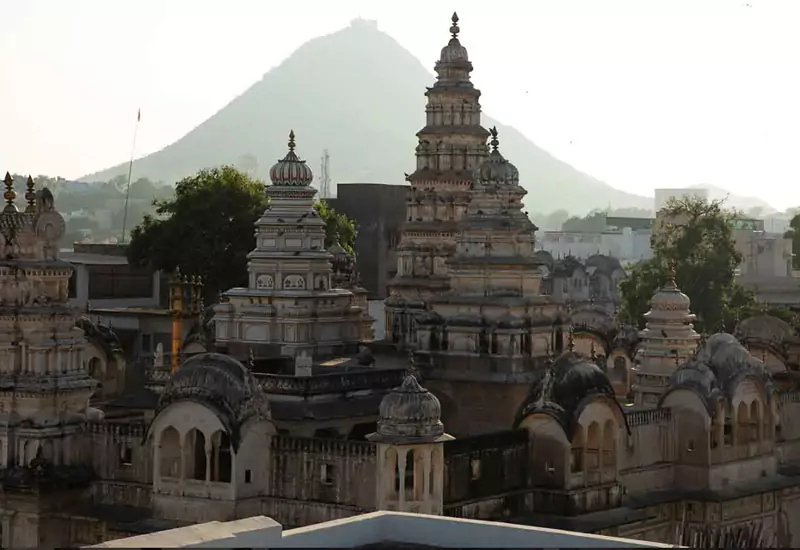
India is a land full of rich myths, ancient stories, and spiritual journeys. Thousands of pilgrims visit temples and sacred sites across the country every year. But few destinations capture the imagination quite like Pushkar Mandir. In this guide, you will learn about the history of Pushkar Mandir, including why it is important for religious reasons. You can discover the significance of Pushkar Mandir and plan your visit for the most fruitful experience.
Pushkar, located next to a beautiful lake and surrounded by sand dunes, is a holy town in Rajasthan. A large number of visitors visit the temples and ghats of Pushkar, including pilgrims, seekers, photographers and international backpackers. One of the most interesting temples in Pushkar is Pushkar Mandir, which is also known as the Brahma Temple. This rare temple in Pushkar is one of the few temples in the world dedicated to Lord Brahma, the creator of the universe. Step inside the world of mythology, culture, art and devotion that transcends time at Pushkar.
In this article, we will explore the history and significance of Pushkar Mandir and what to see during a visit, the best time to visit, and how you can experience the temple through expert travel assistance.
The history of Pushkar is all over the Hindu scriptures. It is said that Lord Brahma performed a sacred ritual, known as a yajna, in Pushkar. The city is surrounded by 52 ghats (steps leading to the river) and narrow, quiet by-lanes dotted with temples. The city of Pushkar is believed to be one of the five dhams in Hinduism.
Pushkar Mandir is one of the few temples for Lord Brahma and is considered special due to its creation myth. Many thousands of shrines are dotted across India, but Pushkar Mandir is unlike any other. Brahma is the creator of the universe, and many believe that his temple in Pushkar is one of the few places on earth where Lord Brahma can be found.
Pushkar Brahma temple is believed to be more than 2,000 years old. However, the current structure was rebuilt in the 14th century and repaired over the centuries by several rulers. Legend goes that Brahma’s wife, Savitri, cursed Brahma that he would not be worshipped in this world. The reason behind this is that Lord Brahma lost his temper one day and boasted to his wife about the power of his third eye. The goddess was very angry and cursed Brahma. This is why very few Brahma temples are found in India, except in Pushkar.
Pushkar is a temple city, and many small, unique shrines dot the bylanes around the main Brahma temple. The Pushkar Mandir has stone carvings, a silver-plated interior, intricately carved pillars, and red sandstone from Rajasthan. Visitors will find the temple to be peaceful, allowing quiet reflection in the sanctum sanctorum.
Pushkar Mandir is visited by people to pray and receive the blessings of Lord Brahma or Brahmaji. The villagers also offer pujas (ritual prayers) for their ancestors at the Pushkar Lake. It is believed that a pilgrimage or puja at Pushkar will give the person peace, prosperity, growth, and well-being.
Pushkar also symbolises the balance of creation, maintenance and dissolution in the universe. Therefore, visiting the holy city of Pushkar is a means to pay homage to life itself.
Pushkar Mandir is considered to be at the heart of the city. A sacred lake with 52 bathing ghats or steps encircles Pushkar. Many people believe that a dip in the lake will wash away their sins and karmas from many lifetimes. Devotees, tourists and photographers all visit Pushkar Lake for the evening aarti ritual.
Many people come to Pushkar Mandir for darshan (a holy visit) and head to the ghats to take part in a puja or simply to watch the pilgrims.
The temples and spiritual sites in Pushkar.
The Temple of Brahma’s wife is situated on top of Ratnagiri Hill and has beautiful views.
The Temple of Lord Vishnu, in its boar incarnation, is also famous for its artistic carvings.
The temple is known for the South Indian style of architecture.
Pushkar also welcomes Sikh pilgrims and has a gurudwara with langar.
Pushkar offers a unique mix of spirituality, music, handicrafts and camel culture. Every year, in the month of November, the Pushkar Camel Fair is a global attraction for photographers, craft buyers and culture enthusiasts.
Walk in the local handicraft markets, sip a coffee on rooftop cafés, browse Ayurvedic shops, get a desi tattoo or unwind with a yoga session in Pushkar. International backpackers often book a retreat or a lakeside stay after visiting Pushkar.
Pushkar can be visited throughout the year, and from October to March, the climate is most pleasant to visit. Travel during this time for sightseeing and spiritual ceremonies.
Pushkar is best visited during the festivals, as it becomes more crowded and spiritually charged during these months.
Kartik Purnima – A month dedicated to spiritual practices, and when many take ritual baths.
Pushkar Camel Fair – The Camel Fair is a meeting point of livestock trade, folk performances, music, and temple visits. Travellers looking to explore a broader Rajasthan journey can also consider the Golden Triangle with Pushkar Camel Fair a popular route combining Delhi, Agra, Jaipur and the vibrant energy of Pushkar during the fair season.
Travellers looking to witness local traditions, handicraft bazaars, and spiritual ceremonies will find it best to visit during these months.
Pushkar is located about 15 km from Ajmer in the state of Rajasthan.
The nearest airport is Jaipur, which is 3 3-hour drive from Pushkar. Pushkar is often combined with sightseeing in Jaipur, and tour providers such as Janu Private Tours organise multi-day itineraries.
Ajmer Junction is well connected with most major cities across India. Taxis or buses can be taken from the railway station to Pushkar.
Pushkar is well connected by good expressways from Jaipur, Ajmer and Delhi.
There are a few things to remember when visiting Pushkar Mandir. Photography is not allowed inside the temple for visitors. Also, there is a small line where you can leave your footwear before entering. Respect the norms of modest dressing. You will find priests offering puja services to families for naming ceremonies and spiritual guidance.
Pushkar is best experienced in the early morning and late afternoon to avoid the crowds and midday heat. During the spiritual journey in Pushkar, respect the religious practices and maintain quiet voices inside the temple complex.
It is important to hire local guides who can explain the legends and rituals at each site. Providers such as Janu Private Tours connect you to experienced local guides.
Take the time to stroll along the ghats at a leisurely pace. Pushkar can be best experienced by sitting and observing.
Pushkar has a wide range of accommodation options for travellers, from budget-friendly hostels to boutique havelis and desert resorts. In and around the lake area of Pushkar, there are many guesthouses with serene views of the lake and city. For mid-range accommodations with traditional Rajasthani hospitality, you can stay in heritage hotels in Pushkar.
Travellers are advised to book accommodations through Rajasthan tour specialists who can take care of their reservations and transportation during the peak-season rush.
Pushkar Mandir is popular among international visitors because it is not only spiritual but also relaxed. It is a fusion of ritual theatres with global traveller vibes. English signage at Pushkar, yoga retreats, rooftop dining, and craft shopping streets are welcoming for international visitors. Many international backpackers begin their journey through Rajasthan in Jaipur and continue their journeys from Jaipur to Pushkar with trusted tour operators such as Janu Private Tours, who can take care of transfers, guides, and local market experiences.
Also Read: Difference between a tour operator and a travel agent
Pushkar Mandir is one of the few temples for Lord Brahma and is significant in creation mythology.
Photography is restricted inside the Brahma Temple to maintain the sanctity of the temple.
The best time to visit Pushkar is between October to March.
You can drive from Jaipur to Pushkar, which will take around 3 hours. Or, you can book guided transfers with recognised tour operators such as Janu Private Tours.
Yes, Pushkar is suitable for international visitors because of the temples, ghats, yoga centres, cafés, shopping lanes and well-organised local guides.
Hi, I am Janu (Shabbir Khan)
Book a Free Call
+91 99291 52946