The great festivals, recipes and desserts are some of the most special parts of the Indian cultural heritage. We have welcomed guests with a glass of water and a tasty treat since ancient times. This tradition adds a touch of sweetness to the initial meeting or welcome. When there are festivals or celebrations of victory, sweets are not only eaten to satisfy hunger, but also to spread happiness and purity. On Raksha Bandhan, an Indian holiday, brothers celebrate their special bond once again.
Today, it's a nice description of Ghewar, a popular Indian dessert. People in Rajasthan and North India think of it as a special traditional dessert. Festivals like Teej and Raksha Bandhan cannot be celebrated without sweet Ghewar. Travelers should not miss trying the taste of ghewar during their tour, especially in Rajasthan. Let’s move on to more about the combination of ghewar and Raksha Bandhan in India.
What Is Ghewar?
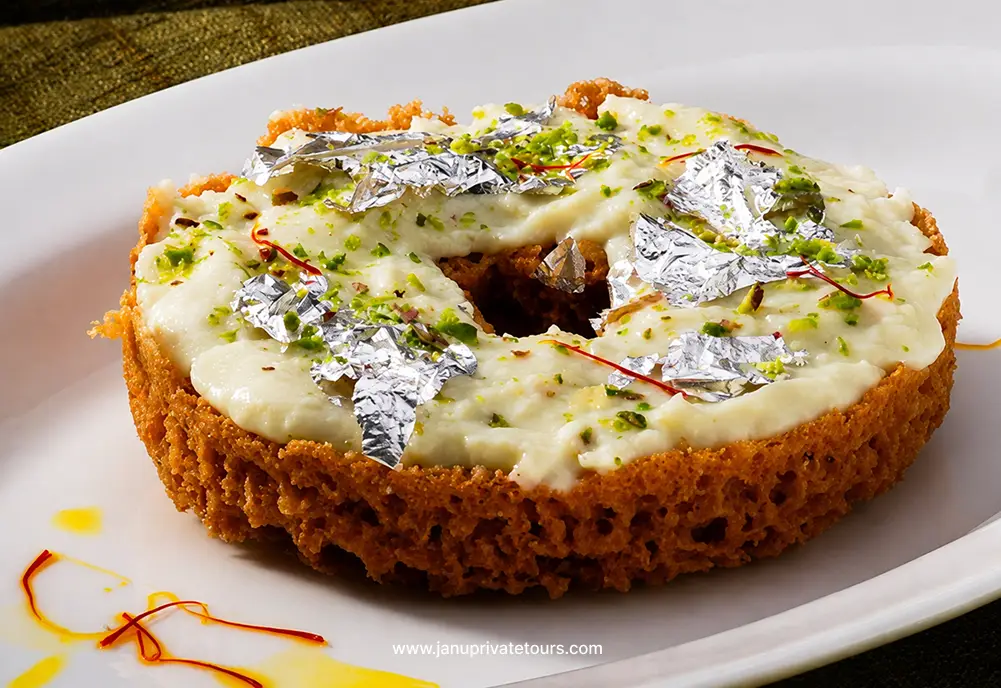
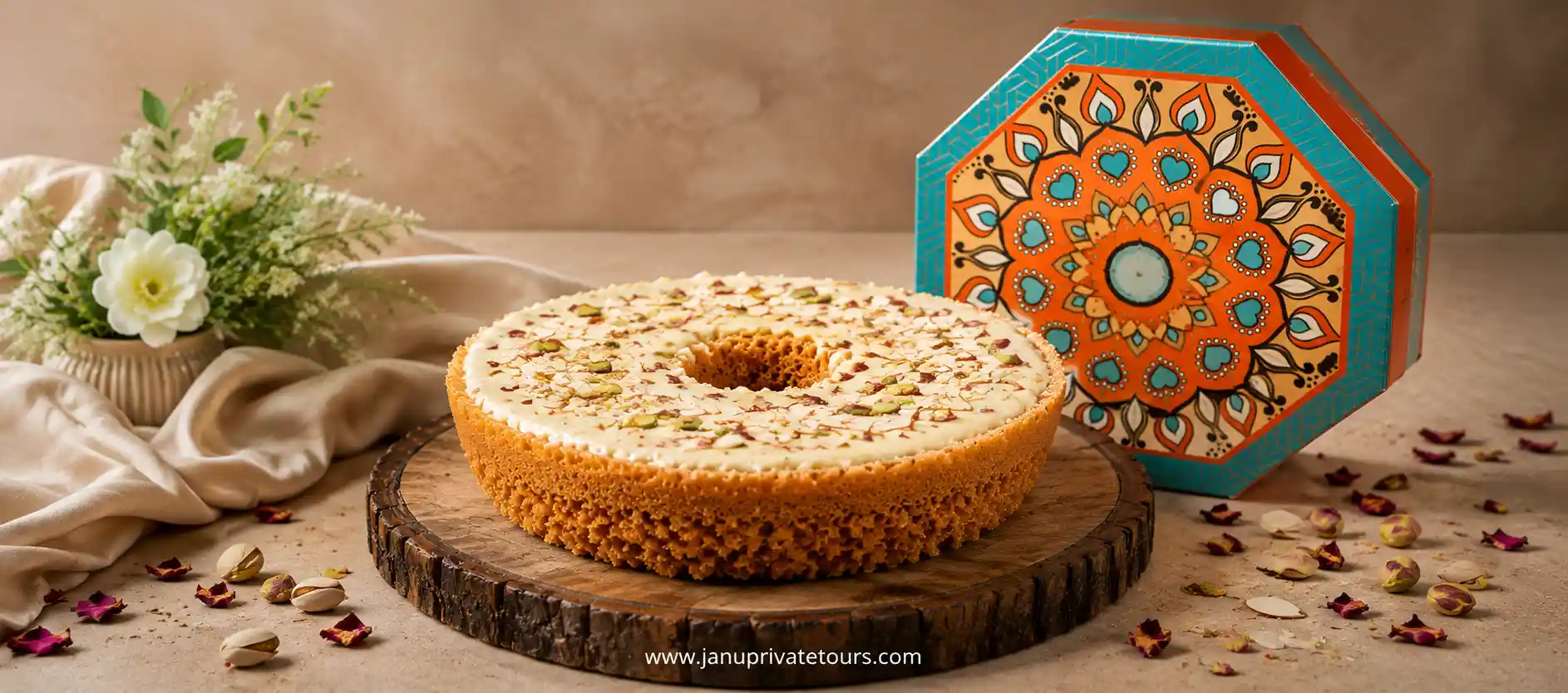
Ghewar is a spherical Indian sweet with a porous, lattice-like texture. Its honeycomb structure is created by deep-frying a flowing batter. After preparation, ghewar is decorated with sugar syrup, nuts, saffron, rabri and cardamom to enhance its look and flavours.
Ghewar's appearance draws attention first. Ghewar is open and delicate, with tiny openings, unlike peda or barfi. The batter is gradually put into hot ghee during frying, creating this peculiar texture. The edges are crunchy and can absorb syrup and toppings.
Renowned in Rajasthan and North India, ghewar is famous. It is especially associated with the monsoon and holidays. The classic thin batter is made from flour, ghee, cooled liquid and water and carefully put into hot ghee multiple times to create the layered structure.
Thus, ghewar is more than a treat to photograph or eat for travelers. Indian cuisine frequently reflects seasonal and social events in which it is enjoyed.
Why Is Ghewar So Closely Associated With Raksha Bandhan?
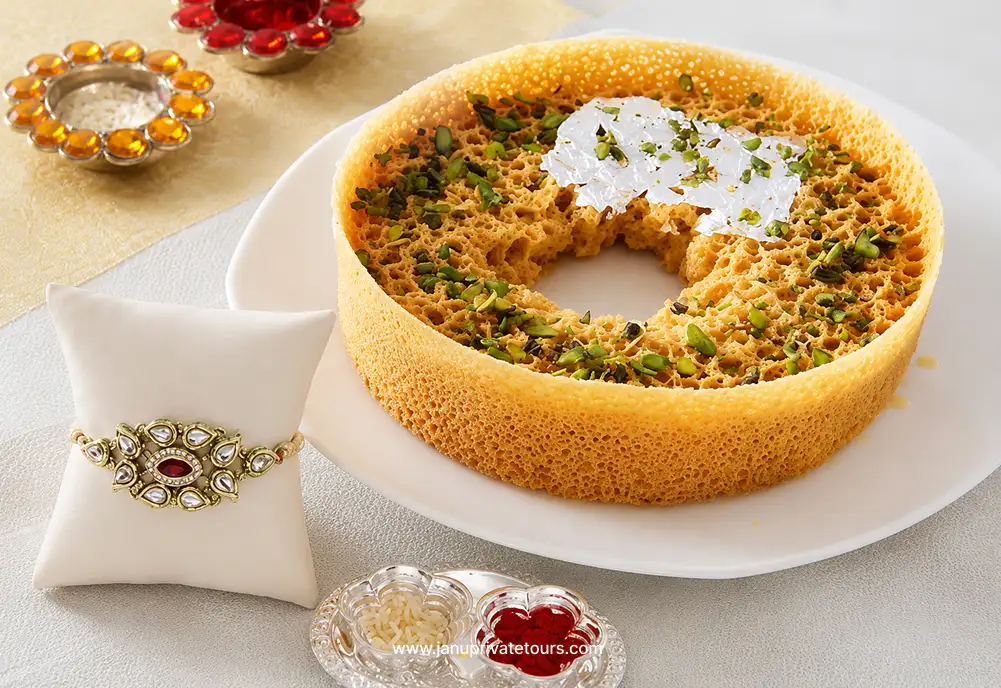
Ghewar spreads the sweetness of joy and happiness during the festival of Raksha Bandhan in India. Brothers and sisters celebrate their love through the taste of different traditional sweets on Raksha Bandhan. It is a ritual in which sisters tie rakhis around their brothers' wrists, pray for them and wish them well. A blessing, affection and gift are returned by the brother. Sugary treats are exchanged during the celebration, making them important.
Ghewar blends very well with the festivals of Raksha Bandhan. Family members can buy a huge decorated ghewar to share at home, give to relatives, or incorporate with other holiday gifts. Sweets are part of the family-centered Raksha Bandhan exchange of affection.
Rajasthan's traditional sweets are closely tied to local festivals and rituals. It's a great way to introduce tourists to the region's joyful culture through food. When ghewar is consumed during festivals, it makes sense that it becomes part of Rajasthan's celebratory culture. How? As ghewar has a historical and cultural significance that everyone should be aware of:
-
Roots and Origin of Ghewar: Food legend says ghewar originated in Rajasthani royal kitchens. One of the common legends connects Raksha Bandhan with the majestic Rajput custom of Rajasthan. It is believed that Rani Karnavati of Mewar had sent a rakhi to Mughal Emperor Humayun requesting protection. Ghewar was the “King of Sweets” in ancient Rajasthan and was usually served on key occasions, thereby establishing its relationship with joyous occasions such as Raksha Bandhan.
-
Ghewar and the Sinjara Tradition: Rajasthani ghewar is also associated with Sinjara, a ritual day before Gangaur or Hariyali Teej. On this day, parents give their newlywed daughters clothes, henna and lots of ghewar. The gesture symbolizes love, wealth and care for their daughters and their spouses. Ghewar became more than a sweet and a symbol of family and festivity, according to Tradition.
The Importance of Sweets During Raksha Bandhan
To find out why ghewar is famous during Raksha Bandhan in India, consider the function of sweets in Indian celebrations. It’s incomplete to celebrate happy moments without the taste of sweets. After the rakhi ceremony, siblings and relatives share sweets on Raksha Bandhan.
In India, travelers can celebrate Raksha Bandhan emotionally by knowing the different historical stories. They can enjoy the markets of festive decorations, family costumes, creative rakhis, gifts and dessert sets.
Why Travelers Should Try Ghewar in Rajasthan
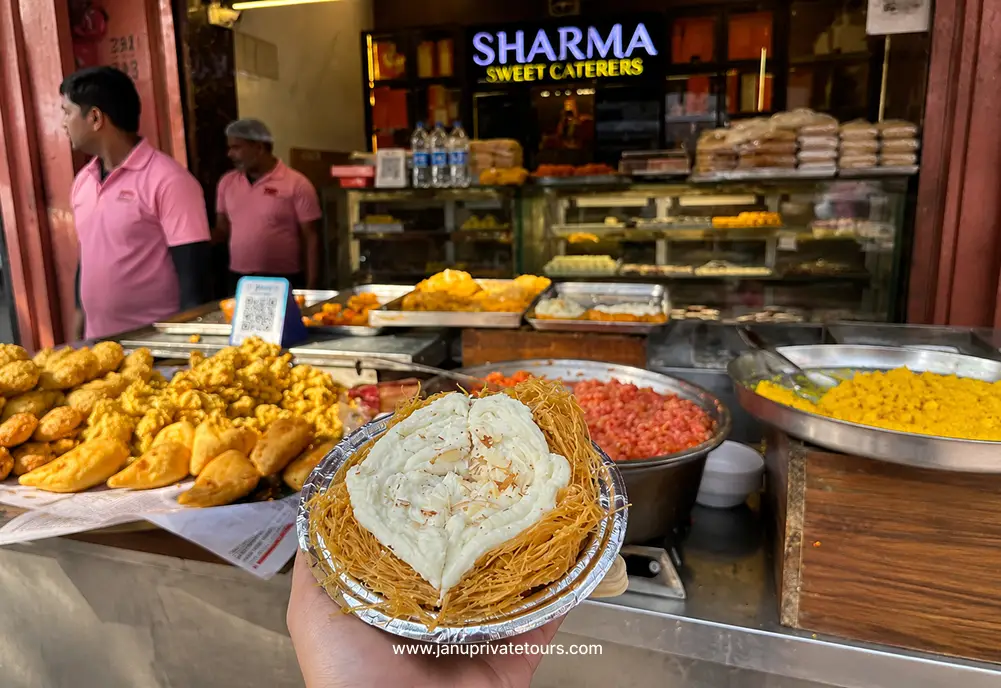
Rajasthan is one of the most interesting places to visit in India. It is known for its history, art, crafts, food and special events, which include its cultural way of festive celebration. Visit Jaipur, Jodhpur, Udaipur and other old cities to see royal architecture and learn about royal festival culture. The taste of food enhances the moments of the trip.
Travelers can connect a familiar festival ritual with Rajasthan by trying ghewar. Festivals like Raksha Bandhan bring ghewar to traditional sweet stores and markets.
First-timers in India can mingle with locals by ordering ghewar. Requesting a shopkeeper's knowledge of sweet kinds, toppings and serving methods might enhance your cultural experience.
Indian markets and confectionery shops can show how communities prepare for Raksha Bandhan, a significant family event.
What Does Ghewar Taste Like?
Ghewar's flavor varies on preparation and toppings. Typical ghewar is crisp, pleasantly rich and sugar syrup-sweetened. Its open construction lets syrup sink into the tiny gaps, giving the sweet distinct textures.
Creamier rabri-topped ghewar. Crisp sweets contrast with Rabri's thick milk layer. Other garnishes like saffron, cardamom, almonds and pistachios provide flavor and texture.
Starting with a regular ghewar sweet will help you understand its flavor. If you like richer desserts, try rabri or mawa.
The monsoon festive season, when sweet stores and markets showcase ghewar, is especially fun.
How Ghewar Is Traditionally Served
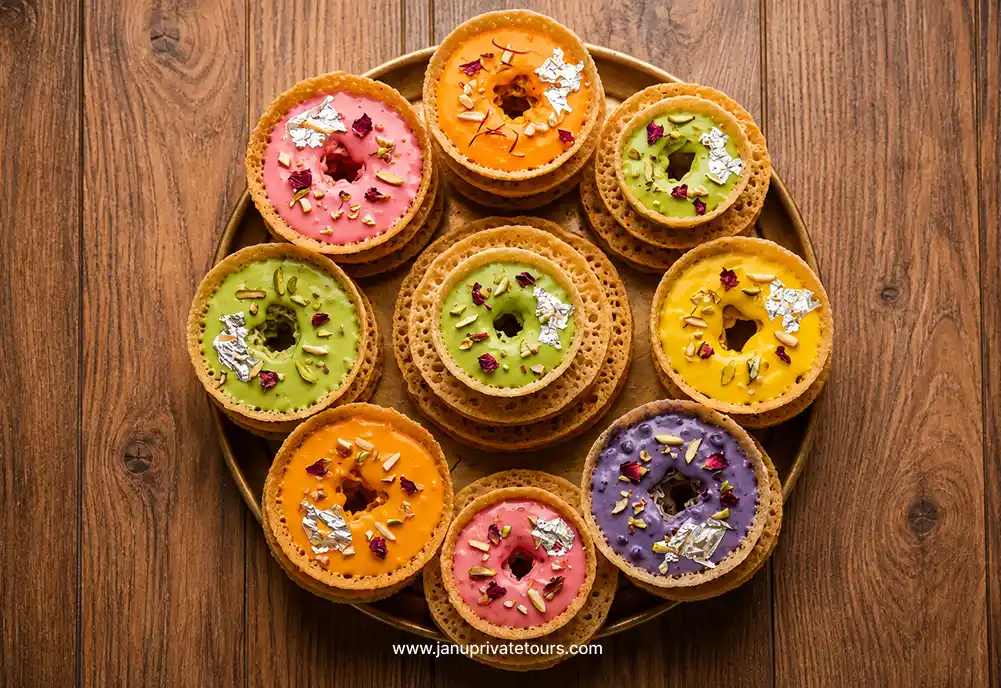
Ghewar may be served in several ways. The festive version can be embellished with rabri and dry fruits, while the simple form has sugar syrup.
Presentation may make the sweet look appealing. Its circular shape and delicate texture set the stage for creative toppings. Saffron threads, chopped pistachios, almonds, silver leaf, or creamy rabri can add elegance.
Decorated ghewar can be part of a Raksha Bandhan sweets collection in India. For guests and relatives, families might buy numerous types.
Ask if a shop serves fresh ghewar. Freshness can affect texture, especially in crisp sweets.
Experience Raksha Bandhan Through Food and Culture
The festival of Raksha Bandhan is not limited merely to tying the Rakhi and exchanging gifts. It is a celebration that gathers family and relatives together to share a lovely time. During this celebration, visitors to local markets can experience this emotional atmosphere, where sweet shops are filled with enticing aromas. In Rajasthan, ghewar is remarkable. Here are some of the things that travelers should not miss during Raksha Bandhan in India:
-
Try traditional ghewar
-
Explore local sweet shops
-
Experience festive markets
-
Learn about local traditions
-
Discover Rajasthan's food culture
-
Respect local customs
-
Combine food with sightseeing
Raksha Bandhan in India is celebrated perfectly with family gatherings and a taste of food. People must enjoy this festive season in Jaipur and Rajasthan with the taste of sweet ghewar.
Conclusion
The celebration of the best bonding festival, Raksha Bandhan in India, is incomplete without desserts. And if this blank is filled with the awesome taste of the sweet ghewar, then it can become memorable. Many festivals belonging to various religions are celebrated in India, such as Diwali, Holi, Eid, Christmas, Guru Nanak Jayanti, Raksha Bandhan and many others. The wide variety of dishes prepared for these occasions is considered complete only when they include an element of sweetness. This taste brings happiness among our societies, families and the travelers coming from other countries.
Ghewar is a special sweet included in the festival of Raksha Bandhan in India. It represents the cultural heritage in Rajasthan and North India. It's time to try the local specialties. Observing the holiday practices can provide you with a unique and valuable experience during the Raksha Bandhan Indian festival.
Janu Private Tours can assist you in finding the best way to explore India’s festivals, culinary delights and local traditions. We can make your experience of the Raksha Bandhan in India more comfortable, flexible and memorable. For immediate trip booking, please visit our website or email us at inquiry@januprivatetours.com.