

Inspiring Journeys Start with Great Stories
Explore destination guides, local traditions, hidden gems, and travel advice curated by our India travel experts.
Explore All Articles
- Published
If spotting a wild Bengal tiger is on your India bucket list, this is where most travelers start. Jim Corbett National Park is India’s oldest national park and one of the few places where tiger sightings are relatively consistent, especially in the Dhikala and Bijrani zones.
I visited Corbett during a late-April safari, and the first thing I noticed wasn’t the tiger hype — it was the silence. One minute you hear langurs screaming warnings from sal trees, the next minute every jeep suddenly stops. Even without a tiger sighting, the atmosphere alone feels cinematic.
Why Is Jim Corbett National Park So Famous?
Corbett is famous for three reasons: Bengal tigers, diverse safari zones, and accessibility from Delhi. Unlike remote parks that require multiple flights, Corbett is roughly 260 km from Delhi — about 6–7 hours by road depending on traffic near Hapur and Moradabad.
The park was established in 1936 as Hailey National Park, making it India’s first national park. It was later renamed after Jim Corbett, who played a major role in wildlife conservation in the Kumaon region.
A few verified facts travelers often don’t know:
- Corbett covers more than 1,300 sq km including buffer zones.
- The park has over 230 recorded tiger sightings annually in tourism zones according to forest department data.
- More than 600 bird species have been recorded here, making it surprisingly good for birdwatchers too.
- Dhikala grasslands are among the best landscapes in India for elephant herds.
- Corbett is part of the larger Corbett Tiger Reserve established under Project Tiger in 1973.
Which Are the Main Safari Zones in Corbett?
Most first-time visitors assume Corbett is one single safari route. It’s not. The park is divided into multiple tourism zones, and your experience depends heavily on which one you book.
Dhikala Zone – Best for Wildlife Density
Dhikala is the most famous zone and usually the toughest to book. The landscape changes dramatically here — dense forests suddenly open into massive grasslands with Ramganga River views.
You can only stay inside the forest lodge if you have a valid booking. Morning mist over the grasslands at 5:45 AM feels unreal, especially in winter.
Best for:
- Tigers
- Wild elephants
- Landscape photography
- Overnight forest stays
Bijrani Zone – Best for Tiger Sightings
Bijrani is popular because it’s closer to Ramnagar and often delivers faster sightings. Guides frequently track alarm calls from deer and langurs here.
If you only have one safari, many naturalists recommend Bijrani over less active zones.
Jhirna & Dhela – Open Year-Round
Unlike Dhikala, these zones remain open throughout the year unless weather conditions become risky.
These are decent options for travelers visiting during monsoon months.
Best Time to Visit Jim Corbett National Park
The best time to visit depends on what you want to experience.
November to February – Best Weather
This is the most comfortable season. Morning safaris can drop below 5°C, especially in Dhikala, so jackets are essential.
Ideal for:
- Families
- Birdwatching
- Landscape photography
- Pleasant weather
One downside? Tall winter grass can occasionally reduce tiger visibility.
March to June – Best Tiger Sightings
This is honestly the best wildlife season despite the heat.
As water sources shrink, animals move toward rivers and open areas. I’ve personally noticed safari drivers become much more alert during late May because tiger movement increases near watering points.
Temperatures can cross 38°C in May afternoons, but sightings improve significantly.
July to September – Monsoon Season
Core zones like Dhikala usually close during heavy monsoon due to road conditions and safety issues.
However, buffer zones may remain operational.
What Are the Safari Prices for Indians and Foreigners?
Safari costs change slightly every season depending on forest department revisions and vehicle type.
Jeep Safari Prices (Approx. 2026)
For Indian Travelers
- Shared jeep safari: ₹1,500–₹2,500 per person
- Full jeep booking: ₹6,500–₹9,000 per vehicle
For Foreign Travelers
- Shared safari: ₹3,500–₹5,500 per person
- Private jeep: ₹9,500–₹13,000 depending on zone
Prices generally include:
- Forest permit
- Gypsy vehicle
- Driver fees
- Nature guide charges
Dhikala bookings and Canter safaris usually cost differently.
One thing many foreigners don’t realize: passport details are mandatory during booking because forest permits are government-issued and non-transferable.
How Many Safaris Should You Book?
One safari is risky if spotting a tiger is your main goal.
Most experienced wildlife photographers book at least:
- 2 safaris for casual travelers
- 4–6 safaris for serious wildlife enthusiasts
Wildlife sightings depend on weather, luck, silence, and animal movement. Even top guides can’t guarantee a tiger.
Ironically, some visitors spot one within 15 minutes while others spend three days tracking pugmarks.
Where Should You Stay Near Corbett?
Ramnagar is the main gateway town. Most hotels and luxury resorts are spread around Dhikuli village along the Kosi River.
If your safari starts before sunrise, staying near your safari gate saves time.
A resort “10 minutes from the gate” may actually take 35 minutes during peak holiday traffic. Local road conditions matter more than Google Maps estimates.
What Should You Pack for a Corbett Safari?
Keep it practical, not fashionable.
Carry:
- Neutral-colored clothes
- Light jacket for morning safaris
- Binoculars
- Dust protection scarf
- Power bank
- Camera with zoom lens if possible
Avoid:
- Bright red or neon clothing
- Loud conversations
- Strong perfume
Animals detect sound and movement surprisingly quickly.
Is Corbett Good for Foreign Travelers?
Absolutely. In fact, Corbett is often one of the easiest wildlife parks for international travelers visiting North India.
Why?
- Well-connected by road and rail
- Multiple accommodation categories
- English-speaking guides available
- Good safari infrastructure
- Close to Delhi and the Golden Triangle route
Many travelers combine Corbett with Delhi, Agra, and Jaipur for a mixed wildlife and heritage itinerary.
Janu Private Tours Guides Recommendations
According to local naturalists and drivers frequently working with international guests, these tips genuinely improve your safari experience:
- Choose morning safaris over afternoon drives for active wildlife movement.
- Book Dhikala at least 45–60 days early during peak season.
- Don’t obsess only over tigers — Corbett’s elephant herds and birdlife are world-class too.
- Sit quietly during alarm calls instead of constantly moving for photos.
- If possible, stay two nights minimum. Corbett feels rushed otherwise.
Final Thoughts on Visiting Jim Corbett in 2026
Jim Corbett National Park remains one of the best wildlife destinations in India for both beginners and experienced safari travelers.
The park offers a rare mix of accessibility, real tiger habitat, forest lodges, river landscapes, and surprisingly good tourism infrastructure. If you plan properly, choose the right safari zones, and stay patient, Corbett delivers experiences that feel far beyond a normal vacation.
- Published
The first time I visited Jawai, I expected a typical wildlife destination. Instead, I found granite hills glowing orange at sunset, leopards casually walking across rocky cliffs, and Rabari shepherds sipping tea while goats wandered nearby. It did not feel like a zoo-style safari zone. It felt raw, open, and surprisingly peaceful.
If you are planning a leopard safari in Rajasthan, this guide covers the best time to visit, Jawai leopard safari timings, safari prices for Indians and foreigners, and the exact booking process without the confusing tourist jargon.
Why Is Jawai Leopard Safari So Popular?
Jawai is famous because humans and leopards coexist here naturally. Unlike many national parks, these leopards live around villages and granite caves rather than deep forests.
Wildlife photographers often compare Jawai’s leopard sightings to some of the best safari zones in India because sightings are relatively frequent. According to Rajasthan tourism operators and safari camps, early morning and evening drives regularly report leopard movement around the granite hills.
A few things make Jawai different:
- Leopards are the main attraction, not tigers
- The terrain is rocky and cinematic
- Safaris feel less crowded than Ranthambore
- Rabari tribal culture adds a unique local experience
You are not just spotting wildlife here. You are seeing how wildlife and rural Rajasthan exist side by side.
Jawai Leopard Safari Best Time to Visit
The best time to visit Jawai Leopard Safari is from October to March when temperatures stay comfortable and leopard movement increases during cooler hours.
Summer safaris are still possible, but afternoon temperatures in Rajasthan can cross 41°C between May and June.
Best Seasons for Jawai Safari
October to February – Ideal Weather & Photography
This is the peak safari season. Morning temperatures can drop to around 11–14°C, which creates excellent conditions for leopard sightings and landscape photography. Sunrises over the granite hills look unreal during winter. If you enjoy wildlife photography, this is honestly the season I recommend most.
March to April – Good Leopard Activity
The weather gets warmer, but safari prices may be slightly lower compared to winter holidays. Leopards often become easier to spot near rocky caves during early mornings.
May to June – Hot but Strong Sighting Chances
Fewer tourists visit during peak summer, but experienced wildlife travelers still come because animals stay active near water sources.
You will need:
- Light cotton clothes
- Sunglasses
- Plenty of water
- Early morning safari slots only
Monsoon months (July to September) can affect safari accessibility due to slippery rocky terrain and uneven village roads.
Jawai Leopard Safari Timings
Jawai safaris usually operate twice daily:
- Morning Safari: Around 5:30 AM – 8:30 AM
- Evening Safari: Around 4:30 PM – 7:00 PM
Timings slightly change depending on sunrise and sunset during different seasons.
Which Safari Timing Is Better?
Most local guides prefer the early morning safari because:
- Leopards are more active after sunrise
- Temperatures stay cooler
- Lighting is better for photography
Average Jawai Leopard Safari Price (2026)
| Safari Type | Indian Price | Foreigner Price |
| Shared Jeep Safari | ₹2,000–₹3,500 per person | ₹3,500–₹5,500 per person |
| Private Jeep Safari | ₹7,500–₹12,000 per jeep | ₹9,000–₹15,000 per jeep |
Most jeeps accommodate 5–6 travelers comfortably.
Luxury camps near Jawai often bundle:
- Accommodation
- Meals
- Leopard safari
- Village tours
- Birdwatching experiences
Before booking, always check:
- Whether guide charges are included
- Camera fees (if applicable)
- Hotel pickup availability
- Cancellation policy
Some camps advertise “cheap safari deals” but later add hidden vehicle or guide costs.
How to Book Jawai Safari
Booking a Jawai safari is relatively simple, but availability gets tight during winter weekends and holiday periods.
I strongly recommend booking at least 12–18 days in advance between November and February.
Step-by-Step Booking Process
1. Choose Your Travel Dates
- Winter weekends fill quickly, especially around Christmas and New Year.
- Midweek safaris are usually quieter.
2. Select Your Safari Type
Decide whether you want:
- Shared safari
- Private jeep safari
- Luxury safari package
Couples and photographers usually prefer private jeeps for flexibility.
3. Pick a Trusted Safari Operator or Camp
Popular safari stays are located around:
- Bera
- Perwa
- Sena village
Look for operators with:
- Real Google reviews
- Naturalist guides
- Clear pricing
- Verified contact details
4. Share ID Details
Most operators ask for:
- Passport copy (foreign travelers)
- Aadhaar or ID proof (Indian travelers)
- Traveler names and age
5. Make Advance Payment
Advance deposits usually range between 30–50%.
Always request:
- Booking confirmation
- Safari timing details
- Pickup instructions
6. Arrive 20–30 Minutes Early
Jawai safaris start on time because leopard movement is unpredictable.
Missing sunrise by even 18 minutes can affect sightings.
What Makes Jawai Different From Other Wildlife Safaris?
Unlike Ranthambore National Park or Bandhavgarh National Park, Jawai feels far less commercial. There are no huge tourist convoys or loud canter vehicles.
Instead, you get:
- Quiet jeep drives
- Rocky cave landscapes
- Rural village interactions
- Smaller safari groups
Birdwatchers also love Jawai because the reservoir attracts migratory birds including flamingos, cranes, and bar-headed geese during winter months.
Safari Tips Most First-Time Travelers Ignore
Wear Neutral Colors
Avoid bright red, yellow, or neon clothing.
Earthy shades work best for wildlife viewing.
Carry a Light Jacket in Winter
Morning safaris in December and January can feel surprisingly cold due to the open-jeep wind.
Mobile Networks Can Be Weak
Internet speeds around Jawai villages fluctuate often.
Download offline maps before arrival.
Do Not Expect 100% Leopard Sightings
Jawai has excellent sighting chances, but wildlife is still unpredictable.
That unpredictability is honestly part of the thrill.
Janu Private Tours Guides Recommendations
If you enjoy quieter wildlife experiences without massive tourist crowds, Jawai is one of Rajasthan’s most memorable safari destinations right now. Book your packages from Janu Private Tours.
- Published
The evening before Teej in Jaipur, every courtyard in the old city smells the same — a mixture of rose water and henna paste. Women sit in circles having mehndi drawn up to their elbows while someone nearby plays a dhol and someone else sings a Teej folk song that her grandmother taught her. The streets are strung with marigold garlands. The sweet shops are stacking ghevar — Rajasthan’s honeycomb-textured festival sweet — three layers deep.
The next morning, a gilded palanquin carrying the idol of Goddess Teej Mata glides out through the gates of Jaipur’s City Palace, escorted by royal guards in red turbans, decorated elephants, and a percussion procession you feel in your chest before you hear it.
Most international visitors have never heard of Teej. The ones who time their Rajasthan trip around it never forget it.
Haryali Teej 2026 falls on Sunday, July 27 — the main public festival in Jaipur, marked by the royal procession from the City Palace. Hartalika Teej follows on August 26, 2026. If India is on your radar for 2026, the monsoon season just became a very good reason to go.
Why Is the Teej Festival Celebrated?
Teej is a love story that spans 108 lifetimes — and India celebrates it every monsoon. The mythology behind it is one of the most extraordinary tales in the Hindu tradition, and understanding it makes watching the festival a completely different experience.
According to the Shiva Purana, Goddess Parvati’s journey to reunite with Lord Shiva was not a single-lifetime effort. After her first incarnation as Sati, she underwent 107 successive rebirths, practising intense penance across each one, until Shiva finally accepted her. The day he gave his word to marry her — after she made a Shiva Lingam from sand and prayed through the night — became Hartalika Teej.
The term Hartalika is a combination of two Sanskrit words: harit (abduction) and aalika (female friend). Legend says Goddess Parvati’s father wanted her to marry Lord Vishnu, but she was devoted to Shiva. Her female friends helped her escape and hide in a forest so she could continue her penance undisturbed — and that act of friendship is honoured in the festival’s name.
The festivals celebrate the bounty of nature, the arrival of clouds and rain, and the renewal that monsoon brings. Beyond mythology, Teej marks the monsoon season in a desert state where rain is genuinely precious. In Rajasthan’s dry landscape, the first green of the Shravan month feels like a miracle — and Teej celebrates that too.
Married women observe Teej by fasting and praying for their husbands’ well-being. Unmarried women fast and pray for a good match. The men, for their part, send gifts. For foreign visitors, the festival is an open-air celebration of colour, music, and devotion that anyone can witness and — with a bit of local guidance — participate in.
Which States in India Celebrate the Teej Festival?
Teej is a North and West India phenomenon, with Rajasthan at the centre of the grandest celebrations. But the festival extends across several states, each with its own character.
The main areas of celebration are Rajasthan, Bihar, eastern Uttar Pradesh, Jharkhand, Uttarakhand, and Nepal. Hartalika Teej has also spread to parts of Madhya Pradesh and Chhattisgarh.
Rajasthan, specifically Jaipur, is where the festival reaches its most spectacular, publicly visible form. Unlike other parts of India, Jaipur’s Teej Festival is celebrated on a royal scale, with a spectacular Teej Mata procession where the deity of Goddess Parvati is taken out in a grand palanquin from the City Palace, accompanied by royal guards, chariots, decorated elephants, camels, and traditional musicians. For international visitors, this is the version worth building a trip around.
Bundi (2.5 hours from Jaipur) holds the famous Kajali Teej Mela — a fair specific to the Kajari Teej form of the festival, celebrated in this under-touristed old city with a river procession. Far fewer foreign tourists make it here, which makes the atmosphere more intimate and the access easier.
Uttar Pradesh and Bihar celebrate Teej with similar rituals — fasting, swings, folk songs — but without the royal procession element that defines Rajasthan’s version.
Nepal celebrates Teej as a major national festival, particularly in Kathmandu, where temples fill with women in red sarees for three days of prayer and fasting.
If you’re choosing a single base for Teej in India, Jaipur is the answer. The combination of the royal procession, the old city backdrop, and the sheer scale of public celebration makes it the most immersive Teej experience available to international visitors.
How Is the Teej Festival Actually Celebrated?
Teej unfolds over several days, each with a specific ritual — and the day before the main festival is one of the most atmospheric for visitors.
The day before Haryali Teej is celebrated as Sinjara, when women apply mehndi on their hands and feet. Parents of married women send a gift pack that includes bindi, vermilion, mehndi, bangles, ghevar (a special Rajasthani sweet), and lahariya (a multicoloured saree) as a symbol of their blessings. Walk through any neighbourhood the evening before Teej in Jaipur, and you’ll find women in every courtyard having intricate henna designs drawn up their forearms, while their children run between the mehndi artists and the mithai shops.
On the main festival day, married women observe the nirjala vrat, a strict fast without water, for the well-being and long life of their husbands. Unmarried girls fast and pray for a good match. This is a deeply personal devotional practice happening alongside the street celebrations — you’ll see women in beautiful green and red embroidered lehengas who have eaten nothing since the previous evening, completing the full procession route before breaking their fast at sunset.
The festivals for women include dancing, singing, getting together with friends and telling stories, dressing up with henna-coloured hands and feet, wearing red, green or orange clothes, sharing festive foods, and playing on swings hung from trees. The swings — jhoolas — decorated with flowers and hung from banyan or mango trees, are one of the most distinctive and photographed elements of Teej. Women take turns on them singing traditional Teej songs. The visual, with embroidered silk and monsoon greenery, is the kind of thing travel photographers plan entire trips around.
What Does the Teej Procession in Jaipur Actually Look Like?
Nothing in Rajasthan’s festival calendar looks quite like the Jaipur Teej procession — and that’s saying something. The high point is the magnificently decorated idol of Goddess Parvati, kept on a palanquin carried through the Pink City. Antique gilt palanquins, bullock carts pulling cannons, chariots, caparisoned elephants, camels, bands, and dance groups form part of the grand procession.
The pink-walled streets of Jaipur burst into life with folk dancers, shehnai melodies, ghoomar performers, and an infectious festive spirit. Locals line up along the route to witness this rare event — Teej Mata is brought out only once a year.
The procession starts from Tripolia Gate at the City Palace and moves through the old city. The route through the walled city — past the Hawa Mahal’s latticed pink facade, through the colour-soaked lanes of Johari Bazaar — takes several hours. The best viewing positions fill up early. A local guide who knows the route makes the difference between watching from 10 rows back and standing at the front as the elephant with the gold-draped palanquin passes three metres in front of you.
The procession is carried out over two consecutive days, and the dressed-up idol of Teej Mata finally ends her journey at Kanak Vrindavan — a garden complex at the foot of the Nahargarh hills, about 8 km from the old city. The arrival there, with the hills behind and the idol finally settled, is the emotional climax of the festival.
What Food Should You Try During Teej Festival?
Teej has its own food calendar, and ghevar is the centrepiece. Ghevar is the undisputed queen of Teej sweets — a honeycomb-textured disc of fried dough soaked in sugar syrup and topped with rabdi (thickened milk) or malai. It’s available throughout monsoon season but reaches its peak during Teej. Pick it up at LMB (Laxmi Misthan Bhandar) in Johari Bazaar, or any of the mithai shops along Bapu Bazaar. A single ghevar at a good shop costs ₹80–300 (roughly USD 1–3.50) depending on size and topping. Go for the rabdi version.
Parents of married women send Sinjara — a gift pack that includes ghevar — as a symbol of their blessings, alongside bangles, mehndi, and a lahariya saree. The sweet is so integral to the festival that receiving a ghevar means someone is celebrating you.
Balushahi is a flaky, deep-fried sweet with a glazed finish — similar to a glazed doughnut in concept but richer in flavour and much denser. Fenia is thin sweet vermicelli cooked in milk with saffron and cardamom, lighter and more delicate than most Rajasthani sweets. It’s the one to try if you have a low tolerance for sugar overload.
Laapsi is a sweet wheat porridge cooked with ghee, jaggery, and nuts — traditionally prepared as a festive offering to Goddess Parvati. You’ll find it at temple stalls on the main festival day, distributed as prasad (sacred food offering) to whoever is standing nearby. Accept it.
Once the fast breaks at sunset, the first food many women eat is savoury — kachori with spiced potato filling from the street stalls that line the old city. If you’ve been walking the procession route all day, you’ll understand why.
What Should You Wear to the Teej Festival?
Green is the colour of Teej — wearing it earns you instant goodwill from every woman you encounter. This isn’t a festival where foreign visitors are expected to dress traditionally, but making the effort is noticed and genuinely appreciated.
Women visitors in a green or red salwar kameez (tunic and trouser set, available in Jaipur markets from USD 12–30, tailored to your measurement in 24 hours) will be welcomed into the festival atmosphere in a way that western clothing simply doesn’t enable. Green symbolises the monsoon’s new growth — the season the entire festival is built around.
Men in a simple kurta (tunic over trousers or jeans) in any colour fit comfortably into the crowd without drawing attention. Comfortable shoes are essential — the procession route through the old city covers 4–5 km on uneven stone surfaces. The monsoon weather means humidity; lightweight, breathable fabric is far more comfortable than denim.
Carry a small umbrella. Jaipur in late July sits in active monsoon season — temperatures hover around 28–32°C (82–90°F) with periodic rain showers. The rain during Teej is considered auspicious. The locals celebrate it. You should too — but a compact umbrella keeps your camera dry.
Where Else in Rajasthan Is Teej Worth Seeing Beyond Jaipur?
Jaipur is the grand, publicly accessible version. These nearby cities offer something more intimate.
Bundi — 165 km from Jaipur (roughly 3 hours by car) — holds the Kajali Teej Mela, a riverside fair specific to this under-visited walled city. The procession here is smaller and genuinely neighbourhood-level, set against Bundi’s painted havelis and step-wells without any tourist infrastructure around it. If you’ve already done Jaipur’s procession on Day 1, Bundi on Kajari Teej (15 days later) is a second, entirely different experience.
Udaipur celebrates Teej with women swinging on flower-decorated jhoolas beside Lake Pichola — the combination of lake, white palace backdrop, and monsoon greenery is visually spectacular. Less public procession than Jaipur, but more romantic and photogenic.
Jodhpur’s Teej celebrations take place against the Blue City’s rooftops and Mehrangarh Fort’s dramatic silhouette. Like Udaipur, it’s more neighbourhood-level than Jaipur’s royal-scale event, but the setting is unmatched.
A Rajasthan circuit that combines Jaipur’s Teej procession with Udaipur or Bundi in a 6–8 day private itinerary covers the full range — from the large-scale royal event to the intimate, local version. This is exactly the kind of trip we design for our international clients.
How to Plan Your Teej Festival Tour to India with Janu Private Tours
Teej is genuinely one of Rajasthan’s most extraordinary experiences for international visitors — and one of the most underbooked. Most foreign tourists haven’t heard of it. The ones who come specifically for it tell us it changed how they think about India.
The practical realities: Jaipur hotels in the old city during Teej week book out fast, especially for the night before the procession (Sinjara evening) when the mehndi atmosphere is at its most beautiful. Rooms within walking distance of Tripolia Bazaar and the procession route should be booked 3–4 months ahead.
Teej pairs naturally with the Golden Triangle. Delhi → Agra (Taj Mahal) → Jaipur, arriving for the Teej procession on July 27, then extending into Rajasthan through Udaipur or Jodhpur — it’s a 10–12 day itinerary that combines India’s most iconic sights with one of its least-visited-by-foreigners festivals. We run this as a private circuit, with a local guide who positions you at the right point on the procession route and takes you into the mehndi lanes the evening before.
Haryali Teej 2026 is July 27. If your travel window includes late July, this is worth building around.
Tell us your travel dates, where you’re flying from, and your group size. We’ll design the full Teej experience — procession access, local family visit, Sinjara evening in the old city, and the right Rajasthan circuit before and after.
- Published
Most people traveling to India for the first time arrive feeling excited and nervous at the same time. You’ve daydreamed over photos of the Taj Mahal at sunrise, the pink streets of Jaipur, the peaceful backwaters of Kerala, but you’re not quite sure what to expect in reality. The fact is that India can overwhelm you or surprise you, and sometimes does. A little information on the essential facts about India before you visit can make all the difference. India rewards travelers who have complete information about the areas they are planning to visit and have planned well.
This guide covers major facts about India from visas and currency to culture, food, transport, and safety. Let us get started.
Quick Reference: Essential Facts About India
| Category | Delhi |
| Capital | New Delhi |
| Population | 1.44 billion |
| Official Languages | Hindi + 21 others |
| Currency | Indian Rupee (INR) |
| Time Zone | IST (UTC +5:30) |
| Best Time to Visit | October to March |
| Visa | e-Visa available online |
| Religion | Hindu-majority, multi-faith |
| Emergency Number | 112 |
| Driving Side | Left |
1. India Is Bigger Than Most Travelers Expect
India occupies over 3.2 million square kilometers and has a population of 1.44 billion people. The country requires multiple trips for complete exploration. Each area of the country presents its own unique cultural identity. Rajasthan showcases its desert forts and its royal palaces. Kerala presents its backwaters together with its spice gardens and its tropical coastlines. The northern Himalayan region presents an entirely different experience when compared to the temple towns found in Tamil Nadu. The most common mistake that first-time visitors make involves trying to see all the attractions during their two-week stay.
Traveler tip: Pick a focused region and explore it well. The Golden Triangle tour of Delhi, Agra, and Jaipur is the best starting point for first-time visitors. The route connects three essential cities through a route that highlights North Indian historical sites, architectural wonders and cultural experiences.
2. You Need a Visa — Apply Online Before You Travel
International travelers should know that India does not permit visas on arrival for most nationalities. You must apply for an e-Tourist Visa online before departure.
Key visa facts:
The e-Tourist Visa is valid for 30 days, 1 year, and 5 years.
The standard time to process applications requires a 72-hour period so applicants should submit their requests at least one week before their scheduled travel date.
Your passport must remain valid for six months after your planned travel dates.
The Indian government immigration portal serves as the official application platform for the process.
For a full breakdown of the process, read our India e-Tourist Visa guide before you book anything.
3. Currency and Money: What You Need to Know on the Ground
The Indian Rupee (INR) serves as the official currency of India. India remains one of the most economical travel destinations. A few cost breakdown of essentials during your travel are as follows
| Expense | Approximate Cost (INR) |
| Budget guesthouse | 500 to 1,500 per night |
| Mid-range hotel | 2,000 to 6,000 per night |
| Street food meal | 50 to 200 |
| Restaurant meal | 300 to 1,000 |
| Domestic flight | 2000 to 10000 |
| Train (sleeper class) | 200 to 800 |
ATMs are widely available in cities but scarce in rural areas. Carry cash when venturing off the main tourist trail. UPI payments via Google Pay and PhonePe are widely accepted in urban areas. Always carry small denomination notes for rickshaws, temple entry, and local markets.
4. Language Will Not Be a Barrier in Tourist Areas
India has 22 officially recognized languages and hundreds of dialects. Hindi is the most widely spoken, but English is an official language and is used extensively in tourism, business, and urban areas. This is one of the most reassuring facts about India for first-time foreign visitors.
In South India, Hindi is less commonly spoken. English or local languages like Tamil, Malayalam, and Kannada are preferred. In major tourist destinations like Delhi, Agra, Jaipur, Kochi, and Mumbai English signage and English-speaking guides are standard.
Learning a few basic phrases goes a long way. Namaste (hello), Dhanyavaad (thank you), and Kitna hai? (how much?) will earn you genuine warmth from locals.
5. Culture and Religion: Respect Goes a Long Way
Among the most important facts about India for any visitor is understanding its extraordinary religious and cultural diversity. India is the birthplace of Hinduism, Buddhism, Jainism, and Sikhism, and is also home to one of the world’s largest Muslim populations. This diversity is visible in every city, every market, and every meal.
Cultural etiquette every visitor should know:
Remove shoes before entering temples, mosques, and many homes
Dress modestly at religious sites, cover shoulders and knees
Use your right hand for eating, giving, and receiving
Cows are sacred in Hindu culture and roam freely in many cities, treat them with respect
Public displays of affection are generally frowned upon
India has over 40 UNESCO World Heritage Sites. If you are visiting Rajasthan, our guide to UNESCO World Heritage Sites in Rajasthan is worth reading before your trip.
6. Best Time to Visit: Timing Your Trip Correctly
One of the most searched facts about India among first-time visitors is when to go. India has multiple climate zones and the answer varies by region.
| Season | Months | Best For |
| Winter | October to March | Most of India, ideal for first-timers |
| Summer | April to June | Hill stations only |
| Monsoon | July to September | Kerala landscapes, avoid coastal areas |
October to March is the best overall window. The north is cool and dry, the south is warm but manageable, and wildlife parks are fully operational. For a detailed month-by-month breakdown, read our guide on the best time to visit India for international travelers.
7. Food: One of the Greatest Joys of Traveling in India
Food is one of the most celebrated facts about India among returning visitors. India has no single national cuisine. Every state has its own distinct food culture, spice profile, and cooking tradition.
| Region | Must-Try Dish |
| Rajasthan | Dal Baati Churma |
| Punjab | Butter Chicken, Sarson da Saag |
| Kerala | Fish Curry with Appam |
| Tamil Nadu | Masala Dosa |
| Mumbai | Vada Pav, Pav Bhaji |
| West Bengal | Rasgulla, Hilsa Fish |
Street food is a cultural institution in India. Chaat, pani puri, samosas, and kachori are eaten at every corner. For a guided introduction to Indian street food culture, check out street food in India that covers the best dishes and where to find them safely.
One practical note: drink only bottled or filtered water. Avoid raw salads and unpeeled fruit from street stalls if you have a sensitive stomach.
8. Getting Around India: Transport Facts Every Traveler Should Know
Understanding how to get around is among the most practical facts about India for first-time visitors. India has multiple transport options at very different price points.
Trains are the backbone of Indian travel. The rail network is one of the largest in the world, with over 13,000 trains running daily. Book tickets in advance on the IRCTC website as popular routes sell out weeks ahead. Domestic flights are affordable and the fastest way to cover long distances. IndiGo, Air India, and SpiceJet connect all major cities.
A private car with a driver is the most comfortable and flexible option for touring. It allows you to stop at smaller temples, roadside viewpoints, and local markets that trains and buses cannot reach. It also removes the stress of navigating unfamiliar transport systems. Janu Private Tours offers private cab services across India with experienced, English-speaking drivers.
Auto-rickshaws and taxis are ideal for short city trips. Use Ola or Uber in cities for metered, safe rides.
9. Safety in India: Honest Facts for First-Time Visitors
Safety is one of the most frequently searched facts about India among first-time travelers, particularly solo visitors and women. The reality is nuanced but largely reassuring.
India is generally safe in popular tourist destinations. Petty theft, overcharging, and fake guides are the most common issues and not violent crime. Solo female travelers should exercise caution at night and in isolated areas, but millions of women travel India independently every year without incident.
Here is our dedicated guide for solo female travelers in India covers safety tips, recommended destinations, and practical advice in detail.
Recommended safe destinations for first-timers: Jaipur, Udaipur, Agra, Goa, Kerala, and Mumbai. The emergency number 112 works nationwide.
10. Wildlife: A Fact About India That Surprises Most Visitors
Many first-time visitors do not realize that India is one of the world’s premier wildlife destinations. This is one of the most underrated facts about India among international travelers.
| Wildlife | Where to See It |
| Bengal Tiger | Ranthambore, Bandhavgarh, Jim Corbett |
| Asiatic Lion | Gir National Park (only place on Earth) |
| Indian Elephant | Kerala, Kaziranga, Corbett |
| One-Horned Rhino | Kaziranga National Park |
| Leopard | Jawai, Rajasthan |
India has over 100 national parks and 500 wildlife sanctuaries. If a tiger safari is on your list, our Rajasthan Heritage and Tiger Safari Tour combines Ranthambore National Park with Rajasthan’s iconic forts and palaces in a single itinerary. For a day trip option, the Ranthambore Tiger Safari Day Tour is a popular choice from Jaipur.
11. Health and Vaccinations: Prepare Before You Go
Health preparation is among the most overlooked facts about India for first-time visitors. Consult your doctor or a travel health clinic at least 4 to 6 weeks before departure. Carry a basic travel medical kit. Pharmacies are widely available and affordable across India. Major cities have excellent private hospitals. Travel insurance with comprehensive medical coverage is strongly recommended for all international visitors.
Plan Your India Trip with Expert Guidance
The facts about India in this guide give you a solid foundation but planning a first trip to India still involves dozens of decisions: which regions to visit, how many days to spend, which tours to book, and how to sequence everything logically.
That is exactly what Janu Private Tours specializes in. With over two decades of experience guiding first-time foreign visitors across India, we build private, customized itineraries that take the stress out of planning and put the joy back into travel. Get in touch with our team to start planning your India trip today.
- Published
Most first-time travelers to India head to the north first, covering destinations like Delhi, Agra, and Jaipur. Although that route is extraordinary, it reveals only one side of the country. South India has a world of its own. From ancient Dravidian temples with towering gopurams to houseboat cruises in Kerala’s backwaters and misty coffee plantations in Coorg, and some of the finest beaches in Asia.
When planning your first trip to India, you might be wondering whether South India should be part of your itinerary. The answer is a big yes!
This South India Travel Guide helps you plan your trip with the right destinations, things to do, and the best time to visit the region. Also, a helpful resource for first-time foreign visitors.
South India at a Glance
| Factor | Details |
| States Covered | Tamil Nadu, Kerala, Karnataka, Andhra Pradesh, Telangana |
| Best Time to Visit | October to March |
| Ideal Trip Duration | 10 to 14 days |
| Top Highlights | Temples, backwaters, hill stations, wildlife, beaches |
| Travel Style | Cultural, scenic, spiritual, beach |
| Budget Range | Budget to luxury |
| Languages | Tamil, Malayalam, Kannada, Telugu, English widely spoken |
Best Time to Visit South India
Timing your trip correctly makes a significant difference in South India. The region has a tropical climate, and the weather varies considerably by state and season.
October to March — Best Overall
This is the best window to experience the region for most first-time visitors. The temperatures are easy on you, the humidity is not daunting, and all of the major attractions are open. Kerala’s beautiful backwaters are calm and inviting, the temples of Tamil Nadu are less crowded, especially in the morning part of the day, and Karnataka’s wildlife parks see the most action. If you are planning on booking a Kerala tour package, this is the ideal time to get your bags packed.
April to June — Hot and Dry
Temperatures peak sharply, easily reaching 38 degrees plus in both Chennai and Hyderabad. The hill stations of Ooty, Munnar and Coorg are popular escapes at this time. However, the beaches on the East Coast continue to be pleasant till April.
July to September — Monsoon Season
Southwest monsoon hits Kerala and Karnataka by early June. Travel gets hampered by the rains, and connecting routes can be a little challenging. If you do not mind getting drenched in rain, this can be the best time to visit, as the landscapes turn incredibly gorgeous.
| Season | Best Regions | Experience |
| October to March | All of South India | Best weather, peak season |
| April to June | Hill stations, east coast | Hot inland, cooler at altitude |
| July to September | East coast only | Heavy rain west side, lush scenery |
For a deeper breakdown, read our guide on the best time to visit Kerala.
Top Destinations in South India
Tamil Nadu — Land of Temples
Tamil Nadu is home to some of the most spectacular Dravidian temple architecture in the world. The Meenakshi Amman Temple in Madurai, with its 14 towering gopurams covered in thousands of painted sculptures, is one of India’s most extraordinary religious sites. The Brihadeeswarar Temple in Thanjavur is a UNESCO World Heritage Site built over 1,000 years ago and still standing in near-perfect condition.
The temple circuit of Madurai, Rameswaram, and Kanyakumari combines spirituality, history, and stunning coastal scenery in a single route. Chennai offers excellent food, colonial architecture, and the world’s second-longest urban beach at Marina Beach.
Kerala — God’s Own Country
Kerala is consistently rated among the most beautiful states in India. The backwaters of Alleppey, where you sleep aboard a traditional wooden houseboat drifting through a network of canals and lagoons, are unlike anything else in the world. Munnar’s rolling tea estates and misty peaks offer a completely different experience. Kochi’s Fort area blends Portuguese, Dutch, and British colonial history with a thriving contemporary arts scene.
Kerala is also the home of Ayurveda in India. Genuine Ayurvedic wellness retreats using treatments and oils practiced here for centuries are available across the state and are a significant draw for international visitors.
Our Kochi, Munnar, Thekkady and Kumarakom tour covers the best of Kerala in a single well-paced itinerary.
Karnataka — History, Wildlife, and Coffee
Karnataka offers three completely distinct travel experiences. Hampi, a UNESCO World Heritage Site, is a surreal landscape of boulder-strewn ruins from the 14th-century Vijayanagara Empire. Mysore is famous for its magnificent palace, vibrant silk markets, and the grand Dasara festival in October. Coorg, in the Western Ghats, is a landscape of coffee and spice plantations, waterfalls, and cool mountain air.
Andhra Pradesh and Telangana
Hyderabad is one of India’s most historically rich cities. The Charminar, Golconda Fort, and the city’s legendary biryani make it a compelling stop on any South India itinerary. Tirupati in Andhra Pradesh is home to the Venkateswara Temple, one of the most visited religious sites in the world.
Top Things to Do in South India
| Experience | Location | Best Time |
| Houseboat cruise | Alleppey, Kerala | November to February |
| Temple tour | Madurai, Thanjavur, Tamil Nadu | October to March |
| Wildlife safari | Kabini, Karnataka | October to May |
| Tea estate walk | Munnar, Kerala | September to March |
| Trekking | Coorg, Wayanad | October to February |
| Beach holiday | Varkala, Pondicherry | November to March |
| Heritage exploration | Hampi, Karnataka | October to February |
| Ayurvedic retreat | Kerala | Year-round |
| Village experience | Kumbalangi, Kerala | October to March |
If you are visiting Kerala and want a genuine local experience away from the tourist trail, our Kumbalangi Village Day Tour offers an authentic glimpse into traditional Kerala life, fishing communities, and backwater culture.
South India Food Guide
South Indian cuisine is far more diverse than the dosas and idlis most international visitors expect. Every state has its own distinct culinary tradition.
| Dish | Region | Description |
| Masala Dosa | Karnataka, Tamil Nadu | Crispy rice crepe with spiced potato filling |
| Kerala Sadya | Kerala | Banana-leaf feast with 20 plus dishes |
| Chettinad Curry | Tamil Nadu | Bold, aromatic, fiery spice blend |
| Bisi Bele Bath | Karnataka | Spiced rice and lentil comfort food |
| Appam with Stew | Kerala | Lacy rice pancake with coconut milk stew |
| Hyderabadi Biryani | Telangana | Slow-cooked rice and meat, world-famous |
Filter coffee in Tamil Nadu and Karnataka is a ritual, not just a drink. Served in a steel tumbler and davara, it is one of the small pleasures that stays with travelers long after they leave. For those visiting Kochi, our Kochi Food Tour takes you through the city’s most authentic flavors, from Syrian Christian cuisine to fresh seafood at the harbor.
How to Get Around South India
South India has a well-developed rail network connecting all major cities affordably and efficiently. The Chennai to Kochi, Bangalore to Mysore, and Hyderabad to Chennai routes are all well-served by comfortable express trains.
For travelers who want flexibility and comfort, a private car with a driver is the most practical option. It allows you to stop at smaller temples, roadside viewpoints, and local markets that trains and buses simply cannot reach. It also removes the complexity of navigating unfamiliar transport systems in a new country.
Suggested South India Itinerary (10 to 12 Days)
| Day | Destination | Highlights |
| Day 1 to 2 | Chennai | Kapaleeshwarar Temple, Marina Beach, Mahabalipuram |
| Day 3 to 4 | Madurai | Meenakshi Temple, Thirumalai Nayakkar Palace |
| Day 5 | Munnar | Tea estates, Eravikulam National Park |
| Day 6 to 7 | Alleppey | Houseboat cruise through the backwaters |
| Day 8 | Kochi | Fort Kochi, Chinese fishing nets, spice markets |
| Day 9 to 10 | Coorg or Wayanad | Coffee estates, wildlife, trekking |
| Day 11 to 12 | Mysore | Palace, Chamundi Hills, Brindavan Gardens |
Our South India 15 Days Tourcovers all of the above and more, with a private guide and driver throughout.
Practical Tips for First-Time Visitors to South India
- Dress modestly at temples. Cover shoulders and knees and remove footwear before entering.
- Book houseboats well in advance during peak season, particularly November to January.
- Carry cash in smaller towns and rural areas as card acceptance is limited.
- Use trains for intercity travel where possible. South India’s rail network is excellent and affordable.
- Start temple visits early in the morning to avoid crowds and heat.
- Respect photography rules. Many temple interiors prohibit cameras.
Why Visit South India with a Private Tour Operator
South India’s diversity is its greatest strength and its biggest planning challenge. Navigating temple timings, houseboat bookings, wildlife safari permits, and regional transport across multiple states requires local expertise that most first-time visitors simply do not have.
A private guided tour ensures seamless logistics, insider access to lesser-known sites, and a comfortable pace tailored to your interests. Whether you are a couple looking for a luxury Kerala tour, a family wanting a cultural circuit, or a first-time visitor wanting to see the best of the south without the stress of planning, Janu Private Tours builds itineraries around what matters to you.
Get in touch with Janu Private Tours to start planning your South India journey.
- Published
If you have time planning your trip to India, you’ve probably come across the term’ Delhi Belly. It appears on travel forums, in guidebooks, and is mentioned in almost every conversation with someone who’s already been to India. While the name sounds moderately humorous, it can have a profound impact on your vacation.
‘Delhi Belly’ is the informal term for traveler’s diarrhea, specifically caught in India (often from eating or drinking unsanitary or contaminated foods/drinks). It’s the most common condition that may affect first-time overseas vacationers in the country. If it strikes halfway through your trip, it can hamper all your careful planning or ruin your travel itinerary.
However, it is preventable. This guide will explain what it is, what causes it, how to recognize the symptoms, how to treat it, and most importantly, how to avoid getting it altogether.
What Is Delhi Belly?
Delhi Belly is a term used to define acute traveler’s diarrhea in India. In medical terms, it is a type of traveler’s diarrhea known to affect 30-70% of people who travel internationally, depending on where they go and the time of year they travel.
The condition comes on suddenly with symptoms including loose stools, stomach cramps, nausea, and/or vomiting. Symptoms usually develop 6-72 hours after eating or drinking contaminated food or water. The condition often lasts 1-2 days in the case of mild bacterial diarrhea, 3-7 days for more severe bacterial diarrhea, and 14 days for Giardia infection. The severity of the symptoms often depends on the type of bacteria, virus, or parasite causing the illness.
What Causes Delhi Belly?
| Cause | Common Source |
| Bacterial infection | Contaminated street food, unwashed produce |
| E. coli (most common) | Undercooked food, tap water |
| Salmonella | Poultry, eggs, dairy |
| Giardia (parasite) | Contaminated water sources |
| Viral gastroenteritis | Person-to-person contact, contaminated food, water |
| Tap water | Ice, brushing teeth, salads washed in tap water |
Contaminated Water
It is unsafe for foreign visitors to drink tap water in India. This fact is the most important one to understand before you get here. Even treated water is not good for your body, as your body is not used to the bacteria found in tap water. The risk is not limited to drinking water only, but to ice, water for washing raw vegetables and salad, and water used for brushing teeth as well.
Street Food and Unhygienic Preparation
India’s street food is truly exceptional, and it would be unfair to miss out on it entirely. However, eating street food, which is prepared in unhygienic conditions, made with contaminated water, or that has just been sitting out in the heat for a long time, can be really dangerous. It’s the preparation and storage conditions of food that cause a problem.
Undercooked Meat and Seafood
Eating undercooked chicken, seafood, or eggs could lead to salmonella and other infections. In hot climates, food spoils more quickly, and there are greater chances of eating something that has not been stored or cooked properly.
Unwashed Raw Produce
Street vendors who sell raw salads, cut fruit, and unpeeled produce washed in tap water represent the major sources of contamination. The bacteria exist on food surfaces because the food has been washed with contaminated water.
Your Gut Simply Adjusting
People should understand that stomach problems that occur in India rarely indicate serious medical conditions. Some travelers experience mild digestive problems because the body takes time to adapt to local spices, cooking oils, and unfamiliar bacteria. This is normal, mild, and the symptoms will improve within two days without the need for any treatment.
Symptoms of Delhi Belly
Mild cases involve loose stools and discomfort for one to two days. Moderate cases include cramps, nausea, and disruption to normal activity for two to four days. Severe cases involving high fever, blood in stools, or symptoms lasting more than five days require medical attention.
| Symptom | Severity |
| Loose or watery stools | Mild to severe |
| Stomach cramps and bloating | Mild to moderate |
| Nausea | Mild to moderate |
| Vomiting | Moderate to severe |
| Fever | Moderate to severe |
| Fatigue and weakness | Mild to moderate |
| Urgency and frequency | Mild to severe |
How To Prevent Delhi Belly
This is the section that matters most. The majority of Delhi Belly cases are entirely preventable with the right habits.
1. Drink Only Bottled or Purified Water
Carry a sealed bottle of water at all times and buy from reputable brands. Check that the seal is intact before opening. Avoid tap water entirely, including for brushing teeth. Use bottled water for this as well, particularly in the first week of your trip.
2. Avoid Ice in Drinks
Unless you are in a high-end hotel or restaurant that explicitly uses purified water for ice, avoid ice in your drinks. This is one of the most commonly overlooked sources of contamination for travelers.
3. Eat Hot, Freshly Cooked Food
The safest street food and restaurant food is food that has been cooked fresh and served hot. Avoid anything that has been sitting out, reheated, or served at room temperature. Busy food stalls with high turnover are generally safer than quiet ones where food sits for longer.
4. Peel It or Leave It
The traveler’s rule for fruit and vegetables is simple. If you can peel it yourself, it is generally safe. If it has been pre-cut, pre-peeled, or washed in water you cannot verify, avoid it. Bananas, oranges, and mangoes you peel yourself are safe. Pre-cut fruit from street stalls is a risk.
5. Be Careful with Salads and Raw Vegetables
Raw salads in India are washed in water. Unless you are in a high-end restaurant with verified purified water, avoid raw salads, particularly in the first week of your trip when your system is most vulnerable.
6. Wash Your Hands Constantly
Hand hygiene is one of the most effective defenses against traveler’s diarrhea. Wash your hands with soap before every meal and after using the bathroom. Carry a small bottle of hand sanitizer for situations where soap and water are not available.
7. Take a Probiotic Before and During Your Trip
Starting a high-quality probiotic supplement two weeks before your trip and continuing throughout can significantly strengthen your gut’s resilience. Probiotics help establish a healthy gut flora that is better equipped to handle unfamiliar bacteria.
8. Consider Traveler’s Diarrhea Medication
Speak to your doctor before traveling to India about carrying a course of antibiotics such as Azithromycin or Ciprofloxacin for use if symptoms become severe. Some travelers also carry Bismuth subsalicylate (Pepto-Bismol) as a preventive measure. Always consult a medical professional before taking any medication.
How To Treat Delhi Belly If It Happens
| Treatment | Purpose |
| Oral rehydration salts (ORS) | Replace lost fluids and electrolytes |
| Loperamide (Imodium) | Slow diarrhea for short-term relief |
| Antibiotics (prescribed) | Treat bacterial infection in severe cases |
| Rest | Allow your body to recover |
| BRAT diet | Bananas, rice, applesauce, toast for easy digestion |
| Avoid dairy and spicy food | These worsen symptoms during recovery |
The most important immediate step is rehydration. Diarrhea and vomiting cause rapid fluid and electrolyte loss, which leads to fatigue, dizziness, and weakness. Oral rehydration salts dissolved in bottled water are available at pharmacies across India and should be in every traveler’s medical kit.
Loperamide (sold as Imodium) can provide short-term relief by slowing diarrhea, which is useful if you need to travel or have a long day of sightseeing. It does not treat the underlying infection but manages symptoms.
If symptoms include high fever, blood in stools, or do not improve after 48 hours, seek medical attention. India has good private hospitals and clinics in all major cities and most high-end hotels can arrange a doctor visit.
What To Pack in Your India Medical Kit
| Item | Why |
| Oral rehydration salts | First response to dehydration |
| Loperamide (Imodium) | Symptom management |
| Prescribed antibiotics | Severe bacterial infection |
| Probiotic supplements | Gut resilience before and during trip |
| Hand sanitizer | Hygiene when soap is unavailable |
| Antacids | Spice-related indigestion |
| Thermometer | Monitor fever |
| Travel insurance documents | Medical coverage if hospitalization needed |
Foods and Drinks To Be Cautious About in India
| Higher Risk | Lower Risk |
| Raw salads | Freshly cooked dal and rice |
| Pre-cut street fruit | Fruit you peel yourself |
| Ice in drinks | Hot chai from busy stalls |
| Tap water | Sealed bottled water |
| Reheated food | Food cooked fresh to order |
| Roadside dairy products | Food from busy, reputable restaurants |
Does Delhi Belly Mean You Should Avoid Street Food?
No. Avoiding street food entirely in India means missing one of the country’s most authentic and enjoyable experiences. The goal is not avoidance but informed choices. Busy stalls with high turnover, food cooked fresh in front of you, and hot dishes served immediately are generally safe. The risk comes from food that has been sitting out, prepared with contaminated water, or served in unhygienic conditions.
Traveling with a knowledgeable local guide significantly reduces this risk. At Janu Private Tours, our guides know which food stalls and restaurants are safe for international visitors and which to avoid. Travelers who join our Delhi Street Food Tour can safely experience authentic local flavors with expert guidance, while our Delhi Sightseeing Tour combines iconic landmarks with trusted restaurant and market recommendations for a stress-free experience in the capital. Eating well in India is one of the great pleasures of the trip and we make sure our travelers experience it without the consequences.
- Published
India is not one climate, one culture, or one dress code. What suits in Goa doesn’t fit in Varanasi. What’s normal in Mumbai might feel over-the-top in a rural Rajasthani village. For first-time foreign visitors, what to wear in India is a common pre-trip concern and one of the most important aspects of overall trip preparation.
Dressing appropriately in India is not about restriction. It is about respect, comfort, and practicality. Get it right, and you will easily move through temples, markets, and local neighborhoods. Get it wrong, you might face denied entry to religious places or just sweat your way through the day. Let us have a look at what to wear and pack for your India trip.
What NOT To Wear in India?
| What to Avoid | Reason |
| Very short shorts outside Beaches | Considered Disrespectful in Cities, temples, rural areas |
| Revealing or sleeveless tops at temples | Entry may be refused |
| Tight clothing in rural and conservative areas | Attracts unwanted attention |
| Heavy denim in summer | Uncomfortable in 40 degree heat |
| Expensive jewelry in public | Security risk in crowded markets |
| Beachwear away from beaches | Inappropriate in cities and religious sites |
Why Clothing Matters More in India Than in Most Destinations?
India is a deeply religious and culturally rich country. Temples, mosques, gurudwaras, and churches are places of worship where millions of people gather daily. Dressing modestly is not an option in these places. It is mandatory.
Apart from religious places, conservative dressing shows respect for the culture here and goes a long way in avoiding unwanted attention, especially for solo female travelers. Plus, it will keep you cooler. Loose, breathable, full-coverage clothes are far more practical in the heat of India than shorts and sleeveless tops.
Can Tourists Wear Western Clothes in India?
Yes. Jeans, trousers, dresses, shirts, and Western casual wear are pretty standard in India’s biggest cities. Delhi, Mumbai, Bengaluru, and Jaipur all have large urban populations that wear Western clothing regularly. It’s more about modesty and context than anything else.
For example, a loose Western shirt and trousers can be fine for most temples for men. Yet a midi dress with shoulders covered is preferable at most sightseeing places. It’s not about Western versus Indian clothing. Rather, it is about making sure your Western clothes are appropriate for the place you are visiting. When in doubt, wear loose shirts and trousers for utmost comfort and coverage.
Quick Reference: What To Wear Where
| Setting | Recommended Clothing |
| Hindu temples | Cover shoulders and knees, remove shoes |
| Mosques | Full coverage, head scarf for women |
| Gurudwaras | Cover head, remove shoes |
| Beaches (Goa, Kerala) | Swimwear at beach only, cover up elsewhere |
| Cities (Delhi, Mumbai) | Smart casual, modest |
| Rural areas and villages | Conservative, full coverage |
| Hill stations and trekking | Layers, warm clothing |
| Restaurants and hotels | Smart casual |
What To Wear in India: For Women
Here is a checklist for women travelers:
Loose Trousers or Salwar Pants
Lightweight, loose trousers are the most versatile woman travelers can pack for India. They cover the legs, stay cool in the heat, and are suitable everywhere. Pair them with kurtas, tunics, or longer tops. Linen, cotton, and rayon are all good fabric choices.
Kurtas and Tunics
A kurta is a long, loose top that falls to mid-thigh or knee. For women, the garment is very versatile and comfortable. Packing 2-3 kurtas are a great option as they are so easy to wear and also acceptable across most religious places of India.
Dupatta or Lightweight Scarf
A dupatta is a long scarf that covers your shoulders and head. It’s excellent for covering up when visiting places of worship in India. Pack a couple of light ones. They cover your head at religious sites, can protect you from extreme sun and dust, and you can use it as a light layer in air-conditioned areas.
Maxi Dresses and Midi Skirts
Long, loose maxi dresses and midi skirts that fall below the knee are practical and comfortable in India’s heat. Avoid anything short, tight, or low-cut in public spaces. Floaty, breathable fabrics work best.
What To Wear in India: For Men
When packing for men, here are the clothes they should pack:
Linen and Cotton Shirts
Lightweight linen or cotton shirts are the most practical choice for men in India. Long sleeves offer sun protection and are required at some religious sites. Loose-fitting shirts in breathable fabrics keep you significantly cooler than fitted synthetic options. Pack shirts in lighter colors as dark colors, particularly black, absorb heat and show sweat quickly in the summer months.
Lightweight Trousers and Chinos
Lightweight cotton or linen trousers are appropriate everywhere in India. They are required at most religious sites and are far more comfortable than denim in the heat. Pack two or three pairs in neutral colors like beige, grey, or navy. These work equally well for temple visits, restaurant dinners, and long days of sightseeing.
Layering for North India Winters
If you are visiting Rajasthan, Delhi, or Agra between November and February, mornings and evenings can be genuinely cold, dropping to 5 to 8 degrees Celsius in January. Pack a fleece or light down jacket for early morning visits to the Taj Mahal or sunrise at Amber Fort. A thermal base layer is useful for the coldest weeks of December and January.
Shorts
Shorts are acceptable in beach destinations like Goa and Kerala and in some urban areas. They are not appropriate at religious sites, in rural villages, or in more conservative regions. If you pack shorts, always carry trousers for temple visits and travel through smaller towns.
Footwear for Men
Comfortable, closed-toe walking shoes are essential for city sightseeing. Slip-on sandals are invaluable for easy removal at temples and mosques, where you will be taking your shoes off multiple times a day. Avoid brand new shoes that have not been broken in. The amount of walking involved in a typical India itinerary will destroy your feet if your shoes are not comfortable from day one.
Temple Etiquette for Men
Cover your shoulders and knees at Hindu temples and mosques. At gurudwaras, cover your head. Most religious sites provide cloth wraps or head coverings at the entrance if your clothing does not meet requirements. Leather items are considered impure at some Hindu temples and may need to be left outside.
Seasonal Packing Checklist
Winter (October to February)
| Item | Notes |
| Light jacket or fleece | Essential for North India mornings and evenings |
| Shawl or warm scarf | Doubles as temple cover and warmth layer |
| Layers | Mornings cold, afternoons warm |
| Closed shoes | Comfortable walking shoes for cooler weather |
| Thermal base layer | For December and January in North India |
Summer (March to June)
| Item | Notes |
| Loose cotton clothing | Breathable, light colors preferred |
| High SPF sunscreen | UV levels are extreme in Indian summer |
| Wide-brim hat or cap | Essential for outdoor sightseeing |
| Sunglasses | UV protection, strong glare |
| Electrolyte sachets | Dehydration risk is high in peak summer |
Monsoon (July to September)
| Item | Notes |
| Waterproof footwear | Sandals or waterproof shoes |
| Compact umbrella | Sudden heavy downpours are common |
| Quick-dry clothing | Humidity means slow drying times |
| Light rain jacket | Packable, easy to carry |
| Extra dry bags | Protect electronics and documents |
What To Wear at Specific Religious Sites
Hindu Temples
Cover shoulders and knees. Remove shoes before entering. Many temples provide a cloth wrap at the entrance if your clothing is not considered appropriate. Avoid leather items inside some temples as leather is considered impure in certain Hindu traditions.
Mosques
Full coverage is required for both men and women. Women should cover their head with a scarf. Remove shoes before entering. The Jama Masjid in Delhi and the mosques within the Taj Mahal complex enforce these rules strictly.
Gurudwaras
Cover your head before entering. Most gurudwaras provide head coverings at the entrance. Remove shoes and wash your feet at the entrance pool. The Golden Temple in Amritsar is one of India’s most visited religious sites and these rules are firmly enforced.
Common Packing Mistakes First-Time Travelers Make in India
| Mistakes | What to do Instead |
| Overpacking heavy clothing | Pack light, buy locally in Jaipur or Delhi |
| Bringing heavy denim jeans | Swap for lightweight cotton or linen trousers |
| Forgetting a scarf or dupatta | Pack at least two, used daily |
| No slip-on shoes | Essential for multiple temple visits per day |
| Too much black clothing in summer | Light colors reflect heat, dark colors absorb it |
| No sunscreen | UV levels in India are extreme, SPF 50 is recommended |
| Wearing revealing clothing in conservative areas | Always carry a cover-up regardless of the weather |
| Packing formal shoes only | Comfortable walking shoes are non-negotiable |
Should You Buy Clothes in India?
Yes, and it is one of the best things you can do. Indian clothing is affordable, well-suited to the climate, and widely available across every city. Jaipur’s markets sell block-print kurtas, cotton trousers, and dupattas at very reasonable prices. Delhi’s Dilli Haat and Lajpat Nagar markets are excellent for a wide range of clothing. Buying locally means you arrive with a lighter suitcase and leave with genuinely Indian pieces.
If you are traveling on a private India day tour, your guide can take you to the right markets and help you find quality clothing at fair prices, without the pressure of tourist-area touts.
Final Thoughts
India rewards travelers who come prepared. Packing the right clothing means fewer complications at temple entrances, more comfort in the heat, and a more respectful experience for everyone around you. Keep it light, keep it loose, and keep a scarf within reach at all times.
Planning your first trip to India and not sure where to start? Janu Private Tours builds fully guided private itineraries for first-time foreign visitors, covering everything from what to pack to where to go and how to get there.
- Published
Many travelers depart India with a suitcase full of unexpected purchases. And why not? India’s markets are overflowing with color, craft, texture, and smell, all competing for your attention at the same time.
However, not everything available at popular markets is necessarily a wise buy. Some goods can be mass-produced, overpriced, or generic and not indicative of the place you visited. Here, we list the best souvenirs to buy in India, why they are a top pick and what a rough idea of what to pay.
Quick Reference: Best Souvenirs by Category
| Category | Best Pick | Best Place to Buy |
| Textiles | Pashmina shawl | Jaipur, Delhi, Kashmir |
| Jewelry | Kundan or Meenakari | Jaipur |
| Home Decor | Marble inlay piece | Agra |
| Spices | Saffron, Cardamom | Kerala, Kashmir |
| Art | Miniature Painting | Rajasthan |
| Clothing | Block-Print Kurta | Jaipur, Ahmedabad |
| Tea | Darjeeling First Flush | Darjeeling, Munnar |
| Wellness | Ayurvedic Oils | Kerala |
| Pottery | Blue Pottery | Jaipur |
| Footwear | Mojari Shoes | Rajasthan |
Best Souvenirs to Buy in India: Textiles and Clothing
So let us first start with the famous textiles and clothing of India that are worth buying:
1. Pashmina Shawl
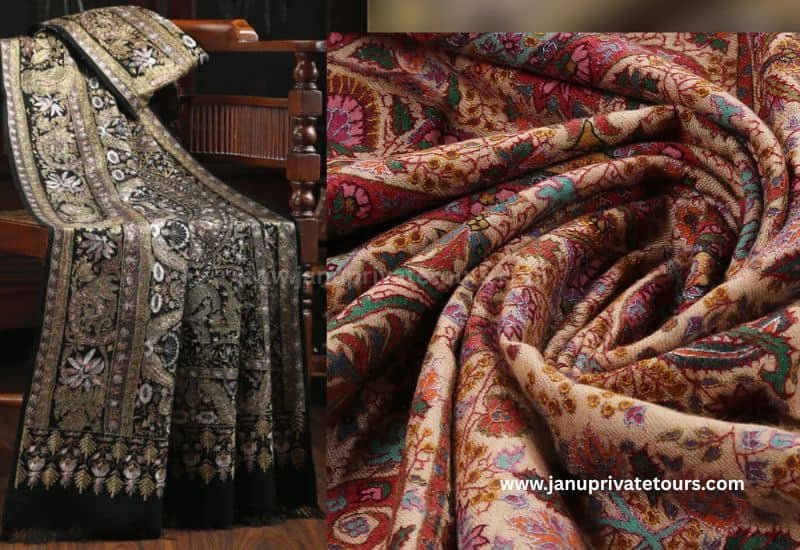
A genuine Pashmina shawl is the ultimate souvenir from India. The undercoat of the Himalayan Changthangi goat is used in creating these warm, soft, and lightweight shawls. You can purchase the embroidered kind for Rs. 15,000 or more, while prices for the plain variety start at Rs. 3,000. Do not buy unless you trust the source, as you may come across blended or synthetic pashmina shawls. For the genuine ones, buy from government-certified emporiums in Jaipur, Delhi, or Kashmir.
2. Block-Print Kurta or Fabric
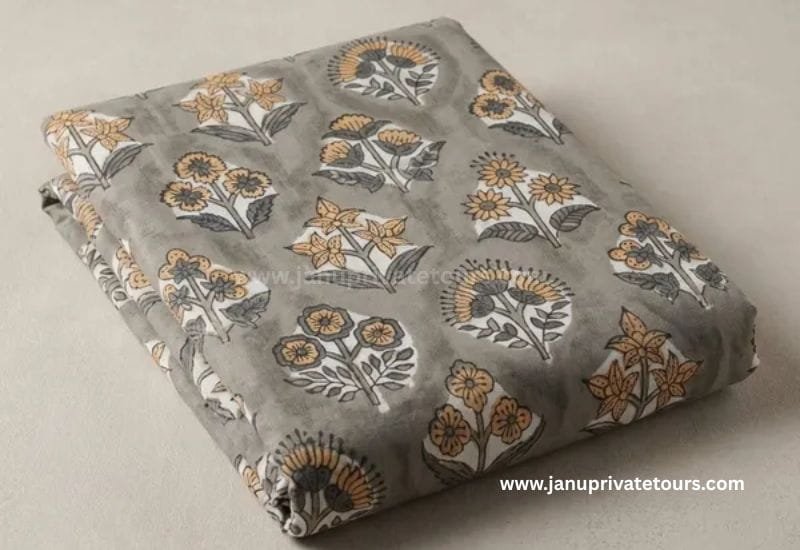
Rajasthan’s regional craft block-printing is an art that gets passed down from generation to generation of craftsmen. Wooden blocks are carved featuring a seemingly infinite variety of patterns and motifs, and dipped in natural dye and hand-pressed onto the fabric. The result? Exquisite patterns in a range of colours. Buy kurtas, dupattas, or a few meters of fabric and other textiles from Jaipur and Sanganer.
3. Banarasi Silk Saree

A Banarasi silk saree is crafted using gold and silver zari thread in Varanasi and has been a part of the city’s tradition for centuries. Even if you do not wear a saree, a small piece of the Banarasi silk fabric will make a beautiful and decorative fabric and a very thoughtful gift. These days, modern variations across Katan, Organza, and Georgette are available, so you can pick the right option for you.
4. Phulkari Embroidery
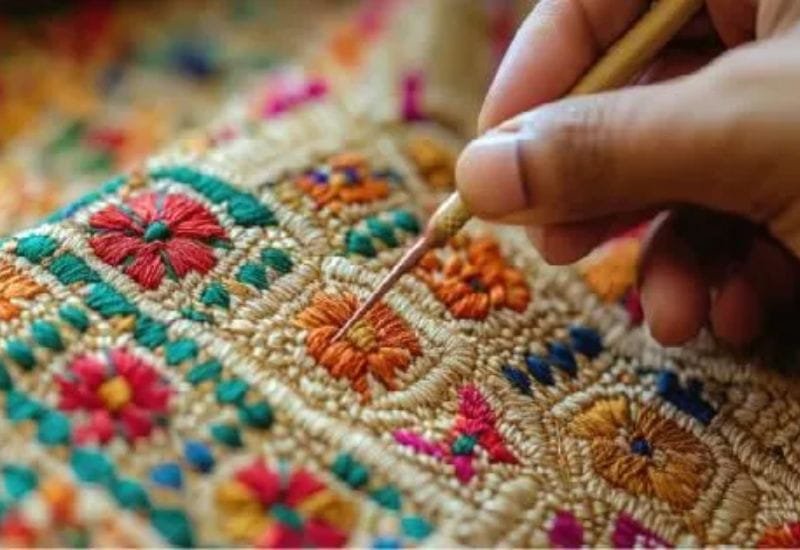
Phulkari means flower work, a traditional embroidery style from Punjab where geometric floral patterns are stitched onto fabric using silk thread. Dupattas, shawls, and cushion covers in Phulkari are lightweight, easy to pack, and genuinely regional.
Jewelry and Accessories
5. Kundan Jewelry
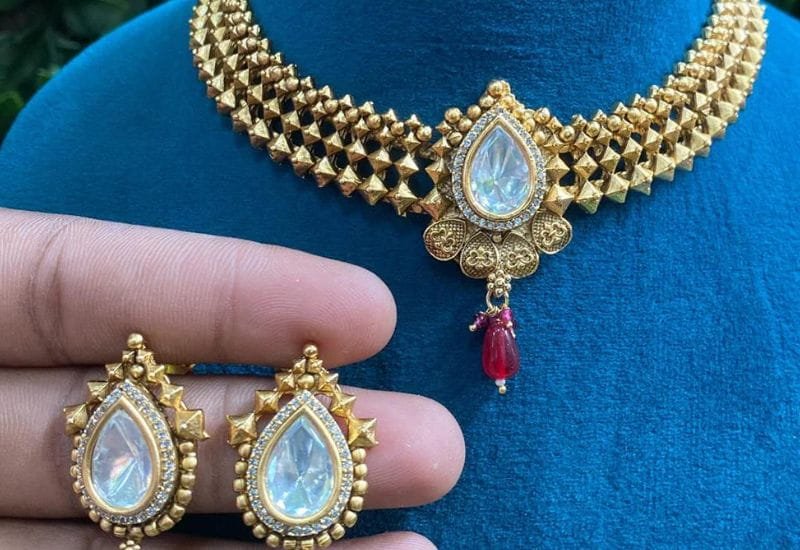
Kundan is a traditional Rajasthani jewelry style where gemstones are set in refined gold using a technique dating back to the Mughal era. Jaipur is the undisputed capital of Kundan jewelry in India. Even a small pair of Kundan earrings makes a beautiful and culturally significant gift.
6. Meenakari Jewelry
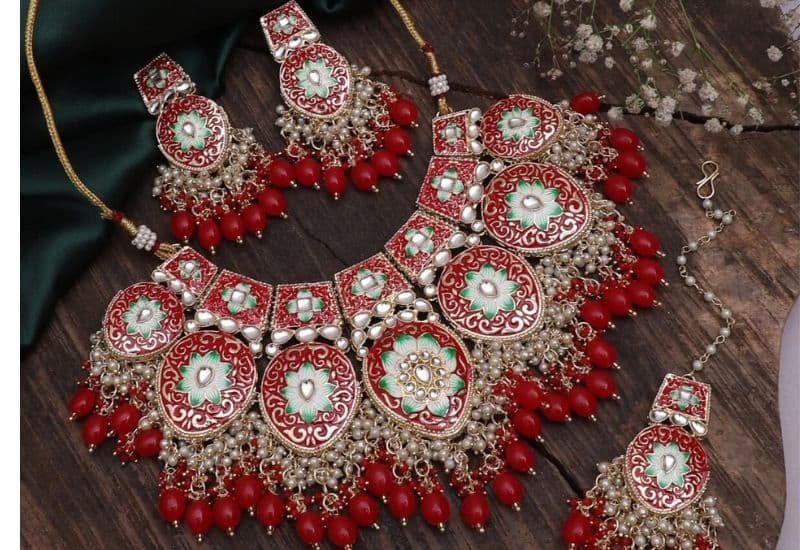
Meenakari is the art of enameling metal, usually gold or silver, with vivid colors. The craft originated in Persia and was brought to Rajasthan by Mughal artisans. Jaipur’s Johari Bazaar is the best place to browse Meenakari pieces. Look for rich reds, greens, and blues, the hallmark of quality Meenakari work.
7. Mojari Shoes
Mojaris are traditional handcrafted leather shoes with a pointed toe, embroidered with thread, beads, or mirror work. They are lightweight, flat, and surprisingly comfortable. Jaipur’s Bapu Bazaar sells them for Rs. 300 to Rs. 1,500 depending on quality. One of the most practical and genuinely Indian souvenirs you can buy.
Home Decor and Crafts
| Item | Origin | Price Range | Best For |
| Marble Inlay Box | Agra | Rs. 500 to Rs. 5,000 | Desk Decor, Gifting |
| Blue Pottery Vase | Jaipur | Rs. 300 to Rs. 2,000 | Home Display |
| Brass Figurine | Moradabad, UP | Rs. 400 to Rs. 3,000 | Shelf Decor |
| Wooden Lacquerware | Rajasthan | Rs. 200 to Rs. 1,500 | Kitchen, Gifting |
| Dhokra Metal Craft | Chhattisgarh, Odisha | Rs. 500 to Rs. 4,000 | Collector’s Piece |
8. Marble Inlay Piece (Agra)
The artisans of Agra have been inlaying semi-precious stones into white marble since the Mughal era, the same technique used on the Taj Mahal itself. Small marble boxes, coasters, and decorative plates make excellent souvenirs. A small inlay box starts around Rs. 500 and is easy to pack.
9. Blue Pottery
Blue pottery is unique to Jaipur and is technically not made from clay. It uses a dough of quartz stone powder, glass, and Multani mitti. The result is a distinctive turquoise-blue glaze with Persian-influenced floral patterns. Neerja International and Kripal Kumbh in Jaipur are reliable shops.
10. Dhokra Metal Craft
Dhokra lost-wax metal casting from Odisha and Chhattisgarh is one of India’s oldest metalworking traditions. Dhokra figurines depicting tribal figures, animals, and deities are striking as collector’s pieces and conversation starters back home.
Spices, Teas, and Food
11. Kashmiri Saffron
Indian saffron from the Pampore region of Kashmir is considered among the finest in the world. A small tin of genuine Kashmiri saffron costs Rs. 300 to Rs. 600 for a gram and is a genuinely luxurious gift. Buy from certified government shops to avoid adulterated products.
12. Darjeeling Tea
Darjeeling tea is a globally recognized geographical indication product, meaning authentic Darjeeling tea can only come from the Darjeeling district of West Bengal. The muscatel flavor is unlike any other tea in the world. A 100g pack costs Rs. 200 to Rs. 800 depending on grade.
13. Kerala Spice Box
Kerala is India’s spice coast. Cardamom, black pepper, cinnamon, cloves, and turmeric all grow here. A curated spice box from a Kerala market or spice plantation makes a practical, aromatic, and genuinely regional gift. Munnar and Thekkady are the best places to buy directly from growers.
14. Masala Chai Blend
A good masala chai blend with ginger, cardamom, cinnamon, cloves, and black pepper is one of the most packable and universally loved souvenirs from India. Most tea shops in Darjeeling, Munnar, and Delhi’s Chandni Chowk sell pre-mixed blends starting at Rs. 100.
Art and Wellness
15. Miniature Painting (Rajasthan)
Rajasthani miniature paintings depict royal court scenes and mythological stories in extraordinary detail, often painted on silk or ivory paper using brushes made from a single squirrel’s hair. Udaipur and Jaipur have the highest concentration of genuine miniature painters. Prices range from Rs. 500 for small prints to Rs. 10,000 and above for original hand-painted pieces.
16. Pattachitra Painting (Odisha)
Pattachitra is a traditional cloth-based scroll painting from Odisha depicting stories from Hindu mythology. Bold lines, natural colors, and intricate borders define the style. Raghurajpur village near Puri is the best place to buy directly from artists.
17. Ayurvedic Oils and Products
Kerala is the home of Ayurveda in India. Genuine Ayurvedic oils infused with herbs like brahmi, ashwagandha, and neem are widely available from certified Ayurvedic pharmacies. Kottakkal Arya Vaidya Sala and Vaidyaratnam are two trusted brands available across Kerala.
18. Sandalwood Products (Karnataka)
Mysuru in Karnataka is famous for its sandalwood. The Karnataka Soaps and Detergents Limited Mysore Sandal Soap is a government-produced product using genuine sandalwood oil and one of the most reliable sandalwood purchases you can make in India.
19. Handmade Paper Products (Jaipur)
Jaipur produces beautiful handmade paper notebooks, journals, greeting cards, and gift wrap using recycled cotton and natural dyes. Lightweight, affordable, and genuinely crafted. Prices start at Rs. 100 for a small notebook.
20. Wooden Lacquerware
Rajasthan’s wooden lacquerware includes brightly painted bowls, rolling pins, toys, and decorative items. Produced in Sawai Madhopur and sold across Rajasthan markets, a set of lacquerware bowls costs Rs. 200 to Rs. 800 and packs flat.
Shop Authentic Souvenirs with Local Experts
Fake products are everywhere near major monuments. Touts outside the Taj Mahal, Amber Fort, and Qutub Minar will sell you genuine marble that is plaster, real Pashmina that is acrylic, and authentic saffron that is dyed corn silk. Overpricing is standard practice in tourist-heavy areas, and without local knowledge, it is very easy to pay three times the fair price for something that is not even genuine. This is not a reason to avoid shopping in India. It is a reason to shop with someone who knows the difference.
At Janu Private Tours, we take you to trusted artisans and verified stores, ensuring you buy authentic Indian souvenirs at fair prices without stress.
Smart Shopping Tips
| Tip | Why It Matters |
| Buy from Government Emporiums | Fixed Prices, Guaranteed Authenticity |
| Avoid touts near monuments | Overpriced, often fake |
| Bargain at local markets | Expected and acceptable |
| Check for GI tags | Darjeeling tea, Pashmina, Banarasi silk are certified |
| Declare high-value items at customs | Rules apply for antiques over 100 years old |
Final Thoughts
India’s craft traditions run deep. Every region has something distinct, something made by hand, something that carries a story. The best souvenirs are not the ones that look the most Indian on a shelf back home. They are the ones you picked up, knowing exactly where they came from and who made them. Ready to shop India the right way? Plan your private India tour with Janu Private Tours and let us handle the rest.