
Indian Festivals & Culture

Holi Festival Jaipur: Experience India’s Festival of Colour in the Pink City

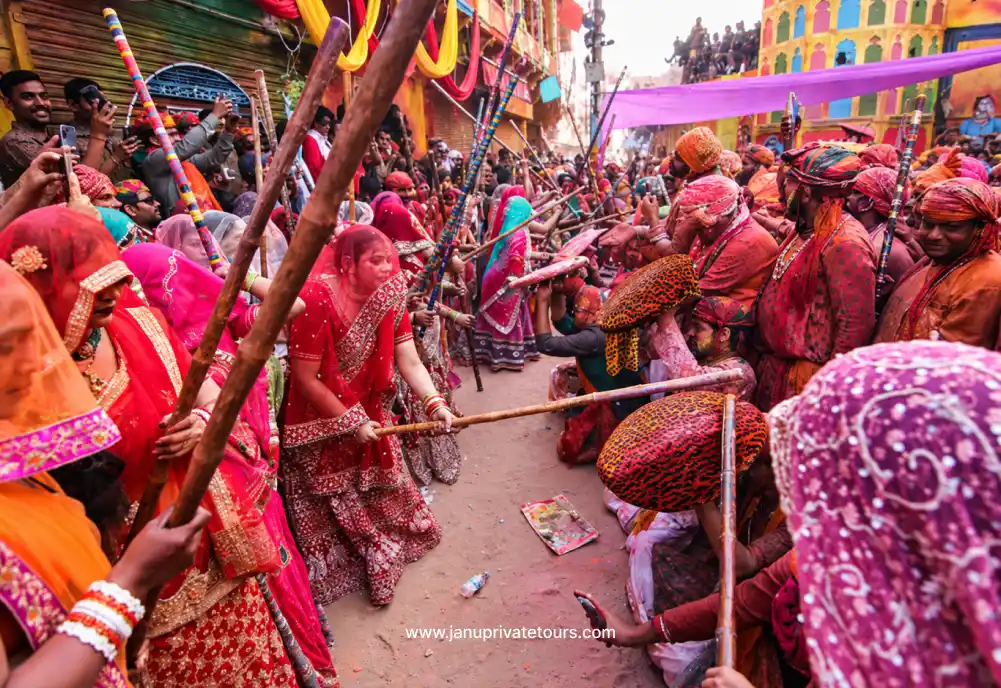
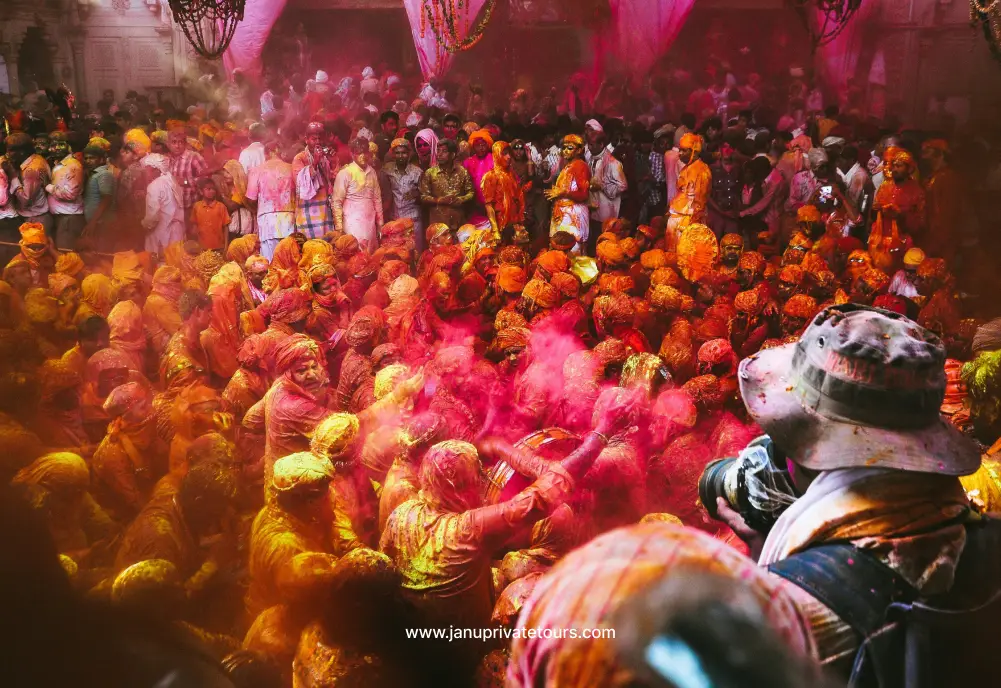
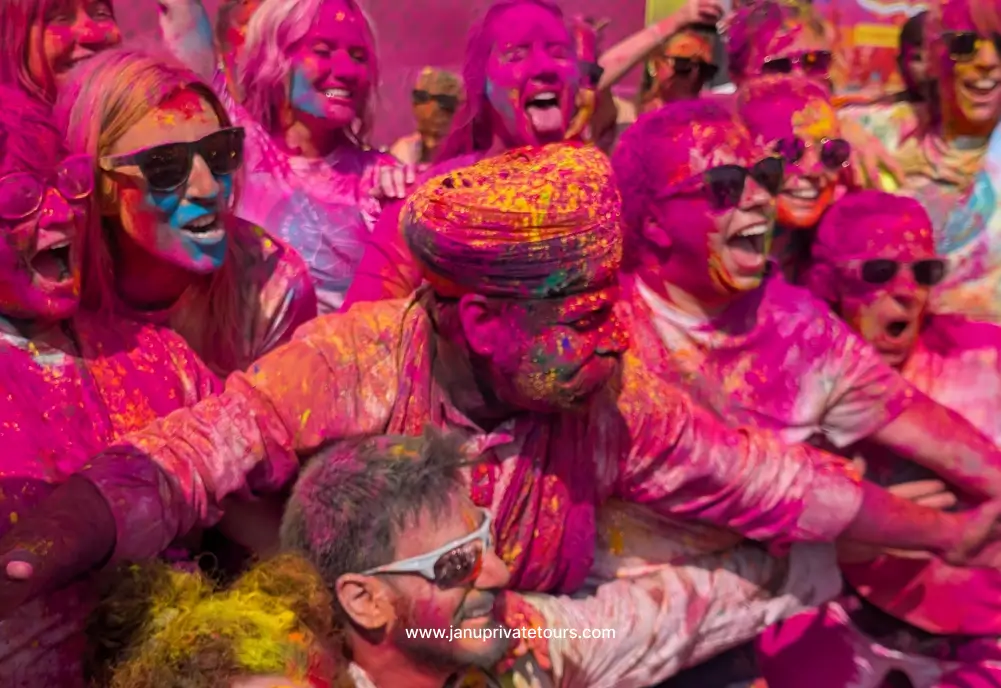
There is a special flow of joy and freshness of the Holi celebration in the air of the ‘Pink City of Rajasthan’, Jaipur. Every year, Jaipur has a lot of tourists coming with a lot of excitement to celebrate the Holi festival. The festival is packed with iconic delicacies, colors, entertainment and musical performances.

Holi is not just throwing some colors around; it is much more. In this lively festival of spring, people spread happiness and celebrate the victory of virtue over evil.

You can experience India’s festival of colour in the Pink City along with visiting its vibrant Holi markets, palaces and forts of Jaipur.

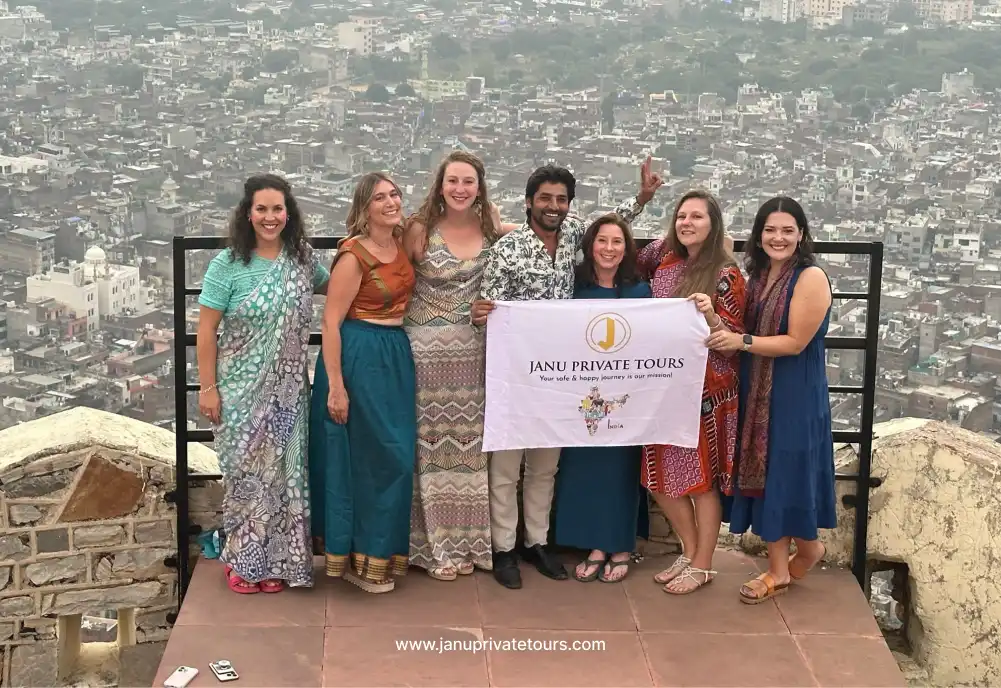
Janu Private Tours offers tailored private tours, guided tourist attractions and comfortable standard transport around Rajasthan. We also provide specialized Holi festival itineraries for those who desire a carefully planned and individualized experience.

What Is Indian Holi?

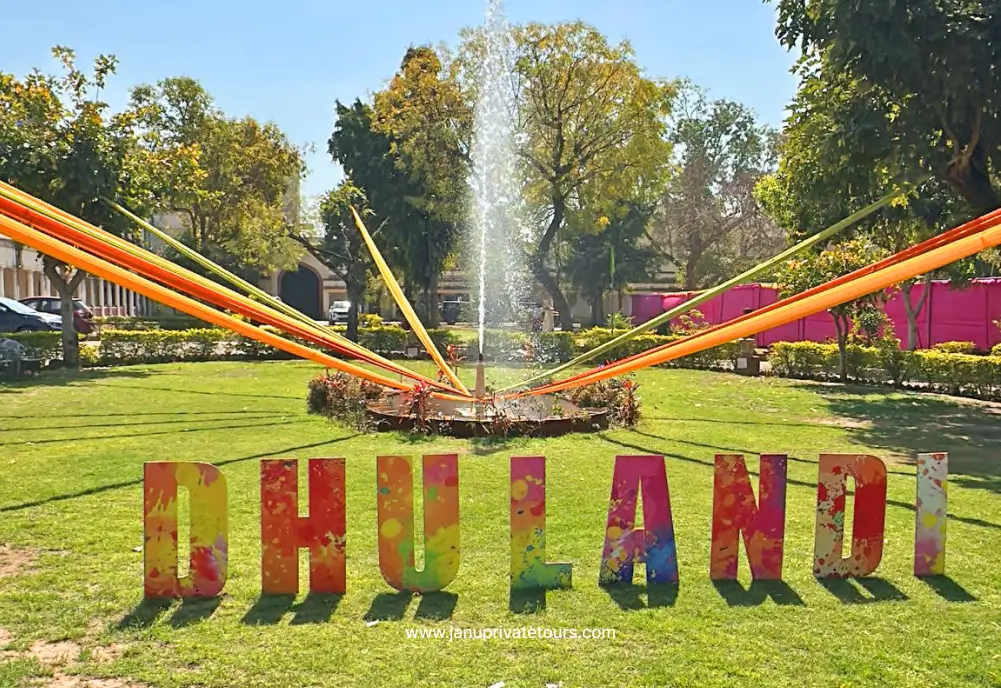
What is Indian Holi? It is among the major festivals in the country. It is often connected with the arrival of spring and the triumph of virtue over evil. Holika Dahan and the vibrant Holi or Dhulandi celebration are the two major occasions that typically comprise the celebration.

This festival is all about the story of Prahlad and Holika. The next day, Holika Dahan, is a party of colors, music, food and friendship. Holika Dahan means the end of evil.

Jaipur brings the customs to life, where you see the rich cultural heritage of Rajasthan. Holi festival Jaipur is the best combination of culturally rich festivities, together with the royal vibe of the city.

When Is Holi?

When is Holi? It is the main question to plan your trip to Jaipur: when you can enjoy this celebration. The date of this festival changes every year as it is based on the Hindu solar calendar.

Knowing when Holi falls in 2027 is very important for people who plan their trip to Rajasthan.

According to the holiday calendar, Holi is scheduled for March 22, 2027, which falls on a Monday. Janu Private Tours also confirms that their 2027 Holi Festival Tour will occur on March 22, 2027. It is best to start planning because Holi is a hot season for sightseeing. Places to stay, ways to get around and planned celebrations can get busy.

Why Experience Holi Festival Jaipur?

The Holi festival Jaipur celebration offers something different from an ordinary sightseeing trip. You are not simply visiting monuments and taking photographs. You get an opportunity to experience a living Indian tradition.

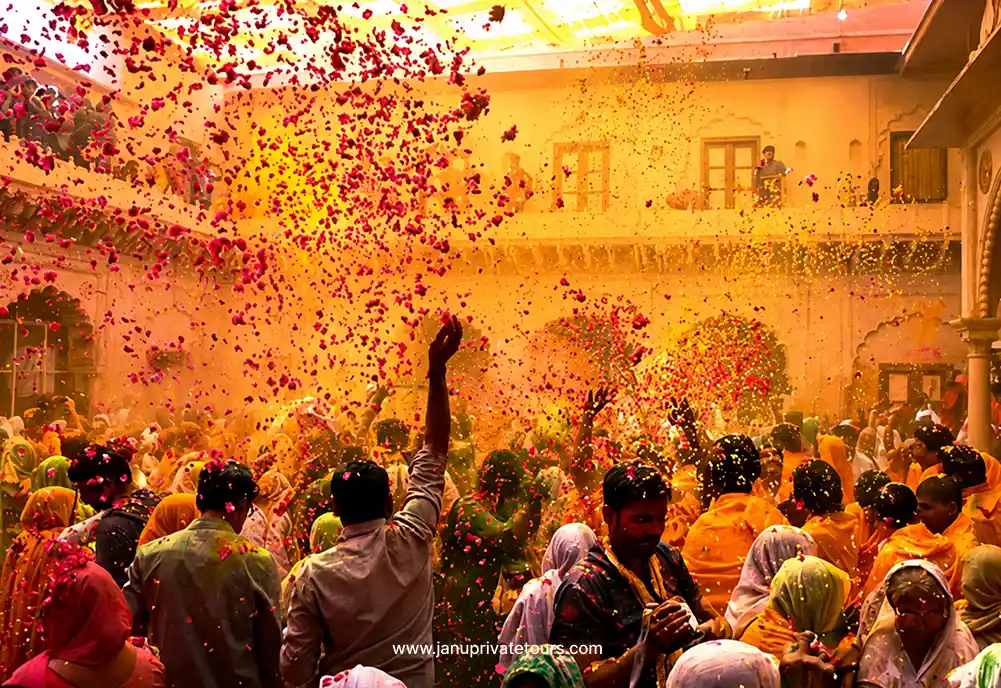
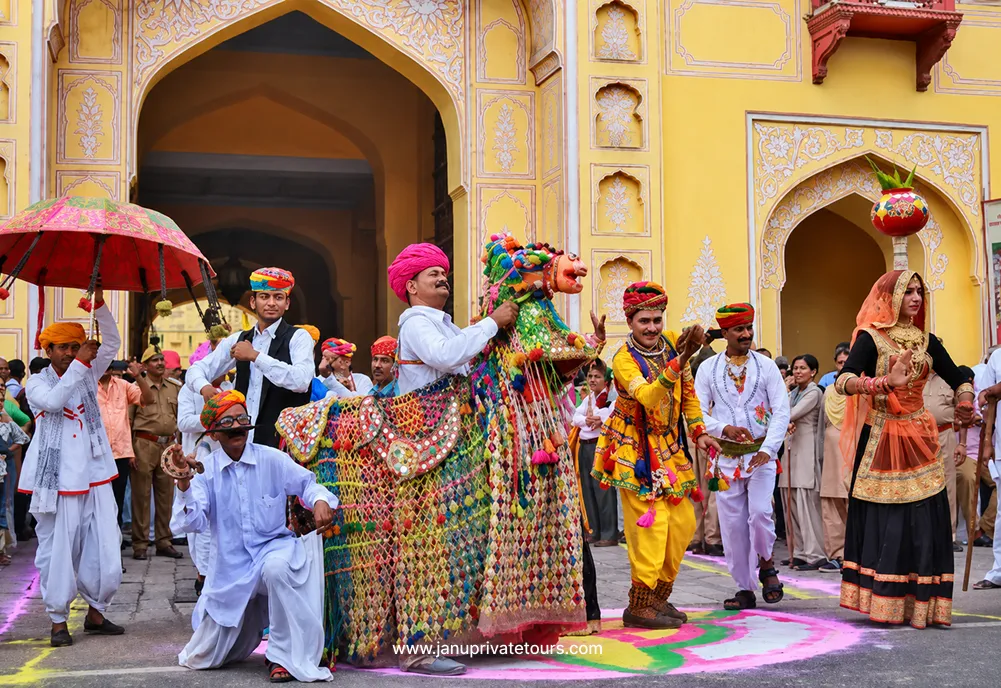
Holi in Jaipur is a festival of vibrant energy. Markets are decorated with bright gulal and traditional Holi products while sweet stores prepare popular sweets such as gujiya and malpua. Music, dancing, local food and community meetings contribute to the atmosphere.

The history of the city makes the experience even more special. Before or after the celebrations, you can visit Jaipur’s well-known sites, such as


Jaipur Experience

What to experience

Amber Fort

Mughal-Rajput architecture and panoramic views

City Palace

Royal heritage and traditional architecture

Hawa Mahal

Jaipur’s iconic facade and historic charm

Jantar Mantar

Observatory recognized by UNESCO

Jal Mahal

Scenic palace surrounded by Man Sagar Lake

Old City Markets

Local handicrafts, textiles, colors and festive shopping

Janu Private Tours offers sightseeing tours in Jaipur with English-speaking guides and scheduling flexibility. Tourists can combine learning about the city’s culture with having fun.

Celebrate Holi with Local Culture

The best way to enjoy the Holi festival Jaipur is to learn about the customs rather than just watching them. If a celebration is well-planned, it can introduce visitors to:

  • Traditional Holi colors and customs

  • Local music and dance

  • Rajasthani food and sweets

  • Community celebrations

  • Cultural performances

  • Local family experiences

  • Festive gatherings with residents and fellow travelers

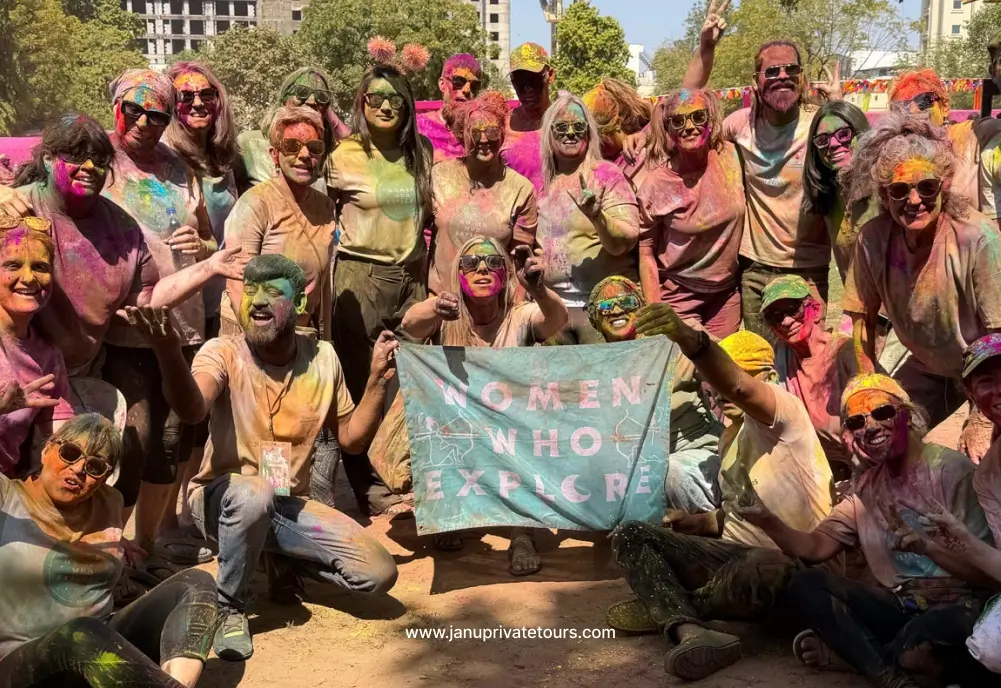
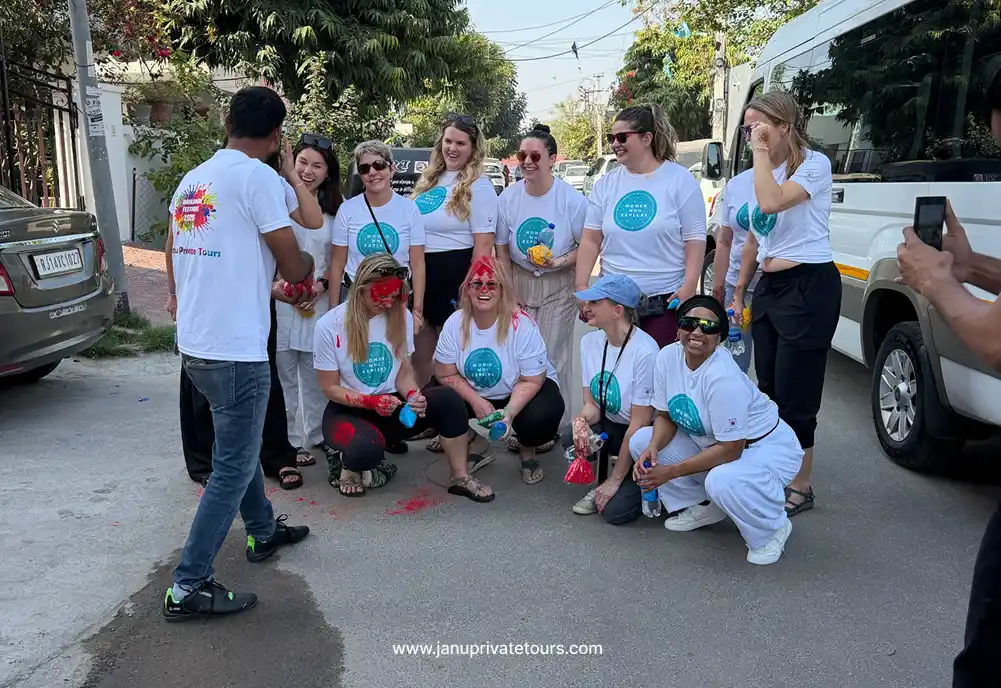
Janu Private Tours’Holi itinerary includes a visit to a local festival. Guests can enjoy music, traditional foods, performances and dancing with other travelers and locals. Their plan also includes having lunch with a nearby family, which makes the trip more personal and cultural.

Holi and Jaipur’s Royal Heritage

One of the most attractive aspects of the Holi festival Jaipur is its link to the city’s regal past. The festival celebrates this historical connection beautifully.

Jaipur is famous for its lavish palaces, castles, traditional crafts, fabrics and vibrant bazaars. Jaipur was built as a planned royal metropolis. Visiting these places around Holi gives visitors a chance to experience Jaipur’s ancient grandeur. It also allows them to witness its vibrant contemporary culture.

You can enjoy one part of your trip seeing Amber Fort and City Palace, walk around the old city, browse for local handicrafts and then allocate another day to celebrating Holi.

This combination makes the Holi festival journey in Jaipur ideal for travelers who want culture, history, food and photography. It is perfect for those seeking celebration in one trip.

Plan a Complete Holi Journey with Janu Private Tours

For travelers visiting India only for the Holi festival, a multi-destination itinerary might make the vacation even more pleasant.

Janu Private Tours’ 2027 Holi Festival Tour is a 9 nights/10 days tour visiting Delhi, Agra, Ranthambore, Jaipur and Delhi. The schedule includes UNESCO World Heritage Sites, guided walking tours and the regal heritage of Rajasthan. It also features wildlife encounters, sightseeing in Jaipur and Holi festivities.

We also offer a shorter 6-day Holi tour that goes from Delhi to Jaipur to Jodhpur to Udaipur. This package features cultural encounters, heritage tours, private transfers and a Holi celebration with locals.

This flexibility is handy if you want to build a trip around your leisure rather than a fixed tour schedule.

What to Expect During Holi in Jaipur

New to Holi in Jaipur? Prepare for a colorful day of fun. Dress to get messy. Keep your phone and camera away from water and colors. Jaipur’s Holi celebration combines colors, music and joy to delight you. Here are some practical tips to enjoy the Holi festival Jaipur:

  • Wear comfortable and old clothes.

  • Carry sunglasses to protect your eyes from color powder.

  • Safeguard electronic gadgets.

  • Colors should be natural or skin-friendly.

  • Maintain hydration throughout the day.

  • Follow local conventions and maintain your personal boundaries.

  • If you like structure, choose a planned celebration.

  • Pre-book travel and accommodations.

Make Holi More Than a Festival

You can explore another phase of southern Rajasthan by planning your tour during the Holi Festival Jaipur. This trip will take you on a guided heritage tour to see and enjoy Rajasthani cuisine, local ancient markets and old architecture with the colors of happiness.

Janu Private Tours focuses on private and flexible India tours that can be carried out with Agra and Ranthambore thrilling trips. We create tour plans that match what our clients or guests really want. We focus on their interests, hobbies and favorite places to make sure their trip is fun and stays with them for a long time.

Conclusion

Holi festival in Jaipur is an opportunity to experience India, rather than just seeing it. From the initial burst of color to traditional food, music, dance and local interaction, Holi produces wonderful memories. These memories endure long after the colors have passed and reflect the rich heritage of the Pink City.

Whether you are planning your first vacation to India or looking for a spectacular color festival India tour, Jaipur is a place to look at. If you are planning a wider Rajasthan visit, then Jaipur should be on your list too.

Janu Private Tours can tailor your Holi festival Jaipur tour into a pleasant and unforgettable trip through Rajasthan. We provide customized plans, private vehicles, pre-arranged tours, cultural events and special Holi packages.

If you have been asking when is Holi in 2027, note March 22, 2027 on your calendar. Start organizing your Pink City vacation. Colors, traditions, customs, cuisines and comfort of India in a tour created around you. Visit Janu Private Tours to start planning your colorful journey today.

How to Celebrate the Holi Festival India Like a Local in 2027: The Complete Travel Guide

India is a unique land of happiness and joy, where every moment is culturally celebrated as a festival. If we begin to talk about the Indian festival list, the Holi festival in India arrives early in the year. The Holi festival represents a special kind of zeal and enthusiasm that fills the entire country with great excitement. This actually shows our unity and culture that the country has been following for a long period.  

The delight, delicious sweets and flow of colors are enjoyable to both adults and kids. You will never forget the experience of celebrating the Holi festival in India, whether you reside in India or not. This is regardless of whether it is your first visit to this place and associated celebration or you are going back again. India celebrates the Holi festival, which has an incredible range of regional variations.

Spending your holidays during this Holi festival date in India will make your trip adventurous. The festival is mixed with the essence of delicious Indian recipes and enthusiastic dancing with dynamic music.  

There are a lot of interesting facts that everyone should know about the Holi festival in India. This guide will help you to complete your travel smoothly during Holi in India. 

What is the Holi Festival in India?

Holi festival in India is celebrated for two days at the end of February or March. It is considered a special celebration that is well-planned. This festival is incomplete without the sweet taste and joyful music, along with entertaining group and solo dances. Different colors have special meanings or symbols that people apply to each other. 

Each Indian region celebrates Holi differently, but the essence is the same. The Holi celebration in India showcases the country’s rich tradition, friendly hospitality and joyful spirit in Mathura, Vrindavan and Jaipur. 

 Holi Festival Date in India 2027

People who travel to India want to know when the Holi festival is. The Holi festival in India is a deal. So when is the Holi festival in India? Ritual planning of building a bonfire, which represents the victory of good over evil and starts Holi, is called Holika Dahan. This sacred bonfire ceremony will fall on 21st March 2027 and the next day people will enjoy the Holi that is on 22nd  March. 

You should make sure to check the dates because the Holi festival in India is based on the lunar calendar. The dates for the Holi festival in India can be on different days each year.

Why is Holi Celebrated in India?

A lot of tourists question why India celebrates Holi. It’s a festival for achieving special things in life like: 

  • The victory of good over evil
  • New beginnings and forgiveness
  • The arrival of spring
  • Better relationships with friends and family 
  • Celebration of joy, love and togetherness 

Holi is a major event in India that symbolizes the country’s rich cultural heritage. Now, if we are talking about the heritage, the celebration of the Holi festival of India is connected to different mythological stories: 

1. Prahlad and Holika: Prahlad was divinely protected from the fire that destroyed Holika because he was devoted to Lord Vishnu. People remember this story through Holika Dahan because it shows that good won over evil.   

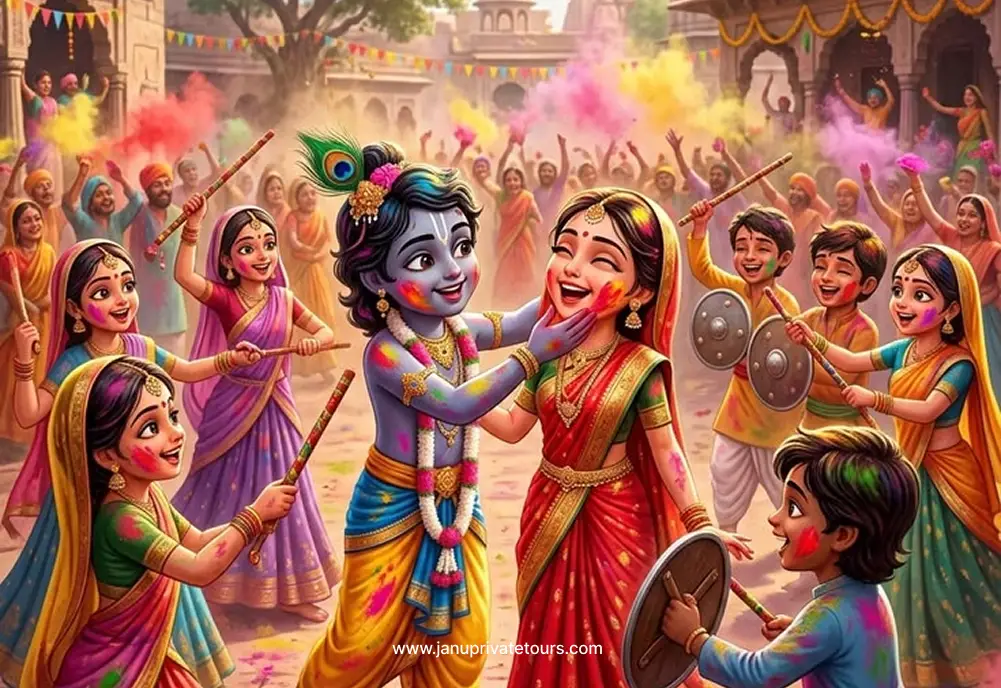
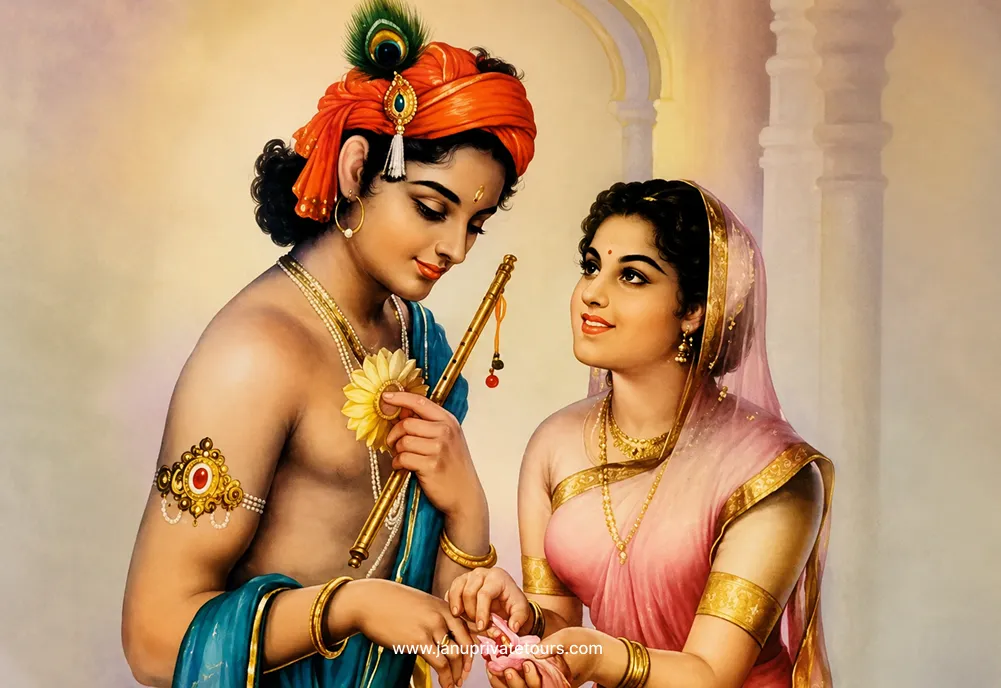
2. Radha and Krishna: Holi’s vibrant celebrations are connected to love and unity, as it is inspired by Lord Krishna’s playful application of colors to Radha.

3. Lord Shiva and Kamadeva: Lord Shiva used his third eye to burn Kamadeva when he attempted to rouse him from his meditation. He was later transformed back into a spiritual form by Shiva, signifying spiritual awakening, love and rebirth.

Best Places to Experience Holi in India Like a Local

Every region celebrates Holi in India differently. Here are some of the most popular destinations.

Destination Special Experience 
MathuraBirthplace of Lord Krishna with traditional celebrations
VrindavanTemple ceremonies and flower Holi
BarsanaFamous Lathmar Holi
JaipurModern cultural events with music and food
DelhiColor-filled celebrations with international visitors
PushkarEnjoy traditional Rajasthani rituals with a lively international music festival vibe
UdaipurPalace celebrations and cultural programs

Travelers can enjoy the Holi festival in India in various cities, which are celebrated differently.  

How to Celebrate Holi Like a Local

To get the most out of the Holi festival in India, it is important to participate considerately and to follow the local customs. You should follow the mentioned tips to celebrate Holi like a local: 

  1. Wear Comfortable White Clothes: You should prefer to wear white colors, which show all shades and spots of color beautifully, making it perfect for festival photos. 
  2. Use Natural Colors: Most communities promote eco-friendly festivals using herbal Indian Holi festival powder that is safe for humans and the environment. 
  3. Join Local Celebrations: Visit temples, neighborhoods and community activities instead of just tourist events. For a more real Holi celebration in India. 
  4. Dance to Traditional Music: The Indian festival Holi emphasizes music. Dance to traditional tunes and celebratory beats with the locals. 
  5. Taste Traditional Holi Foods: The Holi celebration is incomplete without popular Indian festival foods. It includes: 
  • Gujiya
  • Dahi Bhalla
  • Malpua
  • Puran Poli
  • Thandai (Special Drink)

These festive treats make the moments filled with enjoyable taste, which makes the Holi festival more creative. 

Essential Travel Tips for the Holi Festival in India

For a secure and pleasurable experience at the Holi festival in India, keep these suggestions in mind. 

Before the Festival

  • Hotel reservations should be made months ahead.
  • Book transportation early.
  • Don’t forget to carry your sunglasses.
  • Carry moisturizer or coconut oil.
  • Store your phone in a waterproof pouch. 

During the Festival

  • Respect local customs.
  • Ask before applying colors to others.
  • Stay hydrated throughout the day.
  • Avoid unknown chemical colors.
  • Travel with trusted guides whenever possible.

With these basic measures, you can enjoy the Holi color festival in India without any excessive worry. 

Local Etiquette Every Traveler Should Know

The Holi Indian festival is about celebration, but observing local customs makes your experience much more delightful. Here is the list of dos and don’ts: 

Do:

  • Smile and join the celebrations
  • Respect religious ceremonies
  • Wear comfortable shoes
  • Protect your camera equipment
  • Accept sweets when offered

Don’t:

  • Throw colors at unwilling participants
  • Disturb temple rituals
  • Wear expensive clothing
  • Litter public spaces
  • Drink excessively in public

What to Pack for Your Holi Trip

You will enjoy your Holi festival in India more peacefully if you pack your belongings carefully. 

Travel Checklist

  • White cotton clothes
  • Sunglasses
  • Waterproof phone cover
  • Comfortable shoes
  • Sunscreen
  • Hat or cap
  • Reusable water bottle
  • Small backpack
  • Wet wipes
  • Extra change of clothes

Conclusion

Holi Festival in India is an amazing opportunity to discover the country’s unique culture, hospitality and heritage. Local color and impressive traditional festivities await you everywhere. From holy Mathura and Vrindavan to the royal Jaipur, capital Delhi and Pushkar, the Holi Festival in India will leave you spellbound. The spirit of this festival brings positivity and fulfillment in the environment. In different parts of India, people enjoy it in different ways, with their own rituals and traditions. 

With Janu Private Tours, you can celebrate India’s famed Holi celebration in 2027. This festival is famous for its brilliant colors and electric atmosphere. Our well-designed itineraries, competent local guides and excellent lodgings ensure a genuinely unique festival adventure. 

What Is Ghewar and Why Is It So Popular During the Raksha Bandhan Festival in India? A Traveler’s Guide to This Sweet Tradition

The great festivals, recipes and desserts are some of the most special parts of the Indian cultural heritage. We have welcomed guests with a glass of water and a tasty treat since ancient times. This tradition adds a touch of sweetness to the initial meeting or welcome. When there are festivals or celebrations of victory, sweets are not only eaten to satisfy hunger, but also to spread happiness and purity. On Raksha Bandhan, an Indian holiday, brothers celebrate their special bond once again. 

 Today, it’s a nice description of Ghewar, a popular Indian dessert. People in Rajasthan and North India think of it as a special traditional dessert. Festivals like Teej and Raksha Bandhan cannot be celebrated without sweet Ghewar. Travelers should not miss trying the taste of ghewar during their tour, especially in Rajasthan. Let’s move on to more about the combination of ghewar and Raksha Bandhan in India.  


What Is Ghewar?

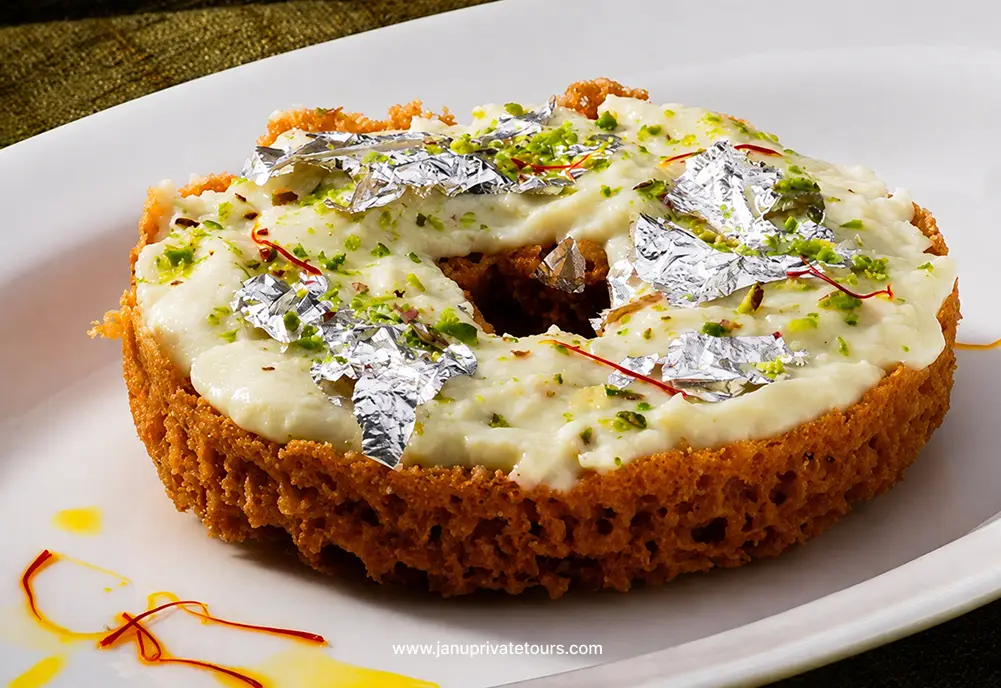
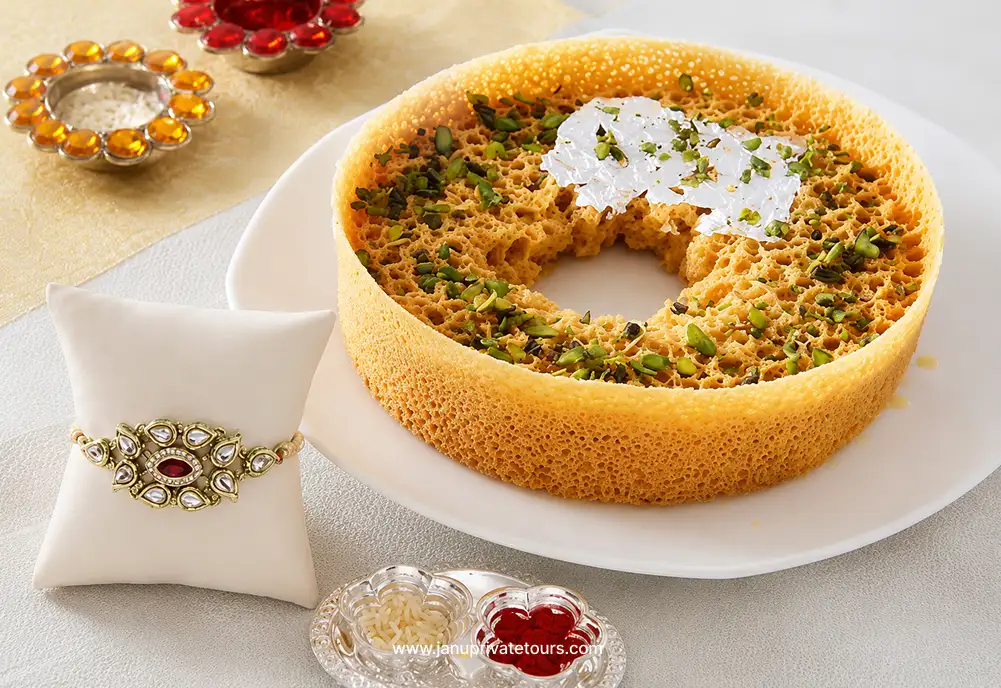
Ghewar is a spherical Indian sweet with a porous, lattice-like texture. Its honeycomb structure is created by deep-frying a flowing batter. After preparation, ghewar is decorated with sugar syrup, nuts, saffron, rabri and cardamom to enhance its look and flavours. 

Ghewar’s appearance draws attention first. Ghewar is open and delicate, with tiny openings, unlike peda or barfi. The batter is gradually put into hot ghee during frying, creating this peculiar texture. The edges are crunchy and can absorb syrup and toppings.

Renowned in Rajasthan and North India, ghewar is famous. It is especially associated with the monsoon and holidays. The classic thin batter is made from flour, ghee, cooled liquid and water and carefully put into hot ghee multiple times to create the layered structure.

Thus, ghewar is more than a treat to photograph or eat for travelers. Indian cuisine frequently reflects seasonal and social events in which it is enjoyed. 

Why Is Ghewar So Closely Associated With Raksha Bandhan?

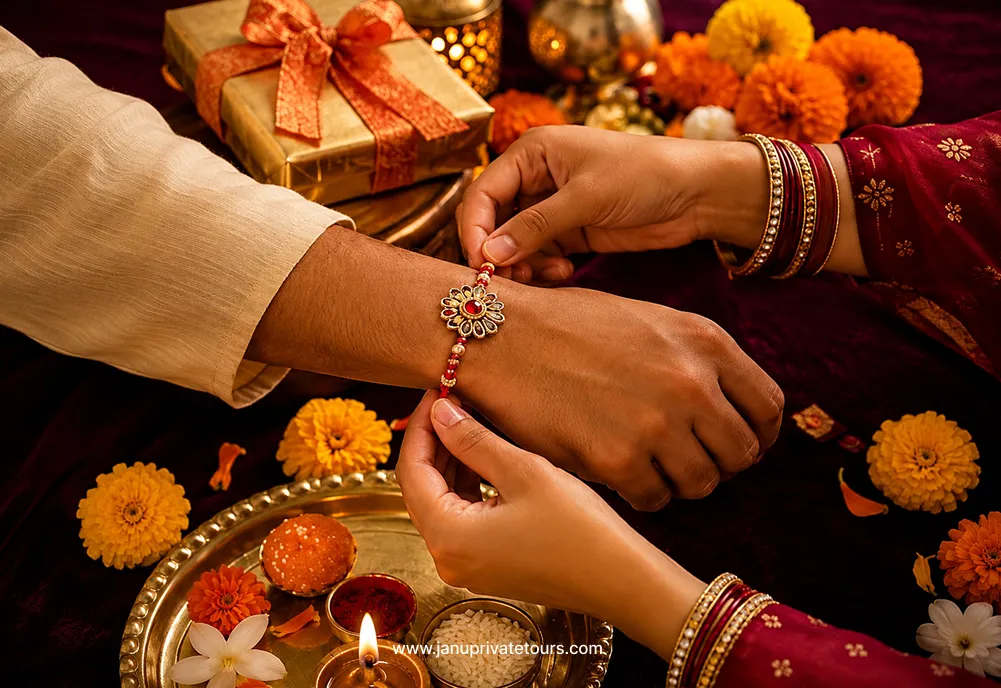
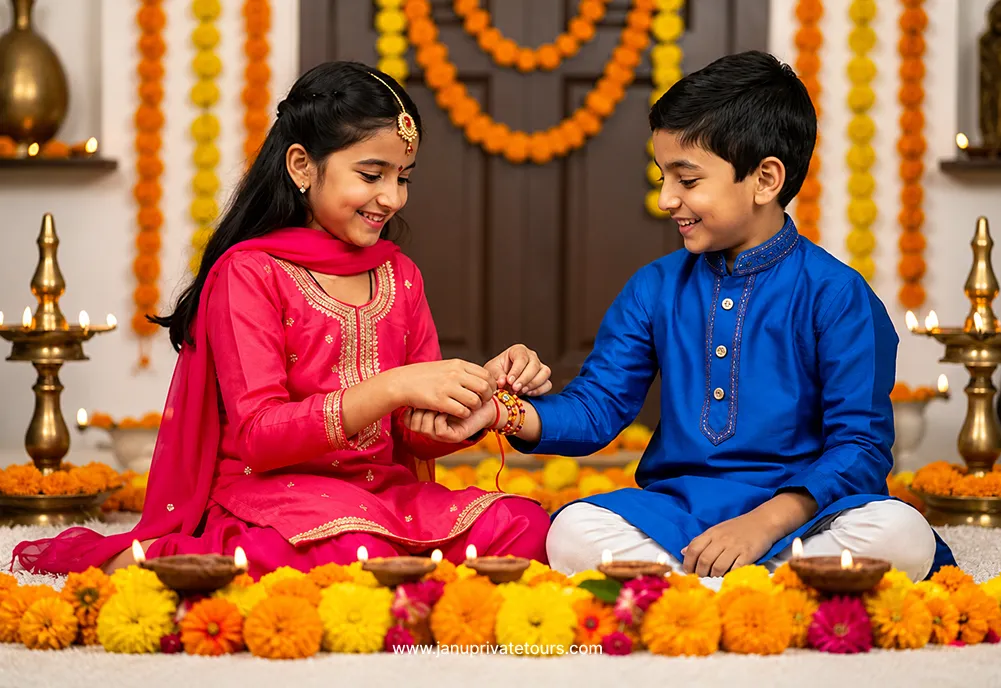
Ghewar spreads the sweetness of joy and happiness during the festival of Raksha Bandhan in India. Brothers and sisters celebrate their love through the taste of different traditional sweets on Raksha Bandhan. It is a ritual in which sisters tie rakhis around their brothers’ wrists, pray for them and wish them well. A blessing, affection and gift are returned by the brother. Sugary treats are exchanged during the celebration, making them important.

Ghewar blends very well with the festivals of Raksha Bandhan. Family members can buy a huge decorated ghewar to share at home, give to relatives, or incorporate with other holiday gifts. Sweets are part of the family-centered Raksha Bandhan exchange of affection.

Rajasthan’s traditional sweets are closely tied to local festivals and rituals. It’s a great way to introduce tourists to the region’s joyful culture through food. When ghewar is consumed during festivals, it makes sense that it becomes part of Rajasthan’s celebratory culture. How? As ghewar has a historical and cultural significance that everyone should be aware of:  

  • Roots and Origin of Ghewar: Food legend says ghewar originated in Rajasthani royal kitchens. One of the common legends connects Raksha Bandhan with the majestic Rajput custom of Rajasthan. It is believed that Rani Karnavati of Mewar had sent a rakhi to Mughal Emperor Humayun requesting protection. Ghewar was the “King of Sweets” in ancient Rajasthan and was usually served on key occasions, thereby establishing its relationship with joyous occasions such as Raksha Bandhan. 

  • Ghewar and the Sinjara Tradition: Rajasthani ghewar is also associated with Sinjara, a ritual day before Gangaur or Hariyali Teej. On this day, parents give their newlywed daughters clothes, henna and lots of ghewar. The gesture symbolizes love, wealth and care for their daughters and their spouses. Ghewar became more than a sweet and a symbol of family and festivity, according to Tradition.

The Importance of Sweets During Raksha Bandhan

To find out why ghewar is famous during Raksha Bandhan in India, consider the function of sweets in Indian celebrations. It’s incomplete to celebrate happy moments without the taste of sweets. After the rakhi ceremony, siblings and relatives share sweets on Raksha Bandhan. 

In India, travelers can celebrate Raksha Bandhan emotionally by knowing the different historical stories. They can enjoy the markets of festive decorations, family costumes, creative rakhis, gifts and dessert sets. 

Why Travelers Should Try Ghewar in Rajasthan

Rajasthan is one of the most interesting places to visit in India. It is known for its history, art, crafts, food and special events, which include its cultural way of festive celebration. Visit Jaipur, Jodhpur, Udaipur and other old cities to see royal architecture and learn about royal festival culture. The taste of food enhances the moments of the trip.

Travelers can connect a familiar festival ritual with Rajasthan by trying ghewar. Festivals like Raksha Bandhan bring ghewar to traditional sweet stores and markets.

First-timers in India can mingle with locals by ordering ghewar. Requesting a shopkeeper’s knowledge of sweet kinds, toppings and serving methods might enhance your cultural experience.

Indian markets and confectionery shops can show how communities prepare for Raksha Bandhan, a significant family event. 

What Does Ghewar Taste Like?

Ghewar’s flavor varies on preparation and toppings. Typical ghewar is crisp, pleasantly rich and sugar syrup-sweetened. Its open construction lets syrup sink into the tiny gaps, giving the sweet distinct textures.

Creamier rabri-topped ghewar. Crisp sweets contrast with Rabri’s thick milk layer. Other garnishes like saffron, cardamom, almonds and pistachios provide flavor and texture.

Starting with a regular ghewar sweet will help you understand its flavor. If you like richer desserts, try rabri or mawa.

The monsoon festive season, when sweet stores and markets showcase ghewar, is especially fun. 

How Ghewar Is Traditionally Served

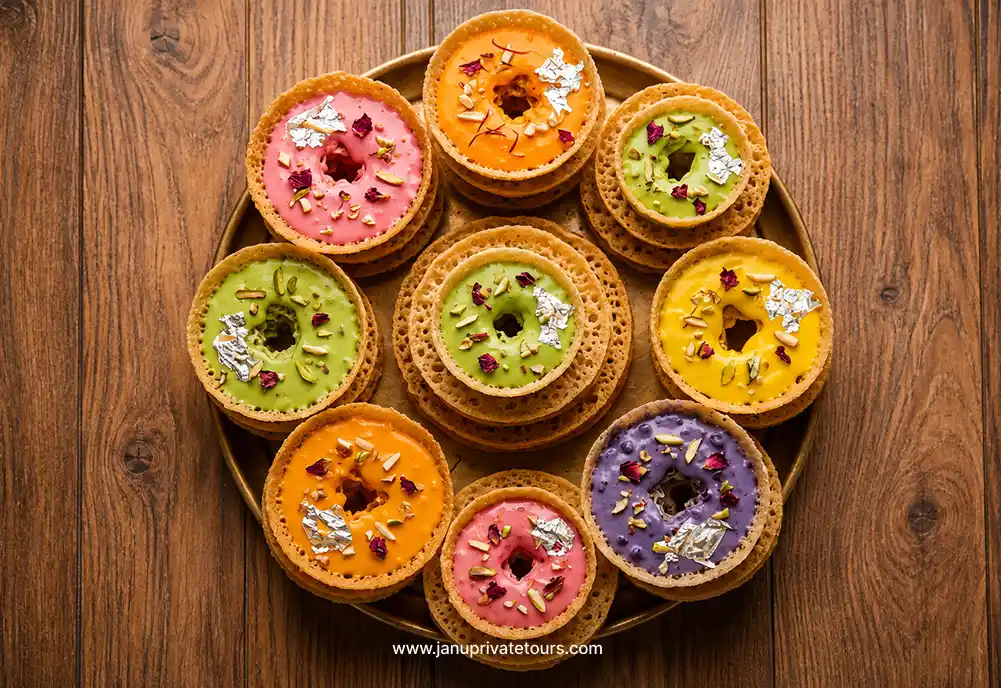
Ghewar may be served in several ways. The festive version can be embellished with rabri and dry fruits, while the simple form has sugar syrup.

Presentation may make the sweet look appealing. Its circular shape and delicate texture set the stage for creative toppings. Saffron threads, chopped pistachios, almonds, silver leaf, or creamy rabri can add elegance.

Decorated ghewar can be part of a Raksha Bandhan sweets collection in India. For guests and relatives, families might buy numerous types.

Ask if a shop serves fresh ghewar. Freshness can affect texture, especially in crisp sweets. 

Experience Raksha Bandhan Through Food and Culture

The festival of Raksha Bandhan is not limited merely to tying the Rakhi and exchanging gifts. It is a celebration that gathers family and relatives together to share a lovely time. During this celebration, visitors to local markets can experience this emotional atmosphere, where sweet shops are filled with enticing aromas. In Rajasthan, ghewar is remarkable. Here are some of the things that travelers should not miss during Raksha Bandhan in India: 

  • Try traditional ghewar
  • Explore local sweet shops
  • Experience festive markets
  • Learn about local traditions
  • Discover Rajasthan’s food culture
  • Respect local customs
  • Combine food with sightseeing

Raksha Bandhan in India is celebrated perfectly with family gatherings and a taste of food. People must enjoy this festive season in Jaipur and Rajasthan with the taste of sweet ghewar.

Conclusion

The celebration of the best bonding festival, Raksha Bandhan in India, is incomplete without desserts. And if this blank is filled with the awesome taste of the sweet ghewar, then it can become memorable. Many festivals belonging to various religions are celebrated in India, such as Diwali, Holi, Eid, Christmas, Guru Nanak Jayanti, Raksha Bandhan and many others. The wide variety of dishes prepared for these occasions is considered complete only when they include an element of sweetness. This taste brings happiness among our societies, families and the travelers coming from other countries. 

Ghewar is a special sweet included in the festival of Raksha Bandhan in India. It represents the cultural heritage in Rajasthan and North India. It’s time to try the local specialties. Observing the holiday practices can provide you with a unique and valuable experience during the Raksha Bandhan Indian festival.

Janu Private Tours can assist you in finding the best way to explore India’s festivals, culinary delights and local traditions. We can make your experience of the Raksha Bandhan in India more comfortable, flexible and memorable. For immediate trip booking, please visit our website or email us at inquiry@januprivatetours.com. 

How to Celebrate Raksha Bandhan in India as an International Traveler

Are you traveling in India in August and can’t help but be fascinated by all the colorful, pretty threads hanging in almost every shop?
Congratulations, you’ve stumbled into one of India’s most vibrant and loved festivals – Raksha Bandhan. 

You might be amazed by the colorful markets, local shops full of beautiful rakhis, boxes of sweets and Indian families preparing for a memorable day. You have landed in India during one of the most heartfelt festivals dedicated to brothers and sisters known as Raksha Bandhan.

For international travelers, Raksha Bandhan is a wonderful opportunity to witness Indian family traditions and experience local markets and sweets.

But how to enjoy Raksha Bandhan in India as an international traveler?

From discovering why Raksha Bandhan is celebrated in India to finding the best souvenirs and participating in the festival, this ultimate guide will tell you how to experience Raksha Bandhan outside of India.

What Is Raksha Bandhan?

Raksha Bandhan, also known as Rakhi, is a Hindu festival that celebrates the relationship between brothers and sisters. The word Raksha Bandhan roughly translates to the “bond of protection.” During Raksha Bandhan, sisters offer decorative threads, also called rakhis, to their brothers as a token of love and a promise of protection. In return, brothers present gifts to their sisters and promise to look after them.

While Raksha Bandhan used to be a festival that solely celebrated the protective relationship between brothers and sisters, it has transformed over time, evolving into a festival of family, love, gratitude and sibling relationships.

The History of the Raksha Bandhan festival in India

Since Raksha Bandhan is an ancient cultural festival, it is hard to tell the origin of Raksha Bandhan in India, its precise history and when it was first celebrated in India. It is believed that Raksha Bandhan has been celebrated for centuries and has an intriguing history with numerous legends and folklore.

The most famous legends tell the story of Krishna and Draupadi, as well as Rajput queen Karnavati and Mughal emperor Humayun. Nevertheless, no one can say for sure which legendary story or historical event was the actual beginning of the Raksha Bandhan festival and its traditions.

When Is The Festival of Raksha Bandhan Celebrated in India?

Raksha Bandhan festival is celebrated on the full moon day of the Hindu month of Shravana. The Hindu calendar is lunisolar, meaning that it follows both the moon and the sun. The exact date of Raksha Bandhan festival may vary slightly from year to year. The Raksha Bandhan festival date​ for the year 2026 is Friday, August 28, 2026, while in the year 2027, the date of Raksha Bandhan festival is Tuesday, August 17, 2027. 

Is Raksha Bandhan Festival a Religious Holiday?

Raksha Bandhan is a Hindu holiday with religious traditions and rituals. Raksha Bandhan is also a family and cultural holiday that is celebrated across different religions.

There are various Raksha Bandhan festival rituals and traditions across India. Some of them may have originated from Hinduism, Buddhism, Jainism, or Sikhism. Today Raksha Bandhan is celebrated in India and beyond, with people from diverse religions and cultures participating in the festival.

Although the Raksha Bandhan festival is a religious holiday, international travelers should be mindful of local traditions and cultural beliefs.

How Is Raksha Bandhan Celebrated in India?

Are you wondering how Raksha Bandhan festival is celebrated in India?

The festival is relatively simple, with a few significant customs and rituals. Below are the most popular Raksha Bandhan traditions.

1. Sisters Choose a Rakhi

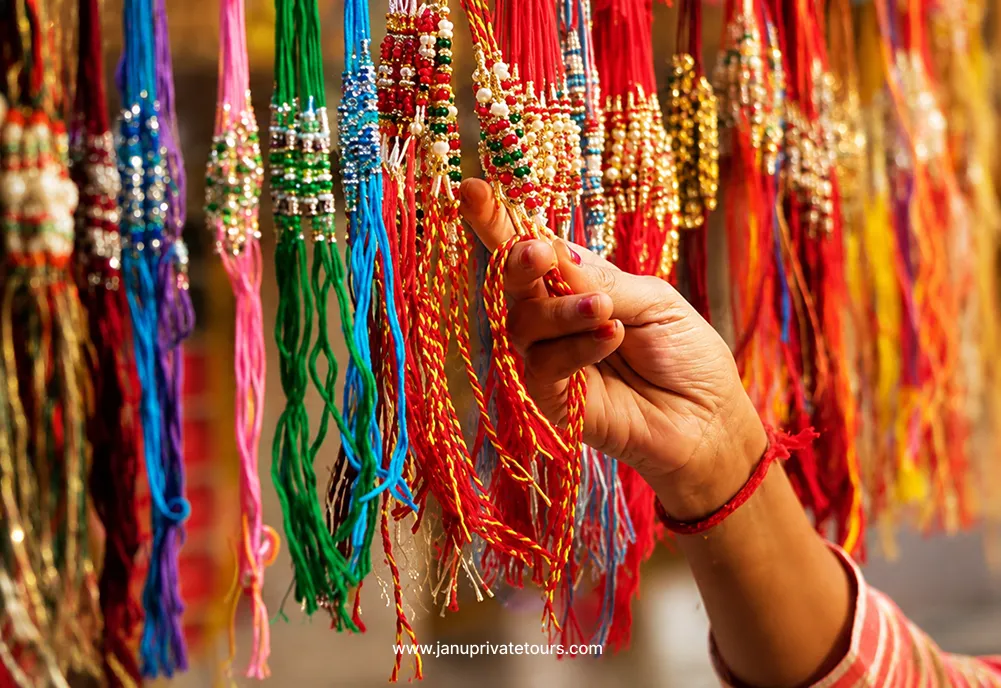
A few days before the festival, local markets and shops are full of colorful rakhis. You can find a wide variety of rakhis, including traditional, beaded, handmade, silver and gold rakhis, personalized gifts, cartoon rakhis for children and more.

2. Rakhi Ceremony

On the day of the festival, sisters and brothers participate in a simple rakhi ceremony. During the rakhi ceremony, sisters apply a tilak to their brother’s forehead, tie a rakhi around their wrists and bless them. In return, brothers promise to protect their sisters against all evils.

3. Gifts Are Given 

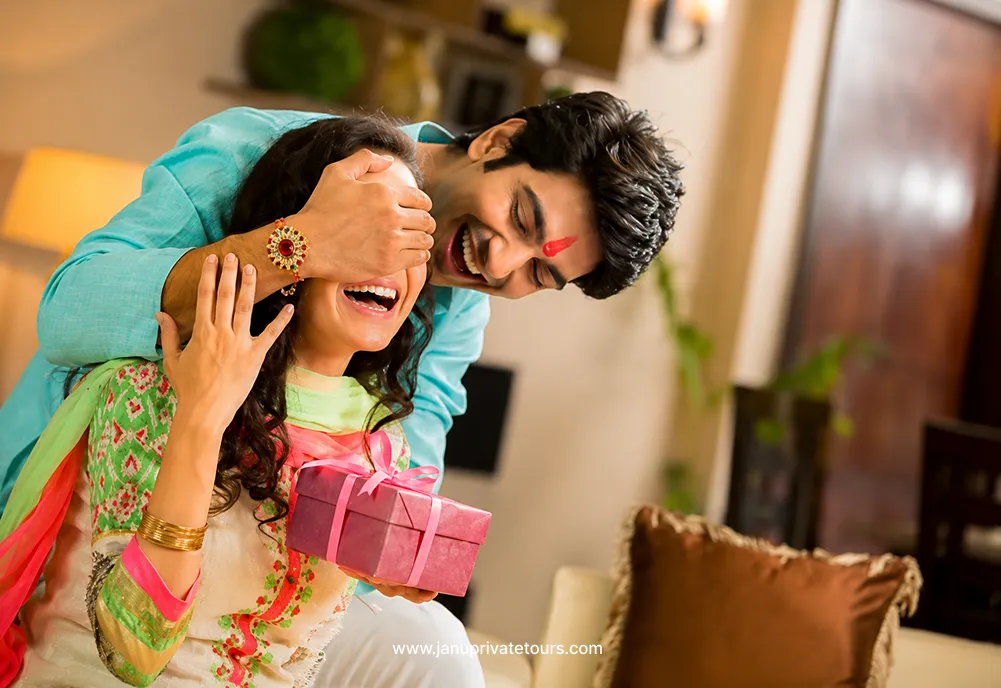
Modern-day Raksha Bandhan traditions suggest that brothers and sisters give each other gifts, which can range from sweets to jewelry, cars and more. Nevertheless, the most important part of the festival is the relationship between siblings and family members. Gifts may have different meanings to different people, while for some, the love and gratitude expressed during the festival are more important than material items.

4. Families Share Sweets

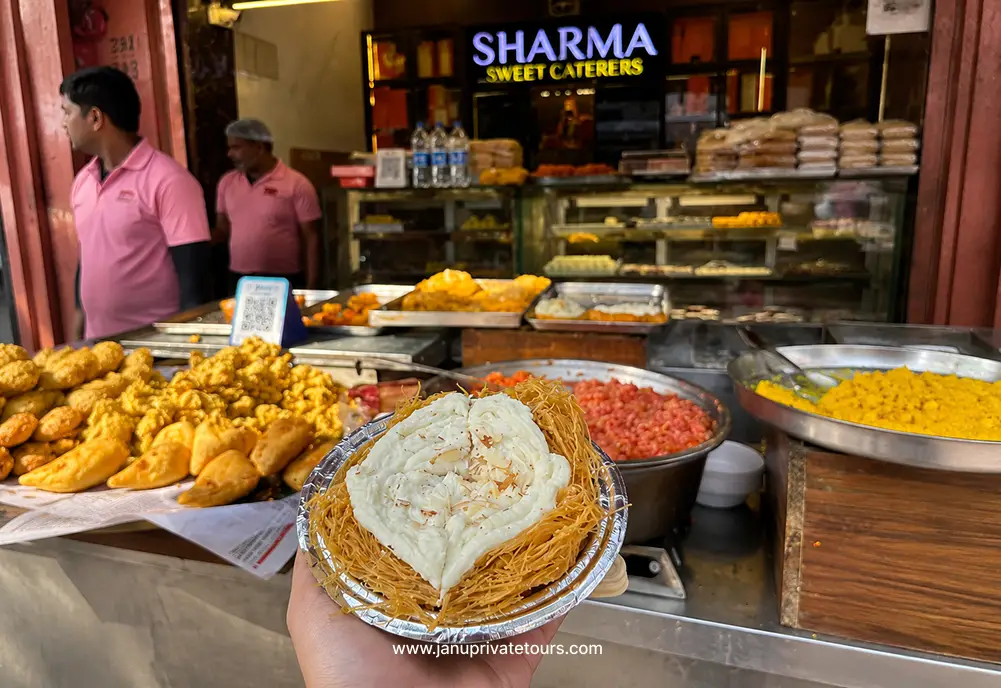
Sweets and food play an essential part in the Raksha Bandhan festival. Local families prepare traditional sweets and desserts to share with their siblings during the festival. Ladoo, barfi, rasgulla, ghewar, gulab jamun, kaju katli, jalebi and many other sweets and desserts are popular in India.

Where Is Raksha Bandhan Celebrated in India?

The most common question asked by international travelers is where Raksha Bandhan is celebrated in India.

Well, Raksha Bandhan is an Indian cultural festival celebrated throughout the country. Travelers should know that Raksha Bandhan traditions and customs may vary from region to region. The most popular destinations to witness Raksha Bandhan in India include: 

  • Rajasthan
  • Delhi
  • Uttar Pradesh
  • Maharashtra
  • Gujarat
  • West Bengal

How Can Travelers Experience Raksha Bandhan?

Are you wondering how to experience Raksha Bandhan festival as a traveler?

Luckily, there are plenty of ways to witness Raksha Bandhan in India and participate in the festival. Below are some of the best ways to experience Raksha Bandhan in India.

Explore a Local Rakhi Market

One of the easiest and most exciting ways to witness Raksha Bandhan festival in India is to explore a local marketplace. A few days before the festival, local markets and shops are filled with colorful rakhis, sweets, gifts and traditional clothes. Local markets are also a great place to take pictures and enjoy the festive atmosphere. Mind that you must ask for permission before taking pictures of people.

Buy a Rakhi

Another wonderful way to participate in Raksha Bandhan as an international traveler is to buy a rakhi. You can purchase a rakhi as a souvenir for your sibling or a friend, or a local guide can help you select a special rakhi for your sister or brother. Always remember that a rakhi has a special meaning for Indian families and it is essential to respect Raksha Bandhan traditions and customs.

Taste Traditional Sweets

Do you enjoy sweets and desserts? If yes, then you will surely fall in love with Raksha Bandhan sweets and desserts. You can visit a local sweet shop and taste traditional sweets and desserts. Local shops in India are full of various sweets, including ladoo, ghewar, barfi and many others. Your local guide can tell you which sweets are the most popular and loved during Raksha Bandhan.

Join a Celebration If You Are Asked to

If your Indian friends, guides, or family members ask you to join their Raksha Bandhan celebration, you can accept their offer. Raksha Bandhan is a festival of family, love and gratitude. Mind that you should always follow the directions of your host and be comfortable with every step during the festival. You do not need to be a Raksha Bandhan expert to join a local festival; a little bit of cultural curiosity will suffice to enjoy Raksha Bandhan with your new friends.

Raksha Bandhan Etiquette for International Travelers

Raksha Bandhan is a festival of family, love and gratitude. Nevertheless, travelers should know Raksha Bandhan etiquette and be aware of Raksha Bandhan manners before participating in the festival.

Below are some of the most important Raksha Bandhan customs for international travelers.

  1. Ask for permission before taking pictures. Photographing local rituals and ceremonies is not recommended without permission, as it is considered disrespectful to family traditions and religious beliefs.
  2. Follow your host’s guidance. It is essential to be respectful and follow the directions of your Raksha Bandhan host.
  3. Dress modestly and comfortably. As with any cultural or religious event, it is necessary to dress modestly and comfortably.
  4. Avoid touching religious objects. In case you are unsure whether it is permissible to touch a specific object, it is better to refrain from touching it.
  5. Learn the meaning of the festival. It is essential to educate yourself on the significance of Raksha Bandhan and its rituals.
  6. Don’t treat Raksha Bandhan as a show. Raksha Bandhan is a festival of family, not an entertainment event. It is critical to treat Raksha Bandhan with respect and cultural awareness.

What Is a Good Raksha Bandhan Gift for Sister in India?

If you are traveling in India with your sister or you want to buy a Raksha Bandhan gift for your sister, keep in mind that you can purchase virtually everything in India.

You can buy jewelry, clothes, sweets and many other souvenirs. Traditional handicrafts and local gifts are also popular Raksha Bandhan presents. However, the best Raksha Bandhan gift for your sister in India is an unforgettable travel experience.

Experience the Heart of India With Janu Private Tours

Traveling to India during Raksha Bandhan is a unique chance to witness India’s cultural heritage and experience India’s local traditions. 

Raksha Bandhan is a festival of family and gratitude celebrated nationwide. International travelers can enjoy Raksha Bandhan in India and participate in this meaningful festival. As a private traveler, you can be a guest in local families and experience Raksha Bandhan from the inside.

Whether you want to explore local markets in Jaipur, enjoy India’s food in Delhi, or go on an adventure through India’s Golden Triangle – a private tour is the best way to experience Raksha Bandhan in India.

Planning an India trip during Raksha Bandhan? Let Janu Private Tours help you experience India beyond the usual tourist trail.

Why Does the Pink City Turn Green in August? Discover the Magic of Teej Festival

When you imagine Jaipur, the first images that appear in your mind are those of rose-pink buildings, grand forts, bazaars and women in traditional Rajasthani attire.

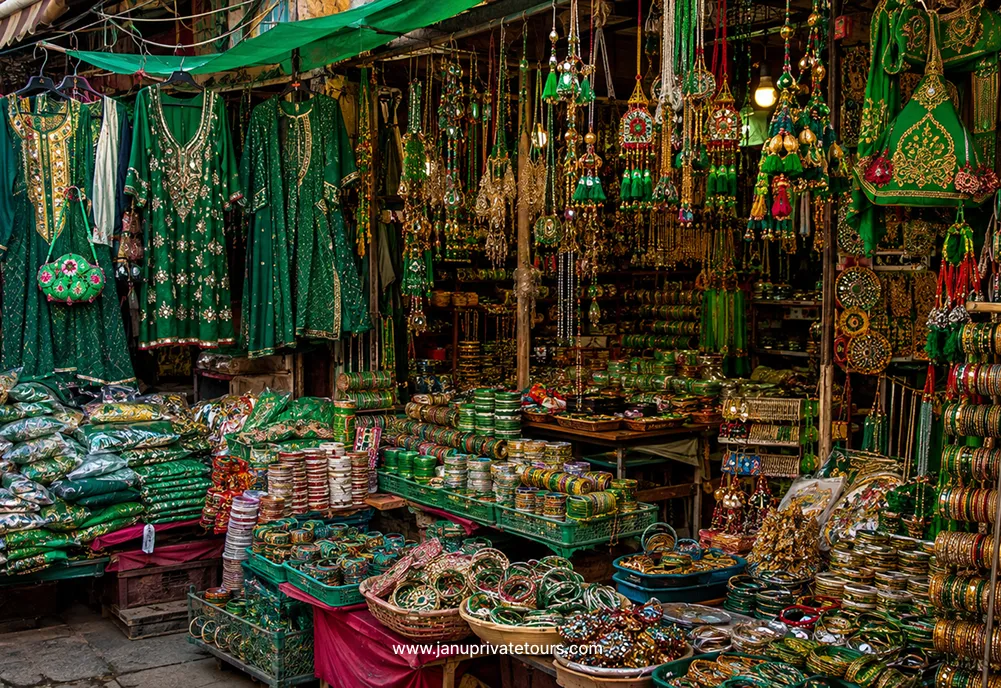
However, if you were to visit the Pink City in August, you would be surprised to see the city drenched in green. From green bangles in the bazaars, green lehengas and sarees in the markets, to green trees after the monsoon rains, swings decorated in flowers in the gardens and courtyards. Not only this, the city is bound to be filled with the delicious aroma of sweets wafting in the air, folk music echoing in the ancient city and Jaipur preparing for one of Rajasthan’s most popular festivals – the Teej Festival.

The festival is not only a celebration of the monsoon season but also one of devotion, womanhood, love, tradition and new birth after the hot summer.

And the best place to witness this spectacular festival is in Jaipur.

What Is Teej Festival?

Teej Festival in India is a set of Hindu festivals that are widely celebrated all over India, especially in northern and western states.

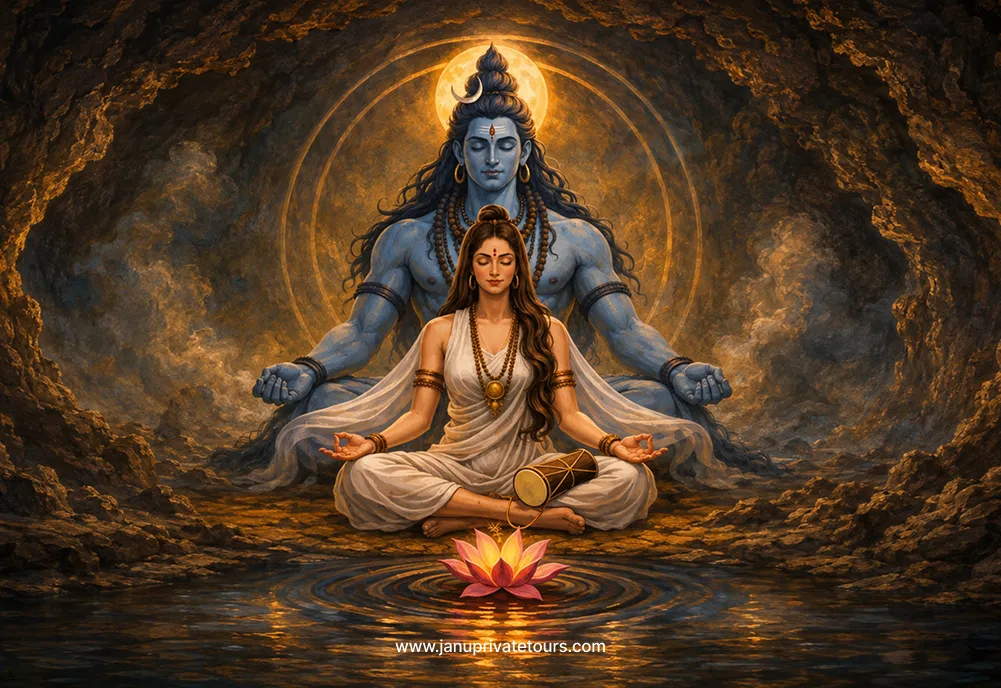
It is a festival dedicated to Goddess Parvati and Lord Shiva and is celebrated during the monsoon season, usually in July and August. Women observe this festival by singing, dancing and fasting to seek the goddess’s blessings of marital bliss, happiness and prosperity.

In addition to being a festival of devotion, Teej is also a festival of monsoon. After the hot summer, the much-needed rains bring joy and relief to the people of Rajasthan. Teej is a monsoon festival famous for greenery, social gatherings, rituals, music, swings and sweets.

Why Does Jaipur Turn Green For Teej?

The reason why Jaipur turns green for Teej is twofold.

First of all, the word green itself is intrinsically linked to this festival. The color green symbolizes fertility, prosperity, abundance and the renewal of life. That is why women in Jaipur and other parts of Rajasthan wear traditional colorful attire, including green, during Teej.

Secondly, Jaipur is a desert state and just like any other desert, it turns green after the rains. The monsoon season brings the much-needed relief from the hot summer and also brings green color to the landscape of Jaipur.

So, if you thought that the Pink City turned green simply for the sake of Teej, you are mistaken. It turned green for two reasons: the much-needed rains and the festival of Teej.

History of Teej Festival

Many travellers often wonder about the meaning of Teej festival. 

The festival Teej is primarily a festival of Goddess Parvati. According to popular belief, Goddess Parvati performed rigorous fasting and meditation to win Lord Shiva’s heart.

The festival of Teej is celebrated all over Rajasthan and has been an integral part of the cultural traditions of this region for centuries.

It is a festival that beautifully depicts the devotion, love and faith of the people of Rajasthan.

Jaipur, in particular, has its own unique way of celebrating this festival. As the capital city of Rajasthan, Jaipur has its own royal traditions and cultural heritage.

The festival of Teej, especially in Jaipur, has a unique charm that is worth experiencing.

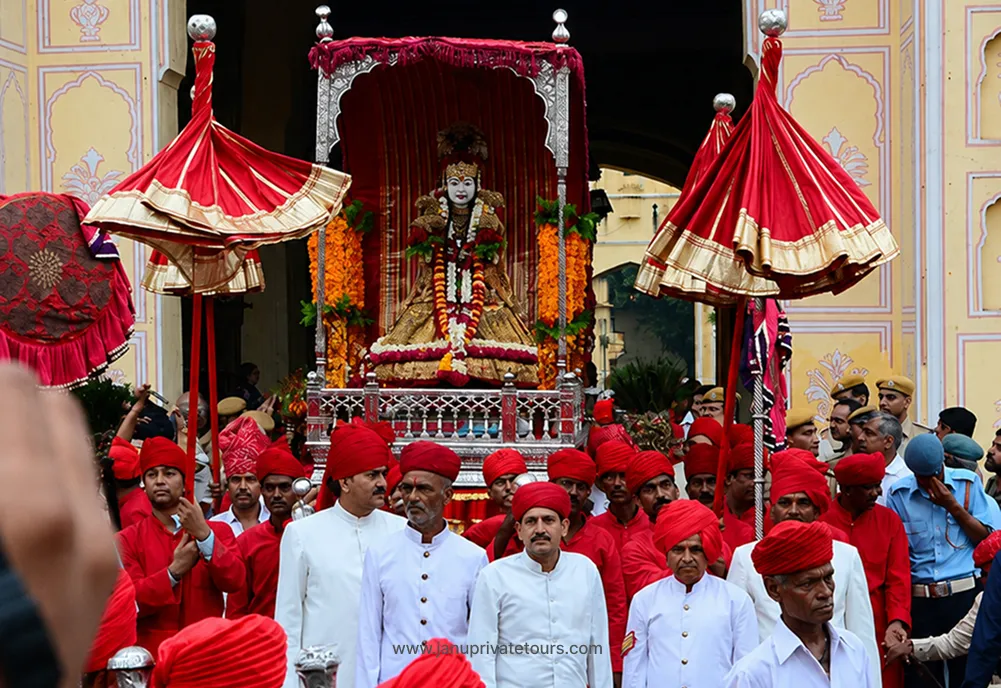
The Jaipur Teej is a royal festival, where the royal procession of Teej Mata and the rich cultural heritage of Rajasthan come together to present a unique festival that has attracted people from all over the country.

So, if you want to witness the Teej Festival in all its glory, then Jaipur is the place to be.

Teej Festival in Jaipur: Where To See?

If you are wondering where to witness the Teej Festival in Jaipur, the answer is the Pink City’s ancient streets and bazaars.

One of the most popular events of this festival is the traditional Teej procession. The grand procession of Teej Mata starts from the City Palace and winds its way through the old city, passing through Tripolia Bazaar and Chhoti Chaupar. The procession comprises camel rides, decorated elephants, horses, folk artists, musicians, royal palanquins, chariots and bullock carts.

If you are a traveler, then the best way to experience this festival is by witnessing the royal procession.

When Is Teej Festival Celebrated in Jaipur?

If you are planning to witness this Teej festival 2026 in Jaipur, you should know that the Jaipur Teej Festival is usually celebrated in August.

This year, the Jaipur Teej Festival will be celebrated on 15th and 16th August 2026. The festival will witness all the traditional events, including the Teej procession, in the ancient capital of Rajasthan.

So, if you are a traveler planning to visit Jaipur in 2026, remember to include the Teej Festival in your itinerary.

The old city of Jaipur turns into a carnival during this festival and the local residents and tourists get together to witness this spectacular event.

How Is Teej Festival Celebrated?

If you are wondering how the Teej Festival is celebrated, here are some interesting facts.

It is celebrated all over northern and western India. However, the ways in which it is celebrated vary from region to region.

Traditional attire

One of the most prominent ways in which the Teej Festival is celebrated is through the traditional attire.

Women in Rajasthan wear traditional colorful sarees and lehengas along with bangles and mehendi during this festival. The colors green and red are especially significant during this festival as they symbolize fertility and prosperity. The traditional bangles and jewelry add to the charm of the traditional attire.

As a traveler, you can witness this festival in all its splendor by visiting the bazaars and markets of Jaipur.

Swings

One of the most interesting aspects of this festival is the swings.

Swings are an integral part of the Teej Festival celebrations. Swings decorated in flowers and colorful fabric can be seen all over Jaipur during this festival. Women and girls of all ages sit on these swings, sing traditional songs and enjoy the monsoon season.

So, if you are a traveler visiting Jaipur during the Teej Festival, make sure you witness this unique aspect of the festival.

Mehendi

Another unique feature of the Teej Festival is mehendi. Mehendi is traditionally applied on women’s hands and feet as a symbol of good luck and prosperity.

Moreover, mehendi makes women’s traditional attire look more charming and attractive.

Traditional Rituals and Cultural Celebrations

In addition, traditional folk songs and music are performed and played during the Teej Festival. As a traveler, you can enjoy the rich cultural heritage of Rajasthan by attending the Teej Festival.

Moreover, it is the festival of fasting and prayers. Women fasting and praying to Goddess Parvati and Teej Mata for marital bliss, prosperity and family happiness are an integral part of the festival.

However, as a traveler, it is essential to remember that all these rituals have religious significance and should be treated with respect.

Ghevar

Ghevar is one of the most popular traditional sweetmeats that are prepared and enjoyed during the Teej Festival.

Ghevar is a disc-shaped sweet made of wheat flour and sugar syrup and is served with rabri, dry fruits and nuts. Ghevar is not only a popular sweet among the locals, but it has also become an integral part of the Teej Festival in Jaipur. Therefore, if you are a traveler and you are in Jaipur, do not forget to taste this scrumptious sweet during your stay.

Royal Teej Procession

If you are in Jaipur during the Teej Festival, then experiencing the royal procession is a must for you.

This procession is one of the vital highlights of the festival. The grand procession of Teej Mata starts from City Palace and winds its way through the old city, passing through Tripolia Bazaar and Chhoti Chaupar. The procession comprises camel rides, decorated elephants, horses, folk artists, musicians, royal palanquins, chariots and bullock carts.

The procession of Teej Mata is the most popular one among all Teej processions. It perfectly represents the cultural traditions and even the royal heritage of Jaipur. Therefore, if you are a traveler, make sure to witness this grand procession.

Why Witness Teej in Jaipur?

Teej is the festival of devotion, love, faith and family. It is the festival of fertility and prosperity, which is celebrated across northern and western India.

However, there is no better place to witness this festival than Jaipur, the ancient capital of Rajasthan. Jaipur is a city of palaces, forts, bazaars, fairs, music, dances, devotion and faith. It is a city that represents the rich cultural traditions of Rajasthan.

If you are a traveler and you want to witness the unique cultural traditions of Rajasthan, then Jaipur is the right choice for you. In addition to cultural traditions, Jaipur offers you an opportunity to shop for traditional attire, jewelry and accessories.

As a result, if you are in Jaipur during the Teej Festival, make sure to explore this wonderful city and immerse yourself in its rich cultural heritage.

Moreover, the local population of Jaipur is very friendly and hospitable. They are always excited about the Teej Festival. As a result, you will see a large number of women applying mehendi, putting on jewelry and traditional bangles, folk music ensembles and decorated swings.

In addition, you will also witness the grand procession of Teej Mata through the ancient streets of Jaipur.

Therefore, if you are a traveler and you want to experience something unique, you should visit Jaipur during the Teej Festival. You will not only witness the Teej Festival but also have an opportunity to explore the rich cultural traditions of Rajasthan.

Experience the Magic of Teej Festival with Janu Private Tours

For those who want to be more explorers in their journey through India, a visit to Rajasthan and especially Jaipur during the Teej Festival is mandatory.

From the royal processions and folk music to the monsoon season, swings, mehendi, traditional attire and sweet delicacies, Teej has it all. And that is how the Pink City turns green for Teej.

For those looking to witness Jaipur in its grand green glory for a few beautiful days, let Janu Private Tours help you experience the Pink City beyond the usual sightseeing itinerary, with local insight, carefully planned experiences and the freedom to discover Rajasthan at your own pace.

Mr. Shabbir Khan (Janu)

Why Every Traveler Should Experience the International Kite Festival in India

There’s a moment on January 14 in Ahmedabad around 8 AM, just after the pre-dawn wind picks up, when you look up and realise the sky has completely disappeared. Not clouds. Kites. Thousands of them, in every colour you can name and several you can’t, criss-crossing each other as sharp strings try to cut rivals down. A million voices across the city scream Kai Po Che! the Gujarati cry of victory when your string slices through someone else’s, and somewhere nearby, a family on a rooftop is sharing a bowl of undhiyu and laughing.

I’ve been to a lot of festivals. This one is categorically different.

India’s kite festival, known as Uttarayan or Makar Sankranti, runs every January, and the 2026 edition drew 135 international kite flyers from 50 countries to Ahmedabad alone. If you haven’t planned to come yet, here’s everything you need to know before the 2027 edition arrives.


How Is the Kite Festival Celebrated in India?

The kite festival isn’t a ticketed event; you attend it as a city-wide phenomenon you get absorbed into. And understanding how it works makes your experience dramatically better.

Celebrations begin in the days before January 14, building like a slow drumroll. The kite markets — particularly the legendary Raipur Darwaza Patang Bazaar in Ahmedabad — open 24 hours a day during the week leading up to the festival. The lanes are stacked floor-to-ceiling with paper-and-bamboo kites of every size, and the bartering and bulk-buying that happens there is a spectacle on its own, even before a single kite takes flight.

On the morning of January 14, children set alarms for 5 AM. Parents who usually struggle to get them out of bed for school find them fully dressed and on the rooftop before sunrise, taking advantage of the ideal pre-dawn wind. By 7 AM, the sky is filling. By 10 AM, it’s total. The Sabarmati Riverfront, with a bank capacity of over 500,000 people, becomes a global canvas where kites from Malaysia, Japan, Italy, Indonesia, and the USA share airspace with the traditional Gujarati patangs.

The kites used for fighting are made of lightweight paper stretched over springy bamboo frames, attached to manja, a special string coated with a paste of glue and ground glass, dried to a razor edge. The objective: manoeuvre your kite so your manja cuts through your rival’s string. Their kite falls; you’ve won. Someone screams, Kai Po Che! The game immediately restarts. This continues, on rooftops across the entire state of Gujarat, from 5 AM until well past midnight.

At the official International Kite Festival venue at the Sabarmati Riverfront, the format is slightly different, more showcase than combat. Master kite flyers from around the world demonstrate creations that bear no resemblance to anything you’ve seen before: giant Chinese flying dragons, Italian sculptural kites, Japanese Rokkaku fighting kites, and Malaysian Wau-Balang kites the size of a car. One of Ahmedabad’s legendary local flyers, Rasulbhai Rahimbhai, is known for flying trains of hundreds of individual kites on a single string, a sight that stops the crowd every time. Entry to the official festival venue at Sabarmati Riverfront is free for all visitors.


Which States in India Celebrate the Kite Festival?

Gujarat is the undisputed capital of kite flying in India, but the celebration extends far beyond one state.

The festival, known as Makar Sankranti across most of North India, falls on January 14 (sometimes January 15) each year, marking the sun’s transition into the Capricorn zodiac, the beginning of the auspicious six-month period of Uttarayana. Every state celebrates this astronomical shift, but the way they do it differs enormously.

Gujarat treats Uttarayan as an official 2-day public holiday. The entire state of Ahmedabad, Surat, Rajkot, Vadodara, Nadiad, and even Dholavira in the remote Kutch desert shuts down normal life and moves to the rooftops. The International Kite Festival (IKF), organised by the Tourism Corporation of Gujarat Limited since 1989, is held across multiple cities in a rolling schedule through January 10–14.

Rajasthan, particularly Jaipur, Jodhpur, and Udaipur, holds enthusiastic kite-flying celebrations on Makar Sankranti. The kite-dotted sky above the Jaipur City Palace and Jodhpur’s Mehrangarh Fort on January 14 creates visuals that travel photographers specifically plan trips around. The atmosphere here is more neighbourhood-level than Gujarat’s state-wide shutdown, warm, accessible, and easy for foreign visitors to join in.

Telangana (Hyderabad) celebrates kite flying as part of its Sankranti traditions, with competitions held across the city’s open grounds.

Delhi and Rajasthan’s border regions fly kites enthusiastically across rooftops on January 14, though without the organised festival structure of Gujarat or the heritage backdrop of Rajasthan’s fort cities.

West Bengal and South India celebrate Makar Sankranti in different forms as Poush Parbon in Bengal (with sesame sweets and rice dishes) and as Pongal in Tamil Nadu (a 4-day harvest festival), with kite flying a secondary tradition rather than the centrepiece.


How Many Kite Festivals Are There in India?

There isn’t one kite festival in India; there are several distinct events worth knowing about, each with a different character.

The International Kite Festival (IKF) in Gujarat is the flagship event, running since 1989. It’s organised by the Tourism Corporation of Gujarat and travels across multiple Gujarat cities between January 10 and 14 each year. Ahmedabad hosts the main event at the Sabarmati Riverfront from January 12–14. The 2026 edition saw 135 international participants from 50 countries. This is the one international travelers specifically plan around.

Uttarayan (January 14 and 15) is the broader festival that the IKF is built within the city-wide, rooftop-level mass celebration where 8 to 10 million people across Gujarat participate. The IKF is the international showcase; Uttarayan is the soul of it.

The Jaipur Kite Festival takes place on Makar Sankranti (January 14) across Jaipur’s old city rooftops, heritage havelis, and near the City Palace area. It’s less internationally organised than Gujarat’s event, which is precisely what makes it appealing for visitors who prefer a more intimate, neighbourhood-level experience.

Jodhpur’s Makar Sankranti kite flying is similarly rooftop-based and set against the dramatic blue city and Mehrangarh Fort backdrop, one of the most photographed kite festival settings in India.

The kite festival at the Statue of Unity (Ekta Nagar) in Gujarat, launched as part of the expanding Uttarayan circuit, adds a striking modern venue to the programme. The world’s tallest statue rising behind kite-covered skies creates one of the more surreal festival photographs you’ll take anywhere.


What Does the Sky Look Like During the Kite Festival? (The Part No Photo Prepares You For)

Every photograph you’ve seen of Uttarayan is technically accurate and somehow completely inadequate. The scale isn’t conveyed. The noise isn’t conveyed. The smell of food drifting up from rooftops below isn’t conveyed.

By 10 AM on January 14, the sky over Ahmedabad is so densely packed with kites that the blue is genuinely difficult to find between them. The dominant sounds are the snapping of kite paper in the wind, the buzz of manja under tension, and the roar of Kai Po Che! erupting from different rooftops every 30–40 seconds as another kite is cut loose and spirals down.

The cut kites fall into lanes and streets below, and children sprint through the city in a tradition called latai pado, chasing fallen kites before someone else gets them. It is, objectively, slightly dangerous and completely joyful.

When the sun goes down, the festival doesn’t. Kite flyers send up bright white kites visible in the darkness, and skilled locals launch tukkals, paper lanterns strung in long lines from the kite string down to the rooftop, creating a floating galaxy of light across the city’s skyline. Ahmedabad’s Night Kite Flying event on January 13 is a dedicated celebration of this tradition, and it is extraordinary.


What Do You Eat During the Kite Festival?

You cannot experience Uttarayan without eating through it. The food is inseparable from the festival, and knowing what to look for means you don’t miss the best part.

Fafda-Jalebi is the definitive Uttarayan morning combination and one of those food pairings that make zero logical sense until you try it. Fafda is a crunchy, salty gram flour snack. Jalebi is a deep-fried spiral soaked in saffron sugar syrup. Salt and sweet together, eaten on a rooftop at 7 AM with the first kites in the sky, it’s one of the best breakfast experiences India offers.

Undhiyu is the centrepiece dish of Uttarayan, a slow-cooked winter vegetable casserole made with seasonal greens, papdi beans, yams, and muthiya (spiced fenugreek dumplings), traditionally cooked upside down in earthen pots. It’s rich, warming, and the reason Gujarati families spend the entire day on the rooftop: the undhiyu is up there with them.

Chikki brittle made from jaggery with sesame seeds (til), peanuts, or puffed rice is the on-the-go snack. You’ll find vendors walking through the festival crowds with trays of it. Budget roughly ₹20–50 (under USD 1) per piece.

At the Sabarmati Riverfront, food stalls from across Gujarat line the festival grounds, offering everything from street snacks to full thali spreads. Bring cash; most stalls don’t take cards.


Practical Tips for International Visitors at the Kite Festival

A few things you genuinely need to know before you go:

Protect Your Hands and Neck

The manja (glass-coated kite string) that falls from cut kites is sharp enough to cut skin, and it drifts down from the sky invisibly. Many regular visitors wear thin gloves on their string hand and a light scarf around the neck on the main festival days. This isn’t paranoia; it’s sensible. The festival organisers increasingly use synthetic manja with rounded edges at official venues, but traditional glass manja is still widely used in the city.

Wear Comfortable, Sun-Ready Clothing

January in Gujarat means clear skies and temperatures between 15–28°C (59–82°F), pleasant in the morning, genuinely warm by early afternoon. You’ll be outdoors for 8–10 hours. Sunscreen, a hat, and a light layer for the early morning are the practical kit.

Book Accommodation in Ahmedabad Very Early

For the 2026 festival, most decent hotels near the Sabarmati Riverfront were fully booked by October 2025. For 2027, book 4–5 months ahead. Prices during Uttarayan week run 50–100% above standard rates.

The official IKF venue entry is free. You do not need a ticket to enter the Sabarmati Riverfront for the International Kite Festival. For rooftop access with a local family — a vastly better experience than the official venue, this is something a local guide or private tour operator (like us) can arrange.


How to Plan Your Kite Festival Tour to India with Janu Private Tours

The kite festival is one of those experiences that works best when someone who knows India builds the logistics around you. Here’s why that matters:

Ahmedabad alone doesn’t need a full trip. The festival pairs beautifully with Rajasthan, a private circuit from Jaipur (where you catch Makar Sankranti kite flying on the 14th), then to Jodhpur for the blue city at its most photogenic, then into Gujarat for the International Kite Festival in Ahmedabad. A 10–12 day itinerary covers all of it without rushing.

For clients who’ve already done the Golden Triangle tour, a Rajasthan-plus-Kite-Festival combination is a compelling reason to return to India in January, a different season, a different energy, a completely different experience.

We arrange rooftop access with local Ahmedabad families on the main Uttarayan day, the genuinely local version, not the tourist-facing official event. We organise visits to Patang Bazaar before the festival, kite-flying lessons if you want them, and the right position at the Sabarmati Riverfront for the night lantern display on January 13.

The 2027 edition will be on January 14. If you’re travelling from the US, UK, Australia, or Canada and want to build a January India festival trip, the time to plan is now, not three weeks before departure.

Tell us your travel dates, group size, and whether you’d like the full Rajasthan-plus-Gujarat circuit or a focused Gujarat experience. We’ll handle everything else.

Experience the Magic of Diwali: A Foreigner’s Guide to India’s Festival of Lights

I’ve watched Diwali from a lot of angles — rooftop guesthouses in Varanasi, courtyards in Jaipur, and once, memorably, from a boat on the Saryu River in Ayodhya as 2.6 million earthen lamps turned the riverbank into something that looked like the Milky Way had landed. Nothing I can type here fully captures it.

What I can do is tell you exactly what to expect, when to go, what to wear, and how to actually participate — not just watch — so your first Diwali in India is the experience it should be.

Diwali 2026 falls on Sunday, November 8. The main Lakshmi Puja takes place after sunset on this day. Start planning now — accommodation in top Diwali destinations sells out 3–4 months in advance.


Why Do Indians Actually Celebrate Diwali? (It’s More Than Just Fireworks)

The short version: good won. Deepawali literally means rows of clay lamps in Sanskrit. The most widely told origin story marks Lord Rama’s return to Ayodhya after 14 years of exile and defeating the demon king Ravana. The people lit oil lamps to guide him home — and that gesture became a tradition that has never stopped.

What’s fascinating for international visitors is that Diwali means something different depending on where in India you’re standing. In West Bengal, it’s Kali Puja. In South India, it celebrates Lord Krishna’s defeat of the demon Narakasura. In the Sikh tradition, it marks Guru Hargobind Ji’s release from imprisonment in 1619. The stories differ; the theme never does — light over darkness, every time. It’s a message broad enough that almost every religion in India has adopted it as its own.


Where Are the Best Places in India to Experience Diwali as a Foreign Visitor?

Not all Diwali celebrations are equal — the city you choose defines the entire experience. Here are the places worth building a trip around.

Ayodhya — The Spiritual Epicentre

The Deepotsav in Ayodhya has transformed from a local festival into an internationally renowned cultural event. In 2025, the administration aimed to illuminate 2.6 million earthen lamps across 56 ghats along the Saryu River, with 33,000 volunteers deployed to light lamps and manage crowds. The scale is genuinely incomprehensible until you’re standing there.

The 2025 celebration added a 1,000-drone aerial show depicting scenes from the Ramayana, combined with projection mapping and laser displays alongside eco-friendly fireworks. Ayodhya is not the place for a quiet, boutique Diwali. It’s the place for the full, overwhelming, once-in-a-lifetime version.

Book VIP Darshan passes in advance if you’re visiting the Ram Mandir — general darshan queues during Deepotsav can run 3 to 5 hours.

Varanasi — Diwali Followed by Dev Deepavali

During Dev Deepavali, a festival following Diwali, the stone steps (ghats) along Varanasi’s riverfront are illuminated by millions of lamps, creating a spiritual atmosphere unlike anywhere else. If Ayodhya is the dramatic version, Varanasi is the profound one. The 84 ghats stretching along the Ganges, every surface covered in flickering diyas, reflecting on the river — it’s the kind of view that makes you go quiet.

Dev Deepavali falls on the full moon night of Kartik, exactly 15 days after the main Diwali — in 2026, that’s November 23. If your schedule allows, staying in Varanasi through both events gives you two entirely different experiences within three weeks.

Jaipur — Diwali in a Palace City

The Pink City goes all-in for Diwali. The City Palace illuminations, the bazaars of Johari Bazaar and Bapu Bazaar lit in colour, and the rooftop fireworks visible from most of the old city make Jaipur a strong choice for first-time visitors who want Diwali combined with the classic Rajasthan experience. It’s also more logistically manageable than Ayodhya for independent international travelers.

Amritsar — Bandi Chhor Divas at the Golden Temple

The Golden Temple at Diwali is the single most photogenic religious sight in India at festival time — and that’s a high bar to clear. The entire marble complex is lit with thousands of lights, the sarovar (sacred pool) reflects the illuminations, and the atmosphere is simultaneously spiritual and joyful. Diwali in the Sikh tradition is linked to the release of Guru Hargobind Ji and his freedom from imprisonment — making the Golden Temple one of the most emotionally charged places in India on this night.


How Do You Celebrate Diwali Like a Local in India?

The best thing about Diwali, from a visitor’s perspective, is that participation is genuinely welcomed. This is not a festival you watch from behind a barrier.

On Dhanteras (Day 1):

Go shopping. This is India’s single biggest shopping day of the year — gold, silver, kitchen utensils, and electronics all fly off shelves because buying on Dhanteras is considered auspicious. The markets in any Indian city on Dhanteras evening are a spectacle on their own.

On the main Diwali night (Day 3):

Join a household for Lakshmi Puja if you get the opportunity. Many Indian families warmly include visiting friends and guests. The puja involves lighting diyas, offering flowers and sweets to the goddess, and prayers for prosperity. After the puja, sweets are shared — mithai (Indian sweets) boxes go around like gifts. Accept everything you’re offered. Refusing is the only way to actually offend anyone.

Make rangoli:

Most guesthouses and heritage hotels organise rangoli sessions for guests during Diwali week. Rangoli is a floor pattern made from coloured powder, rice flour, or flower petals, traditionally placed at the entrance of homes to welcome Goddess Lakshmi. You will make a mess. You will love it.

Go To The Ghats At Night:

Whether you’re in Varanasi, Ayodhya, or any river city, the ghat area on Diwali night — covered in rows of earthen diyas, incense in the air, devotional music from temple speakers — is the image you came for.


What Should You Wear During the Diwali Festival?

Dressing well during Diwali isn’t about strict rules — it’s about showing up with intent. Go traditional if you can: a salwar kameez (tunic-and-trouser set) for women or a kurta-pyjama for men are both widely available in Indian markets for USD 10–25. Bright colours are the code — red, orange, deep yellow, emerald green. Skip white (associated with mourning) and black (inauspicious for festivals).

Practically: easy-to-remove footwear matters since you’ll be slipping shoes off at every temple and home. Carry a shawl to cover shoulders at religious sites. And definitely skip the tight waistband — the volume of mithai (Indian sweets) heading your way is not to be underestimated.


What Should You Actually Do During the Diwali Festival?

Beyond the obvious watching-the-fireworks part, here’s what makes a Diwali trip genuinely memorable:

Attend A Dawn Aarti on Dhanteras

The atmosphere at river ghats at 5:30 AM during Diwali week — the copper lamps, the chanting, the darkness gradually becoming light — is quiet in a way the main festival night isn’t. Both are worth experiencing; they’re completely different.

Visit A Mithai Shop and Go Deep

Indian sweets during Diwali include varieties you won’t find at any point during the rest of the year — kaju katli (cashew fudge cut in diamond shapes), besan laddoo (chickpea flour balls with ghee and cardamom), gulab jamun (milk-solid dumplings in rose-flavoured sugar syrup). Budget roughly ₹500–800 (about USD 5–8) for a mixed box of high-quality sweets from a good local shop. It’s the best food souvenir India offers.

Watch A Ram Leela Performance

In the days leading up to Diwali, dramatic retellings of the Ramayana are performed across India in open-air theatres and town squares. The performances can run 3–4 hours, with elaborate costumes, fire effects, and the eventual burning of a massive effigy of Ravana. You don’t need to follow every line of the story to find it completely captivating.

Take A Diyas Painting or Pottery Class

In Jaipur and Varanasi, especially, local artisans offer short workshops where you paint your own earthen lamps before Diwali. A 90-minute session costs roughly ₹400–600 (around USD 5–7), and you leave with something you actually made.

Be Honest About the Firecrackers

Indian fireworks during Diwali are loud — genuinely, persistently loud from roughly 6 PM until midnight. If you’re a light sleeper or noise-sensitive, book accommodation away from dense residential areas and bring earplugs for the main night. This is authentic India; it’s wonderful and chaotic and not for everyone at full volume.


Diwali Tourism in India: What International Visitors Need to Know

India has significantly upgraded its Diwali tourism offering — dedicated crowd management at major events, English-language programming, and structured international tour packages make 2026 one of the best years yet to visit. India’s Ministry of Tourism actively promotes Diwali under its Incredible India campaign, and dedicated packages combining the festival with the Golden Triangle tour or Rajasthan tours are among the most-booked itineraries for November departures from the US, UK, and Australia.

The practical reality: hotels in Varanasi, Ayodhya, Jaipur, and Amritsar should be booked at least 3 months ahead. Festival week prices typically run 40–80% above standard rates. Flights into Varanasi (VNS) and Lucknow (for Ayodhya) fill up fast — book the moment your dates are confirmed.

Because Diwali follows the Hindu lunar calendar, the date shifts every year between mid-October and mid-November. For 2026, arrive by November 5 to catch Dhanteras, and depart after November 11 to include Bhai Dooj. That 6-day window is the full Diwali experience.


Janu Private Tours’ Diwali Planning Advice for International Visitors

We’ve planned Diwali festival tour for visitors from the US, UK, Europe, Australia, and Canada for years. These are the things we tell every client before they go:

Choose one city, not three. The temptation is to do Varanasi AND Ayodhya AND Jaipur in the same Diwali week. The reality: travel during festival week in India is hectic, trains and flights are overbooked, and you’ll spend more time in transit than at celebrations. Pick your primary Diwali city and stay for 3–4 full nights. Then move.

Diwali + Golden Triangle works beautifully as a combined itinerary. Delhi, Agra, and Jaipur before the festival, then Varanasi or Ayodhya for the main event. We design this as a 10–14-day private trip — it’s one of our most-requested November itineraries.

Book a local guide for Diwali night specifically. The crowds in Ayodhya and Varanasi during the main Diwali can be genuinely overwhelming. A knowledgeable local guide knows which ghats are accessible without the 2-hour queue, where to stand for the best view of the diya lighting, and which lane to take when it’s time to leave. This is not the night to navigate solo.

Ready to plan your Diwali 2026 trip? Tell us your departure country, travel dates, group size, and whether you want a cultural deep-dive or a festival-plus-landmarks combination. We’ll build an itinerary around the festival that gives you the real experience — not the rushed version.

Why Foreign Tourists Love Rajasthan’s Gangaur Festival

There’s a moment at Jaipur’s Gangaur procession — somewhere along Tripolia Bazaar — when the music stops making sense as separate instruments and becomes a single, physical thing you feel in your sternum. The elephant in front of you is draped in embroidered gold. The women behind it carry a gilded palanquin with the idol of Goddess Gauri, dressed in a crimson silk sari and jasmine garlands, swaying slightly with each step. The women lining the route throw rose petals from their balconies.

A client from Sydney messaged us three months after her Gangaur trip: I’ve done Diwali. I’ve done Holi. Gangaur is the one nobody talks about and the one I’ll remember for the rest of my life.

She’s not wrong. Gangaur is Rajasthan’s longest-running, most elaborate festival — 16 days of daily rituals building toward a single grand procession — and it draws far fewer international visitors than it deserves. Here’s everything you need to plan a trip around it.

Gangaur 2026 ran from March 4 to March 21, with the main procession day on March 21. For 2027, the festival will fall in late March to early April — exact dates follow the Hindu lunar calendar, so check the Rajasthan Tourism website closer to the time.


Why Is the Gangaur Festival Celebrated?

Gangaur is a love story, a harvest celebration, and a spring festival all folded into one — and understanding the mythology makes watching it unforgettable.

The name itself tells you everything. Gangaur combines two divine names: Gan (a name for Lord Shiva) and Gaur (Goddess Gauri, another name for Parvati). The festival honours the divine union of Shiva and Parvati — specifically the moment after their marriage when Gauri returned to her parental home for 18 days and blessed the women she met with happiness, marital bliss, and prosperity. Women reenact this visit every year by worshipping clay idols of Isar (Shiva) and Gauri for 18 consecutive days before the grand finale.

According to mythology, Goddess Parvati performed intense penance across multiple lifetimes to earn Lord Shiva’s love. Impressed by her devotion, Shiva finally accepted her as his wife. The festival celebrates that devotion — and by extension, every woman’s capacity for patience, persistence, and love.

For married women in Rajasthan, Gangaur is the most important festival of the year. They fast for their husbands’ longevity and family well-being. For unmarried girls, it’s a chance to pray for a good match. But for everyone in the street — including foreign visitors — it’s 16 days of music, colour, and a royal procession that has no equivalent anywhere else in India.

The Gangaur festival also coincides with spring’s arrival, making it a harvest celebration too. After the dry Rajasthani winter, the Chaitra month brings the first warmth and greenery — and Gangaur celebrates that renewal with flowers and fresh offerings to the goddess every morning.


In Which Season Is the Gangaur Festival Celebrated?

Gangaur falls in spring — and it’s the most pleasant time of year to be in Rajasthan. The festival begins the day after Holi (India’s colour festival, usually late February or early March) and runs for 16 days through the Hindu month of Chaitra (March–April).

Temperatures in Jaipur and Udaipur during Gangaur week typically sit between 22–32°C (72–90°F). Mornings are cool and comfortable; afternoons warm up. The sky is clear, the daylight is long, and the desert landscape starts showing green for the first time since the previous monsoon. Roses and marigolds are in full bloom — which is why the flower garlands, petal offerings, and floral decorations during Gangaur look so extraordinary. The flowers are at their peak and cost next to nothing at this time of year.

For international visitors, this timing is excellent. It’s past the busy November–February peak season, which means hotel rates are slightly lower and the major monuments (City Palace, Amber Fort) are more comfortable to explore. The Golden Triangle circuit is at its best in March — not too cold, not too hot, with excellent light for photography.


Where Is the Gangaur Festival Celebrated?

Gangaur is primarily a Rajasthan festival, but the celebration takes a different character in each city.

The festival is widely celebrated in Jaipur, Udaipur, Jodhpur, Jaisalmer, Bikaner, and Nathdwara within Rajasthan. Rajasthani communities in Kolkata (West Bengal) and Gujarat also celebrate Gangaur, keeping alive the traditions of their home state. But the most spectacular public celebrations — the ones worth building a trip around — are in Jaipur and Udaipur, for very different reasons.

Jaipur hosts the grandest, most publicly visible procession in India for this festival. The scale is royal in the literal sense — the celebrations are rooted in the patronage of Jaipur’s Rajput royal family, who organised Gangaur processions for centuries. The pageantry here is unmatched.

Udaipur is entirely different. The idols of Isar and Gauri are carried in boats across Lake Pichola, beginning from the City Palace Ghat and moving across the lake as the sun sets. Locals and tourists gather at Gangaur Ghat — a ghat named specifically for this festival — where the lakefront fills with lamps, flower garlands, and devotional music. The Rajasthan Tourism Department also organises the Mewar Festival in Udaipur concurrently, adding cultural performances and heritage events to the lake celebrations.

Jodhpur has the most unusual version. Here, Gangaur is called Dhinga Gavar — and it comes with a tradition unique to this city. Women patrol the streets holding sticks, and local belief holds that if any unmarried young man gets touched by the stick, he will be married soon. The festival here is called Baintmaar Teej in some traditions, and the playful, street-level energy is nothing like Jaipur’s royal formality.

Bikaner’s celebration is best viewed from the ramparts of Junagarh Fort, where the procession below takes on a cinematic quality against the desert city’s terracotta buildings.


What Does the Gangaur Procession in Jaipur Actually Look Like?

The Jaipur Gangaur procession is one of the most photographed events in Rajasthan — and the photographs still don’t prepare you for being there.

The procession begins at Zanani-Deodhi inside the City Palace and moves through Tripolia Bazaar, Chhoti Chaupar, Gangauri Bazaar, and Chaugan Stadium before reaching its final destination at Talkatora — a distance that takes several hours to cover. The route through Jaipur’s old city, flanked by the pink-stuccoed facades of the walled city’s buildings, creates a backdrop that no amount of stage design could replicate.

What you’ll actually see: women in embroidered lehenga-choli sets in crimson, green, and gold carry the Gangaur Mata idol in an ornate palanquin. Decorated elephants, caparisoned camels, royal chariots, and bullock carts accompany the procession. Musicians playing shehnai, dhol, and nagara set a rhythm that carries for several blocks in every direction. Folk dancers perform ghoomar — a swirling Rajasthani dance form — while moving. The entire procession can take 2–3 hours to pass a single vantage point.

The best viewing positions along Tripolia Bazaar fill up an hour before the procession begins. If you want the front row rather than the 12th row, positioning matters — and this is exactly the kind of logistical detail a local guide handles for you, while you focus on watching.


What Is the Difference Between Teej and Gangaur?

Both are women’s festivals in Rajasthan dedicated to the love of Shiva and Parvati. The confusion between them is completely understandable — but they’re different in season, mood, and scale.

Teej (primarily Haryali Teej) is a monsoon festival, celebrated in July–August when Rajasthan is green and rain-soaked. The dominant mood is of seasonal joy and renewal — swings hung from trees, folk songs in the rain, mehndi on hands, and a procession that celebrates the arrival of the rains. The Jaipur Teej procession is grand and royal, but the festival window is short — the main celebrations happen over 2–3 days.

Gangaur, by contrast, is a spring festival built over 16 continuous days of daily home rituals before the final procession. Where Teej is seasonal joy, Gangaur is devotional endurance — women worship clay idols every morning for more than two weeks before the grand culmination. The emotional weight of the final procession day is enormous because it follows 16 days of preparation.

Scale: Gangaur is generally considered the longer and more elaborate of the two for Rajasthan specifically. In terms of public spectacle, Jaipur’s Gangaur procession rivals Teej in grandeur.

Season: Teej = monsoon (July–August). Gangaur = spring (March–April). Both are worth experiencing; they’re different enough that visitors who’ve done one have strong reasons to return for the other.

Why Teej is celebrated: Teej marks the reunion of Goddess Parvati and Lord Shiva after a long separation, celebrated at the arrival of the monsoon. Married women fast without water (nirjala vrat) for their husbands’ longevity. Unmarried women pray for a good match. The mythology is essentially the same as Gangaur — but the seasonal context transforms the mood entirely.


What Food Is Associated with the Gangaur Festival?

Gangaur has its own food vocabulary, and ghevar is the word you need to know first.

Ghevar is the undisputed sweet of Gangaur — a honeycomb-textured disc of fried dough soaked in sugar syrup and topped with rabdi (thickened sweetened milk) or malai. You’ll find sweet shops in Jaipur stacking ghevar in the weeks before Gangaur — the Bapu Bazaar and Johari Bazaar mithai shops are the places to go. A good ghevar costs ₹80–350 depending on size (roughly USD 1–4). Get the rabdi version. The dry version is fine; the rabdi version is the reason for the trip.

Ghewar is also the gift of Gangaur — parents of married women send it as part of their blessing packages along with new clothes, mehndi, and bangles. Receiving a ghewar means someone is celebrating you. If a local family offers you one during the festival, eat it immediately. Declining is the one way to genuinely dampen the moment.

Panchkuta sabzi — a dry curry made from five desert ingredients: ker (a tart berry), sangri (dried beans), dried mango, seeds, and spices — is the traditional Gangaur lunch. It’s intensely flavoured, unlike anything you’ve eaten, and completely vegetarian. Malpua (sweet pancakes in sugar syrup, garnished with pistachios) and kheer (slow-cooked rice pudding with saffron and cardamom) round out the festival food table.

During the procession, street vendors along the route sell bhutte ki kees (spiced grated corn stir-fried with ghee), kachori (fried pastry with spiced filling), and chikki (sesame-jaggery brittle). Budget ₹50–150 (under USD 2) for a full street food circuit along Tripolia Bazaar.


What Should You Wear and Expect as a Foreign Visitor?

Gangaur is welcoming to international visitors — and a few small preparations dramatically improve the experience.

Wearing traditional Rajasthani attire is not required, but it’s appreciated and genuinely transforms how locals interact with you. Women in a bright lehenga-choli or salwar kameez (available in Jaipur’s Bapu Bazaar for USD 15–40, tailored overnight) will be warmly woven into the celebration by women along the procession route. Avoid white and black — the festival palette is red, green, yellow, and gold.

March in Jaipur means warm afternoons — 30–33°C (86–91°F) by 2 PM. The procession starts in the late afternoon and continues into the evening, so you’ll transition from warm sun to comfortable cool. Carry a hat, sunscreen, and a lightweight cotton shawl (useful for both sun coverage and entering any temple along the route).

Photography etiquette: ask before photographing women at close range during rituals. Most women are happy to be photographed in their Gangaur attire — especially if you show them the result on your camera screen. A smile and a gesture asking permission takes three seconds and means everything.


How to Plan Your Gangaur Festival Tour with Janu Private Tours

Gangaur is one of those festivals that works best when someone who knows Rajasthan has already solved the logistics. Here’s why that matters practically:

The procession route through Jaipur’s old city has several dozen vantage points of wildly different quality. Being at Tripolia Bazaar near the City Palace gates at the right moment — when the procession is still compact and the light is correct — versus being stuck behind a crowd at Chaugan Stadium an hour later is the difference between a defining photograph and a disappointing one. A local guide who has done this 10 times knows exactly where to be and when.

Gangaur pairs naturally with the Golden Triangle. Delhi → Agra (Taj Mahal) → Jaipur for the main Gangaur procession → Udaipur for the lake boat procession is a 10–12 day private itinerary that covers three of India’s most iconic sights and two completely different Gangaur experiences in a single trip.

For clients who want to combine Jaipur’s procession on the main day with Udaipur’s lake ceremony the following day, the drive between the two cities is 393 km — roughly 5 hours 20 minutes by private car. We schedule this as a morning departure after the Jaipur celebrations, arriving in Udaipur in time for the evening events.

Gangaur 2027 will fall in late March or early April — the exact dates follow the Hindu lunar calendar and are confirmed closer to the year. If you’re planning a spring India trip, late March is the window to hold.

Tell us your travel dates, group size, and whether you prefer Jaipur’s royal procession, Udaipur’s lake ceremony, or both. We’ll design the full Gangaur experience — correct vantage points, local family access, the Gangaur Ghat experience in Udaipur, and the right Rajasthan circuit around it.

Why the Teej Festival Is Perfect for Cultural Tourism in India

The evening before Teej in Jaipur, every courtyard in the old city smells the same — a mixture of rose water and henna paste. Women sit in circles having mehndi drawn up to their elbows while someone nearby plays a dhol and someone else sings a Teej folk song that her grandmother taught her. The streets are strung with marigold garlands. The sweet shops are stacking ghevar — Rajasthan’s honeycomb-textured festival sweet — three layers deep.

The next morning, a gilded palanquin carrying the idol of Goddess Teej Mata glides out through the gates of Jaipur’s City Palace, escorted by royal guards in red turbans, decorated elephants, and a percussion procession you feel in your chest before you hear it.

Most international visitors have never heard of Teej. The ones who time their Rajasthan trip around it never forget it.

Haryali Teej 2026 falls on Sunday, July 27 — the main public festival in Jaipur, marked by the royal procession from the City Palace. Hartalika Teej follows on August 26, 2026. If India is on your radar for 2026, the monsoon season just became a very good reason to go.


Why Is the Teej Festival Celebrated?

Teej is a love story that spans 108 lifetimes — and India celebrates it every monsoon. The mythology behind it is one of the most extraordinary tales in the Hindu tradition, and understanding it makes watching the festival a completely different experience.

According to the Shiva Purana, Goddess Parvati’s journey to reunite with Lord Shiva was not a single-lifetime effort. After her first incarnation as Sati, she underwent 107 successive rebirths, practising intense penance across each one, until Shiva finally accepted her. The day he gave his word to marry her — after she made a Shiva Lingam from sand and prayed through the night — became Hartalika Teej.

The term Hartalika is a combination of two Sanskrit words: harit (abduction) and aalika (female friend). Legend says Goddess Parvati’s father wanted her to marry Lord Vishnu, but she was devoted to Shiva. Her female friends helped her escape and hide in a forest so she could continue her penance undisturbed — and that act of friendship is honoured in the festival’s name.

The festivals celebrate the bounty of nature, the arrival of clouds and rain, and the renewal that monsoon brings. Beyond mythology, Teej marks the monsoon season in a desert state where rain is genuinely precious. In Rajasthan’s dry landscape, the first green of the Shravan month feels like a miracle — and Teej celebrates that too.

Married women observe Teej by fasting and praying for their husbands’ well-being. Unmarried women fast and pray for a good match. The men, for their part, send gifts. For foreign visitors, the festival is an open-air celebration of colour, music, and devotion that anyone can witness and — with a bit of local guidance — participate in.


Which States in India Celebrate the Teej Festival?

Teej is a North and West India phenomenon, with Rajasthan at the centre of the grandest celebrations. But the festival extends across several states, each with its own character.

The main areas of celebration are Rajasthan, Bihar, eastern Uttar Pradesh, Jharkhand, Uttarakhand, and Nepal. Hartalika Teej has also spread to parts of Madhya Pradesh and Chhattisgarh.

Rajasthan, specifically Jaipur, is where the festival reaches its most spectacular, publicly visible form. Unlike other parts of India, Jaipur’s Teej Festival is celebrated on a royal scale, with a spectacular Teej Mata procession where the deity of Goddess Parvati is taken out in a grand palanquin from the City Palace, accompanied by royal guards, chariots, decorated elephants, camels, and traditional musicians. For international visitors, this is the version worth building a trip around.

Bundi (2.5 hours from Jaipur) holds the famous Kajali Teej Mela — a fair specific to the Kajari Teej form of the festival, celebrated in this under-touristed old city with a river procession. Far fewer foreign tourists make it here, which makes the atmosphere more intimate and the access easier.

Uttar Pradesh and Bihar celebrate Teej with similar rituals — fasting, swings, folk songs — but without the royal procession element that defines Rajasthan’s version.

Nepal celebrates Teej as a major national festival, particularly in Kathmandu, where temples fill with women in red sarees for three days of prayer and fasting.

If you’re choosing a single base for Teej in India, Jaipur is the answer. The combination of the royal procession, the old city backdrop, and the sheer scale of public celebration makes it the most immersive Teej experience available to international visitors.


How Is the Teej Festival Actually Celebrated?

Teej unfolds over several days, each with a specific ritual — and the day before the main festival is one of the most atmospheric for visitors.

The day before Haryali Teej is celebrated as Sinjara, when women apply mehndi on their hands and feet. Parents of married women send a gift pack that includes bindi, vermilion, mehndi, bangles, ghevar (a special Rajasthani sweet), and lahariya (a multicoloured saree) as a symbol of their blessings. Walk through any neighbourhood the evening before Teej in Jaipur, and you’ll find women in every courtyard having intricate henna designs drawn up their forearms, while their children run between the mehndi artists and the mithai shops.

On the main festival day, married women observe the nirjala vrat, a strict fast without water, for the well-being and long life of their husbands. Unmarried girls fast and pray for a good match. This is a deeply personal devotional practice happening alongside the street celebrations — you’ll see women in beautiful green and red embroidered lehengas who have eaten nothing since the previous evening, completing the full procession route before breaking their fast at sunset.

The festivals for women include dancing, singing, getting together with friends and telling stories, dressing up with henna-coloured hands and feet, wearing red, green or orange clothes, sharing festive foods, and playing on swings hung from trees. The swings — jhoolas — decorated with flowers and hung from banyan or mango trees, are one of the most distinctive and photographed elements of Teej. Women take turns on them singing traditional Teej songs. The visual, with embroidered silk and monsoon greenery, is the kind of thing travel photographers plan entire trips around.


What Does the Teej Procession in Jaipur Actually Look Like?

Nothing in Rajasthan’s festival calendar looks quite like the Jaipur Teej procession — and that’s saying something. The high point is the magnificently decorated idol of Goddess Parvati, kept on a palanquin carried through the Pink City. Antique gilt palanquins, bullock carts pulling cannons, chariots, caparisoned elephants, camels, bands, and dance groups form part of the grand procession.

The pink-walled streets of Jaipur burst into life with folk dancers, shehnai melodies, ghoomar performers, and an infectious festive spirit. Locals line up along the route to witness this rare event — Teej Mata is brought out only once a year.

The procession starts from Tripolia Gate at the City Palace and moves through the old city. The route through the walled city — past the Hawa Mahal’s latticed pink facade, through the colour-soaked lanes of Johari Bazaar — takes several hours. The best viewing positions fill up early. A local guide who knows the route makes the difference between watching from 10 rows back and standing at the front as the elephant with the gold-draped palanquin passes three metres in front of you.

The procession is carried out over two consecutive days, and the dressed-up idol of Teej Mata finally ends her journey at Kanak Vrindavan — a garden complex at the foot of the Nahargarh hills, about 8 km from the old city. The arrival there, with the hills behind and the idol finally settled, is the emotional climax of the festival.


What Food Should You Try During Teej Festival?

Teej has its own food calendar, and ghevar is the centrepiece. Ghevar is the undisputed queen of Teej sweets — a honeycomb-textured disc of fried dough soaked in sugar syrup and topped with rabdi (thickened milk) or malai. It’s available throughout monsoon season but reaches its peak during Teej. Pick it up at LMB (Laxmi Misthan Bhandar) in Johari Bazaar, or any of the mithai shops along Bapu Bazaar. A single ghevar at a good shop costs ₹80–300 (roughly USD 1–3.50) depending on size and topping. Go for the rabdi version.

Parents of married women send Sinjara — a gift pack that includes ghevar — as a symbol of their blessings, alongside bangles, mehndi, and a lahariya saree. The sweet is so integral to the festival that receiving a ghevar means someone is celebrating you.

Balushahi is a flaky, deep-fried sweet with a glazed finish — similar to a glazed doughnut in concept but richer in flavour and much denser. Fenia is thin sweet vermicelli cooked in milk with saffron and cardamom, lighter and more delicate than most Rajasthani sweets. It’s the one to try if you have a low tolerance for sugar overload.

Laapsi is a sweet wheat porridge cooked with ghee, jaggery, and nuts — traditionally prepared as a festive offering to Goddess Parvati. You’ll find it at temple stalls on the main festival day, distributed as prasad (sacred food offering) to whoever is standing nearby. Accept it.

Once the fast breaks at sunset, the first food many women eat is savoury — kachori with spiced potato filling from the street stalls that line the old city. If you’ve been walking the procession route all day, you’ll understand why.


What Should You Wear to the Teej Festival?

Green is the colour of Teej — wearing it earns you instant goodwill from every woman you encounter. This isn’t a festival where foreign visitors are expected to dress traditionally, but making the effort is noticed and genuinely appreciated.

Women visitors in a green or red salwar kameez (tunic and trouser set, available in Jaipur markets from USD 12–30, tailored to your measurement in 24 hours) will be welcomed into the festival atmosphere in a way that western clothing simply doesn’t enable. Green symbolises the monsoon’s new growth — the season the entire festival is built around.

Men in a simple kurta (tunic over trousers or jeans) in any colour fit comfortably into the crowd without drawing attention. Comfortable shoes are essential — the procession route through the old city covers 4–5 km on uneven stone surfaces. The monsoon weather means humidity; lightweight, breathable fabric is far more comfortable than denim.

Carry a small umbrella. Jaipur in late July sits in active monsoon season — temperatures hover around 28–32°C (82–90°F) with periodic rain showers. The rain during Teej is considered auspicious. The locals celebrate it. You should too — but a compact umbrella keeps your camera dry.


Where Else in Rajasthan Is Teej Worth Seeing Beyond Jaipur?

Jaipur is the grand, publicly accessible version. These nearby cities offer something more intimate.

Bundi — 165 km from Jaipur (roughly 3 hours by car) — holds the Kajali Teej Mela, a riverside fair specific to this under-visited walled city. The procession here is smaller and genuinely neighbourhood-level, set against Bundi’s painted havelis and step-wells without any tourist infrastructure around it. If you’ve already done Jaipur’s procession on Day 1, Bundi on Kajari Teej (15 days later) is a second, entirely different experience.

Udaipur celebrates Teej with women swinging on flower-decorated jhoolas beside Lake Pichola — the combination of lake, white palace backdrop, and monsoon greenery is visually spectacular. Less public procession than Jaipur, but more romantic and photogenic.

Jodhpur’s Teej celebrations take place against the Blue City’s rooftops and Mehrangarh Fort’s dramatic silhouette. Like Udaipur, it’s more neighbourhood-level than Jaipur’s royal-scale event, but the setting is unmatched.

A Rajasthan circuit that combines Jaipur’s Teej procession with Udaipur or Bundi in a 6–8 day private itinerary covers the full range — from the large-scale royal event to the intimate, local version. This is exactly the kind of trip we design for our international clients.


How to Plan Your Teej Festival Tour to India with Janu Private Tours

Teej is genuinely one of Rajasthan’s most extraordinary experiences for international visitors — and one of the most underbooked. Most foreign tourists haven’t heard of it. The ones who come specifically for it tell us it changed how they think about India.

The practical realities: Jaipur hotels in the old city during Teej week book out fast, especially for the night before the procession (Sinjara evening) when the mehndi atmosphere is at its most beautiful. Rooms within walking distance of Tripolia Bazaar and the procession route should be booked 3–4 months ahead.

Teej pairs naturally with the Golden Triangle. Delhi → Agra (Taj Mahal) → Jaipur, arriving for the Teej procession on July 27, then extending into Rajasthan through Udaipur or Jodhpur — it’s a 10–12 day itinerary that combines India’s most iconic sights with one of its least-visited-by-foreigners festivals. We run this as a private circuit, with a local guide who positions you at the right point on the procession route and takes you into the mehndi lanes the evening before.

Haryali Teej 2026 is July 27. If your travel window includes late July, this is worth building around.

Tell us your travel dates, where you’re flying from, and your group size. We’ll design the full Teej experience — procession access, local family visit, Sinjara evening in the old city, and the right Rajasthan circuit before and after.

Desert Festival Jaisalmer

The golden city of Jaisalmer transforms into a vibrant cultural spectacle every year during the Desert Festival Jaisalmer. Set against the stunning backdrop of the Thar Desert, this annual celebration showcases Rajasthan’s rich heritage, folk traditions, music, dance, and desert lifestyle in the most colorful way possible.

Organized by the Rajasthan Tourism Department, the festival usually takes place in February, just before the Hindu festival of Holi. For three unforgettable days, the city comes alive with traditional performances, competitions, camel parades, and cultural events that attract travelers from across India and around the world.

If you are planning to witness Rajasthan at its most festive and authentic, this detailed guide will walk you through the highlights, major events, and essential travel tips for the Desert Festival Jaisalmer.

What is the Desert Festival Jaisalmer?

The Desert Festival Jaisalmer is an annual cultural celebration designed to promote the unique traditions of Rajasthan’s desert communities. Unlike typical music or art festivals, this event offers a full immersion into local customs, rural sports, folk storytelling, and desert life.

The festival reflects the resilience, creativity, and vibrancy of communities that have thrived for centuries in harsh desert conditions. From colorful turbans and embroidered costumes to rhythmic folk music and decorated camels, every element reflects the spirit of Rajasthan.

Major Highlights of Desert Festival Jaisalmer

1. Grand Opening Ceremony at Jaisalmer Fort

The festival typically begins near the iconic Jaisalmer Fort, one of the largest living forts in the world. The golden sandstone fort creates a dramatic setting as performers gather in traditional attire to inaugurate the event.

Local musicians play instruments like the dholak and algoza, while dancers perform traditional forms such as Kalbeliya and Ghoomar. The energy is infectious, and the opening procession sets the tone for the celebrations ahead.

2. Camel Parade and Camel Polo

Camels are central to desert life, and during the Desert Festival Jaisalmer, they take center stage. Decorated with colorful saddles, ornaments, and intricate patterns shaved into their fur, camels parade proudly through the festival grounds.

One of the most entertaining events is camel polo—a rare sport played on camelback. Visitors also witness camel dance performances, which display the surprising agility and training of these desert animals.

3. Turban Tying and Longest Moustache Competition

One of the most famous attractions of the Desert Festival Jaisalmer is the turban tying competition. Participants demonstrate how to wrap elaborate Rajasthani turbans in record time. Visitors are often invited to try tying one themselves.

Equally popular is the longest moustache competition. Rajasthan’s proud moustached men compete for the title, and the event draws huge crowds every year.

4. Folk Music and Dance Performances

Traditional Rajasthani music plays a crucial role throughout the festival. Folk artists perform ballads that narrate stories of valor, romance, and desert legends.

Kalbeliya dancers in flowing black costumes mesmerize audiences with their graceful movements, while Manganiyar musicians create soulful melodies under the open desert sky. Evening performances often take place at the Sam Sand Dunes, where cultural shows are followed by sunset views.

5. Mr. Desert Competition

The Mr. Desert contest is another crowd favorite. Contestants are judged on traditional attire, personality, confidence, and desert heritage representation. The winner is crowned “Mr. Desert,” symbolizing pride in Rajasthani culture.

6. Fire Dance and Acrobatic Shows

As night falls, the festival atmosphere becomes even more electrifying. Fire dancers perform dramatic acts, balancing pots of fire while dancing to rhythmic beats. Acrobats and puppeteers entertain visitors with traditional storytelling techniques.

7. Cultural Exhibitions and Handicraft Stalls

The Desert Festival Jaisalmer also features local handicrafts, textiles, jewelry, and souvenirs. Visitors can shop for:

  • Mirror-work embroidery

  • Bandhani (tie-dye) fabrics

  • Leather goods

  • Silver jewelry

  • Handmade artifacts

These stalls offer a chance to support local artisans while taking home authentic Rajasthani crafts.

Venue: Sam Sand Dunes

The grand finale of the Desert Festival Jaisalmer takes place at the Sam Sand Dunes, located about 40 km from the city. Here, golden dunes stretch endlessly under the sky, creating a magical setting for cultural performances and sunset photography.

Many visitors combine the festival with a desert safari experience, including camel rides and overnight camping in luxury tents.

Best Time and Duration

The Desert Festival Jaisalmer usually takes place in February, when the weather is pleasant and ideal for outdoor events. Temperatures remain comfortable during the day and cool at night.

The festival typically lasts three days, but travelers often extend their stay to explore the Golden Triangle tour with Jodhpur and Jaisalmer, and the desert landscapes.

Travel Tips for Desert Festival Jaisalmer

To make the most of your experience, consider the following tips:

1. Book Accommodation Early

Hotels and desert camps fill up quickly during the festival season. Advance booking is highly recommended.

2. Dress Comfortably

Daytime temperatures can be warm, but evenings in the desert are chilly. Carry light cotton clothing for the day and warm layers for nighttime events.

3. Carry Sun Protection

Sunscreen, sunglasses, and hats are essential for daytime festival activities.

4. Plan Transportation

Arrange reliable transportation to Sam Sand Dunes in advance, as traffic increases during the festival.

5. Respect Local Traditions

Participate respectfully in competitions and photography. Always ask before taking close-up pictures of performers.

Exploring Jaisalmer Beyond the Festival

While the Desert Festival Jaisalmer is the main attraction, the city itself offers several must-visit landmarks:

  • Jaisalmer Fort

  • Patwon Ki Haveli

  • Salim Singh Ki Haveli

  • Gadisar Lake

  • Desert National Park

Combining festival experiences with heritage sightseeing ensures a well-rounded journey.

Why is the Desert Festival in Jaisalmer Unique?

Unlike commercial music festivals, the Desert Festival Jaisalmer celebrates centuries-old traditions that are still alive today. The event captures the spirit of Rajasthan’s desert communities, blending music, art, sports, and storytelling in a natural desert setting.

The sight of vibrant costumes against golden sand dunes, the rhythm of folk music echoing across the desert, and the warmth of local hospitality create an unforgettable atmosphere.

Conclusion: Experience Desert Festival Jaisalmer with Janu Private Tours

Attending the Desert Festival Jaisalmer is more than just witnessing a cultural event—it is stepping into the heart of Rajasthan’s living heritage. From camel parades and folk performances to sunset celebrations at Sam Sand Dunes, every moment offers something extraordinary.

To truly enjoy the festival without the stress of planning logistics, expert guidance makes a significant difference. Janu Private Tours specializes in curated Rajasthan experiences, ensuring seamless travel arrangements, comfortable transportation, and knowledgeable local guides.

With Janu Private Tours, you can combine the Desert Festival Jaisalmer with visits to forts, havelis, desert safaris, and authentic cultural encounters. Their personalized itineraries allow you to explore at your own pace while gaining deeper insights into Rajasthan’s traditions.

If you are ready to experience the colors, music, and magic of the Desert Festival Jaisalmer, let Janu Private Tours craft a journey that turns your desert adventure into a truly unforgettable memory.

Chat with Us