

Wildlife Safari India

8 Reasons Why India Is The World’s Best Destination for Tiger Safari

Picture yourself in an open jeep, quietly driving along the forest trail.

You hear a distant peacock crying.

Chital deer get on alert.

A langur monkey calls loudly from the treetops.

Your guide takes a close look and signals for the driver to stop.

Everyone holds their breath.

And right in front of you, emerges a tiger!

For a moment, the forest seems to hold its breath.

That is the magic of a tiger safari India! 

India is at the forefront of tiger conservation and has the world’s maximum number of wild tigers.

As per the tiger estimation 2022, there is an optimum number of 3,167 wild tigers in India.

India hosts 58 tiger reserves in 18 states that serve as natural habitats for these big cats.

But why exactly should someone think about planning a wildlife tour in India?

Below are the reasons why India is one the world’s best tiger safari destinations.

8 Reasons India Is Considered the World’s Best Destination for Tiger Safaris
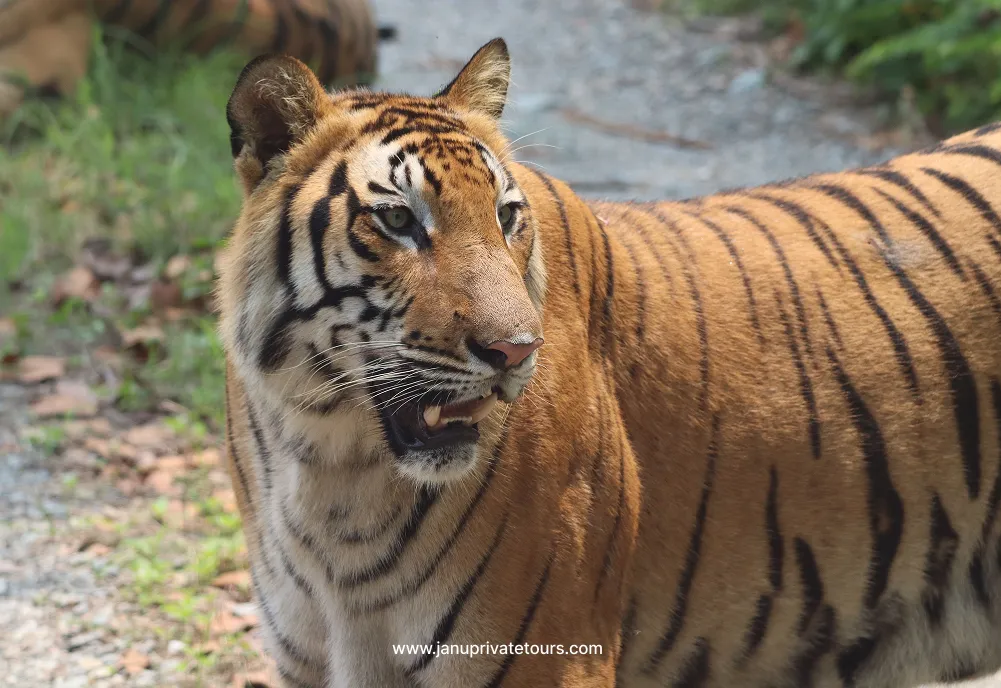
India has the World’s Largest Wild Tiger Population

India has the world’s largest tiger population.

According to the latest tiger estimate for 2022, there are at least 3,682 wild tigers in India, compared to only 1,411 in 2006. India hosts 58 tiger reserves that cover a large geographical area of 84,500 square kilometers. These tiger reserves comprise 60-65% of the country’s total tiger population.

So, the wildlife tour in India is the perfect holiday for a nature lover who wants to see the magnificent wild tigers and other wildlife.

While India has several famous tiger destinations, these are the top 6 destinations for a tiger safari holiday.

Bengal Tigers in India Inhabit Their Natural Habitat
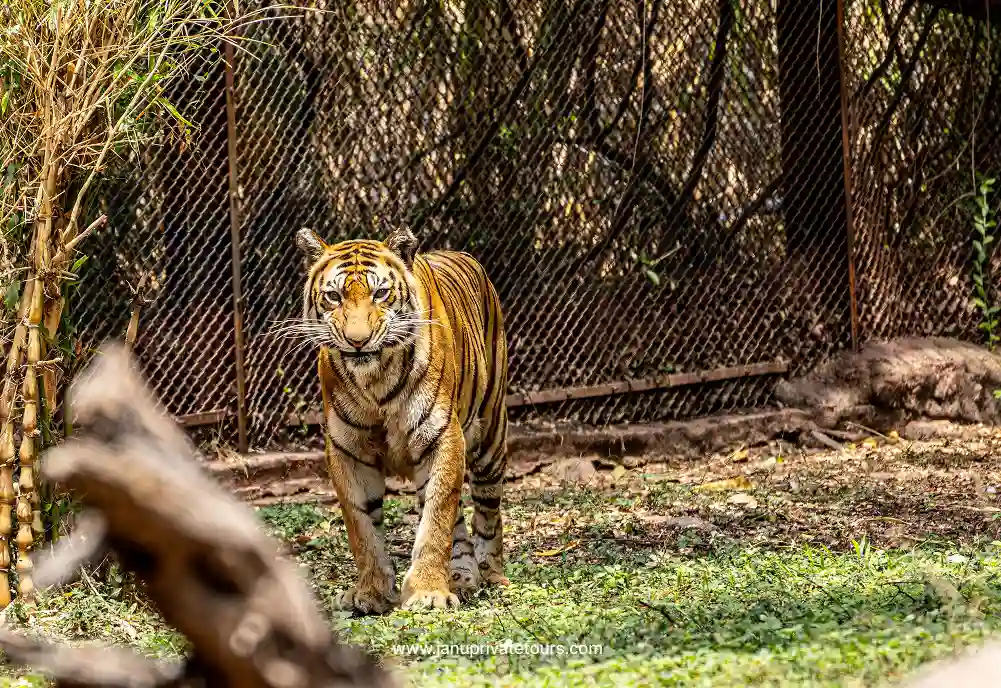
Sure, seeing a tiger in a zoo enclosure is exciting, but witnessing these big cats in their natural habitat is an entirely different feeling.

On a wildlife safari, you never know what you are going to see and where you are going to see it.

India’s national parks and wildlife sanctuaries provide the best chance to see Bengal tigers in their natural habitat. A wildlife tour in India is an adventurous and exciting tiger safari experience because you never know what you might spot on the trail in addition to the big cats.

Although you may have to wait patiently for the guide to spot a tiger, such tiger safaris India are an excellent opportunity to see these amazing animals up close.

Each Tiger Park in India Offers a Unique Experience

Each tiger reserve in India offers something uniquely different.

From the rugged landscape of Ranthambore, dense sal forests of Kanha, and arid grasslands of Tadoba to the hilly tracts of Bandhavgarh, every tiger reserve in India has its own charm.

Here are some of the best tiger destinations in India.

Ranthambore National Park

This beautiful forest is a preferred destination for international wildlife tourists.

Situated in Rajasthan, Ranthambore National Park offers a unique opportunity to see Royal Bengal tigers in their natural habitat.

The park is also famous for its leopards, sloth bears, deer, hyenas, and a rich variety of birds. Ranthambore National Park is one of the best tiger destinations in India for a wildlife lover who also likes to explore the forts of Rajasthan.

Bandhavgarh National Park

Another famous tiger destination in India is the Bandhavgarh National Park situated in Madhya Pradesh.

The park comprises of grasslands and dense forests as the natural habitat for tigers and other wild animals. Favored by nature lovers and wildlife photographers, this park also has the ancient Bandhavgarh Fort that adds to the excitement of a tiger safari India.

Sariska Tiger Reserve

The Sariska Tiger Reserve, located in the Alwar district, is one of the famous tiger destinations in Rajasthan, India.

With its diverse wildlife and natural landscape, this tiger reserve is an excellent place for an adventurous tiger safari.

In addition to offering a unique opportunity to explore Rajasthan beyond its forts and palaces, Sariska Tiger Reserve also has a unique claim to fame as it was one of the first reserves in the world to reintroduce tigers.

Kanha National Park

Kanha National Park is another popular tiger destination in India, offering the best wildlife experience in the country.

The park is famous for its sal forests, meadows, and scenic landscapes. The national park is home to Bengal tigers, leopards, wild dogs, deer, and a rich variety of birds. In Kanha, you can also witness the successful conservation of the endangered barasingha, or the swamp deer.

If you are looking for the best tiger safari India with a wilderness experience, Kanha is an excellent choice.

Tadoba-Andhari Tiger Reserve

Tadoba-Andhari Tiger Reserve in Maharashtra is a preferred destination for wildlife tourists and nature lovers.

The tropical dry deciduous forests, bamboo groves, grasslands, and lakes of Tadoba offer a unique opportunity to spot tigers, leopards, sloth bears, dholes, gaur, deer, and a variety of bird species.

A visit to this tiger reserve is an exciting and delightful experience for a wildlife safari tourist.

These are some of the best tiger destinations in India, and the choice of the destination depends on the preferences and availability of time.

Wildlife Safaris Can be Combined With Cultural Tours

Few countries in the world offer such a unique combination of adventure and culture as India.

A tiger safar India can be customized to include the cultural tours of the country.

For example, a wildlife tour that includes a visit to Ranthambore can also be combined with a cultural tour of Rajasthan. You can begin your tour from Delhi, visit Agra to witness the beauty of the Taj Mahal, and then explore Ranthambore for a wildlife experience. You could also visit Jaipur, the Pink City, and tour its many forts and palaces.

This way, you can not only enjoy the adventure of a tiger safari India but also explore the cultural heritage of the country.

The Forests are Home to an Amazing Diversity of Wildlife
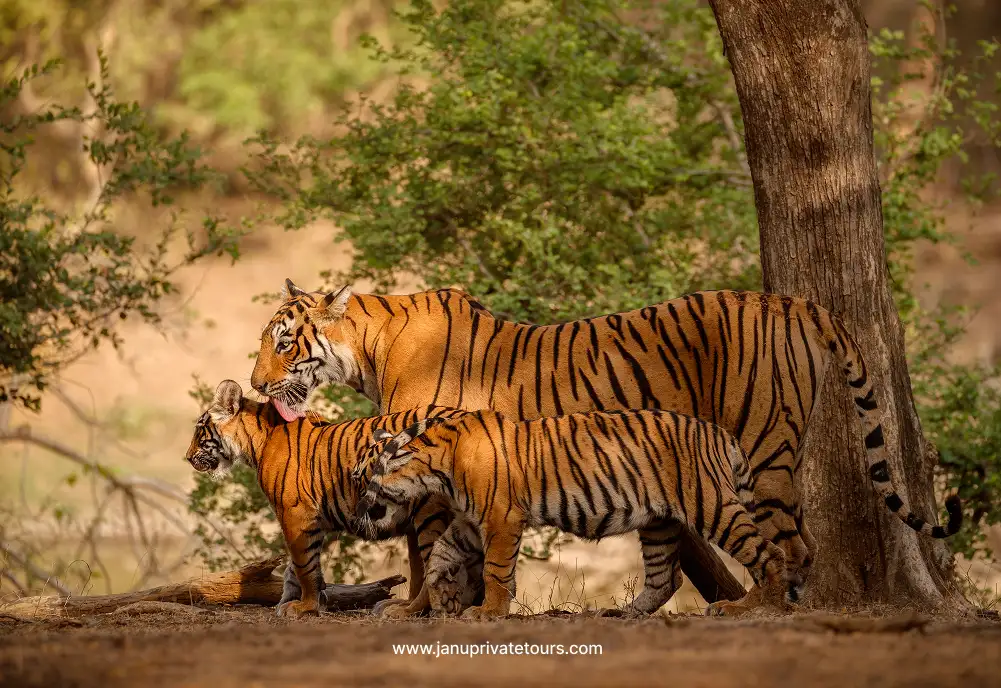
Although tigers are the center of attention on any wildlife tour in India, they are not the only attraction.

India’s national parks and wildlife sanctuaries are home to an astonishing variety of flora and fauna. Depending on the park, one can see leopards, sloth bears, dholes, sambar, chital, gaur, nilgai, crocodiles, langurs, wild pigs, and numerous bird species.

So, even if you do not see a tiger on your wildlife safari, you are bound to have an amazing experience spotting the diverse range of wildlife that inhabits the Indian forests.

India Offers Luxury Safaris for Discerning Traveler

A luxury tiger safari India offers discerning travelers the opportunity to enjoy the wilderness without sacrificing comfort. India offers a wide range of jungle resorts and lodges that provide all the luxury and comfort of home without compromising on the tiger viewing experience.

A luxury tiger safari India is an excellent option for honeymooners and families as it offers them a comfortable yet memorable wildlife tour experience.

India’s Conservation Story is Truly Inspiring

A wildlife tour in India is not just an adventurous experience; it also helps in tiger conservation efforts.

India has one of the most successful tiger conservation programs in the world.

Project Tiger, launched in 1973, has played a significant role in increasing tiger numbers in the country. India’s tiger reserves serve as a habitat for not only tigers but also a wide range of wildlife. By simply going on a tiger safari India, you can contribute to these tiger conservation efforts.

Every Safari has its Own Unique Adventure

Ask a wildlife tourist who has gone on a tiger safari India about their experience, and they will tell you that it is an adventure of a lifetime.

While the thrill of spotting a tiger is incomparable, even if you do not see one, a wildlife tour in India is always an amazing experience. Every tiger safari India has its unique charm and offers you the excitement of discovering the wilderness. You may find yourself mesmerized by the beauty of the Indian forests and their diverse wildlife. You may also find yourself on edge as you wait to see a tiger.

Either way, a wildlife safari tour in India is bound to leave you with lifetime memories.

The Best Place to See Tigers in India

There is no absolute best place to see tigers in India; it all depends on the preferences and availability of time.

If you wish to explore Rajasthan and its cultural heritage, Ranthambore is the best place to see tigers in India.

For a focused wildlife experience, Bandhavgarh is the best tiger reserve in India.

Kanha, on the other hand, is the best place to enjoy the scenic wilderness of India’s forests on a tiger safari.

Tadoba is another excellent option for wildlife tourists who wish to have an exciting tiger safari experience.

While Ranthambore offers the best tiger viewing experience along with Rajasthan’s cultural tour, Kanha is perfect for those who simply wish to enjoy the wilderness at its best.

The Best Time to Go on a Tiger Safari India
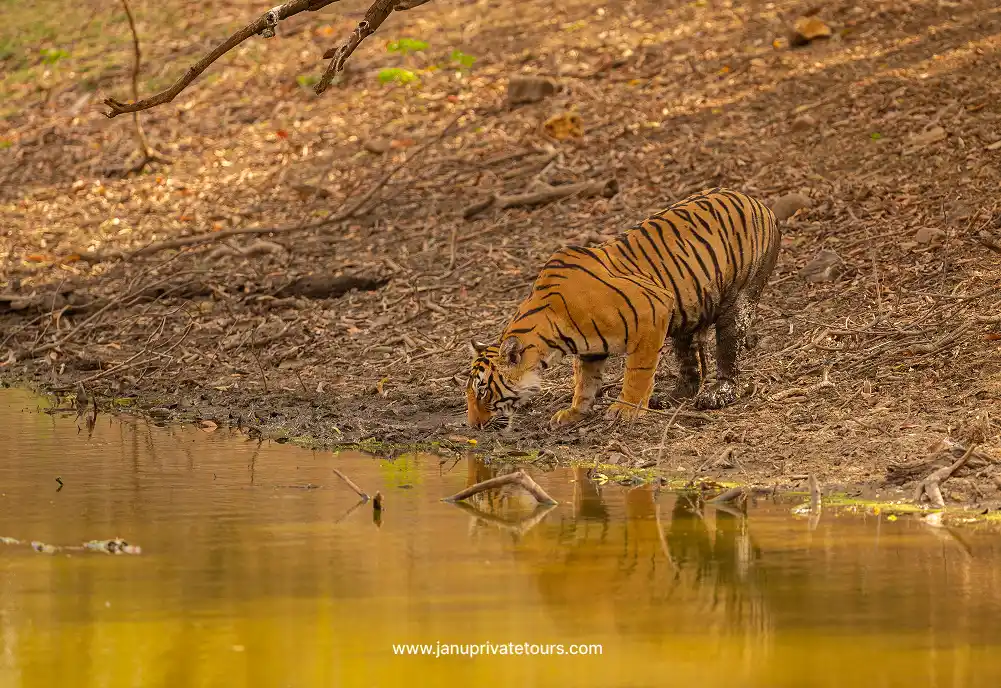
The best time to go on a tiger safari India largely depends on the tiger reserve that you wish to visit.

Generally, the dry season, March to June, is the best time to go on a tiger safari India as the animals congregate around the waterholes, allowing a clear and high chance of wildlife sightings. The colder season, from October to March, offers a more pleasant environment for a longer wildlife experience.

That being said, every season has its own charm, and the choice between them depends on personal preference.

How to Make the Most of Your Tiger Safari India?

Planning for your Tiger Safari India can help you make the best out of your tour. Here are some important tips to make the most of your tiger safari India.

  • Go on More than One Safari
  • Choose Your Destination Carefully
  • Hire an Experienced Naturalist
  • Have Realistic Expectations about Your Wildlife Tour

Experience the Wild Beauty of India with Janu Private Tours
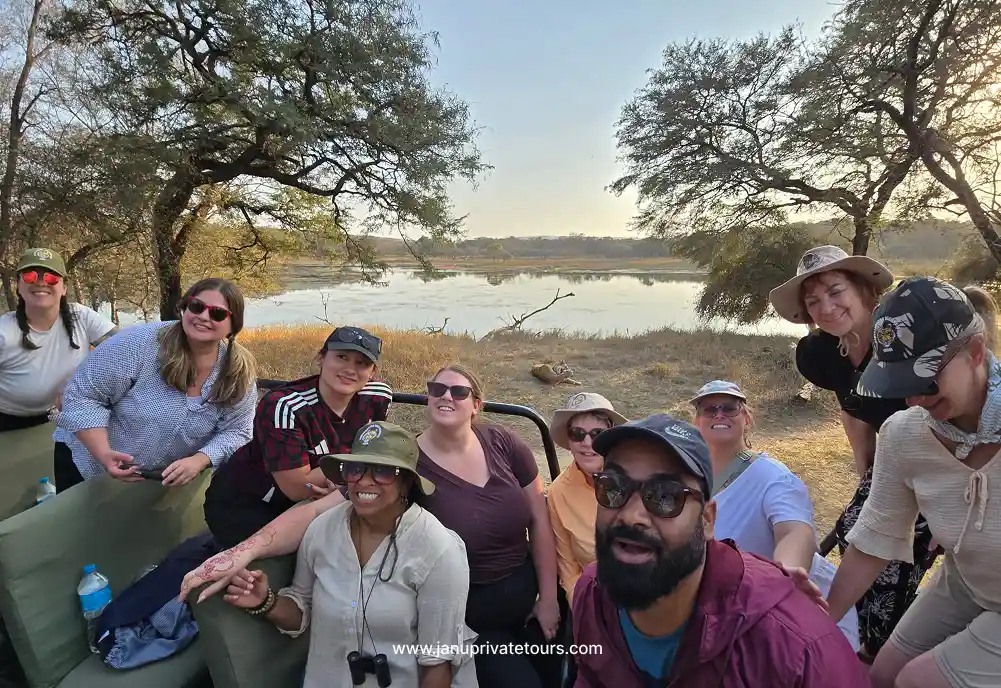
India’s wilderness offers a unique experience for those who wish to see tigers in their natural habitat.

Apart from India’s rich cultural heritage, iconic destinations such as Rajasthan’s palaces and Varanasi’s ghats, India’s forests, rivers, and wildlife provide the much-needed opportunity to unwind and explore a different side of the country.

Janu Private Tours organizes expertly crafted tiger safari tours India that offer an extraordinary tiger-viewing experience while giving you a chance to experience the beauty and adventure of India.

For an international tourist, this could mean a wildlife tour that combines a tiger safari in Ranthambore with a tour of Jaipur and Agra. It could also mean exploring the forests and wildlife of Madhya Pradesh or going on an in-depth wildlife tour of the tiger reserves of central India.

Either way, a tiger safari tour in India offers an unparalleled opportunity to experience the wild beauty of the country.

With Janu, we promise you that the journey is always about much more than a mere tiger spotting.

From the thrill of hearing an animal’s alarm call to the rustling grasses, and the anticipation as your safari vehicle moves forward, we assure you a unique wildlife experience that, if you are lucky, might also include the sighting of a tiger.

Kanha National Park safari Travel Guide


There’s a moment, somewhere between 6:17 AM and the first crack of golden light over the Sal trees, when Kanha stops being a destination and starts being an experience. The damp soil, the alarm calls of langurs overhead and the quiet tension in your guide’s eyes — that’s what you’re actually paying for.
This guide covers everything you need to plan your Kanha safari right: the best seasons, safari timings zone-by-zone, current prices for Indian and foreign visitors and the recommendations our Janu Private Tours naturalists give every guest before they board their jeep.

What Is the Best Season to Visit Kanha National Park?

The short answer: October to March for overall experience; April to June if spotting tigers is your only goal.
The park is open from October 15 to June 30 every year. That’s 8.5 months — and each stretch feels like a completely different park.
Here’s the honest breakdown:

Season Months Temperature Tiger Visibility Crowd Level
Winter Oct – Feb 8°C – 25°C Good Moderate to High
Peak Sightseeing Mar – May 28°C – 42°C Excellent Very High
Monsoon Jul – Sep 20°C – 30°C Core closed Very Low

Our naturalists at Janu Private Tours tend to recommend February as the sweet spot — the light is soft, migratory birds are still around, water sources are beginning to thin (which draws animals out) and the peak-season crowds haven’t fully landed yet. February is rarely talked about. That’s exactly why it works.

Is Winter Really the Best Time to Visit Kanha?

Yes — but with one caveat. If you want to photograph tigers, winter is not the best season.
Between November and February, the dense canopy makes sightings harder. Tigers are there; you just can’t always see them. What winter does offer is far more comfortable safari conditions. Temperatures hover between 8°C and 20°C in the mornings and the park is vivid with activity — leopards, wild dogs (dholes), spotted deerand over 300 species of birds.
A guest who traveled with us in December 2024 put it well: “I didn’t see a tiger on day one, but I saw a pack of dholes take down a spotted deer 40 metres from our jeep. I’d forgotten tigers existed.”
Winter is also when the famous Barasingha — the hard-ground swamp deer found almost nowhere else on earth — gathers in herds on Kanha’s meadows. You won’t see anything like it in March.

When Is Tiger Sighting Highest at Kanha?

April and May.

As temperatures climb past 38°C, the forest dries out and tigers — like any sensible creature — move to water sources. With reduced foliage, open grasslands and predictable water points, these months offer the highest probability of tiger sightings in the entire year.
The trade-off is real: it’s hot. Not pleasantly warm — genuinely punishing, particularly on the afternoon safari when the air inside the jeep can feel like an oven. You’ll want to carry at least 2 litres of water, wear a full-sleeve shirt (UV protection, not fashion)and book a lodge with a pool for the midday break.
Is it worth it? Most serious wildlife photographers say yes. Our guides at Janu Private Tours have recorded some of their most memorable tiger encounters in the week between April 15 and April 30 — when the heat is high but the crowds have slightly thinned compared to the festive school holiday rush in March.

Should You Visit Kanha During Monsoon?

Only if you genuinely enjoy the unpredictable — which some people absolutely do.
The core zones of Kanha close from July 1 to September 30 every year. Full stop, no exceptions. However, buffer zones like Khatia, Khapa, Sijora and Rukhad remain operational throughout the monsoon. These aren’t consolation prizes — the jungle in July is a different visual world. Deep greens, flowing streams, mist across the meadows at 7 AM.
What you won’t get is tiger sightings with any regularity. What you might get: leopards, sloth bears, a dramatic sky and the park almost entirely to yourself.
One practical note: road conditions inside buffer zones can change within hours after heavy rainfall. Always check with your guide or lodge the evening before. There’s a reason monsoon safaris carry a “subject to weather” disclaimer — it’s not fine print, it’s genuine advice.

What Are the Kanha National Park Safari Timings?

Two safaris run daily: one in the morning and one in the afternoon. There is no midday entry. The safaris run from sunrise to sunset, with a mandatory break between 11:00 AM and 3:00 PM when the core zones are rested.
Here are the confirmed seasonal timings:

Core Zone Safari Timings (Jeep/Gypsy)

Season Morning Safari Afternoon Safari
Nov 15 – Feb 15 6:00 AM – 11:00 AM 3:30 PM – Sunset
Feb 16 – Apr 30 5:45 AM – 10:45 AM 3:30 PM – 6:30 PM
May 1 – Jun 30 5:30 AM – 10:30 AM 3:30 PM – 6:30 PM

Important timing notes:

  • All core zone safaris are closed every Wednesday. Afternoon buffer zone safaris still run on Wednesdays..
  • The park is fully closed on Holi and Diwali (both morning and afternoon)..
  • Tatkal (next-day) bookings open daily at 5:00 PM..
  • Timings can shift by 15–20 minutes based on forest management decisions — your lodge or guide will confirm final times the evening before..

Night Safari Timings

A night safari operates in the Khatia buffer zone from 7:00 PM to 10:00 PM. Booking is available at the Khatia Ticket Counter on the day. It’s popular with repeat visitors who’ve already done multiple morning safaris and want something different.

Kanha Nature Trail (Jungle Walk)

An on-foot jungle walk runs daily from 3:00 PM to 6:30 PM in the buffer zone near Khatia and Mukki gates — organized by the Forest Department. Worth it for the sensory experience alone: the sound of the forest at 4 PM, when the birds shift from midday silence to evening call, is something a jeep never gives you.

How Many Safari Zones Are There in Kanha?

Eight in total — four core zones and four buffer zones.
Core zones: Kanha, Kisli, Mukki, Sarhi Buffer zones: Khatia, Khapa, Sijora, Phen
The Kanha Zone (accessed via Khatia Gate) is historically the most popular — dense tiger population, classic meadows and proximity to Kanha Museum. The Mukki Zone on the southern end is quieter and our Janu guides often prefer it in November–December when the Kanha side gets crowded.
Sarhi is the least visited of the four core zones. If you’re doing a 3-day trip and can squeeze in a Sarhi safari on day two, the lower footfall genuinely changes the quality of the experience. Fewer jeeps means less noiseand less noise means more animal activity.

What Are the Kanha National Park Safari Prices?

Current pricing (2025–26 season) — subject to government revisions.
The Madhya Pradesh Forest Department periodically updates fees. These are verified rates based on current park information:

Jeep (Gypsy) Safari — Core Zone

Type Approximate Cost
Full jeep permit (up to 6 people) ₹6,000 – ₹8,500 (includes permit + guide + jeep hire)
Single seat (shared jeep) ₹1,500 – ₹2,500 per person
Permit fee alone ~₹1,550 per jeep
Guide fee ~₹600 per safari
Jeep hire ~₹2,500 per safari

Safari entry permit charges are the same for Indian and foreign tourists. This is one of the more traveler-friendly policies at Kanha — unlike some other reserves, there’s no differential “foreigner pricing” at the permit level.

Canter Safari (Open Bus — 12 Seats)

Type Cost
Per person (Indian or Foreigner) ₹1,200 per person

Canter safaris are the option when jeep permits are sold out. Tickets are not available online — only at the gate counter on the day, on a first-come basis. Get there at least 45 minutes before opening. Cash only; cards are not accepted.

Other Safari Types

Type Approximate Cost
Night Safari (Khatia buffer zone) ₹5,000 – ₹7,000 per jeep
Full-day Photography Safari ₹10,000 – ₹11,200 (special permission required 30 days in advance)

Note: All prices are approximate and subject to change. Always verify current rates on the official MP Forest Department portal (forest.mponline.gov.in) before booking.

How to Book a Kanha Safari: Step-by-Step

Booking sounds straightforward. The reality is slightly more stressful if you’re doing it solo for the first time.
Online booking is available 120 days in advance through the MP Forest Department’s official portal. This is genuinely competitive — popular zones during October and November fill within hours of opening. If you’re planning for December or January, book the moment the 120-day window opens.
What you’ll need:

  • Government-issued ID for every person in the jeep (Aadhar, Passport, Driving Licence, PAN card).
  • Payment via the portal (no cash accepted online, obviously).
  • Name, ageand ID number of each visitor.

Lead time guidance:

  • Indian nationals: Book at least 30 days ahead (though honestly, 60–90 days is safer for peak season).
  • Foreign nationals: Book 90 days in advance — sometimes 120 days for core zones in winter.

Once a permit is issued, it is non-transferable and non-refundable. The ID used during booking must be the same ID carried on the day of safari. This is verified at the gate.
If you’re traveling with Janu Private Tours, we handle all permit booking on your behalf, including follow-up on tatkal slots if an earlier window closes out. It removes the single most frustrating part of the process.

How to Reach Kanha National Park

Kanha sits in a part of Madhya Pradesh that most tourists dramatically underestimate for distance. Plan your journey before you plan your safari.
By Air: The nearest airport is Jabalpur (JLR), approximately 160 km from Khatia Gate — roughly 3.5 hours by road without major traffic. Nagpur Airport (NAG) is about 285 km away (5–5.5 hours), but has better flight connectivity from major cities. Some guests fly into Raipur (RAI), about 260 km southeast.
By Rail: Jabalpur Junction is well-connected from Mumbai, Delhi, Kolkataand Varanasi. From Jabalpur station, Khatia Gate is about 160 km — budget 3 hours in a private cab. The Gondia railway station (closer to Mukki Gate) is an alternative if you’re approaching from Maharashtra.
By Road: From Jabalpur, take NH30 toward Mandla and then follow state highway routes toward Kanha. The roads improve significantly once you enter the forest buffer zone, but the last 40–50 km can be slow on market days in nearby villages. Our Janu Private Tours drivers typically add 30 minutes to this estimate during local market days (Tuesday and Friday in most villages along this route).

Janu Private Tours Guides’ Recommendations

Our naturalists have collectively logged over 2,000 safaris across Kanha’s zones. These are the tips that don’t usually make it into generic travel guides.

  1. Mukki over Khatia in December. The Khatia side (Kanha zone) is where most operators push guests because it’s convenient. Mukki is quieter, the meadow system is differentand the Barasingha density in December is genuinely remarkable. Ask for Mukki.
  2. Morning safari, always, if you can only do one. The afternoon safari in Kanha is good, but the one-hour window between 6:30 AM and 7:30 AM — when the light is low, the animals are most activeand the forest is still cool — is irreplaceable. The afternoon safari often feels like a different, slightly sleepier park.
  3. Don’t fixate on the tiger. We’ve seen guests who spend two mornings in Kanha so focused on spotting a tiger that they miss a leopard 15 metres off the road, a family of gaur in the clearingand an Indian roller sitting on the exact branch in perfect light. Kanha has 22 species of mammals. Let the safari guide you.
  4. Carry a fleece for November–January mornings. Even if you’re used to cold weather, the open jeep at 6:00 AM in December — wind in your face at 30 km/h — is a different kind of cold. Not dangerous, just unpleasant enough to ruin your first hour.
  5. Tip your guide and driver. ₹100–₹200 each is the standard. These are local community members who work without weekends during peak season. The guides in particular carry knowledge that took years to build. A small tip is acknowledgment, not obligation.
  6. Book the Kanha Nature Trail at least once. Walking through the forest — even in a buffer zone — changes your relationship with the place. The birding alone between 4:30 PM and 5:30 PM is extraordinary. It doesn’t substitute for a jeep safari, but it adds a dimension that most guests don’t expect.

Quick Reference: Kanha Safari Facts

  • Park open: October 15 – June 30.
  • Core zone closed: July 1 – September 30 (monsoon).
  • Closed day: Every Wednesday (core zone); buffer zone afternoon runs.
  • Daily safaris: 2 (morning + afternoon).
  • Safari vehicle capacity: 6 passengers per jeep.
  • Booking opens: 120 days in advance.
  • Tatkal bookings: Open at 5:00 PM daily for next-day slots.
  • Safari permit fee: Same for Indian and foreign nationals.
  • Forest department booking portal: forest.mponline.gov.in.

Kanha is one of those places that doesn’t really need marketing. Ask anyone who’s been. But planning it well — getting the season right, the zone right, the timings right — is what separates a good safari from one of the better mornings of your life.
If you’d like to plan a private Kanha safari with a Janu Private Tours naturalist, our expert team is here to help. We handle permits, transfers, accommodationand guide allocation so you can focus on the forest.

Ranthambore National Park Safari

Ranthambore is one of those rare places where you genuinely cannot predict your morning. You could spend three hours watching a sambar deer graze peacefully, or you could round a bend and find a Bengal tiger cooling off at Padam Talao — 15 feet from your jeep. That unpredictability is exactly the point.
This guide covers everything: safari charges, timings, zones, how to reach the park, and practical tips from guides who’ve done this for years. No filler, no fluff.

Where Is Ranthambore National Park Located?

Ranthambore National Park sits in the Sawai Madhopur district of southeastern Rajasthan, roughly 180 km from Jaipur. It’s tucked between two ancient hill ranges — the Aravalli to the northwest and the Vindhya to the southeast which gives the landscape that dramatic, almost cinematic quality that makes wildlife photography here so addictive.
The park covers a total area of 1,334 sq km, including the Kailadevi Wildlife Sanctuary and Sawai Mansingh Sanctuary. Its core zone spans approximately 275 sq km the original protected forest where tiger sightings were first documented under Project Tiger in 1973.
The gateway town is Sawai Madhopur, just 11–14 km from the park entrance. Most hotels, resorts, and safari operators are clustered here or along the road leading to the park gates.

What Animals Can You Spot in Ranthambore National Park?

Ranthambore is India’s most famous tiger-watching destination, but the park’s wildlife extends well beyond its star attraction.
As of 2022, the park was home to 69 confirmed Bengal tigers, with estimates suggesting over 75 roam the reserve today. The safari-accessible zones (Zones 1–5 primarily) host roughly 25 tigers — each with a named territory and, if you follow wildlife circles, a loyal fan following.
Beyond tigers, expect to see:

  • Leopards — elusive but spotted most often in Zones 4 and 5
  • Sloth bears — Zone 9 is your best bet, especially pre-monsoon
  • Sambar deer, chital (spotted deer), nilgai — practically guaranteed sightings
  • Indian wild boar, striped hyena, rhesus macaque, langur monkeys
  • Marsh crocodiles — near Padam Talao and Raj Bagh lakes
  • Over 320 species of birds, including painted storks, serpent eagles, and the Indian skimmer

May and June, despite the heat, are actually the best months for sightings — animals concentrate around the three major lakes (Padam Talao, Raj Bagh Talao, Malik Talao) as water sources shrink elsewhere. Personally, I think the early October re-opening has its own magic — the forest is lush green, still dripping from monsoon rains, and the tigers are well-fed and active.

How Are the Safari Zones in Ranthambore National Park Divided?

Ranthambore is divided into 10 distinct safari zones, split between the core area (Zones 1–5) and buffer zones (Zones 6–10). Each zone covers different terrain, wildlife density, and photography opportunities.
Core Zones (1–5): These are the original protected forests with historically higher tiger density. They’re more forested, denser in vegetation, and where most of the named tigers hold territory.

  • Zone 1 — Traditionally Machli’s territory (arguably India’s most famous tigress). Open forests and lakes.
  • Zone 2 — High tiger density; good for big cat activity.
  • Zone 3 — Excellent for photography; Padam Talao provides stunning lake reflection shots.
  • Zone 4 — Rajbagh Talao ruins as backdrop; dramatic landscape compositions. Zone 3 and 4 together are considered the hotspot — if you only have one or two safaris, book here.
  • Zone 5 — Views of the historic Ranthambore Fort; slightly lower tiger frequency.

Buffer Zones (6–10):

Added later to extend the park’s conservation coverage. Less crowded, good for leopards, bears, and birding.

  • Zone 7 and Zone 8 — Jeep-only (no canter safaris permitted here)
  • Zone 9 — Known for sloth bear sightings

One practical thing to know:

Zone 1–5 closes every Tuesday and Zone 6–10 closes every Wednesday for maintenance. Book accordingly. On Tuesdays, all safari vehicles are pushed into zones 6–10, which creates more crowds there and thinner coverage in the core — something most first-timers don’t realize until they arrive.

What Types of Safaris Are Offered in Ranthambore National Park?

Two vehicle types operate in Ranthambore:

The Jeep Safari and the Canter Safari. Both are managed by the Rajasthan Forest Department, and private vehicles are strictly not permitted inside the park.

Jeep Safari

A 6-seater open-top gypsy (actually 4 guests + driver + naturalist guide). Nimble, quieter, and significantly better for photography and wildlife encounters. You can go deeper into zones where canters can’t. This is what Janu Private Tours recommends for serious wildlife enthusiasts or anyone who wants a more immersive experience. Advance booking opens 90 days before your safari date.

Canter Safari

A 20-seater open bus. More affordable, social, and a solid option for larger groups or budget travellers. Not permitted in Zones 7 and 8. Canters are louder, which can sometimes spook wildlife before you’re close enough to appreciate the encounter.

Half-Day and Full-Day Safaris

A limited option (only 5 jeeps per day) that allows extended time inside the park — either 6 hours (half-day) or 12 hours from sunrise to sunset (full-day). No zone restrictions apply for these permits. You can bring packed lunch or return to your hotel mid-day. Availability is genuinely scarce; book well in advance.
Choice Jeep and Choice Guide options also exist for guests who want a luxury jeep upgrade or a specific certified naturalist. Charges vary.

What Are the Ranthambore National Park Safari Timings?

Safari timings in Ranthambore change seasonally based on sunrise and sunset. The park operates two shifts daily — morning and afternoon. Each shift runs approximately 3 to 3.5 hours.
Arrive at the gate30–45 minutes before your designated departure time — latecomers forfeit their slot without refund.

Season Morning Safari Afternoon safari
October – January 7:00 AM – 10:30 AM 2:30 PM – 6:00 PM
February – March 6:30 AM – 10:00 AM 2:30 PM – 6:00 PM
April – June 6:00 AM – 9:30 AM 3:00 PM – 6:30 PM

Monsoon season (July – September):

Zones 1–5 are fully closed. Zones 6–10 remain open for safaris during this period, offering a quieter, greener, and genuinely underrated experience.
Morning safaris are widely considered the better slot — cooler temperatures, active predators, and the golden light that makes every photograph look effortless. That said, afternoon safaris have produced some of the most dramatic tiger sightings precisely because the animals are more relaxed near water at dusk.

What Are the Ranthambore National Park Safari Charges?

Safari prices in Ranthambore vary by vehicle type, visitor nationality, and zone. The Forest Department updated pricing in April 2024 (with approximately a 10–30% increase), so double-check current rates on the official Rajasthan Forest portal before booking.

Jeep Safari (per person, per shift)

Visitor Type Approximate Charge (Government Rate)
Indian National ₹1,000 – ₹2,200 (incl. guide + entry fees)
Foreign Tourist ₹2,231 – ₹4,200 (incl. guide + entry fees)

Note: Service charges and GST apply over government rates. Tatkal (last-minute) booking carries an additional surcharge.

Canter Safari (per person, per shift)

Visitor Type Approximate Charge
Indian National ₹700 – ₹1,200
Foreign Tourist ₹1,500 – ₹2,500

Children under 5:

Free entry. Children aged 5–12 are typically charged adult rates.
Still camera: No additional charge. Video camera: Additional fee applies (varies by season — confirm at the gate).
Booking modes:

  • Advance booking — Opens 90 days prior to safari date online via the official Rajasthan forest portal. 5 jeeps per zone are available via advance booking.
  • Tatkal booking — Opens 1 day prior; 2 jeeps per zone reserved. Carries a premium but is a lifeline for last-minute travellers.
  • Zone change — Available at an additional charge if you need to switch zones after booking. Ask your operator.

Honest note: These are government base rates, and verified numbers shift year to year. Your tour operator’s quoted price will include taxes, operator fees, and possibly a premium jeep or guide upgrade. Always ask for an itemized breakdown.

What Are the Major Tourist Attractions in Ranthambore National Park?

Ranthambore is more than a tiger reserve — it’s a layered destination where wildlife, medieval history, and Rajasthani culture converge.

Ranthambore Fort

Perched on a 700-foot hill 5 km inside the reserve, this fort predates the Mughals and was once considered impregnable by Akbar’s generals. It’s a UNESCO World Heritage Site (listed as one of the Hill Forts of Rajasthan) and offers panoramic views of the forest below. Tigers have been photographed lounging in its ruins — one of the most iconic images in Indian wildlife photography.

Trinetra Ganesha Temple

Inside the fort complex, this 10th-century Ganesha temple receives devotees from across India. Wedding invitation cards are traditionally mailed here. It’s a deeply local tradition most tourists never know about.

Padam Talao, Raj Bagh Talao, and Malik Talao

Three interconnected lakes within the park. Padam Talao is the largest and the most reliable spot for tiger and crocodile sightings. Early morning mist over these lakes — with the fort silhouette in the background — is one of those sights you genuinely don’t forget.

Ranthambore School of Art

Located in Sawai Madhopur town, this small school trains local youth in tiger-themed folk art. Worth 45 minutes of your time and directly supports conservation-linked livelihoods.

Chambal River Safari and Surwal Lake

Just outside the park’s boundaries. Surwal Lake (about 23 km from Sawai Madhopur — roughly 35 minutes without traffic) is a winter birding hotspot with flamingos and bar-headed geese. The Chambal River stretch nearby offers gharial and river dolphin sightings.

When Is the Best Time to Visit Ranthambore National Park?

October to April is the sweet spot — good weather, high wildlife activity, and the core zones fully open. Within that window, different months suit different goals.

  • October – November: Post-monsoon freshness; forest is green, animals are active. Slightly lower tiger sighting probability (vegetation is dense), but the landscape is at its most beautiful.
  • December – February: Peak tourist season. Cooler temperatures (as low as 4–8°C at night). Tigers are more active during midday. Clear skies make for excellent photography.
  • March – April: The transition into summer. Vegetation starts to thin. Tiger sightings near waterholes increase sharply.
  • May – June: Peak heat (upwards of 42°C during the day). Also peak sighting season — animals crowd every water source. Serious wildlife photographers often prefer this period. Prepare for pre-dawn starts and afternoon heat.
  • July – September (Monsoon): Core zones closed. Zones 6–10 remain open. Lush, atmospheric, uncrowded — but tiger sightings are genuinely rare.

If I had to pick one month? March. The landscape is transforming, the light is extraordinary, and tiger sightings near the lakes are reliable without the extreme heat of May.

How to Reach Ranthambore National Park?

The easiest and most reliable way to reach Ranthambore is by train to Sawai Madhopur Junction, which sits just 11 km from the park entrance and is well-served by express trains from Delhi, Jaipur, Mumbai, and Kota.

By Train (Recommended)

The Ranthambore Express (12465/12466) and the Golden Temple Mail (12903/12904) are popular options from Delhi. The train from Delhi to Sawai Madhopur takes approximately 5 hours. From Jaipur, the same journey is just under 2 hours — making a Jaipur-Ranthambore day trip feasible, though overnight stays are far more rewarding.

By Air

The nearest commercial airport is Jaipur International Airport (JIA), approximately 160–180 km from the park. The drive from Jaipur takes 3.5 to 4 hours under normal traffic. International visitors typically fly into Delhi (approximately 350–390 km away) and connect by train or road.

By Road

Roads to Ranthambore are well-maintained and scenic. State highways pass through traditional Rajasthani villages and open farmland. Taxis and private cars are readily available from Jaipur, Kota, Agra, and Delhi. Government buses also operate on this route, though they’re less convenient for luggage-heavy travellers.

Distance Chart: Major Cities to Ranthambore National Park

City Road Distance Approx. Drive Time Best Transport
Jaipur 180Km 3.5 – 4 hours Train (2 hrs) or taxi
Delhi 390 Km 6 – 8 hours Train (5 hrs) or overnight taxi
Agra 235 Km 4 – 5 hours Train (3.5 hrs) via Bharatpur
Kota 110 Km 2 – 2.5 hours Road or Train
Udaipur 370 Km 6 -7 hours Road or train via Chittorgarh
Mumbai 1030 km 18+ hours by road Train (overnight, ~14 hrs)

Distances are approximate. Road times exclude traffic delays — add 30–45 minutes for holiday weekends and festival seasons.

Where to Stay Near Ranthambore National Park?

Accommodation options in and around Sawai Madhopur range from forest department guesthouses to heritage luxury tents. The general rule: stay as close to the park gate as possible to make the most of early morning departure windows.

Budget to Mid-Range

Government-run forest rest houses are available for booking through the official portal — basic, clean, and unbeatable for atmosphere. Several guesthouses along Ranthambore Road offer clean rooms in the ₹1,500–₹5,000 range per night.

Luxury and Heritage

Several premium properties have established themselves as benchmarks for Ranthambore stays:

  • Aman-i-Khás — Ultra-luxury tented camp, Mughal-inspired design, exceptional naturalists
  • The Oberoi Vanyavilas — Leading wildlife resort with indoor-outdoor tent suites; one of Asia’s most celebrated jungle lodges
  • SUJÁN Sher Bagh — Luxury tented camp with a strong conservation ethos; limited to 12 tents
  • Khem Villas — Mid-luxury, known for personalized naturalist-led experiences
  • Tiger Moon Resort — 32 en-suite cabins and bungalows just outside the park entrance; good pool for the afternoon heat

Janu Private Tours recommends

booking accommodation and safari slots simultaneously, as peak season (December–February) fills both within days of availability opening. A 3-night stay allows at least 4 safaris across different zones — the minimum for a meaningful tiger-watching experience.

Things to Remember Before Visiting Ranthambore National Park

Here’s what most guides won’t tell you — the small things that separate a frustrating trip from a memorable one.
On safaris:

  • Wear earth tones — khaki, olive, grey, brown. Bright colours genuinely disturb wildlife behaviour. Leave the red jacket at the hotel.
  • Silence matters more than most people expect. No talking above a whisper once inside the forest. No mobile calls.
  • Carry no food or plastic inside the park. ₹5,000 fine, and rightfully so.
  • Book 2–3 safaris across different zones. One safari gives you a park; three give you a relationship with it.
  • Zone allocation happens automatically on the morning of your safari. You can request zones but cannot guarantee them on standard permits.

On photography:

  • A 300mm telephoto lens minimum; 400–600mm preferred. Early morning light is golden but low — cameras with good high-ISO performance help.
  • Bring spare batteries. Cold November mornings drain batteries in under 2 hours.

On booking:

  • The official Rajasthan forest booking portal (rajasthanwildlife.in) is the only legitimate advance booking channel. Be sceptical of third-party “guaranteed booking” services charging heavy premiums.
  • Tatkal quota (2 jeeps per zone) opens one day prior at 6:00 AM. Set an alarm.
  • If you’re visiting with children under 12, check current age-specific permit rules with your operator — policies have been revised recently and may vary by zone.

On uncertainty:

Even the most experienced guides at Ranthambore will tell you — tiger sightings are never guaranteed. The park is not a zoo. But what Ranthambore guarantees is this: every single safari, something remarkable happens. Even a monsoon-season zone 8 safari through empty-seeming forest has its own quality of attention, its own silence. That’s worth something, independent of the tiger count.
Planning a private Ranthambore safari? Janu Private Tours specializes in curated wildlife experiences across Rajasthan, combining Ranthambore with Jaipur, Agra, or the Ranthambore–Udaipur–Jodhpur circuit. Contact our travel specialists for personalized itinerary recommendations.

Gir National Park: Timings, Weather, and the Best Time to Visit

Gir National Park in Gujarat is the only place on Earth where you can watch a wild Asiatic lion in its natural habitat. Not in a zoo. Not in a wildlife documentary. In a real, sun-baked teak forest where the grass crunches under your jeep tyres and your guide whispers “stop” with a grip that means business.
This guide covers everything you need to plan your Gir trip — timings, weather by season, 2026 safari prices for Indians and foreigners, booking tips, and the attractions that make Gir more than just a lion safari. If you are short on time, the answer-first version: visit between November and February, book your e-permit at least 4–6 weeks early, and do the morning slot.

What Are the Safari Timings at Gir National Park?

Gir National Park offers two safari slots daily, scheduled according to seasonal daylight hours. Morning safaris generally operate between 6:30 AM and 9:30 AM, and evening safaris run between 3:00 PM and 6:00 PM.
Each safari lasts approximately three hours and covers one of the designated jeep routes inside the park — which route you get is assigned randomly at the entry gate. You cannot choose it. That random element is part of the experience, honestly.
The early morning slot from 6:30 AM to 9:30 AM is considered the best time to spot lions and other wildlife, as animals are more active during the cool morning hours. You also get better light for photography — that soft, golden Gujarat sunrise makes even a hyena look photogenic.

What About Devaliya Safari Timings?

Devaliya Safari timings are 7 AM, 8 AM, 9 AM, 10 AM, 3 PM, 4 PM, and 5 PM. The park is closed every Wednesday. Each Devaliya slot runs for approximately 55 minutes — shorter than the core jungle safari, but the enclosed zone gives you near-guaranteed lion sightings, which is why first-timers or families with young children often prefer it.

What Is the Best Time to Visit Gir National Park?

The best time to visit Gir National Park for a wildlife safari is from October to March, when the weather is pleasant and animal movement is high, making safaris comfortable and rewarding.
That said, “best time” depends on what you are after. Let me break it down honestly:

Winter (November – February): The Comfortable Choice

The winter season is considered the best time to visit Gir National Park. During this period, the temperature ranges from 10°C to 22°C, creating pleasant weather conditions for wildlife exploration. The cool air, clear skies, and active wildlife make winter the perfect time for safaris.
The months of October, November, and February are the most comfortable as the temperature remains neither too cold nor too hot. Winter is considered the peak tourist season in Gir, and hence an advance booking of safari is highly recommended.
If you are visiting Gir for the first time, this is your window. The mornings feel crisp — carry a light jacket because 10°C at 6:30 AM in an open jeep is more biting than it sounds.

Summer (March – June): Best for Lion Sightings

Summers in Gir can be harsh, with temperatures rising between 29°C and 42°C. Although the afternoons can be scorching, mornings and late evenings are still good for spotting wildlife, as animals often gather around water bodies to escape the heat.
For those who want to see the Asiatic Lions, the months of April and May are considered the best. When the waterholes dry up and temperatures peak, lions have fewer places to hide. That makes early morning safaris in April and May paradoxically excellent for sightings — just be prepared to sweat through your khakis by 9 AM.
The best lion-sighting logic is that heat pushes animals toward waterholes, especially in early mornings. Carry sun protection.

Monsoon (Mid-June – Mid-October): When the Park Closes

Safari booking for the Gir Jungle Trail remains suspended from 16th June till 15th October every year due to weather conditions.
During the monsoon season, Gir National Park receives moderate to heavy rainfall, and the core safari zones remain closed to visitors for conservation and forest regeneration. This closure period is essential for the breeding of wildlife and the natural recovery of the forest ecosystem. However, Devaliya Safari Park remains open during the monsoon season and offers visitors a safe and well-managed wildlife viewing experience.
If you find yourself in Gujarat during the monsoon with a free afternoon and lion fever, Devaliya is your only option — and it delivers.

How Much Does a Gir Safari Cost in 2026?

Here is the part most travel blogs either get wrong or deliberately vague about. Let us be direct.
The prices of Gir lion safari may vary from ₹5,500 to ₹8,000 (inclusive of permit, gypsy, guide charges, and services and taxes). The prices may vary on weekends, number of persons, festivals, and long weekends.
The prices of the Sasan Gir safari for a foreign tourist can be between ₹15,500 to ₹17,500 (inclusive of permit, gypsy, guide charges, and services and taxes).
Here is a quick-reference table for 2026:

Category Weekday Price (per Jeep) Notes
Indian Nationals ₹5,500 – ₹8,000 Up to 6 adults per jeep
Foreign Nationals / NRI ₹15,500 – ₹17,500 Passport details mandatory
Devaliya (Indians) ₹4,800 – ₹6,200 Based on 4/6/8-seater
Devaliya (Foreigners) From ₹12,500 Per Jeep

In one e-permit, a maximum of 6 persons (one child aged 3 to 12 years) are allowed. The permit does not include safari vehicle charges, guide charges, or service charges — always confirm the all-inclusive price before booking.

Camera Fees (Often Overlooked)

Camera fees for Indian nationals: ₹200+ per camera per visit for cameras above 7.1 megapixels, paid directly in cash. For foreign nationals: ₹1,400+ per camera per visit for cameras above 7.1 megapixels. Government service tax is extra on top of this. If you are bringing a DSLR or mirrorless camera, budget for this separately — most people forget and get surprised at the gate.

Cancellation Policy

If you cancel your ride before 10 days of your permit date, you can get a 75% refund. Cancel closer than 10 days and you are unlikely to see much back.

How to Book a Gir Safari: Step-by-Step

The process of online jeep safari booking at the Sasan Gir National Park and Wildlife Sanctuary is meticulously supervised by Gir forest officials, strictly adhering to the rules and regulations set forth by India’s forest department. 100% of the total safari permits for the Gir Jungle Trail are made accessible through online platforms.
Book only through the official Gir online portal (girnationalparkonline.nic.in) — the Gujarat Forest Department manages it directly.

  • Step 1: Create an account on the official permit booking site.
  • Step 2: Choose your safari type — Core Jungle Trail, Devaliya Interpretation Zone, or Kankai-Banej Forest Tour.
  • Step 3: Select your date and time slot, then fill in all visitor details with valid ID proof.
  • Step 4: Complete payment online. Download and carry your e-permit.

Foreign nationals are required to provide their foreign tourist passport details. Tourists can request safari booking up to three months prior to their actual arrival. Six persons can visit the Gir Jungle Trail with one e-permit.
Janu Private Tours Tip: During peak season (December–February), popular morning slots sell out within hours of opening. Our guides recommend booking 4–6 weeks ahead, and for December or the week around Diwali, closer to 8–10 weeks. We handle all bookings for our guests, including route strategy across multiple safari days to maximise your chances of seeing lions, leopards, and the elusive sloth bear.
Always book your safari permit in advance. Arriving at least 30 minutes before your safari timing ensures a smooth entry process and better chances of getting a good guide and driver.

What Animals Will You See at Gir National Park?

The main attraction of Gir is the Asiatic Lion (Panthera leo persica), which has now populated to around 411 in number. With approximately 295 species of birds, 39 species of mammals, and 37 species of reptiles, Gir boasts a fantastic array of fauna.
Key predators besides Asiatic lions include leopards, striped hyenas, golden jackals, and sloth bears. Herbivores include chital (spotted deer), nilgai (blue bull), sambar deer, four-horned antelope, and wild boar.
The Asiatic lion differs from its African cousin in one interesting way: they form smaller prides of 2–5 individuals, compared to African lions. So when you spot a lion at Gir, you are usually seeing a more intimate, tight-knit family — not the large prides you see in Masai Mara documentaries.
Kamleshwar Dam, a large reservoir in the sanctuary, is the best spot where marsh crocodiles can be seen in large numbers. The park also has King Cobra, Russell’s viper, star tortoise, and Indian rock pythons — making it one of the more reptile-rich sanctuaries in India.

Top Attractions in and Around Gir National Park

The Gir region rewards travellers who give it more than two nights. Beyond the safari, here is what our guides recommend building into your itinerary:

Devalia Safari Park (Gir Interpretation Zone)

Located within the sanctuary, Devalia is a fenced 412-hectare zone that offers controlled safari tours with near-guaranteed lion sightings. As a tourist, you can be almost guaranteed lion sightings if you happen to visit the Gir Interpretation Zone, also known as Devalia. It is also a good backup plan if core jungle permits are sold out on your date.

Kamleshwar Dam

Kamleshwar Dam is constructed on the Hiran River, one of the seven rivers flowing through the park, and serves as a vital water source often referred to as the “lifeline of Gir.” Originally established in 1959 for irrigation purposes, the dam spans an impressive area of 7.64 million square meters.
It is a brilliant spot for crocodile spotting and birdwatching, especially in the early morning. The light over the water at 7 AM, with the Gir hills behind it, is the kind of scene you will spend five minutes trying to photograph and then just give up and stare at.

Somnath Temple

The Somnath Jyotirlinga Temple is the first of Lord Shiva’s twelve Jyotirlinga temples and one of the nation’s oldest, located on Gujarat’s western coast. The road distance from Gir National Park to Somnath is approximately 50 km and it takes nearly 1 hour to cover this distance.
The evening aarti here, with the Arabian Sea crashing behind the temple walls and hundreds of devotees gathered — that is the Gujarat equivalent of watching the sun set over Jaisalmer Fort. Unmissable.

Girnar Hills, Junagadh

Rising to an elevation of 3,672 feet, Girnar is an ancient hill located in Junagadh. During a trek to Girnar Hill, visitors will encounter several notable sites, including Dhodar Kund and numerous temples representing different sects of Hinduism and Jainism.
The temples are situated atop the hills at a high elevation, which can be reached by either climbing the 10,000 stone steps that lead to the top or by opting for the Udan Khatola ropeway, one of the highest temple ropeways in the country.
If the 10,000-step climb sounds like too much commitment after two early morning safaris, take the ropeway and save your knees.

Kankai Mata Temple

Dedicated to Kankani Mata, this famous temple is accessible after taking permission from the forest department and is located at a distance of 25 km from Sasan Gir. This place is tucked away in the wilderness and you can easily listen to the sounds of lions during the night who assemble near the lake here. Only 50 devotees are allowed to enter the temple at one time.
It sits inside the reserved forest, which means you are essentially doing a mini wildlife trail just to reach the temple. Leopard sightings near this route are not unheard of.

Uparkot Fort, Junagadh

Said to have been built in the 4th century BCE by the Mauryan ruler Chandragupta, Uparkot Fort is one of the best places to visit in Junagadh near Gir National Park. Within its premises, the fort contains a mosque of Jama Masjid, a set of Buddhist caves, and two stepwells named Adi Kadi Vav and Navghan Kuvo.
At over 2,300 years old, this fort has seen more history than most countries. Worth two to three hours of your time if you are driving between Gir and Junagadh anyway.

What Should You Pack for a Gir Safari?

Wildlife spotting at Gir is best during winter, as more animals venture out during this time. Winter mornings can be extra cold on safaris, so appropriate clothing is key. Put on natural earth-tone colors — olive green, khaki brown — that blend with the forest. Wear comfortable shoes for sitting in jeeps. Get a sun hat, sunglasses, and scarves for protection. Binoculars are great for proper wildlife viewing. For photography, cameras with zoom lenses of at least 200–300mm are recommended, along with extra batteries and memory cards and dust protection for equipment.
Also: cash. The camera fee, guide tip, and any snacks near the park gate all require physical rupees. ATMs in Sasan village can be unreliable during peak season — come prepared.

Janu Private Tours Guide Recommendations for Gir

Our team has escorted guests through Gir across every season and every type of traveller — honeymooners, wildlife photographers, families with toddlers, solo travellers who booked two weeks before departure.
Here is what we consistently recommend:
Plan a minimum of two full safari days. One safari gives you a taste. Two gives you a real chance at seeing lions, leopards, and a sloth bear — Gir’s unofficial “big three.” A third safari adds the Devaliya zone for guaranteed sightings without pressure.
Combine Gir with Somnath and Diu. The trio makes a near-perfect Gujarat short break. Gir for wildlife, Somnath for spiritual gravitas, Diu for beach days and Portuguese architecture. The three destinations sit within a 110 km radius of each other.
Stay inside or very close to Sasan village. Being a 10-minute drive from the gate means you can do both the morning and evening safari on the same day without the schedule becoming a logistical headache. Resorts that offer in-house safari assistance are especially valuable when permits are tight.
Book through a licensed operator for foreign nationals. The permit system is entirely online and in English, but for international visitors with passport-based ID requirements and tighter cancellation flexibility, having a ground team that monitors availability and handles last-minute reshuffles saves considerable stress.
Planning a trip to Gir? Janu Private Tours designs private, fully-managed wildlife experiences across India, including Gir, with permit handling, expert naturalist guides, and curated stays. Get in touch with our team at januprivatetours.com for a tailored itinerary.

Sariska Tiger Reserve Travel Guide

Here’s something most Rajasthan travel guides won’t tell you: Sariska is the world’s first tiger reserve to have successfully relocated tigers after local extinction. That’s not a marketing line — it’s a conservation milestone verified by the National Tiger Conservation Authority (NTCA) and the Wildlife Institute of India. And yet, the reserve still gets a fraction of Ranthambore’s crowds.
If you’re planning a wildlife trip to Rajasthan and wondering whether Sariska Tiger Reserve deserves a spot on your itinerary — yes, it does. Here’s everything you need to know, including what we atJanu Private Tours recommend after years of curating experiences across India’s finest wild spaces.

Why Visit Sariska Tiger Reserve? (And Why It’s Not Just a “Cheaper Ranthambore”)

The easiest way to describe Sariska is to say it’s Ranthambore-lite. That would also be completely wrong.
Sariska spans a core tiger habitat of 881 km² plus a 322.23 km² buffer area, totalling 1,203.34 km² — a landscape of scrub-thorn arid forests, dry deciduous forests, grasslands, and rocky Aravalli hills. That’s a genuinely diverse terrain. One hour you’re tracking pug marks on a dry riverbed; the next, you’re looking up at the ancient Kankwari Fort — a Mughal-era structure sitting right inside the reserve.
Sariska holds the unique distinction of being the first reserve in the world to successfully relocate tigers after local extinction, making it a landmark in global conservation history. According to a March 2023 survey, the tiger population has risen to 32, putting the sighting probability at a realistic 60–70% per safari — not a guarantee, but solid odds.
Beyond tigers, over 25 mammal species are recorded here, including striped hyena, golden jackal, desert fox, jungle cat, rusty-spotted cat, palm civets, hedgehogs, porcupines, and mongoose. And yes, there are crocodiles lazing around the reserve’s lakes too — which most people don’t expect in Rajasthan.
Add to that a 200-year-old palace turned heritage hotel, temples hidden in the jungle, and roads that haven’t yet been overrun by tourist traffic. That’s why Sariska is worth visiting on its own terms.

What Is the Best Time to Visit Sariska Tiger Reserve?

The short answer: October to March for comfort; March to June for tiger sightings.

Winters from October to March offer optimum weather and high diurnal activity from the big cats. Temperatures hover between 8°C and 25°C, mornings are crisp, and visibility across the Aravalli slopes is excellent. You’ll likely spot sambar deer and nilgai out in the open during these months.
March to June is when things get serious for tiger tracking. Summers push temperatures up to 46°C, which forces the big cats to visit water bodies more frequently — making sightings far more predictable than in winter. The logic is simple: less cover, more heat, more animals near water. Your guide knows where every waterhole is.
The core zone closes from 1 July to 30 September during the monsoon. That said, buffer zone safaris continue, and if you visit in July, you’ll be rewarded with dancing peacocks, fresh green hills, and almost no other tourists. It’s a completely different mood — quieter, softer, and equally valid.
Our Janu Private Tours recommendation: If you want the best of both worlds — good weather and decent sighting odds — plan your visit between mid-October and mid-November or mid-February to March. You’ll avoid peak crowds while catching animals on the move as seasons shift.
Wednesday is the weekly holiday at Sariska — the reserve closes for tourism that day. Don’t make the mistake of booking travel without factoring this in.

How Does the Safari Experience in Sariska Actually Feel?

Forget pre-packaged wildlife television. A safari here is dustier, more personal, and honestly more real.
Safaris run in two shifts — morning and evening — and each lasts approximately 3.5 hours. You enter from one of four gates: Sariska Gate (Core Zone), Telha Gate (Core Zone), Baraliwari Gate (Buffer Zone), and Bala Quila Gate (Buffer Zone).
Zone 2 (Slopka and Kaalighati route) sees the most frequent tiger activity. Zone 1, the Pandupol route, is better for birdwatching and temple visits — including a centuries-old Hanuman temple tucked into the hills that’s worth visiting regardless of your wildlife luck.
The jeep — a 4×4 Maruti Gypsy — seats up to six passengers. Your driver and naturalist guide travel with you; their costs are included in the standard safari fee. The driver and guide are randomly assigned by the forest department’s automated system to ensure fair distribution across zones, so you can’t request a specific guide through official channels. If you’re booking through Janu Private Tours, we work with trusted naturalists from the park periphery who have decades of local knowledge — that makes a genuine difference.
One guest who traveled with us in February 2024 described the experience this way: “We’d done Ranthambore twice and almost skipped Sariska. I’m so glad we didn’t. We sat in silence for 40 minutes near a waterhole, and then ST-22 walked right past us. No other vehicles. Just us.”
That’s the Sariska difference. Less footfall, more moments.

What Wildlife Can You Spot at Sariska Tiger Reserve?

The star is obviously the Royal Bengal Tiger, but here’s what you might actually see over a 3.5-hour drive.
Mammals: The reserve harbours sloth bear, Indian leopard, jungle cat, caracal, striped hyena, golden jackal, chital, sambar deer, nilgai, wild boar, small Indian civet, Javan mongoose, ruddy mongoose, honey badger, rhesus macaque, and Northern plains gray langur. Between 25 and 30 leopards are estimated to live in the reserve — the rocky Aravalli terrain suits them perfectly.
Birds: 211 bird species have been recorded at Sariska, of which 120 are resident, 73 are migratory, and 18 are considered vagrants. Species present include grey francolin, white-throated kingfisher, Indian peafowl, bush quail, sandgrouse, treepie, golden-backed woodpecker, crested serpent eagle, and the Indian eagle-owl. Sariska reportedly has one of the highest densities of Indian peafowl of any reserve in the country.
Reptiles: Marsh crocodiles around the lakes catch most visitors off guard. Indian pythons, cobras, and monitor lizards round out the reptile list. Worth watching the ground in Zone 1.
The most photographed tiger in recent years has been ST-7, locally known as “Ponytail” — named for a distinctive tuft of fur at the tail tip. If your guide mentions a recent sighting in Zone 2, that’s usually your best bet.

What Is the Sariska Tiger Reserve Safari Pricing for Indians and Foreigners?

Current pricing for the 2025–26 season (subject to revision by the Rajasthan Forest Department):

Safari Type Indian Nationals Foreign Nationals
Gypsy (Jeep) Safari – Per Seat ₹1,440 Higher differential applies
Canter Safari – Per Seat ₹1,010 Higher differential applies

The Canter (20-seater open minibus) is priced at ₹1,010 per person and the Gypsy (6-seater 4×4) at ₹1,440 per person for the 2026–27 season. These prices include the jungle safari ticket, boarding pass, nature guide, and driver charges — you’re not paying extras on top.
For foreign nationals, the park entry fee stands at ₹470, while Indian nationals pay ₹80. This base entry fee is separate from safari vehicle charges, so international visitors should factor both into their budget.
Children below 5 years enter free of charge.
A full private jeep for 6 people works out significantly cheaper per person than comparable safari experiences at Ranthambore — especially for small groups. If there are 4 of you traveling together, book the full jeep rather than shared seats. The intimacy is worth the modest premium.
Drone photography inside the reserve is prohibited without official authorization. Carrying a DSLR camera is fine — but plan to leave your DJI at the hotel.

How Does Sariska Tiger Reserve Booking Work?

Book early, and always pay in full upfront.

Online advance booking is available up to 365 days before your visit date and covers up to 75% of available safari seats. The remaining 25% are released at the gate on the day — but depending on the season, those spots go within minutes of opening.
The booking is done on a first-come, first-served basis. Full payment is required in advance, and confirmed bookings are non-refundable and non-transferable. No exceptions.
From Sariska Gate, 15 jeeps (6 seats each) and 15 canters (20 seats each) are permitted entry per shift. From Telha and Baraliwari gates, 5 jeeps per shift are allowed. That’s a fairly small number — which is exactly what keeps Sariska from being overrun.
You can book directly through the Rajasthan Forest Department’s official website or through authorized agents. If you’re booking through Janu Private Tours, we handle the permits, timing, and all logistics — so you focus on looking out of the jeep, not at a booking portal.
Show up at least 10–15 minutes before your safari departure. Late arrivals are denied entry even with valid, paid bookings — the forest department is strict about this, and rightly so.

What Are the Key Travel Tips for Visiting Sariska Tiger Reserve?

Practical advice that actually matters:Getting there:

Sariska sits in Alwar district, Rajasthan. The reserve is 200 km from Delhi, 36 km from Alwar, and approximately 101 km from Jaipur. From Jaipur, you’re looking at a roughly 2.5 to 3-hour drive on NH-48. From Delhi, allow 3.5 to 4 hours depending on traffic after Gurgaon. Alwar Junction is the nearest railway station — from there, a cab to the reserve takes about an hour.
What to wear: Earthy tones. Olive, khaki, beige. Avoid white and bright colours — they’re visible at a distance and disturb animals before you’ve even seen them. A light jacket or shawl for morning safaris between October and February is non-negotiable; the open gypsy at dawn can be genuinely cold.
Photography: The best light is in the first 45 minutes of the morning safari and the last 45 minutes of the evening one. Carry a telephoto lens if you have one — 300mm minimum is ideal for big cats at distance. A monopod is more practical than a tripod in a moving jeep.
Noise and scent: Keep conversation low inside the forest. Avoid strong perfumes — not just for wildlife etiquette, but because certain scents genuinely mask the animal smell that your guide is tracking. The naturalists at Sariska work partly by scent.
Accommodation: Stay inside or adjacent to the reserve, not in Alwar town. Options include RTDC Hotel Tiger Den, the heritage Sariska Palace, and eco-lodge Vanaashrya Resort — all within 10–15 km of the main gates. Booking 4–6 weeks in advance during October–March peak season is strongly advised.
The midday gap: Safaris don’t run midday, which leaves you 3–4 hours between shifts. Use this time to visit Kankwari Fort (inside the reserve — arrange access through your agent), or just rest. The forest at midday, even in summer, deserves stillness.

Janu Private Tours Guide Recommendations for Sariska

We’ve helped dozens of guests experience Sariska — not just tick it off a list. Here’s what our guides consistently recommend:
Do two safaris, not one. A single safari gives you a taste. Two gives you a story. The morning and evening shifts show completely different animal behaviour — morning is predator-tracking, evening is when the deer come out in open grasslands and the light turns gold.
Combine Sariska with Alwar. The Alwar City Palace and its museum hold one of Rajasthan’s most underrated royal collections, including Mughal miniature paintings and a Persian manuscript library. It’s 37 km from the reserve — an easy half-day addition.
Ask your guide about ST-22 and ST-27. These two tigers have home ranges that overlap Zone 1 and Zone 2. Your naturalist will know recent sighting patterns. Trust them on route selection.
Skip the canter for your first visit. The jeep gives you closer access, a lower profile, and the freedom to slow down or stop without 19 other people shifting in their seats. It’s simply a better experience — especially for photographers.
The best 48 hours looks like this: Drive from Jaipur in the afternoon, check in to Sariska Palace, evening safari, dinner under the Aravalli sky, morning safari with an early wake-up call, late breakfast, then Kankwari Fort or Pandupol Temple before heading out.

Quick-Reference: Sariska Tiger Reserve Key Facts

Detail Information
Location Alwar district, Rajasthan
Total Area 1,203.34 km² (core + buffer)
Status Tiger Reserve since 1978 (Project Tiger); National Park since 1982
Tiger Population 32 (as of 2023 survey)
Best Months October–March (comfort); March–June (sightings)
Core Zone Closed 1 July – 30 September
Weekly Closure Wednesday (no tourism)
Safari Duration 3.5 hours per shift
Safari Options Jeep (6-seater) or Canter (20-seater)
Distance from Jaipur 101 km
Distance from Delhi 200 Km
Nearest Railway Station Alwar Junction (36 KM)

Planning a trip to Sariska? Janu Private Tours designs private, curated wildlife and heritage experiences across Rajasthan — from Sariska to the Thar. Reach us at januprivatetours.com to start building your itinerary.
Sources: National Tiger Conservation Authority (NTCA), Wildlife Institute of India, Wikipedia – Sariska Tiger Reserve, Rajasthan Forest Department, sariskasafari.in (2026 pricing), hawamahaltickets.com (2025 fee update).

Jim Corbett National Park – A Comprehensive Guide 2026

If spotting a wild Bengal tiger is on your India bucket list, this is where most travelers start. Jim Corbett National Park is India’s oldest national park and one of the few places where tiger sightings are relatively consistent, especially in the Dhikala and Bijrani zones.

I visited Corbett during a late-April safari, and the first thing I noticed wasn’t the tiger hype — it was the silence. One minute you hear langurs screaming warnings from sal trees, the next minute every jeep suddenly stops. Even without a tiger sighting, the atmosphere alone feels cinematic.

Why Is Jim Corbett National Park So Famous?

Corbett is famous for three reasons: Bengal tigers, diverse safari zones, and accessibility from Delhi. Unlike remote parks that require multiple flights, Corbett is roughly 260 km from Delhi — about 6–7 hours by road depending on traffic near Hapur and Moradabad.

The park was established in 1936 as Hailey National Park, making it India’s first national park. It was later renamed after Jim Corbett, who played a major role in wildlife conservation in the Kumaon region.

A few verified facts travelers often don’t know:

  • Corbett covers more than 1,300 sq km including buffer zones.
  • The park has over 230 recorded tiger sightings annually in tourism zones according to forest department data.
  • More than 600 bird species have been recorded here, making it surprisingly good for birdwatchers too.
  • Dhikala grasslands are among the best landscapes in India for elephant herds.
  • Corbett is part of the larger Corbett Tiger Reserve established under Project Tiger in 1973.

Which Are the Main Safari Zones in Corbett?

Most first-time visitors assume Corbett is one single safari route. It’s not. The park is divided into multiple tourism zones, and your experience depends heavily on which one you book.

Dhikala Zone – Best for Wildlife Density

Dhikala is the most famous zone and usually the toughest to book. The landscape changes dramatically here — dense forests suddenly open into massive grasslands with Ramganga River views.

You can only stay inside the forest lodge if you have a valid booking. Morning mist over the grasslands at 5:45 AM feels unreal, especially in winter.

Best for:

  • Tigers
  • Wild elephants
  • Landscape photography
  • Overnight forest stays

Bijrani Zone – Best for Tiger Sightings

Bijrani is popular because it’s closer to Ramnagar and often delivers faster sightings. Guides frequently track alarm calls from deer and langurs here.

If you only have one safari, many naturalists recommend Bijrani over less active zones.

Jhirna & Dhela – Open Year-Round

Unlike Dhikala, these zones remain open throughout the year unless weather conditions become risky.

These are decent options for travelers visiting during monsoon months.

Best Time to Visit Jim Corbett National Park

The best time to visit depends on what you want to experience.

November to February – Best Weather

This is the most comfortable season. Morning safaris can drop below 5°C, especially in Dhikala, so jackets are essential.

Ideal for:

  • Families
  • Birdwatching
  • Landscape photography
  • Pleasant weather

One downside? Tall winter grass can occasionally reduce tiger visibility.

March to June – Best Tiger Sightings

This is honestly the best wildlife season despite the heat.

As water sources shrink, animals move toward rivers and open areas. I’ve personally noticed safari drivers become much more alert during late May because tiger movement increases near watering points.

Temperatures can cross 38°C in May afternoons, but sightings improve significantly.

July to September – Monsoon Season

Core zones like Dhikala usually close during heavy monsoon due to road conditions and safety issues.

However, buffer zones may remain operational.

What Are the Safari Prices for Indians and Foreigners?

Safari costs change slightly every season depending on forest department revisions and vehicle type.

Jeep Safari Prices (Approx. 2026)

For Indian Travelers

  • Shared jeep safari: ₹1,500–₹2,500 per person
  • Full jeep booking: ₹6,500–₹9,000 per vehicle

For Foreign Travelers

  • Shared safari: ₹3,500–₹5,500 per person
  • Private jeep: ₹9,500–₹13,000 depending on zone

Prices generally include:

  • Forest permit
  • Gypsy vehicle
  • Driver fees
  • Nature guide charges

Dhikala bookings and Canter safaris usually cost differently.

One thing many foreigners don’t realize: passport details are mandatory during booking because forest permits are government-issued and non-transferable.

How Many Safaris Should You Book?

One safari is risky if spotting a tiger is your main goal.

Most experienced wildlife photographers book at least:

  • 2 safaris for casual travelers
  • 4–6 safaris for serious wildlife enthusiasts

Wildlife sightings depend on weather, luck, silence, and animal movement. Even top guides can’t guarantee a tiger.

Ironically, some visitors spot one within 15 minutes while others spend three days tracking pugmarks.

Where Should You Stay Near Corbett?

Ramnagar is the main gateway town. Most hotels and luxury resorts are spread around Dhikuli village along the Kosi River.

If your safari starts before sunrise, staying near your safari gate saves time.

A resort “10 minutes from the gate” may actually take 35 minutes during peak holiday traffic. Local road conditions matter more than Google Maps estimates.

What Should You Pack for a Corbett Safari?

Keep it practical, not fashionable.

Carry:

  • Neutral-colored clothes
  • Light jacket for morning safaris
  • Binoculars
  • Dust protection scarf
  • Power bank
  • Camera with zoom lens if possible

Avoid:

  • Bright red or neon clothing
  • Loud conversations
  • Strong perfume

Animals detect sound and movement surprisingly quickly.

Is Corbett Good for Foreign Travelers?

Absolutely. In fact, Corbett is often one of the easiest wildlife parks for international travelers visiting North India.

Why?

  • Well-connected by road and rail
  • Multiple accommodation categories
  • English-speaking guides available
  • Good safari infrastructure
  • Close to Delhi and the Golden Triangle route

Many travelers combine Corbett with Delhi, Agra, and Jaipur for a mixed wildlife and heritage itinerary.

Janu Private Tours Guides Recommendations

According to local naturalists and drivers frequently working with international guests, these tips genuinely improve your safari experience:

  • Choose morning safaris over afternoon drives for active wildlife movement.
  • Book Dhikala at least 45–60 days early during peak season.
  • Don’t obsess only over tigers — Corbett’s elephant herds and birdlife are world-class too.
  • Sit quietly during alarm calls instead of constantly moving for photos.
  • If possible, stay two nights minimum. Corbett feels rushed otherwise.

Final Thoughts on Visiting Jim Corbett in 2026

Jim Corbett National Park remains one of the best wildlife destinations in India for both beginners and experienced safari travelers.

The park offers a rare mix of accessibility, real tiger habitat, forest lodges, river landscapes, and surprisingly good tourism infrastructure. If you plan properly, choose the right safari zones, and stay patient, Corbett delivers experiences that feel far beyond a normal vacation.

Jawai Leopard Safari Booking – Price, Best Time & Safari Tips

The first time I visited Jawai, I expected a typical wildlife destination. Instead, I found granite hills glowing orange at sunset, leopards casually walking across rocky cliffs, and Rabari shepherds sipping tea while goats wandered nearby. It did not feel like a zoo-style safari zone. It felt raw, open, and surprisingly peaceful.

If you are planning a leopard safari in Rajasthan, this guide covers the best time to visit, Jawai leopard safari timings, safari prices for Indians and foreigners, and the exact booking process without the confusing tourist jargon.

Why Is Jawai Leopard Safari So Popular?

Jawai is famous because humans and leopards coexist here naturally. Unlike many national parks, these leopards live around villages and granite caves rather than deep forests.

Wildlife photographers often compare Jawai’s leopard sightings to some of the best safari zones in India because sightings are relatively frequent. According to Rajasthan tourism operators and safari camps, early morning and evening drives regularly report leopard movement around the granite hills.

A few things make Jawai different:

  • Leopards are the main attraction, not tigers
  • The terrain is rocky and cinematic
  • Safaris feel less crowded than Ranthambore
  • Rabari tribal culture adds a unique local experience

You are not just spotting wildlife here. You are seeing how wildlife and rural Rajasthan exist side by side.

Jawai Leopard Safari Best Time to Visit

The best time to visit Jawai Leopard Safari is from October to March when temperatures stay comfortable and leopard movement increases during cooler hours.

Summer safaris are still possible, but afternoon temperatures in Rajasthan can cross 41°C between May and June.

Best Seasons for Jawai Safari

October to February – Ideal Weather & Photography

This is the peak safari season. Morning temperatures can drop to around 11–14°C, which creates excellent conditions for leopard sightings and landscape photography. Sunrises over the granite hills look unreal during winter. If you enjoy wildlife photography, this is honestly the season I recommend most.

March to April – Good Leopard Activity

The weather gets warmer, but safari prices may be slightly lower compared to winter holidays. Leopards often become easier to spot near rocky caves during early mornings.

May to June – Hot but Strong Sighting Chances

Fewer tourists visit during peak summer, but experienced wildlife travelers still come because animals stay active near water sources.

You will need:

  • Light cotton clothes
  • Sunglasses
  • Plenty of water
  • Early morning safari slots only

Monsoon months (July to September) can affect safari accessibility due to slippery rocky terrain and uneven village roads.

Jawai Leopard Safari Timings

Jawai safaris usually operate twice daily:

  • Morning Safari: Around 5:30 AM – 8:30 AM
  • Evening Safari: Around 4:30 PM – 7:00 PM

Timings slightly change depending on sunrise and sunset during different seasons.

Which Safari Timing Is Better?

Most local guides prefer the early morning safari because:

  • Leopards are more active after sunrise
  • Temperatures stay cooler
  • Lighting is better for photography

Average Jawai Leopard Safari Price (2026)

Safari Type Indian Price Foreigner Price
Shared Jeep Safari ₹2,000–₹3,500 per person ₹3,500–₹5,500 per person
Private Jeep Safari ₹7,500–₹12,000 per jeep ₹9,000–₹15,000 per jeep

Most jeeps accommodate 5–6 travelers comfortably.

Luxury camps near Jawai often bundle:

  • Accommodation
  • Meals
  • Leopard safari
  • Village tours
  • Birdwatching experiences

Before booking, always check:

  • Whether guide charges are included
  • Camera fees (if applicable)
  • Hotel pickup availability
  • Cancellation policy

Some camps advertise “cheap safari deals” but later add hidden vehicle or guide costs.

How to Book Jawai Safari

Booking a Jawai safari is relatively simple, but availability gets tight during winter weekends and holiday periods.

I strongly recommend booking at least 12–18 days in advance between November and February.

Step-by-Step Booking Process

1. Choose Your Travel Dates

  • Winter weekends fill quickly, especially around Christmas and New Year.
  • Midweek safaris are usually quieter.

2. Select Your Safari Type

Decide whether you want:

  • Shared safari
  • Private jeep safari
  • Luxury safari package

Couples and photographers usually prefer private jeeps for flexibility.

3. Pick a Trusted Safari Operator or Camp

Popular safari stays are located around:

  • Bera
  • Perwa
  • Sena village

Look for operators with:

  • Real Google reviews
  • Naturalist guides
  • Clear pricing
  • Verified contact details

4. Share ID Details

Most operators ask for:

  • Passport copy (foreign travelers)
  • Aadhaar or ID proof (Indian travelers)
  • Traveler names and age

5. Make Advance Payment

Advance deposits usually range between 30–50%.

Always request:

  • Booking confirmation
  • Safari timing details
  • Pickup instructions

6. Arrive 20–30 Minutes Early

Jawai safaris start on time because leopard movement is unpredictable.

Missing sunrise by even 18 minutes can affect sightings.

What Makes Jawai Different From Other Wildlife Safaris?

Unlike Ranthambore National Park or Bandhavgarh National Park, Jawai feels far less commercial. There are no huge tourist convoys or loud canter vehicles.

Instead, you get:

  • Quiet jeep drives
  • Rocky cave landscapes
  • Rural village interactions
  • Smaller safari groups

Birdwatchers also love Jawai because the reservoir attracts migratory birds including flamingos, cranes, and bar-headed geese during winter months.

Safari Tips Most First-Time Travelers Ignore

Wear Neutral Colors

Avoid bright red, yellow, or neon clothing.

Earthy shades work best for wildlife viewing.

Carry a Light Jacket in Winter

Morning safaris in December and January can feel surprisingly cold due to the open-jeep wind.

Mobile Networks Can Be Weak

Internet speeds around Jawai villages fluctuate often.

Download offline maps before arrival.

Do Not Expect 100% Leopard Sightings

Jawai has excellent sighting chances, but wildlife is still unpredictable.

That unpredictability is honestly part of the thrill.

Janu Private Tours Guides Recommendations

If you enjoy quieter wildlife experiences without massive tourist crowds, Jawai is one of Rajasthan’s most memorable safari destinations right now. Book your packages from Janu Private Tours.

Chat with Us