

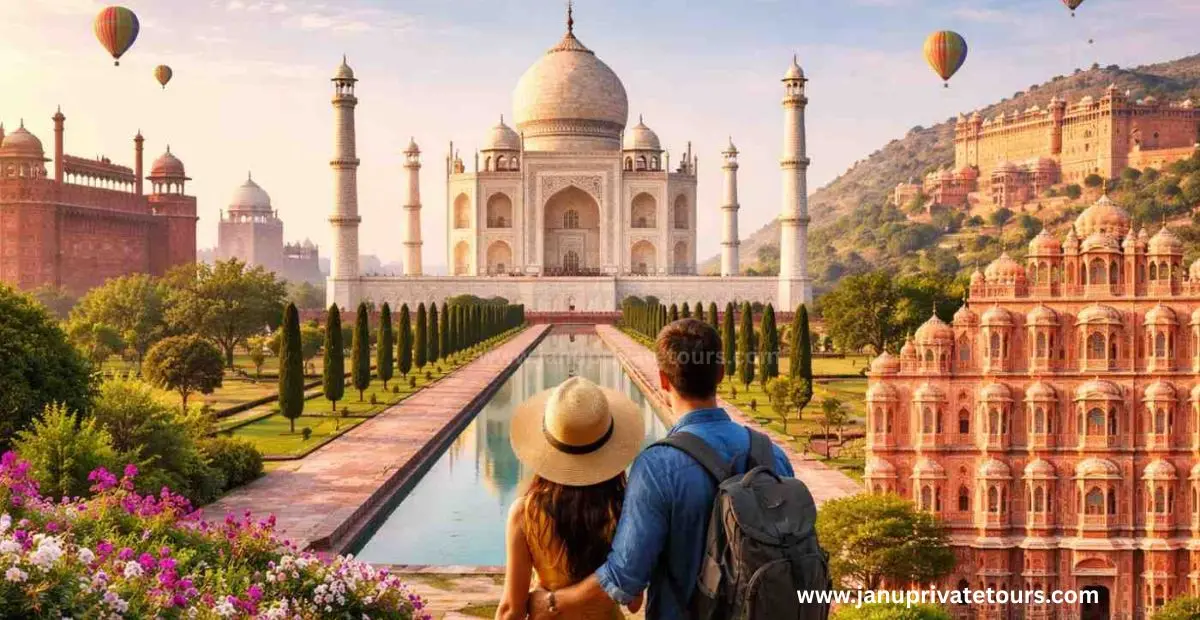
Traveling to India for the first time can feel exciting… and overwhelming at the same time.
You’ve probably seen:
Stunning palaces and colorful festivals
Spiritual rituals along sacred rivers
Breathtaking landmarks like the Taj Mahal
But you’ve also likely heard:
“Will I get sick?”
“Is it too chaotic?”
Let’s be honest—both sides are true.
India is not a simple destination.
It’s intense, diverse, unpredictable… and absolutely unforgettable.
India is best described as a contrast – driven experience:
Modern cities next to ancient traditions
Luxury hotels beside bustling markets
Peaceful temples within noisy streets
For first-time visitors, this contrast can feel overwhelming—but only if you’re unprepared.
With the right guidance, India becomes:
Safe
Manageable
Deeply rewarding
India isn’t just a place you visit—it’s a place you experience.
It challenges your expectations, opens your perspective, and creates moments you’ll never forget.
From sunrise at the Taj Mahal to walking through Jaipur’s old streets, every day feels different.
That’s exactly why millions of travelers return again and again.
By the end of this India trip planning guide for first-time visitors, you’ll know:
How to enter India (visa, documents).
How to stay safe and avoid scams.
What to eat, where to stay, and how to travel.
Which destinations are best for first-time visitors?
How to plan your first time in India travel experience.
And most importantly:
How to explore India for the first time with confidence instead of confusion
If this is your first visit, don’t try to do everything alone.
India rewards travelers who:
Plan ahead
Travel at the right pace
Get local insights
Many first-time visitors choose curated experiences such as private tours to simplify logistics and avoid common mistakes—especially when visiting regions like Rajasthan or the Golden Triangle.
Yes—almost all foreign travelers need an Indian visa to enter India.
The good news?
India has made the process much easier with the introduction of the e-Visa system, which most travelers from the USA, UK, Europe, and Australia can use.
For first-time visitors, the India e-Visa is the most convenient way to enter the country.
30-Day Tourist Visa (double entry)
1-Year Tourist Visa (multiple entry)
5-Year Tourist Visa (multiple entry)
Applying for an Indian visa is straightforward, but accuracy is important.
You’ll need:
A valid passport (minimum 6 months validity)
A passport-size photo (digital format)
A scanned passport copy
A valid email address
A debit/credit card for payment
Processing usually takes 24–72 hours, but apply at least 4–7 days in advance.
You can enter India through major international airports such as:
Delhi
Mumbai
Jaipur
Bangalore
Chennai
And selected seaports.
Always double-check your approved entry points before traveling.
Even with long-term visas, there are stay limitations per visit:
30-Day e-Tourist Visa: Valid for 30 days from the date of first entry (double entry).
1-Year & 5-Year e-Tourist Visas: Valid from the date the ETA is granted (multiple entries).
Maximum Continuous Stay:
For most countries: 90 days per visit.
For the USA, UK, Canada, and Japan: Continuous stay during each visit shall not exceed 180 days.
Overstaying can result in fines or future travel restrictions.
In most cases, tourist visas cannot be extended while in India.
If you wish to stay longer:
You must exit India and reapply
Or plan with a longer-duration visa
India offers a Visa on Arrival (VoA) only for nationals of Japan, South Korea, and the United Arab Emirates (UAE).
Special Rule for UAE: UAE nationals are eligible only if they have previously obtained an e-Visa or a paper visa for India.
Validity: Up to 60 days with double entry for tourism, business, or medical purposes.
Airports: Only available at Delhi, Mumbai, Chennai, Kolkata, Bengaluru, and Hyderabad.
For all other travelers (USA, UK, EU, Australia, etc.), you must apply for an e-Visa online at least 4 days before arrival.
First-time travelers often make small mistakes that can cause big issues.
Avoid these:
Entering the wrong passport details
Uploading unclear documents
Applying too late
Booking flights before visa approval
Always wait for visa confirmation before finalizing travel plans.
If you’re planning a multi-city trip (Delhi, Agra, Jaipur, Rajasthan, etc.), align your visa duration with your itinerary.
Many travelers underestimate how much time India requires.
This is the #1 question every first-time traveler asks.
The honest answer is:
Yes, India is safe for tourists—if you travel smart.
Just like in the USA, UK, or Europe:
Some areas are very safe
Some require caution
Awareness makes all the difference
Millions of international travelers visit India every year without issues.
The key is preparation—not fear.
India can feel intense because:
It’s crowded
People are curious about foreigners
Street life is very active
This does NOT mean it’s unsafe—it means it’s different.
Once you understand the environment, it becomes much easier to navigate confidently.
If you’re travelling solo in India, one of the most searched concerns:
Is India safe for solo female travelers?
The Reality:
Thousands of women travel solo in India every year
Many have safe, life-changing experiences
Smart Safety Tips:
Dress modestly (especially in smaller cities)
Avoid walking alone late at night
Use trusted transport (Uber/Ola or hotel-arranged cars)
Stay in well-reviewed accommodations
Trust your instincts—always
Cities like Jaipur, Udaipur, and Kerala are considered more comfortable for first-time female travelers.
India is generally safe—but like any tourist destination, scams exist.
Watch out for:
1. “Closed Attraction” Scam
Someone tells you a monument is closed → takes you to a shop
Ignore and verify yourself
2. Fake Tour Guides
Unlicensed guides offering “cheap tours.”
Always use verified services
3. Overpriced Taxi/Auto
Drivers quoting inflated prices
Use Uber, Ola, or pre-booked transport
4. Currency Confusion
Being given incorrect change
Count money carefully
Transportation is one of the biggest concerns for first-time visitors.
Safe Options:
Uber / Ola (widely available in cities)
Hotel-arranged taxis
Pre-booked private drivers
Avoid:
Random street taxis without negotiation
Traveling alone late at night in unfamiliar areas
For multi-city travel, many first-time visitors prefer private car + driver setups for comfort and safety.
Foreign travelers—especially women—may attract attention.
This is usually:
Curiosity
Not aggression
How to handle it:
Stay confident and calm
Avoid engaging in unwanted conversations
A firm “No, thank you” works well
Ignore persistent sellers
Most situations are harmless but unfamiliar, not dangerous.
India is vast, and safety varies by location.
Generally safe for tourists:
Rajasthan (Jaipur, Udaipur, Jodhpur)
Kerala
Goa
Himachal Pradesh
Use extra caution in:
Overcrowded markets
Isolated areas at night
Remote regions without tourist infrastructure
Stick to well-traveled routes for your first trip.
India’s monsoon season (June–September) can affect travel.
Risks:
Flooded streets
Travel delays
Slippery roads
Tips:
Avoid heavy travel during the peak monsoon
Check weather forecasts
Allow buffer days in your itinerary
India is generally stable, but like any country:
Protests can happen
Local tensions may arise
What to do:
Avoid large gatherings or protests
Follow local news or hotel advice
Register with your embassy (recommended)
Stay aware, not afraid.
If you:
Plan ahead
Choose reliable services
Respect local culture
You’ll likely have a smooth and safe journey.
This is a common concern.
Reality:
Hotels & restaurants → clean facilities
Public toilets → inconsistent
Tips:
Carry tissues/wipes
Use hotel/restaurants when possible
Here’s a quick checklist:
Must-carry:
Hand sanitizer
Wet wipes
Sunscreen
Comfortable walking shoes
Light clothing
Pack light—but smart.
India doesn’t always go “by the plan.”
And that’s okay.
The best experiences often come from:
Unplanned moments
Local interactions
Small surprises
Most travel stress comes from:
Not knowing what to expect
Small logistical challenges
When you’re prepared:
You feel confident
You enjoy more
You worry less
Keep things simple.
For your first trip:
Choose fewer destinations
Plan transport in advance
Avoid overloading your itinerary
By now, you’ve seen that traveling in India is:
Incredibly rewarding
Deeply cultural
But also… complex to plan
From visas and safety to transport and itineraries—there’s a lot to manage, especially for a first-time visit.
Most international travelers eventually realize:
The biggest challenge isn’t what to see
It’s how to experience it smoothly
That’s why many visitors choose locally guided, private travel experiences—to avoid:
Transport confusion
Overpacked itineraries
Safety uncertainties
Time-consuming planning
Travel becomes completely different when:
Your itinerary is thoughtfully designed
Transport is pre-arranged
You have local support at every step
You don’t have to negotiate, guess, or worry
You focus on the experience—not the logistics.
With over 20 years of experience hosting international travelers, Janu Private Tours specializes in:
Personalized itineraries
Private car & driver experiences
Cultural and heritage tours
Safe, comfortable travel across India
Travelers choose Janu Private Tours because it offers:
Understand India beyond guidebooks—with real cultural insight.
Trusted drivers, verified hotels, and reliable support.
Adjust your journey based on your pace and interests.
No stress, no confusion—everything handled for you.
Instead of spending weeks researching and second-guessing:
Reach out and get:
A custom itinerary
Expert recommendations
Clear pricing
Honest guidance
India is not a destination you want to “figure out as you go”—
It’s a destination you want to experience fully and comfortably.
With the right planning and support, your journey becomes:
Effortless
Meaningful
Unforgettable
Hi, I am Janu (Shabbir Khan)
Book a Free Call
+91 99291 52946