
Blogs

What Is Delhi Belly

If you have time planning your trip to India, you’ve probably come across the term’ Delhi Belly. It appears on travel forums, in guidebooks, and is mentioned in almost every conversation with someone who’s already been to India. While the name sounds moderately humorous, it can have a profound impact on your vacation.

‘Delhi Belly’ is the informal term for traveler’s diarrhea, specifically caught in India (often from eating or drinking unsanitary or contaminated foods/drinks). It’s the most common condition that may affect first-time overseas vacationers in the country. If it strikes halfway through your trip, it can hamper all your careful planning or ruin your travel itinerary.

However, it is preventable. This guide will explain what it is, what causes it, how to recognize the symptoms, how to treat it, and most importantly, how to avoid getting it altogether.

What Is Delhi Belly?

Delhi Belly is a term used to define acute traveler’s diarrhea in India. In medical terms, it is a type of traveler’s diarrhea known to affect 30-70% of people who travel internationally, depending on where they go and the time of year they travel.

The condition comes on suddenly with symptoms including loose stools, stomach cramps, nausea, and/or vomiting. Symptoms usually develop 6-72 hours after eating or drinking contaminated food or water. The condition often lasts 1-2 days in the case of mild bacterial diarrhea, 3-7 days for more severe bacterial diarrhea, and 14 days for Giardia infection. The severity of the symptoms often depends on the type of bacteria, virus, or parasite causing the illness.

What Causes Delhi Belly?

Cause Common Source
Bacterial infection Contaminated street food, unwashed produce
E. coli (most common) Undercooked food, tap water
Salmonella Poultry, eggs, dairy
Giardia (parasite) Contaminated water sources
Viral gastroenteritis Person-to-person contact, contaminated food, water
Tap water Ice, brushing teeth, salads washed in tap water

Contaminated Water

It is unsafe for foreign visitors to drink tap water in India. This fact is the most important one to understand before you get here. Even treated water is not good for your body, as your body is not used to the bacteria found in tap water. The risk is not limited to drinking water only, but to ice, water for washing raw vegetables and salad, and water used for brushing teeth as well.

Street Food and Unhygienic Preparation

India’s street food is truly exceptional, and it would be unfair to miss out on it entirely. However, eating street food, which is prepared in unhygienic conditions, made with contaminated water, or that has just been sitting out in the heat for a long time, can be really dangerous. It’s the preparation and storage conditions of food that cause a problem.

Undercooked Meat and Seafood

Eating undercooked chicken, seafood, or eggs could lead to salmonella and other infections. In hot climates, food spoils more quickly, and there are greater chances of eating something that has not been stored or cooked properly.

Unwashed Raw Produce

Street vendors who sell raw salads, cut fruit, and unpeeled produce washed in tap water represent the major sources of contamination. The bacteria exist on food surfaces because the food has been washed with contaminated water.

Your Gut Simply Adjusting

People should understand that stomach problems that occur in India rarely indicate serious medical conditions. Some travelers experience mild digestive problems because the body takes time to adapt to local spices, cooking oils, and unfamiliar bacteria. This is normal, mild, and the symptoms will improve within two days without the need for any treatment.

Symptoms of Delhi Belly

Mild cases involve loose stools and discomfort for one to two days. Moderate cases include cramps, nausea, and disruption to normal activity for two to four days. Severe cases involving high fever, blood in stools, or symptoms lasting more than five days require medical attention.

Symptom Severity
Loose or watery stools Mild to severe
Stomach cramps and bloating Mild to moderate
Nausea Mild to moderate
Vomiting Moderate to severe
Fever Moderate to severe
Fatigue and weakness Mild to moderate
Urgency and frequency Mild to severe

How To Prevent Delhi Belly

This is the section that matters most. The majority of Delhi Belly cases are entirely preventable with the right habits.

1. Drink Only Bottled or Purified Water

Carry a sealed bottle of water at all times and buy from reputable brands. Check that the seal is intact before opening. Avoid tap water entirely, including for brushing teeth. Use bottled water for this as well, particularly in the first week of your trip.

2. Avoid Ice in Drinks

Unless you are in a high-end hotel or restaurant that explicitly uses purified water for ice, avoid ice in your drinks. This is one of the most commonly overlooked sources of contamination for travelers.

3. Eat Hot, Freshly Cooked Food

The safest street food and restaurant food is food that has been cooked fresh and served hot. Avoid anything that has been sitting out, reheated, or served at room temperature. Busy food stalls with high turnover are generally safer than quiet ones where food sits for longer.

4. Peel It or Leave It

The traveler’s rule for fruit and vegetables is simple. If you can peel it yourself, it is generally safe. If it has been pre-cut, pre-peeled, or washed in water you cannot verify, avoid it. Bananas, oranges, and mangoes you peel yourself are safe. Pre-cut fruit from street stalls is a risk.

5. Be Careful with Salads and Raw Vegetables

Raw salads in India are washed in water. Unless you are in a high-end restaurant with verified purified water, avoid raw salads, particularly in the first week of your trip when your system is most vulnerable.

6. Wash Your Hands Constantly

Hand hygiene is one of the most effective defenses against traveler’s diarrhea. Wash your hands with soap before every meal and after using the bathroom. Carry a small bottle of hand sanitizer for situations where soap and water are not available.

7. Take a Probiotic Before and During Your Trip

Starting a high-quality probiotic supplement two weeks before your trip and continuing throughout can significantly strengthen your gut’s resilience. Probiotics help establish a healthy gut flora that is better equipped to handle unfamiliar bacteria.

8. Consider Traveler’s Diarrhea Medication

Speak to your doctor before traveling to India about carrying a course of antibiotics such as Azithromycin or Ciprofloxacin for use if symptoms become severe. Some travelers also carry Bismuth subsalicylate (Pepto-Bismol) as a preventive measure. Always consult a medical professional before taking any medication.

How To Treat Delhi Belly If It Happens

Treatment Purpose
Oral rehydration salts (ORS) Replace lost fluids and electrolytes
Loperamide (Imodium) Slow diarrhea for short-term relief
Antibiotics (prescribed) Treat bacterial infection in severe cases
Rest Allow your body to recover
BRAT diet Bananas, rice, applesauce, toast for easy digestion
Avoid dairy and spicy food These worsen symptoms during recovery

The most important immediate step is rehydration. Diarrhea and vomiting cause rapid fluid and electrolyte loss, which leads to fatigue, dizziness, and weakness. Oral rehydration salts dissolved in bottled water are available at pharmacies across India and should be in every traveler’s medical kit.

Loperamide (sold as Imodium) can provide short-term relief by slowing diarrhea, which is useful if you need to travel or have a long day of sightseeing. It does not treat the underlying infection but manages symptoms.

If symptoms include high fever, blood in stools, or do not improve after 48 hours, seek medical attention. India has good private hospitals and clinics in all major cities and most high-end hotels can arrange a doctor visit.

What To Pack in Your India Medical Kit

Item Why
Oral rehydration salts First response to dehydration
Loperamide (Imodium) Symptom management
Prescribed antibiotics Severe bacterial infection
Probiotic supplements Gut resilience before and during trip
Hand sanitizer Hygiene when soap is unavailable
Antacids Spice-related indigestion
Thermometer Monitor fever
Travel insurance documents Medical coverage if hospitalization needed

Foods and Drinks To Be Cautious About in India

Higher Risk Lower Risk
Raw salads Freshly cooked dal and rice
Pre-cut street fruit Fruit you peel yourself
Ice in drinks Hot chai from busy stalls
Tap water Sealed bottled water
Reheated food Food cooked fresh to order
Roadside dairy products Food from busy, reputable restaurants

Does Delhi Belly Mean You Should Avoid Street Food?

No. Avoiding street food entirely in India means missing one of the country’s most authentic and enjoyable experiences. The goal is not avoidance but informed choices. Busy stalls with high turnover, food cooked fresh in front of you, and hot dishes served immediately are generally safe. The risk comes from food that has been sitting out, prepared with contaminated water, or served in unhygienic conditions.

Traveling with a knowledgeable local guide significantly reduces this risk. At Janu Private Tours, our guides know which food stalls and restaurants are safe for international visitors and which to avoid. Travelers who join our Delhi Street Food Tour can safely experience authentic local flavors with expert guidance, while our Delhi Sightseeing Tour combines iconic landmarks with trusted restaurant and market recommendations for a stress-free experience in the capital. Eating well in India is one of the great pleasures of the trip and we make sure our travelers experience it without the consequences.
What To Wear In India As A Respectful Traveler

India is not one climate, one culture, or one dress code. What suits in Goa doesn’t fit in Varanasi. What’s normal in Mumbai might feel over-the-top in a rural Rajasthani village. For first-time foreign visitors, what to wear in India is a common pre-trip concern and one of the most important aspects of overall trip preparation.

Dressing appropriately in India is not about restriction. It is about respect, comfort, and practicality. Get it right, and you will easily move through temples, markets, and local neighborhoods. Get it wrong, you might face denied entry to religious places or just sweat your way through the day. Let us have a look at what to wear and pack for your India trip.

What NOT To Wear in India?

What to Avoid Reason
Very short shorts outside Beaches Considered Disrespectful in Cities, temples, rural areas
Revealing or sleeveless tops at temples Entry may be refused
Tight clothing in rural and conservative areas Attracts unwanted attention
Heavy denim in summer Uncomfortable in 40 degree heat
Expensive jewelry in public Security risk in crowded markets
Beachwear away from beaches Inappropriate in cities and religious sites

Why Clothing Matters More in India Than in Most Destinations?

India is a deeply religious and culturally rich country. Temples, mosques, gurudwaras, and churches are places of worship where millions of people gather daily. Dressing modestly is not an option in these places. It is mandatory.

Apart from religious places, conservative dressing shows respect for the culture here and goes a long way in avoiding unwanted attention, especially for solo female travelers. Plus, it will keep you cooler. Loose, breathable, full-coverage clothes are far more practical in the heat of India than shorts and sleeveless tops.

Can Tourists Wear Western Clothes in India?

Yes. Jeans, trousers, dresses, shirts, and Western casual wear are pretty standard in India’s biggest cities. Delhi, Mumbai, Bengaluru, and Jaipur all have large urban populations that wear Western clothing regularly. It’s more about modesty and context than anything else.

For example, a loose Western shirt and trousers can be fine for most temples for men. Yet a midi dress with shoulders covered is preferable at most sightseeing places. It’s not about Western versus Indian clothing. Rather, it is about making sure your Western clothes are appropriate for the place you are visiting. When in doubt, wear loose shirts and trousers for utmost comfort and coverage.

Quick Reference: What To Wear Where

Setting Recommended Clothing
Hindu temples Cover shoulders and knees, remove shoes
Mosques Full coverage, head scarf for women
Gurudwaras Cover head, remove shoes
Beaches (Goa, Kerala) Swimwear at beach only, cover up elsewhere
Cities (Delhi, Mumbai) Smart casual, modest
Rural areas and villages Conservative, full coverage
Hill stations and trekking Layers, warm clothing
Restaurants and hotels Smart casual

What To Wear in India: For Women

Here is a checklist for women travelers:

Loose Trousers or Salwar Pants

Lightweight, loose trousers are the most versatile woman travelers can pack for India. They cover the legs, stay cool in the heat, and are suitable everywhere. Pair them with kurtas, tunics, or longer tops. Linen, cotton, and rayon are all good fabric choices.

Kurtas and Tunics

A kurta is a long, loose top that falls to mid-thigh or knee. For women, the garment is very versatile and comfortable. Packing 2-3 kurtas are a great option as they are so easy to wear and also acceptable across most religious places of India.

Dupatta or Lightweight Scarf

A dupatta is a long scarf that covers your shoulders and head. It’s excellent for covering up when visiting places of worship in India. Pack a couple of light ones. They cover your head at religious sites, can protect you from extreme sun and dust, and you can use it as a light layer in air-conditioned areas.

Maxi Dresses and Midi Skirts

Long, loose maxi dresses and midi skirts that fall below the knee are practical and comfortable in India’s heat. Avoid anything short, tight, or low-cut in public spaces. Floaty, breathable fabrics work best.

What To Wear in India: For Men

When packing for men, here are the clothes they should pack:

Linen and Cotton Shirts

Lightweight linen or cotton shirts are the most practical choice for men in India. Long sleeves offer sun protection and are required at some religious sites. Loose-fitting shirts in breathable fabrics keep you significantly cooler than fitted synthetic options. Pack shirts in lighter colors as dark colors, particularly black, absorb heat and show sweat quickly in the summer months.

Lightweight Trousers and Chinos

Lightweight cotton or linen trousers are appropriate everywhere in India. They are required at most religious sites and are far more comfortable than denim in the heat. Pack two or three pairs in neutral colors like beige, grey, or navy. These work equally well for temple visits, restaurant dinners, and long days of sightseeing.

Layering for North India Winters

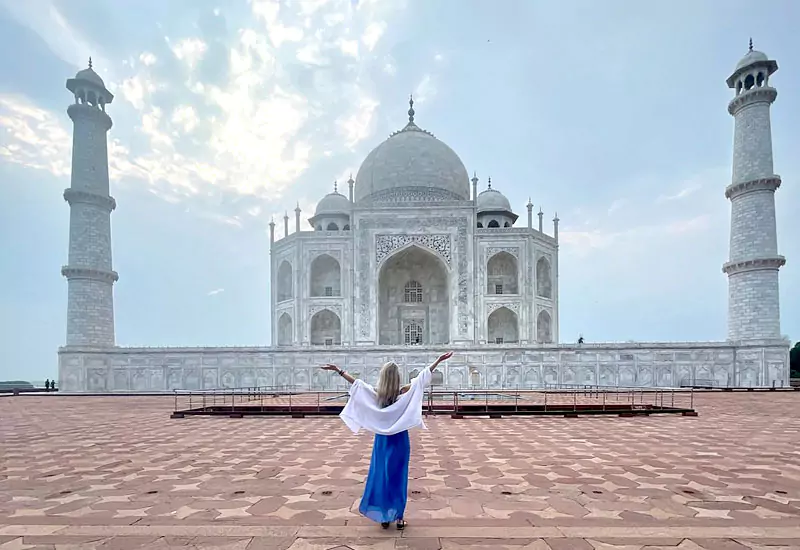
If you are visiting Rajasthan, Delhi, or Agra between November and February, mornings and evenings can be genuinely cold, dropping to 5 to 8 degrees Celsius in January. Pack a fleece or light down jacket for early morning visits to the Taj Mahal or sunrise at Amber Fort. A thermal base layer is useful for the coldest weeks of December and January.

Shorts

Shorts are acceptable in beach destinations like Goa and Kerala and in some urban areas. They are not appropriate at religious sites, in rural villages, or in more conservative regions. If you pack shorts, always carry trousers for temple visits and travel through smaller towns.

Footwear for Men

Comfortable, closed-toe walking shoes are essential for city sightseeing. Slip-on sandals are invaluable for easy removal at temples and mosques, where you will be taking your shoes off multiple times a day. Avoid brand new shoes that have not been broken in. The amount of walking involved in a typical India itinerary will destroy your feet if your shoes are not comfortable from day one.

Temple Etiquette for Men

Cover your shoulders and knees at Hindu temples and mosques. At gurudwaras, cover your head. Most religious sites provide cloth wraps or head coverings at the entrance if your clothing does not meet requirements. Leather items are considered impure at some Hindu temples and may need to be left outside.

Seasonal Packing Checklist

Winter (October to February)

Item Notes
Light jacket or fleece Essential for North India mornings and evenings
Shawl or warm scarf Doubles as temple cover and warmth layer
Layers Mornings cold, afternoons warm
Closed shoes Comfortable walking shoes for cooler weather
Thermal base layer For December and January in North India

Summer (March to June)

Item Notes
Loose cotton clothing Breathable, light colors preferred
High SPF sunscreen UV levels are extreme in Indian summer
Wide-brim hat or cap Essential for outdoor sightseeing
Sunglasses UV protection, strong glare
Electrolyte sachets Dehydration risk is high in peak summer

Monsoon (July to September)

Item Notes
Waterproof footwear Sandals or waterproof shoes
Compact umbrella Sudden heavy downpours are common
Quick-dry clothing Humidity means slow drying times
Light rain jacket Packable, easy to carry
Extra dry bags Protect electronics and documents

What To Wear at Specific Religious Sites

Hindu Temples

Cover shoulders and knees. Remove shoes before entering. Many temples provide a cloth wrap at the entrance if your clothing is not considered appropriate. Avoid leather items inside some temples as leather is considered impure in certain Hindu traditions.

Mosques

Full coverage is required for both men and women. Women should cover their head with a scarf. Remove shoes before entering. The Jama Masjid in Delhi and the mosques within the Taj Mahal complex enforce these rules strictly.

Gurudwaras

Cover your head before entering. Most gurudwaras provide head coverings at the entrance. Remove shoes and wash your feet at the entrance pool. The Golden Temple in Amritsar is one of India’s most visited religious sites and these rules are firmly enforced.

Common Packing Mistakes First-Time Travelers Make in India

Mistakes What to do Instead
Overpacking heavy clothing Pack light, buy locally in Jaipur or Delhi
Bringing heavy denim jeans Swap for lightweight cotton or linen trousers
Forgetting a scarf or dupatta Pack at least two, used daily
No slip-on shoes Essential for multiple temple visits per day
Too much black clothing in summer Light colors reflect heat, dark colors absorb it
No sunscreen UV levels in India are extreme, SPF 50 is recommended
Wearing revealing clothing in conservative areas Always carry a cover-up regardless of the weather
Packing formal shoes only Comfortable walking shoes are non-negotiable

Should You Buy Clothes in India?

Yes, and it is one of the best things you can do. Indian clothing is affordable, well-suited to the climate, and widely available across every city. Jaipur’s markets sell block-print kurtas, cotton trousers, and dupattas at very reasonable prices. Delhi’s Dilli Haat and Lajpat Nagar markets are excellent for a wide range of clothing. Buying locally means you arrive with a lighter suitcase and leave with genuinely Indian pieces.

If you are traveling on a private India day tour, your guide can take you to the right markets and help you find quality clothing at fair prices, without the pressure of tourist-area touts.

Final Thoughts

India rewards travelers who come prepared. Packing the right clothing means fewer complications at temple entrances, more comfort in the heat, and a more respectful experience for everyone around you. Keep it light, keep it loose, and keep a scarf within reach at all times.

Planning your first trip to India and not sure where to start? Janu Private Tours builds fully guided private itineraries for first-time foreign visitors, covering everything from what to pack to where to go and how to get there.

20 Best Souvenirs to Buy in India

Many travelers depart India with a suitcase full of unexpected purchases. And why not? India’s markets are overflowing with color, craft, texture, and smell, all competing for your attention at the same time.

However, not everything available at popular markets is necessarily a wise buy. Some goods can be mass-produced, overpriced, or generic and not indicative of the place you visited. Here, we list the best souvenirs to buy in India, why they are a top pick and what a rough idea of what to pay.

Quick Reference: Best Souvenirs by Category

Category Best Pick Best Place to Buy
Textiles Pashmina shawl Jaipur, Delhi, Kashmir
Jewelry Kundan or Meenakari Jaipur
Home Decor Marble inlay piece Agra
Spices Saffron, Cardamom Kerala, Kashmir
Art Miniature Painting Rajasthan
Clothing Block-Print Kurta Jaipur, Ahmedabad
Tea Darjeeling First Flush Darjeeling, Munnar
Wellness Ayurvedic Oils Kerala
Pottery Blue Pottery Jaipur
Footwear Mojari Shoes Rajasthan

Best Souvenirs to Buy in India: Textiles and Clothing

So let us first start with the famous textiles and clothing of India that are worth buying:

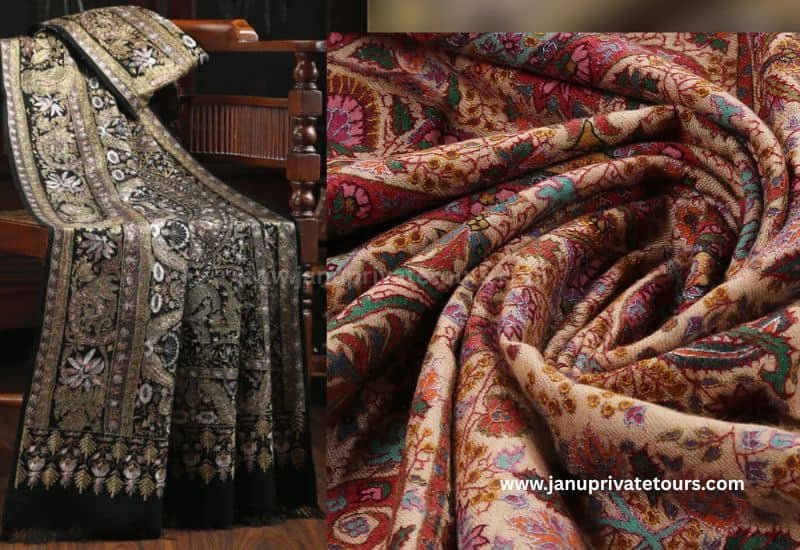
1. Pashmina Shawl

Pashmina

A genuine Pashmina shawl is the ultimate souvenir from India. The undercoat of the Himalayan Changthangi goat is used in creating these warm, soft, and lightweight shawls. You can purchase the embroidered kind for Rs. 15,000 or more, while prices for the plain variety start at Rs. 3,000. Do not buy unless you trust the source, as you may come across blended or synthetic pashmina shawls. For the genuine ones, buy from government-certified emporiums in Jaipur, Delhi, or Kashmir.

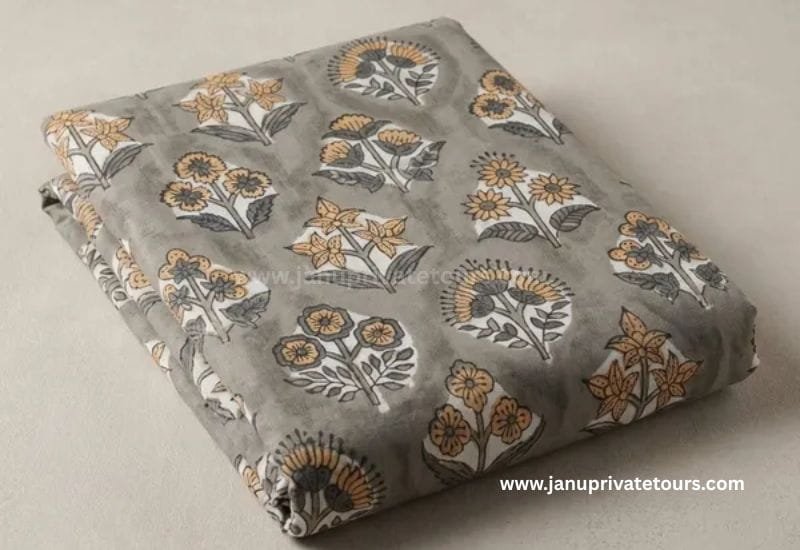
2. Block-Print Kurta or Fabric

Block-Print

Rajasthan’s regional craft block-printing is an art that gets passed down from generation to generation of craftsmen. Wooden blocks are carved featuring a seemingly infinite variety of patterns and motifs, and dipped in natural dye and hand-pressed onto the fabric. The result? Exquisite patterns in a range of colours. Buy kurtas, dupattas, or a few meters of fabric and other textiles from Jaipur and Sanganer.

3. Banarasi Silk Saree

Banarsi

A Banarasi silk saree is crafted using gold and silver zari thread in Varanasi and has been a part of the city’s tradition for centuries. Even if you do not wear a saree, a small piece of the Banarasi silk fabric will make a beautiful and decorative fabric and a very thoughtful gift. These days, modern variations across Katan, Organza, and Georgette are available, so you can pick the right option for you.

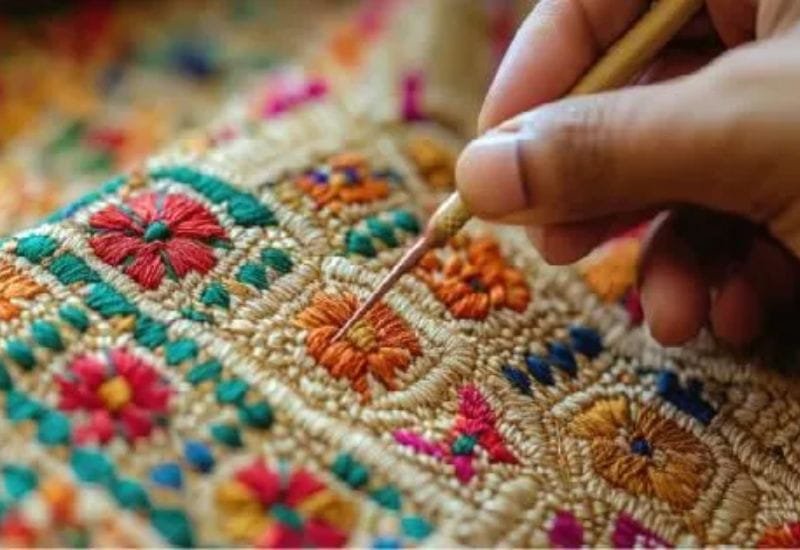
4. Phulkari Embroidery

Phulkari

Phulkari means flower work, a traditional embroidery style from Punjab where geometric floral patterns are stitched onto fabric using silk thread. Dupattas, shawls, and cushion covers in Phulkari are lightweight, easy to pack, and genuinely regional.

Jewelry and Accessories

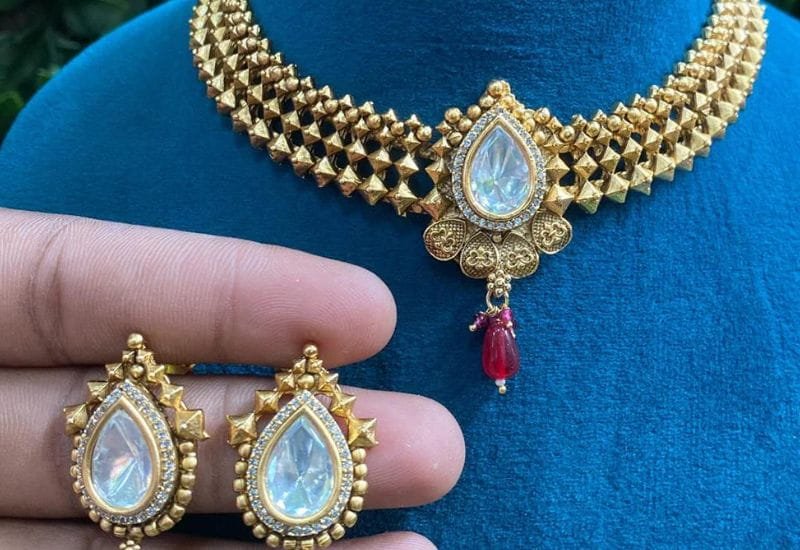
5. Kundan Jewelry

Kundan

Kundan is a traditional Rajasthani jewelry style where gemstones are set in refined gold using a technique dating back to the Mughal era. Jaipur is the undisputed capital of Kundan jewelry in India. Even a small pair of Kundan earrings makes a beautiful and culturally significant gift.

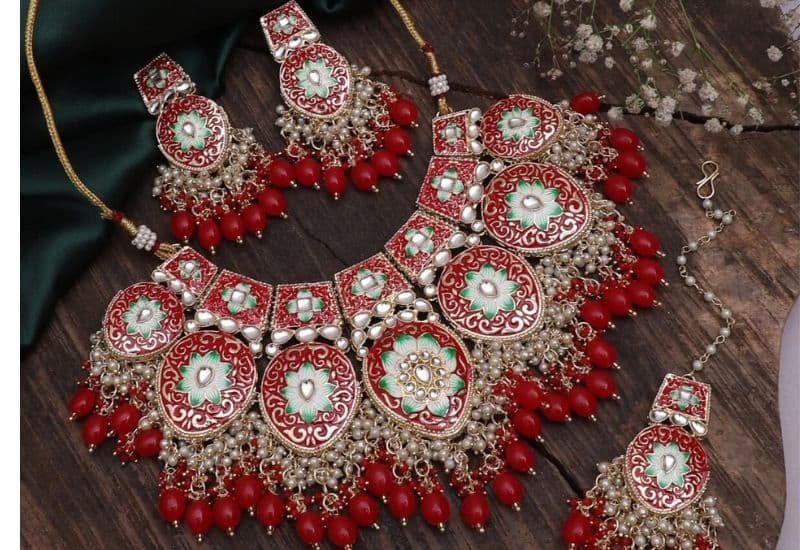
6. Meenakari Jewelry

Meenakari

Meenakari is the art of enameling metal, usually gold or silver, with vivid colors. The craft originated in Persia and was brought to Rajasthan by Mughal artisans. Jaipur’s Johari Bazaar is the best place to browse Meenakari pieces. Look for rich reds, greens, and blues, the hallmark of quality Meenakari work.

7. Mojari Shoes

Mojaris are traditional handcrafted leather shoes with a pointed toe, embroidered with thread, beads, or mirror work. They are lightweight, flat, and surprisingly comfortable. Jaipur’s Bapu Bazaar sells them for Rs. 300 to Rs. 1,500 depending on quality. One of the most practical and genuinely Indian souvenirs you can buy.

Home Decor and Crafts

Item Origin Price Range Best For
Marble Inlay Box Agra Rs. 500 to Rs. 5,000 Desk Decor, Gifting
Blue Pottery Vase Jaipur Rs. 300 to Rs. 2,000 Home Display
Brass Figurine Moradabad, UP Rs. 400 to Rs. 3,000 Shelf Decor
Wooden Lacquerware Rajasthan Rs. 200 to Rs. 1,500 Kitchen, Gifting
Dhokra Metal Craft Chhattisgarh, Odisha Rs. 500 to Rs. 4,000 Collector’s Piece

8. Marble Inlay Piece (Agra)

The artisans of Agra have been inlaying semi-precious stones into white marble since the Mughal era, the same technique used on the Taj Mahal itself. Small marble boxes, coasters, and decorative plates make excellent souvenirs. A small inlay box starts around Rs. 500 and is easy to pack.

9. Blue Pottery

Blue pottery is unique to Jaipur and is technically not made from clay. It uses a dough of quartz stone powder, glass, and Multani mitti. The result is a distinctive turquoise-blue glaze with Persian-influenced floral patterns. Neerja International and Kripal Kumbh in Jaipur are reliable shops.

10. Dhokra Metal Craft

Dhokra lost-wax metal casting from Odisha and Chhattisgarh is one of India’s oldest metalworking traditions. Dhokra figurines depicting tribal figures, animals, and deities are striking as collector’s pieces and conversation starters back home.

Spices, Teas, and Food

11. Kashmiri Saffron

Indian saffron from the Pampore region of Kashmir is considered among the finest in the world. A small tin of genuine Kashmiri saffron costs Rs. 300 to Rs. 600 for a gram and is a genuinely luxurious gift. Buy from certified government shops to avoid adulterated products.

12. Darjeeling Tea

Darjeeling tea is a globally recognized geographical indication product, meaning authentic Darjeeling tea can only come from the Darjeeling district of West Bengal. The muscatel flavor is unlike any other tea in the world. A 100g pack costs Rs. 200 to Rs. 800 depending on grade.

13. Kerala Spice Box

Kerala is India’s spice coast. Cardamom, black pepper, cinnamon, cloves, and turmeric all grow here. A curated spice box from a Kerala market or spice plantation makes a practical, aromatic, and genuinely regional gift. Munnar and Thekkady are the best places to buy directly from growers.

14. Masala Chai Blend

A good masala chai blend with ginger, cardamom, cinnamon, cloves, and black pepper is one of the most packable and universally loved souvenirs from India. Most tea shops in Darjeeling, Munnar, and Delhi’s Chandni Chowk sell pre-mixed blends starting at Rs. 100.

Art and Wellness

15. Miniature Painting (Rajasthan)

Rajasthani miniature paintings depict royal court scenes and mythological stories in extraordinary detail, often painted on silk or ivory paper using brushes made from a single squirrel’s hair. Udaipur and Jaipur have the highest concentration of genuine miniature painters. Prices range from Rs. 500 for small prints to Rs. 10,000 and above for original hand-painted pieces.

16. Pattachitra Painting (Odisha)

Pattachitra is a traditional cloth-based scroll painting from Odisha depicting stories from Hindu mythology. Bold lines, natural colors, and intricate borders define the style. Raghurajpur village near Puri is the best place to buy directly from artists.

17. Ayurvedic Oils and Products

Kerala is the home of Ayurveda in India. Genuine Ayurvedic oils infused with herbs like brahmi, ashwagandha, and neem are widely available from certified Ayurvedic pharmacies. Kottakkal Arya Vaidya Sala and Vaidyaratnam are two trusted brands available across Kerala.

18. Sandalwood Products (Karnataka)

Mysuru in Karnataka is famous for its sandalwood. The Karnataka Soaps and Detergents Limited Mysore Sandal Soap is a government-produced product using genuine sandalwood oil and one of the most reliable sandalwood purchases you can make in India.

19. Handmade Paper Products (Jaipur)

Jaipur produces beautiful handmade paper notebooks, journals, greeting cards, and gift wrap using recycled cotton and natural dyes. Lightweight, affordable, and genuinely crafted. Prices start at Rs. 100 for a small notebook.

20. Wooden Lacquerware

Rajasthan’s wooden lacquerware includes brightly painted bowls, rolling pins, toys, and decorative items. Produced in Sawai Madhopur and sold across Rajasthan markets, a set of lacquerware bowls costs Rs. 200 to Rs. 800 and packs flat.

Shop Authentic Souvenirs with Local Experts

Fake products are everywhere near major monuments. Touts outside the Taj Mahal, Amber Fort, and Qutub Minar will sell you genuine marble that is plaster, real Pashmina that is acrylic, and authentic saffron that is dyed corn silk. Overpricing is standard practice in tourist-heavy areas, and without local knowledge, it is very easy to pay three times the fair price for something that is not even genuine. This is not a reason to avoid shopping in India. It is a reason to shop with someone who knows the difference.

At Janu Private Tours, we take you to trusted artisans and verified stores, ensuring you buy authentic Indian souvenirs at fair prices without stress.

Smart Shopping Tips

Tip Why It Matters
Buy from Government Emporiums Fixed Prices, Guaranteed Authenticity
Avoid touts near monuments Overpriced, often fake
Bargain at local markets Expected and acceptable
Check for GI tags Darjeeling tea, Pashmina, Banarasi silk are certified
Declare high-value items at customs Rules apply for antiques over 100 years old

Final Thoughts

India’s craft traditions run deep. Every region has something distinct, something made by hand, something that carries a story. The best souvenirs are not the ones that look the most Indian on a shelf back home. They are the ones you picked up, knowing exactly where they came from and who made them. Ready to shop India the right way? Plan your private India tour with Janu Private Tours and let us handle the rest.

Interesting Facts About India’s Taj Mahal

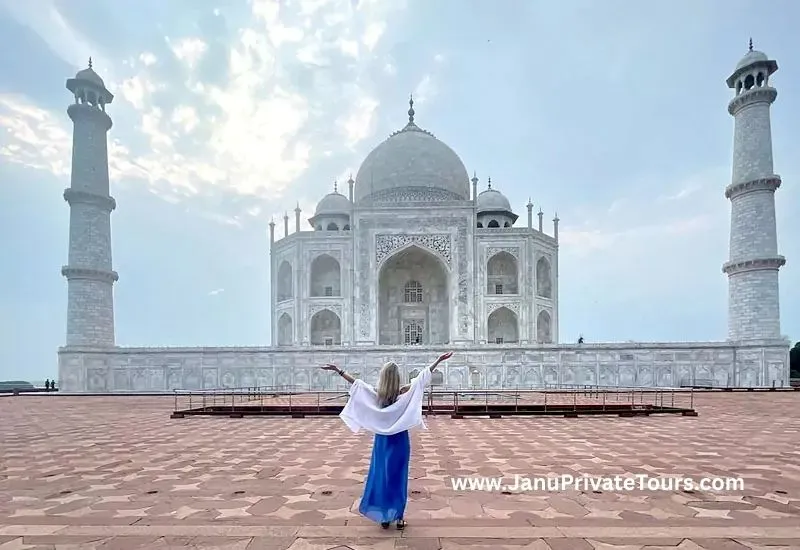
Most of us can recognize the Taj Mahal from photographs. Yet see it for the first time, and most people fall short of words. This is no ordinary monument but a 370-year-old testament to love, built by an emperor who lost everything, engineered by 20,000 artisans, and one that remains almost completely intact to this day. If you’re planning a trip, here are 10 facts about India’s most-visited site that will transform how you see it.

Taj Mahal at a Glance

Feature Details
Location Agra, Uttar Pradesh, India
Built By Emperor Shah Jahan
Built For Mumtaz Mahal
Year Completed 1653
UNESCO Status World Heritage Site (1983)
Primary Material White Makrana marble
Best Time to Visit Sunrise
Closed On Fridays
Entry Fee (Foreign) Rs. 1,100 per person

Why is the Taj Mahal so famous worldwide?

The Taj Mahal is located in Agra, Uttar Pradesh, in northern India. Agra is roughly 230 kilometers south of Delhi and 240 kilometers east of Jaipur. That means it’s the centerpiece of the Golden Triangle tour, India’s most popular travel circuit, which links Delhi, Agra, and Jaipur.

But the Taj Mahal isn’t famous simply because it’s beautiful. It’s famous for what it represents. The Mughal Emperor Shah Jahan built it after his wife, Mumtaz Mahal, died in 1631 while giving birth to their 14th child. Shah Jahan was so heartbroken that he decided to build the greatest monument the Mughal Empire had ever seen, not a palace or a fort, but a tomb. A tomb to keep his beloved wife’s memory alive.

And what a monument the world got! The Taj Mahal Tours combines Persian, Islamic, and Indian architectural traditions in a way that has no real parallel anywhere in the world. UNESCO added it to the World Heritage List in 1983, and it is also among the Seven Wonders of the World. Today, over 7 million people visit it annually, making it the most popular tourist site in India.

10 Interesting Facts About the Taj Mahal

Here are 10 interesting facts about the Taj Mahal worth noting:

1. It Was Built as a Symbol of Love

Taj

Shah Jahan and Mumtaz Mahal were married in 1612. By all historical accounts, theirs was a genuinely close relationship. When Mumtaz died in 1631, Shah Jahan reportedly went into mourning for two years. Construction of the Taj Mahal began in 1632, just one year after her death, and the emperor is said to have supervised the project personally throughout its construction.

2. It Took Over 20 Years and 20,000 Workers to Complete

Construction began in 1632 and was completed in 1653, taking 21 years in total. At its peak, over 20,000 artisans, craftsmen, and laborers worked on the site simultaneously. Architects and craftsmen were brought in from Persia, Central Asia, and across the Indian subcontinent. The sheer scale of coordination required to build this structure in the 17th century, without modern machinery, is extraordinary.

3. The Marble Changes Color Throughout the Day

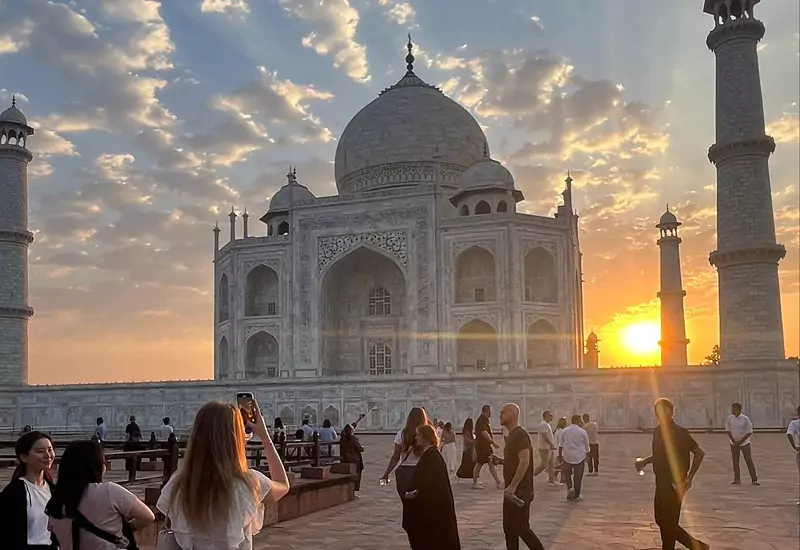
One of the most visually striking facts about the Taj Mahal is that it does not look the same at any two times of day. In the early morning light, the marble takes on a soft pink tone. By midday, it appears brilliant white. At sunset, it shifts to warm gold and amber. On full moon nights, it glows a pale silver. This is not an accident. The white Makrana marble from Rajasthan was specifically chosen for its translucent quality, which interacts with light in this way.

4. The Taj Mahal is Almost Perfectly Symmetrical

Every element of the Taj Mahal complex is mirrored on both sides of a central axis. The gardens, the reflecting pool, the mosque, the guest house, the minarets, all perfectly balanced. Architects and mathematicians have studied the proportions and found them to be extraordinarily precise for a pre-modern structure. There is, however, one deliberate exception.

5. Shah Jahan’s Tomb Breaks the Symmetry

Inside the main chamber, the cenotaphs of Mumtaz Mahal and Shah Jahan are placed side by side. Mumtaz’s cenotaph sits exactly at the center of the chamber, in perfect alignment with the building’s axis. Shah Jahan’s cenotaph, added after his death in 1666, sits slightly to the side, making it the only asymmetrical element in the entire structure. It was not planned. Shah Jahan had intended to build a second black marble mausoleum for himself across the river, but he was imprisoned by his son Aurangzeb before it could be built.

6. The Minarets Lean Slightly Outward

Look carefully at the four minarets surrounding the main dome, and you will notice they lean very slightly away from the central structure. This was intentional. The architects designed them this way so that in the event of an earthquake or structural collapse, the minarets would fall outward rather than onto the main tomb. A 17th-century engineering solution that still impresses structural engineers today.

7. Precious Stones Are Inlaid Directly into the Marble

width=800

The floral patterns and decorative motifs covering the Taj Mahal’s interior and exterior walls are not painted. They are inlaid using a technique called Pietra dura, where semi-precious stones are cut into precise shapes and set directly into the marble. The stones used include lapis lazuli from Afghanistan, turquoise from Tibet, jade from China, carnelian from Arabia, and mother of pearl from the Indian Ocean. Over 28 types of precious and semi-precious stones were used in total.

8. The Calligraphy Gets Larger as You Look Up

The Quranic verses inscribed around the main gateway and the tomb appear to be uniform in size. They are not. The calligrapher, Amanat Khan, deliberately made the letters progressively larger as they go higher up the wall. From ground level, the optical effect makes them appear perfectly uniform. It is one of the most sophisticated examples of visual correction in pre-modern architecture anywhere in the world.

9. It is One of the New Seven Wonders of the World

Seven

In 2007, the Taj Mahal was officially named one of the New Seven Wonders of the World following a global vote of over 100 million people. It joined the Great Wall of China, Machu Picchu, the Colosseum, Christ the Redeemer, Chichen Itza, and Petra. Of all seven, the Taj Mahal is consistently ranked among the top three most visited.

10. The Taj Mahal is Closed Every Friday

This is the most practically important fact for travelers. The Taj Mahal is closed to tourists every Friday for afternoon prayers at the mosque within the complex. If your itinerary has you arriving in Agra on a Friday, plan your visit for early morning before the closure or adjust your schedule accordingly. Missing this detail has ruined many a carefully planned trip.

Best Time to Visit the Taj Mahal

Time Experience
Sunrise Soft pink light, smallest crowds, most photogenic
Morning (8 am to 11 am) Good light, manageable crowds
Midday Bright white marble, very crowded, hot in summer
Sunset Warm golden tones, beautiful but busier
Full Moon Night Rare ticketed experience, magical silver glow

Sunrise is the clear recommendation for first-time visitors. Gates open at 6 am, and the first hour offers the best light, the fewest crowds, and the most peaceful experience of the monument.

Entry Fees and Visiting Tips

Visitor Type Entry Fee
Foreign Nationals Rs. 1,100, optional ₹200 to enter the main mausoleum
Indian nationals Rs. 50
Children under 15 Free

Book tickets online at the Archaeological Survey of India website to avoid queues at the gate. The Taj Mahal has strict security. No food, no tripods, no large bags, and no selfie sticks are permitted inside. Shoe covers are provided free at the marble plinth.

Things You Should NOT Do at the Taj Mahal

  • Do not bring food or drinks inside the complex
  • Do not use a tripod (confiscated at entry)
  • Do not engage with touts outside the gates offering official tickets
  • Do not wear revealing clothing; modest dress is expected
  • Do not visit on a Friday without checking the schedule
  • Do not book last-minute guides from outside the gate, use verified operators

How to Visit the Taj Mahal Easily?

From Delhi: The fastest option is the Gatimaan Express train, which covers Delhi to Agra in under two hours. By private car, the journey takes approximately three to four hours, depending on traffic. A day trip from Delhi is possible, but an overnight stay in Agra allows for both sunrise and sunset visits.

From Jaipur: Agra is approximately four to five hours by road from Jaipur. Most travelers on the Golden Triangle route stop in Agra between Jaipur and Delhi, which is the most logical and time-efficient sequence.

Why Visit the Taj Mahal with a Private Tour

Visiting the Taj Mahal independently is possible, but it comes with real friction. Queues at the ticket counter, touts at every entrance, guides with no credentials offering their services, and no one to explain what you are actually looking at.

A private tour removes all of that. Your guide handles tickets in advance, takes you through the less crowded entry points, explains the history and architecture in context, and ensures you are standing in the right spot at the right time for the best photographs. At Janu Private Tours, our Agra specialists have guided first-time foreign visitors through the Taj Mahal and know exactly how to make the experience memorable rather than stressful.

Wrapping Up

The Taj Mahal is one of those rare places that lives up to everything you have heard about it and then goes further. The story behind it, the engineering within it, and the experience of standing in front of it at sunrise are things that stay with travelers long after they leave India.

If you want to experience the Taj Mahal the right way, with expert guidance, pre-booked tickets, and a private driver who knows Agra inside out, plan your visit with Janu Private Tours. We handle every detail so you can simply be present for one of the world’s great travel experiences.

Sri Lanka vs India

Deciding between Sri Lanka and India remains one of the most common confusions for first-time travelers planning a South Asia trip. Both countries offer some of the most diverse and extraordinary travel experiences on the planet. But when you arrive, the experiences they offer are completely different. India is vast, layered, and endlessly immersive. Sri Lanka is compact, picture-perfect and easier to get around in a short space of time. If you are comparing Sri Lanka vs India, then let this post help you learn what each country brings and what you can enjoy.

Quick Comparison: India vs Sri Lanka

Factor India Sri Lanka
Size Massive, Highly Diverse compact, Easy to Explore
Travel Style Intense, Immersive Relaxed, scenic
Best For Culture, history, variety Easy travel, beaches, wildlife
Wildlife Tigers, lions, elephants Leopards, large elephant herds
Cost Budget to luxury Slightly higher average
Ideal Duration 10 to 21 days 7 to 14 days
First-Timer Friendly Moderate High

Size and Travel Experience

India is one of the world’s largest countries. For context, a single state here (Rajasthan) is bigger than many European nations. This means incredible diversity, but it also means long travel times between key sights. Traveling from Delhi to Agra to Jaipur to Varanasi involves planning, and oftentimes first-time visitors do not quite capture how large India is.

By contrast, you can drive from coast to coast in Sri Lanka in the morning. You can see the hill country, ancient ruins, beaches, and nature reserves in a well-rounded 10-day trip and not feel like you’re on the road every second day.

If you have limited time and want all-inclusive experiences without the complexity of the itinerary, visiting Sri Lanka is more feasible. If you are looking for a more detailed experience and a place that benefits from a longer stay, then India can be an ideal pick.

Culture and Heritage

India has one of the most ancient and stratified civilizations on earth. It’s home to 42 UNESCO World Heritage Sites. Rajasthan’s Amber Fort, Agra, and the ghats of Varanasi are just a few. Every region has its language, food, architecture, and customs. Simply traveling through Rajasthan alone feels like you’re seeing numerous different countries.

Sri Lanka’s Cultural Triangle is equally remarkable for its size. Three of the island’s 8 UNESCO World Heritage Sites are in what’s known as the Cultural Triangle. Sigiriya, Polonnaruwa, and Kandy are must-sees for history aficionados. And the Buddhist legacy is everywhere on the island.

If you want a truly intense cultural adventure, India has more to offer. But if you prefer your historical sites accessible, landscape concentrated, without the complexity of navigating such a vast region, Sri Lanka is the place to go.

Landscapes and Nature

Now let us have a look at both the destinations have to offer:

Mountains and Hill Stations

India is home to the stunning Himalayan mountain range in the northern part of the country. From the famous hill station Shimla to the less commercialized Munnar, and the peaceful ashrams of Rishikesh, India offers a varied mix of mountain landscapes and lush tea plantations. Rajasthan in the west offers contrasting desert scenery along with Kerala’s unique backwaters in the southwest. The Indian state of Uttarakhand in the north is home to the mighty and holiest of the rivers, the Ganga.

Sri Lanka’s central highlands are equally stunning, with destinations such as Ella and Nuwara Eliya. In addition, the train ride from Kandy to Ella is known to be one of the most picturesque train rides in the entire Asian continent.

Beaches

India has some popular beach destinations with Goa, Kerala and the eastern coastal islands of Andamans topping the list. However, beach quality in India varies dramatically from place to place and season to season.

Sri Lanka, in contrast, is dotted with consistently beautiful beaches that offer crystal clear waters and golden sands. The eastern coast has more to offer in terms of secluded, pristine beaches.

Scenery Diversity

In terms of scenic diversity, India definitely wins with its vast and varied landscapes and terrains. However, Sri Lanka compresses an incredible amount of diversity into its relatively small size and offers more accessibility and consistency in terms of scenic beauty.

Wildlife Experiences

India is among the places in the world where you can see tigers in the wild. Ranthambore National Park near Jaipur is one of the best tiger reserves in Asia and is a popular addition to Golden Triangle tour itineraries.

Sri Lanka offers some of the best leopard sightings in the world at Yala National Park, along with large elephant gatherings at Minneriya. For whale watching, Mirissa on Sri Lanka’s south coast is world-class.

Both destinations are exceptional for wildlife. Your choice depends on whether tigers or leopards are higher on your list.

Wildlife India Sri Lanka
Tigers Yes (Ranthambore, Jim Corbett) No
Leopards Rare sightings Highest density in the world
Elephants Yes Large wild herds
Lions Gir Forest, Gujarat only No
Whale Watching Limited Excellent (Mirissa)

Food and Cuisine

India’s food culture is one of the most diverse in the world. North Indian cuisine differs dramatically from South Indian, and Rajasthani food is entirely different again. Street food in Delhi, Jaipur, and Varanasi is an experience in itself.

Sri Lankan food is built around rice, coconut, and fresh seafood. It is flavorful and approachable, with less regional variation than India. For travelers with sensitive stomachs, Sri Lanka’s food is generally considered easier to adjust to.

Aspect India Sri Lanka
Variety Extremely high Moderate
Spice Level Strong, region-dependent Balanced, coconut-based
Street Food Extensive Good but limited variety
Signature Dishes Biryani, dal, regional curries Rice and curry, hoppers, kottu

Travel Costs and Budget

India is one of the most affordable travel destinations in the world at the budget and mid-range level. Accommodation, food, and transport costs are significantly lower than most other countries.

Sri Lanka is also comparatively the same. A few attractions may cost a little higher when compared to India. Here is a generic idea of budget. However, this is indicative and it is better to discuss with tour operators like Janu Private Tours for detailed pricing and comparison.

Category India Sri Lanka
Budget Travel Very affordable (–25/day) Affordable (–40/day)
Mid-Range Excellent value (–60/day) Good value (–100/day)
Luxury World-class (0+/day) Limited but growing (0+/day)
Internal Transport Very cheap Moderate
Food Extremely affordable Affordable

Ease of Travel

India requires more planning. Language barriers exist outside tourist areas, traffic in major cities can be overwhelming, and navigating independently as a first-time visitor takes confidence. Many foreign travelers find that having a private driver and guide, particularly for cities like Delhi, Agra, and Jaipur, makes the experience significantly more manageable.

Sri Lanka is considerably easier to navigate independently. English is widely spoken, distances are short, and the tourist infrastructure is well-developed. That said, a guided experience still adds significant value, particularly for cultural and wildlife sites.

Best Time to Visit

October to March is the ideal window for both destinations. For India, this covers the Golden Triangle, Rajasthan, and most major tourist circuits. For Sri Lanka, the west and south coasts are at their best during this period.

Season India Sri Lanka
October to March Best overall for most regions West and south coast ideal
April to June Hot in north, good in hills East coast opens up
Monsoon (July to Sept) Mixed, some regions affected West coast wet, east coast dry

Safety and Comfort for Tourists

Both India and Sri Lanka are safe for foreign tourists when basic precautions are followed. India’s major tourist cities, including Delhi, Agra, and Jaipur, are well-equipped for international visitors. Solo female travelers should take standard precautions, particularly in crowded areas.

Sri Lanka is generally considered easier and more comfortable for independent travel. The country is smaller, less chaotic, and English is more widely spoken outside tourist zones.

Which Destination is Better for You?

First-Time Travelers

Sri Lanka is the easier starting point. If you have never traveled to South Asia before, Sri Lanka’s compact size and straightforward infrastructure builds confidence. India rewards those who come prepared.

Culture Seekers

India wins decisively. The depth, variety, and scale of India’s cultural heritage is unmatched anywhere in the world.

Wildlife Lovers

Both are exceptional. Choose India for tigers, choose Sri Lanka for leopards and whale watching.

Luxury Travelers

India offers some of Asia’s finest heritage hotels, particularly in Rajasthan. Sri Lanka’s luxury market is growing but more limited.

Honeymooners

Sri Lanka’s beaches and hill country make it a natural honeymoon destination. India’s palace hotels in Rajasthan offer an equally romantic but more culturally immersive experience.

Budget Travelers

India offers more for less, particularly for longer trips.

Can You Combine India and Sri Lanka?

Yes, and it works very well. Direct flights connect Colombo to Delhi, Mumbai, and Chennai. A combined itinerary of 18 to 21 days works well, spending 10 to 12 days in India covering the Golden Triangle tour and Rajasthan, then flying to Sri Lanka for 7 to 8 days of beaches, wildlife, and cultural sites.

This combination gives you the best of both worlds and is increasingly popular among travelers from the UK, USA, and Australia planning extended South Asia trips.

Final Thoughts

India’s complexity is real. Traffic, language barriers, monument queues, and the sheer scale of planning can overwhelm first-time visitors. Many travelers who try to explore India independently spend more time managing logistics than actually experiencing the country.

A private tour operator removes that friction entirely. At Janu Private Tours, we specialize in building private itineraries for first-time foreign visitors to India, with English-speaking drivers, expert local guides, and flexible schedules built around your pace. Whether you are planning luxury India tours or a broader South Asia trip combining India and Sri Lanka, we handle every detail so you can focus on the experience. If you are ready to plan your India trip, contact Janu Private Tours for a private itinerary built specifically for first-time foreign travelers.

10 Most Spoken Languages in India: What Every Traveler Should Know

Arriving in India can seem like entering a different world. Not just visually, but linguistically. You may hear five different languages within the same city. Yes, India does not have one language. With 1.4 billion people spread over 28 states, India is one of the most linguistically diverse countries in the world. The Constitution of India officially recognizes 22 languages, and linguists have identified over 19,500 dialects spoken in the country.

For first-time foreign visitors, that can be a lot to handle. Will you be understood? Can you get by with just English? Does the language change from region to region as you travel from Delhi to Rajasthan to Kerala?

This guide gives you an overview of the 10 most spoken languages in India, where they are spoken, and whether language barriers can cause problems in your trip.

10 Major Languages Spoken in India

Here is the list of 10 major languages of India:

1. Hindi

Hindi is the most widely spoken language in India and serves as the primary language, notably in the north and central regions. States such as Uttar Pradesh, Rajasthan, Madhya Pradesh, Bihar, and the capital city, Delhi, are predominantly Hindi-speaking.

If you are covering the Golden Triangle tour, which includes Delhi, Agra, and Jaipur, Hindi is the language you will encounter most frequently on the streets, in markets, and at monuments. Most people working in tourism can speak enough English to help you get by, but knowing a few Hindi phrases like namaste (hello), shukriya (thank you), and kitna (how much) is always helpful.

2. Bengali

Bengali, the second-most-spoken language in India, is primarily spoken in West Bengal and across the northeastern states. The city of Kolkata, known for its grand colonial architecture and beautiful literary heritage, is the cultural epicenter of the language. It’s also the hometown of the ageless Tagore, a Nobel laureate who wrote in Bengali. The language carries a deep literary and artistic tradition. If you are visiting Kolkata and the eastern circuit of India, you will hear Bengali most often. English is widely spoken in Kolkata’s tourist, commercial, and official areas.

3. Marathi

Marathi is the official language of Maharashtra, home to Mumbai, India’s financial capital and one of its most visited cities. With nearly 95 million speakers, Marathi is deeply embedded in the culture of western India.

Travelers visiting Mumbai, Pune, or the Ajanta and Ellora caves will encounter Marathi widely. English is broadly spoken in Mumbai, making it one of India’s most accessible cities for international visitors.

4. Telugu

Telugu is the most widely spoken Dravidian language in India, dominant across Andhra Pradesh and Telangana. Hyderabad, one of India’s fastest-growing cities and a major tech hub, is a Telugu-speaking city.

Telugu has a rich classical tradition and is sometimes called the Italian of the East for its vowel-heavy, melodic sound. Travelers visiting Hyderabad for its historic Charminar, Golconda Fort, and famous biryani will find English widely spoken in tourist areas.

5. Tamil

Tamil is one of the oldest continuously spoken languages in the world, with a literary tradition dating back over 2,000 years. It is the official language of Tamil Nadu and is also widely spoken in Sri Lanka, Singapore, and Malaysia.

Chennai, Madurai, and Mahabalipuram are key destinations in Tamil Nadu. The ancient temples of Tamil Nadu, including the Brihadeeswarar Temple in Thanjavur, are UNESCO World Heritage Sites and among India’s most impressive historical monuments.

6. Gujarati

Gujarati is spoken by approximately 62 million people, primarily in the state of Gujarat in western India. The Gujarati community is known globally for its entrepreneurial culture, and large Gujarati diaspora communities exist in the UK, USA, and East Africa.

Gujarat is home to the Gir Forest, the only place in the world where Asiatic lions live in the wild, and the stunning Rann of Kutch salt desert. Ahmedabad, Gujarat’s largest city, is a UNESCO World Heritage City.

7. Urdu

Urdu shares its spoken form almost entirely with Hindi but is written in the Nastaliq script derived from Persian and Arabic. It is the official language of Pakistan and is widely spoken in Uttar Pradesh, Hyderabad, and parts of Delhi.

Urdu carries a rich poetic and literary tradition; the language of Mughal courts, classical ghazals, and the poetry of Mirza Ghalib. Travelers exploring Old Delhi, Agra’s Mughal monuments, or Lucknow will encounter Urdu’s influence in architecture, food names, and cultural expression throughout the region.

8. Kannada

Kannada is the official language of Karnataka, home to Bengaluru (Bangalore), India’s technology capital, and the historic city of Mysuru (Mysore). With around 45 million speakers, Kannada has a classical literary tradition dating back over 1,500 years.

Mysore Palace, Hampi’s ancient ruins, and Coorg’s coffee plantations are among Karnataka’s top attractions. English is widely spoken in Bengaluru, making it one of India’s most internationally accessible cities.

9. Odia

Odia is the official language of Odisha on India’s eastern coast. It is one of India’s classical languages and is closely associated with the famous Jagannath Temple in Puri and the Sun Temple at Konark, both UNESCO World Heritage Sites.

Odisha remains one of India’s least-visited states by international tourists, but it offers extraordinary temple architecture, tribal culture, and coastal landscapes for travelers looking beyond the standard tourist circuit.

10. Malayalam

Malayalam is spoken by approximately 38 million people in Kerala, India’s southernmost state on the western coast. Kerala markets itself as God’s Own Country and for good reason. Backwater cruises, Ayurvedic wellness retreats, spice plantations, and pristine beaches make Kerala one of India’s most beloved destinations.

Malayalam is considered one of the most complex languages in India linguistically, but Kerala has one of the highest literacy rates in the country, and English is widely spoken throughout the state’s tourism sector.

Does the Language Barrier Affect Your India Trip?

For most international travelers, the honest answer is: not significantly, if you plan well.

English is an official language of India and is widely spoken in:

  • All major tourist cities (Delhi, Agra, Jaipur, Mumbai, Goa, Kerala)
  • Hotels, restaurants, and tour operators catering to foreign visitors
  • Airports, railway stations, and major transport hubs

Where language can become a challenge is in rural areas, local markets, and smaller towns off the tourist trail. This is one of the key reasons many first-time foreign visitors to India choose to travel with a private guide and driver, not just for convenience, but for the confidence of having someone who can bridge language gaps, negotiate on your behalf, and explain cultural context in real time.

Final Words

Language differences should never limit your experience in India. With Janu Private Tours, you travel with English-speaking guides who not only translate, but help you truly understand what you are seeing. From local conversations to cultural insights, we make India easy to explore.

At Janu Private Tours, all our guides are fluent English speakers with deep regional knowledge. Whether you are exploring the Mughal heritage of Agra, the palaces of Rajasthan, or the backwaters of Kerala, we ensure language is never a barrier to your experience.

Temple Etiquette for Foreigners

India is home to some of the world’s most impressive temples. The Indian temples offer travelers a deep and unforgettable encounter starting from the gopurams of South India to the Varanasi ghats, and the historic Rajasthan temples. If you are visiting temples in India for the first time, understanding temple etiquette is essential. This guide explains the most important temple etiquette for foreigners in India, including dress code, behavior, photography rules, and cultural expectations, so you can visit respectfully and confidently.

Important Temple Etiquette for Foreigners in India to Be Aware Of

These are the most basic temple etiquette in India everyone must adhere to:

1. Remove Your Shoes Before Entering

One of the most important Indian temple customs is to remove your shoes before entering any temple complex. This rule applies to all Hindu temples, Sikh gurudwaras, Jain temples, and Buddhist shrines. Visitors must keep their shoes outside because shoes are considered unclean; they must be stored at a shoe rack or with an official shoe attendant. Many devotees choose to walk barefoot, though socks are permitted. The stone floors become extremely hot during summer, so early morning is the best time to visit.

2. Dress Modestly and Appropriately

Next on the list of temple rules for visitors is to follow proper dress standards. Both men and women should cover their shoulders and knees before entering a temple. Clothes like sleeveless tops, shorts, and short skirts do not meet the dress code. Many temples provide wraps or scarves at the entrance for visitors who are not dressed suitably, but it is always better to come prepared. The Indian climate requires visitors to wear lightweight cotton clothing, which serves as an appropriate temple-visiting outfit. At Sikh gurudwaras, you will also be required to cover your head, so carry a scarf or bandana.

3. Understand the Concept of Purity

The Hindu practice of ritual purity serves as the primary temple rule that foreign visitors should observe when visiting Indian temples. Temple rules are designed to preserve the sanctity of these sacred spaces. The inner sanctum of some South Indian temples remains inaccessible to non-Hindu visitors. The practice is a religious custom that has existed for ages, as it shows no disrespect to visitors. People should check whether temples permit public entry before visiting. Our guides at Janu Private Tours will provide you with information about what to expect during your upcoming visit.

4. Ask Before Taking Photographs

Photography rules vary by temple. While photos are usually allowed in outer courtyards, they are often restricted inside the main shrine. Always ask for permission before taking pictures. You should first check with the temple priest or official about using your camera. Avoid photographing worshippers without permission, as it is considered disrespectful. If you are unsure, take the camera down and be present in the experience.

5. Speak Softly and Move Respectfully

The most important temple etiquette for foreigners in India is to practice quietness and respect when they visit temples. Temples serve as spaces for meditation and prayer, which makes it unacceptable for people to make loud noises through their conversations, laughter, and other disruptive actions. Speak softly and move calmly, as temples are places of prayer and meditation.
Indian culture views feet as the most unclean body part, so you should not direct your feet toward the altar or deity. Instead, sit cross-legged or kneel. Moreover, avoid pointing your feet toward the deity.

6. Follow the Clockwise Direction

One of the less well-known aspects of temple etiquette for foreigners in India is the significance of the circumambulation direction. When visiting Hindu temples, worshippers always walk clockwise around the main shrine, a practice called pradakshina. It is regarded as an act of respect and devotion. Be sure to follow the path of worshippers and avoid taking a shortcut or walking in the opposite direction. In large temple complexes, the route is often clearly marked; however, if you’re not sure, just observe what locals are doing and follow their example.

7. Participate Respectfully in Rituals

If you’re given Prasad (blessed foods), the Tilak (forehead mark), or a floral garland, accept it with a smile. Refusing to accept an offer is considered disrespectful. If you are offered prasad, accept it politely. You may choose whether or not to consume it. Don’t throw away Prasad before temple personnel or other worshippers.

8. Menstruation and Entry Restrictions

It is a delicate subject and a crucial aspect of temple etiquette for all temple visitors. For every woman visitor, please note that entry to the temple during menstruation is restricted. This custom is still followed across most of the temples across India. This is an important etiquette for foreigners visiting temples in India that should be observed and not forgotten. Practices may vary by region and temple. Please confirm with your guide before entering any temple.

9. Do Not Touch the Deity or Sacred Objects

If you’re not invited or granted the priest’s permission, don’t touch any temple objects. This is the most basic and frequently ignored temple etiquette rule for foreigners visiting India. Only authorized and trained priests can handle sacred objects, since, according to the temple’s beliefs, God is an actual living entity. Don’t lean against the temple’s walls or pillars, as they are considered sacred spaces. When you visit, pay your respects to each temple.

10. Timing Your Visit Wisely

Many temples are closed between midday and the afternoon, reopening in the evening for Aarti. There are various times, and it is best to inquire before your visit. The most lively traditional culture in India, Aarti, or the ceremony, involves lighting a candle before the God, and then singing Bhajans. For example, the evening aarti ceremonies held at Varanasi or Haridwar temples provide an unforgettable experience that leaves guests with a lifetime of fond memories. The Varanasi Night Ganga Aarti Tour is a great way to witness the aarti in person.

11. Respect the Queue

The most popular temples are packed, particularly at weekends and on festivals. It is important to maintain proper manners, follow the queue, and wait for your turn instead of running around. The majority of temples offer a paid fast-track darshan queue when you’re short on time, and it is an excellent option.

Final Thoughts

A trained local professional guide can make a huge difference when you visit Indian temples. It can help you avoid surprises and understand the significance behind every ritual. When you travel with Janu Private Tours, our guides are local experts and are aware of the ancient traditions prevalent in the places they guide visitors to. We help you prepare for each temple visit, understand why each ceremony is important, and ensure you have an enjoyable, enriching experience.

If you’re thinking of spiritual Tours to India, we are ready to make every moment of your India tour memorable. Let us assist you in exploring the spiritual aspect of India in the utmost comfort and luxury. Get in touch with Janu Private Tours to get authentic temple experiences during your visit to India.

15 Best Places to Visit in Agra

Agra sits on the banks of the Yamuna River in Uttar Pradesh and welcomes millions of travelers every year. Though most people come for the Taj Mahal yet the places to visit in Agra go far beyond one monument. Agra is packed with Mughal-era monuments, local markets, and food shaped by royal kitchens. If you’re looking to plan a trip and are wondering about the most popular destinations to visit in Agra, this guide will provide the 15 must-see sights that make Agra one of India’s top places to visit.

Top Places to Visit in Agra, India

No matter if you’re traveling as part of a Golden Triangle Tour or on a specific Agra tour, here is everything you need to know.

1. Taj Mahal

Taj Mahal is the most magnificent structure. It was constructed in the time of Mughal Emperor Shah Jahan between 1632 and 1653 as a mausoleum to the love of his life, Mumtaz Mahal. This white marble work of art is classified as a UNESCO World Heritage Site and is a symbol of love for all time. The beauty of the symmetry, the gemstone inlaid work, the reflecting pool, and the sheer magnitude of the complex are intimidating in the most beautiful way possible. Take advantage of our specially designed Taj Mahal Tour for a detailed guided tour.

  • Entry fee: INR 1,100 for foreign nationals
  • Opening hours: Sunrise to 30 minutes before sunset
  • Closed: Fridays
  • Best time to visit: Sunrise, between 6:00 AM and 8:00 AM
  • Time needed: 2 to 3 hours
  • Insider tip: Book tickets online the night before at the official ASI portal to skip long queues.

2. Agra Fort

Only 2.5 km away from the Taj Mahal, Agra Fort is yet another UNESCO World Heritage Site and one of the most stunning Mughal defenses of India. It was constructed by the Emperor Akbar in 1565 and then expanded by Shah Jahan. The fort was the main home of the Mughal Emperors up to 1638. Within the huge red sandstone walls, visitors will discover a variety of auditoriums, palaces, and mosques, as well as garden spaces that convey about the Mughal Empire. Learn more about this remarkable monument in our comprehensive Agra Fort Guide to Travel.

  • Entry fee: INR 650 for foreign nationals
  • Opening hours: Sunrise to sunset, all days
  • Best time to visit: Early morning before 10:00 AM
  • Time needed: 1.5 to 2 hours
  • Insider tip: Hire a licensed guide at the entrance for INR 300 to 500. Without context, the fort is impressive. With context, it becomes one of the most moving experiences in Agra.

3. Fatehpur Sikri

Located about 40 km away from Agra, Fatehpur Sikri is one of the most stunning places to visit in Agra. It was built by the Emperor Akbar around 1570, as the capital of his new empire, and then removed after only 14 years because of water scarcity, and has been largely untouched for the last century. Its courtyards, palaces, and the grand Buland Darwaza gateway are as if you are stepping into the Mughal time. We also offer an Agra City Tour with Fatehpur Sikri, so you can cover the UNESCO World Heritage Sites comfortably.

  • Entry fee: INR 610 for foreign nationals
  • Opening hours: Sunrise to sunset, all days
  • Distance from Agra: 40 km
  • Best time to visit: Early morning
  • Time needed: 2 hours
  • Insider tip: Fatehpur Sikri is best visited with a private car or as part of a Golden Triangle tour India itinerary, as public transport is limited and time-consuming for first-time visitors.

4. Itmad-ud-Daulah (Baby Taj)

Also referred to as the Baby Taj, the tomb of Itmad-ud-Daulah is an amazing piece in Mughal architecture that a lot of tourists skip over when they are rushing to visit the most important sights. Built between 1622 and 1628 by the Empress Nur Jahan for her father, it is the very first Mughal structure constructed entirely out of white marble and also the first one to have an intricate piece of pietra dura inlay work. As it receives far fewer visitors, you can appreciate the craftsmanship without being rushed.

  • Entry fee: INR 310 for foreign nationals
  • Opening hours: Sunrise to sunset, all days
  • Best time to visit: Morning
  • Time needed: 45 minutes to 1 hour
  • Insider tip: Combine this visit with Chini Ka Rauza, which is located nearby, to make the most of one trip across the Yamuna riverbank.

5. Mehtab Bagh

Mehtab Bagh, or the Moonlight Garden, sits directly across the Yamuna River, which is located across from the Taj Mahal. It offers the best views of the Taj Mahal. It was first laid out by the Emperor Babur in an extensive series of gardens along this river. The garden was sunken into decay over time, but is now beautifully restored.

  • Entry fee: INR 300 for foreign nationals
  • Opening hours: Sunrise to sunset, all days
  • Best time to visit: Late afternoon for sunset views of the Taj Mahal
  • Time needed: 30 to 45 minutes
  • Insider tip: The reflection pool in the garden frames the Taj Mahal perfectly. Bring a camera and arrive 30 minutes before sunset for the best light.

6. Akbar’s Tomb, Sikandra

Next on the list of places to visit in Agra is Akbar’s Tomb. It is located about 10 km away from the Agra city center. The burial site of the emperor Akbar, located at Sikandra, is an intriguing blend that combines Hindu, Islamic, Buddhist, and Christian architectural styles that reflect Akbar’s famously inclusive religious philosophies. The tomb is located in a vast walled garden full of monkeys and deer, and the main entrance features intricate patterns of geometric shapes and calligraphy.

  • Entry fee: INR 310 for foreign nationals
  • Opening hours: Sunrise to sunset, all days
  • Distance from Agra: 10 km northwest of central Agra
  • Best time to visit: Morning
  • Time needed: 1 hour
  • Insider tip: Best visited en route from Delhi to Agra or as a first stop before heading to the Taj Mahal, since it sits on the main highway into the city.

7. Jama Masjid, Agra

The next Agra attraction is the Jama Masjid, Agra. The mosque was built around 1648 Shah Jahan’s daughter, Jahanara Begum. The mosque’s red marble and sandstone structure, three massive domes, and its vast courtyard create a magnificent and tranquil spot to visit. It is situated within the heart of the city’s old part, close to the Agra Fort, and remains an active spot for worship.

  • Entry fee: Free
  • Opening hours: Open daily, avoid visiting during prayer times
  • Best time to visit: Mid-morning between prayer times
  • Time needed: 30 minutes
  • Insider tip: Dress modestly. Cover shoulders and knees. Remove shoes before entering. Non-Muslim visitors are generally welcome outside of prayer times.

8. Chini Ka Rauza

Chini Ka Rauza is one of the less well-known but gorgeous landmarks. It was built in 1630 as the burial place of Afzal Khan, an Agra-based Persian poet and scholar who was secretary in the regime of Shah Jahan. The building is adorned with vibrant tiles that are unlike any other in Agra. The name literally translates to China Tomb, a reference to the Chinese-inspired tiles employed in the decoration.

  • Entry fee: Free
  • Opening hours: Sunrise to sunset, all days
  • Best time to visit: Morning
  • Time needed: 20 to 30 minutes
  • Insider tip: Located near Itmad-ud-Daulah, making it easy to combine both in a single riverside trip. Most tourists miss this entirely, which means you will have it almost to yourself.

9. Ram Bagh

Ram Bagh is believed to be the oldest Mughal garden in India established by the Emperor Babur in 1528. The garden is situated on the banks of the Yamuna River. The garden follows the traditional charbagh layout and is separated into 4 quadrants through water channels. Although it’s not as famous as the other places to visit in Agra, it is of immense historical significance because it is the basis for the subsequent Mughal garden designs, including that of the Taj Mahal itself.

  • Entry fee: INR 250
  • Opening hours: Sunrise to sunset, all days
  • Best time to visit: Morning
  • Time needed: 30 minutes
  • Insider tip: A quiet and peaceful stop best suited for travelers with a genuine interest in Mughal garden history.

10. Agra Bear Rescue Facility

The Agra Bear Rescue Facility run by Wildlife SOS is a genuinely engaging and educational trip for wildlife lovers. The facility houses rescue sloth bears, which were previously used as performance animals. Visitors are able to look over the bears from large naturalistic enclosures and learn about the conservation efforts being undertaken to protect the animals. It’s a special and important element to any Agra trip, especially for families traveling with children.

  • Entry fee: Donation-based
  • Opening hours: Morning visits available, advance booking required
  • Best time to visit: Early morning
  • Time needed: 1 hour
  • Insider tip: Combine this visit with the Elephant Conservation Center as both are managed by Wildlife SOS and located in the same area outside Agra.

11. Kinari Bazaar

There is no way to visit Agra without a visit to its market, which is why Kinari Bazaar is on the list of places to visit in Agra. The market is situated close to Agra’s Jama Masjid in the old city. This bustling marketplace is renowned for its zardozi embroidered stalls, the marble-inlay technique, its leather products, and the popular Agra petha dessert.

Walking through the narrow streets and stalls, with their vibrant designs and the aroma of street food and spices throughout the air, is an event that will bring the lively lifestyle to the forefront. For a deeper look into Agra’s culinary scene, our Agra Food Tour is a great opportunity to discover Agra’s culinary delights with an experienced local guide.

Must Read: Check out our guide to the best Shopping Markets in Agra for a comprehensive overview of shopping.

12. Taj Nature Walk

The Taj Nature Walk is an enclosed nature park that is located near the Taj Mahal complex, which offers an oasis from the crowds and an alternative perspective on the Taj Mahal. The walk leads you through a natural forest area in which you can see a variety of kinds of birds, and in clear weather, you can see the Taj Mahal rising above the trees. It’s a great opportunity to take just a few minutes, especially in the morning hours or later in the afternoon.

  • Entry fee: INR 200 for foreign nationals
  • Opening hours: 6:00 AM to 6:00 PM, all days
  • Best time to visit: Early morning for birdwatching
  • Time needed: 45 minutes to 1 hour
  • Insider tip: Wear comfortable shoes and bring water. The walk is easy but the terrain is uneven in places.

13. Sadar Bazaar

Sadar Bazaar is a more organized shopping area with fixed-price stores, making it easier for foreign travelers who prefer to avoid bargaining. You will find handicrafts, textiles, and Agra’s famous marble inlay work here at more consistent prices than the tourist-facing stalls near the monuments.

  • Entry fee: Free
  • Opening hours: 10:00 AM to 9:00 PM, most days
  • Best time to visit: Morning or early evening
  • Time needed: 30 to 45 minutes
  • Insider tip: Look for government-approved emporiums in Sadar Bazaar for guaranteed quality on marble and handicraft purchases.

14. Guru Ka Tal

The historic Sikh shrine Guru Ka Tal, which was built to honor Guru Tegh Bahadur’s visit, serves as the site where the ninth Sikh Guru was held captive by Mughal Emperor Aurangzeb during the 17th century. It is a lesser-known attraction in Agra that holds immense historical and religious significance for the Sikh community. It is a tranquil place where one can escape the crowds and chaos of the more popular tourist destinations in the city.

  • Entry fee: Free
  • Opening hours: Open daily
  • Best time to visit: Morning
  • Time needed: 30 to 45 minutes
  • Insider tip: Cover your head before entering the gurdwara. A scarf or bandana works fine. The atmosphere here is calm and reflective, a welcome contrast to the busier monument sites.

15. Wildlife SOS Elephant Conservation Center

One of the most responsible wildlife experiences available in India. The center rescues and rehabilitates elephants previously used in tourism or forced labor. Visitors observe elephants in a natural setting with no riding, no performance, and no exploitation involved. It is a meaningful and educational experience for all ages.

  • Entry fee: Varies by program, generally INR 500
  • Opening hours: Morning slots available
  • Best time to visit: Early morning
  • Time needed: 1.5 to 2 hours
  • Insider tip: Slots fill up weeks in advance during peak season from October to March. Book as early as possible.

Plan Your Agra Trip with Janu Private Tours

Janu Private Tours is your perfect partner to explore the places to visit in Agra. We bring curated Golden Triangle Tours connecting Delhi, Agra, and Jaipur with beautifully-paced itineraries that range from a short two-day tour to the more leisurely six-day tour. If you’re seeking something more luxurious, our luxury Golden Triangle Tour featuring Oberoi Hotels is the ultimate option to explore Agra along with the Golden Triangle in style. Our tours are designed entirely around your needs, interests, and your budget, schedule, and preferences. So why wait? Let us help you craft a detailed itinerary for your next trip.

Top 8 Places To Visit in Munnar, Kerala, India

Munnar, Kerala, India, is undoubtedly one of the most beautiful hill stations in South India. This hill station offers an unparalleled visual treat with its sprawling tea plantations, forests, and misty valleys. With cool temperatures and lush surroundings you can relax and rejuvenate in this picturesque destination.

This blog provides all the essential information about the best places to visit in Munnar, Kerala, India. Our team at Janu Private Tours has been providing Munnar and Kerala region tours and we recommend these particular locations to our clients.

8 Best Places to Visit in Munnar, Kerala, India

When booking your Kerala tour packages, make sure to add these beautiful destinations of Munnar for a great, memorable trip:

1. Eravikulam National Park

Eravikulam National Park is the top attraction of Munnar because it is one of India’s most significant wildlife protection areas. The park spans 97 square kilometres, which contains both rolling grasslands and shola forests. The park serves as the primary habitat for the Nilgiri Tahr. The park provides shelter to more than 26 mammal species, including over 130 bird species. The area is a perfect destination for both wildlife enthusiasts and birdwatchers.

The park is famous for its Neelakurinji flowers, which produce a rare purple bloom that covers the hills every 12 years. The park manages its entry system through strict measures that safeguard its natural environment. Therefore, make your reservation early and at least a week in advance.

2. Tea Museum, Munnar

The Tata Tea company operates The Tea Museum, which displays the complete history of tea farming in the region from its beginnings during British colonial times in the 19th century. The museum contains historic machinery, photographs and complete displays that show every step of tea production from its origin as a bush leaf to its becoming a beverage in your cup.

The museum tour concludes with an opportunity to taste Munnar’s best teas and visitors can purchase high-quality loose-leaf tea to enjoy at home. The experience in Munnar provides educational value while offering enjoyment to visitors of all ages, who find it their most enjoyable activity.

3. Top Station

The Top Station is the highest location that drivers can reach by road. Its elevation reaches 1,700 meters above sea level. The drive to the destination is a mesmerizing one, going through the tea gardens and misty forest where visitors can witness breathtaking panoramic views. The Theni district of Tamil Nadu and the distant valleys beyond become visible when the sky remains clear. This is one of the best places to visit in Munnar, Kerala, India.

Top Station is a special place that becomes most enchanting during early morning hours because the mist moves through the valleys and the light makes the tea bushes look identical to a fantasy landscape. The location serves as one of the prime Munnar observation points that lets visitors watch Neelakurinji flowers blossom during their seasonal flowering period. Visitors should wear jackets because temperatures at the mountain summit will reach low levels at all times of the year.

4. Mattupetty Dam and Lake

Mattupetty Dam stands is one of the popular places to visit in Munnar, Kerala, India, because of its exceptional beauty. The dam creates a beautiful reservoir, which people can see from the surrounding forest and rolling hills, while visitors experience peaceful moments at the water viewpoints. Visitors enjoy boating activities on the lake, while they can also spend time walking through the area and having picnics in the surrounding space.

The dairy farm, which operates near the dam, functions as the Indo-Swiss Livestock Project, which started in the 1960s to show visitors how regional cattle breeding and dairy production work. The Mattupetty region provides visitors with opportunities to observe native animals such as elephants, bison and multiple deer species, which exist in their natural habitat.

5. Attukal Waterfalls

The next attraction of Munnar is The Attukal Waterfalls. It is around 9 kilometers from the town center along the Pallivasal road. The waterfall creates a stream which flows through a rocky gorge that has abundant green trees and visitors to the site experience a cool mountain breeze together with the sound of water. The area around the falls is popular for picnics and short treks and the surrounding forest is home to a variety of birds and butterflies.

The falls reach their maximum beauty during the monsoon season because that time brings the highest water levels and the most attractive plant life. The drier months maintain Attukal as an attractive and tranquil destination that makes it among the popular places to visit in Munnar, Kerala, India.

6. Chinnar Wildlife Sanctuary

Chinnar Wildlife Sanctuary is located at a distance of 60 kilometers from Munnar, which marks the border between Tamil Nadu and Kerala. The sanctuary extends across more than 90 square kilometers of dry deciduous forests, grasslands and riverine areas. The sanctuary provides habitat to elephants, leopards, spotted deer, grizzled giant squirrels and a remarkable variety of birdlife.

Chinnar offers wildlife photographers and true nature enthusiasts a more secluded and untamed experience than Eravikulam National Park, which receives higher tourist traffic. The sanctuary offers guided treks, which enable visitors to explore the natural environment while accompanied by a knowledgeable naturalist. The Thoovanam Waterfalls inside the sanctuary are another highlight, accessible via a scenic trek through the forest.

7. Pothamedu Viewpoint

Pothamedu Viewpoint offers Munnar visitors a prime location to see complete views of the nearby tea, coffee and cardamom fields, which stretch across the landscape. The viewpoint stands at 6 kilometres from Munnar town and provides visitors with a complete view of the valley, which extends to distant green hills that appear in the background. The beauty of the landscape reaches its highest point during sunrise and sunset because those times provide the best illumination for viewing the area. This makes it among the best places to visit in Munnar, Kerala, India.

The Pothamedu area provides visitors with peaceful walking paths that lead through the plantations, while visitors experience the fresh mountain breeze, which carries the special Munnar scent of cardamom and eucalyptus. The location provides visitors with a peaceful experience, which stands in contrast to the busy viewing points that exist throughout the region and requires only a brief journey from the town.

8. Blossom Hydel Park

Next on the list of places to visit in Munnar, Kerala, India, is the Blossom Hydel Park. It is a well-maintained garden park that exists beside the Mudrapuzha River at a distance from Munnar town. The park displays numerous flowering plants together with decorative trees and perfectly trimmed lawns, while its riverside position creates an ideal atmosphere for visitors to enjoy their time at the park. The park contains several small waterfalls, which provide visitors with access to a children’s playground and zebra boating options on the river.

The park serves as an ideal destination for both families and travelers who wish to spend their time in a peaceful environment, between their scheduled outdoor activities in Munnar. The combination of colorful blooms, river views and mountain backdrop creates one of the most visually appealing locations in the area.

Plan Your Munnar Trip with Janu Private Tours

Are you looking to visit Munnar? The perfect way to visit these places comfortably is to book a private Kerala tour where experienced operators will take care of all the details for you. That is where Janu Private Tours help. We help travelers by providing them with experienced local guides who take them to various points of interest. Moreover, we design personalized India tours together with South India tour packages, which we create according to your individual preferences, travel methods and financial budget.

Places to Visit in Delhi

Delhi isn’t only a city. It’s a thousand-year period of history, stacked on top of itself, breathing, expanding and still stunning. Seven different empires have made Delhi their capital. Each left the city with monuments, markets and stories that can still be walked through even today.

For visitors new to the city, deciding where to begin is the biggest challenge. The city is huge. There is traffic. The sheer volume of things to be done can seem overwhelming before even setting foot on the ground.

This guide will help you navigate the complexities of all that. Here are the places to visit in Delhi, from UNESCO World Heritage Sites to bustling street food, holy mosques and tranquil garden tombs. No matter if you’re looking for a Delhi guided tour or planning your itinerary, these places are a must:

Old Delhi: Where History Is Still Alive

Old Delhi is the emotional center, the heart of Delhi. It was constructed in the 17th century by the Mughal Emperor Shah Jahan and it is the region of Delhi that is the most ancient, loudest and alive. It is among the most vital destinations in Delhi and is worth at least half a day. When planning your custom India tour, make sure to include these destinations:

Red Fort

Red Fort is the most famous structure within Old Delhi and one of the most popular places to visit in Delhi for those interested in Mughal culture and history. It was constructed in 1638 by Shah Jahan between 1638 and 1648. This huge red sandstone castle served as the seat of ceremonial Mughal power for two centuries. It is a UNESCO World Heritage Site.

Within the fort, you’ll discover the Diwan-i-Aam, in which the Emperor received publicly issued petitions.

There is also the Diwan-i-Khas, where he held meetings with foreign ambassadors, as well as the Rang Mahal, the Palace of Colors, which was where the queen’s wives resided. The walls, arched galleries and the fort’s size give the impression of Mughal imperial splendor. Each year, during Independence Day, India’s Prime Minister addresses the nation from Lahori Gate.

Chandni Chowk

Enter the Red Fort’s Lahori Gate and you are instantly within Chandni Chowk, one of Asia’s most storied and chaotic markets. Jahanara, the Mughal Princess, created the bazaar. The market has been operating continuously for more than 350 years. It is among the best places to visit in Delhi and is a total sensory experience.

Each lane of Chandni Chowk specializes in something distinct. Dariba Kalan is known as the silver jewelry lane. Khari Baoli is Asia’s largest spice market, filled with large bags of cardamom, turmeric and dried chilies. Kinari Bazaar sells wedding trimmings, ribbons and embroidery. The street food in Kinari Bazaar is delicious. You should try the parathas from Parathe Wali Gali, the jalebi from the Old Famous Jalebiwala and the daulat ki chaat during winter.

Jama Masjid

Just a short distance from Chandni Chowk stands Jama Masjid, the largest mosque in India. Shah Jahan built it between 1644 and 1656. It can accommodate 25000 worshippers in its huge courtyard. The mosque is constructed of white and red sandstone and its three magnificent domes, as well as its two minarets measuring 40 meters, are the main attractions in the Old Delhi skyline.

Visitors are welcome outside prayer hours. The south minaret offers the most spectacular views of Old Delhi available to visitors. Dress modestly and cover your head before entering.

UNESCO World Heritage Sites: Must-See Places to Visit in Delhi

Delhi is home to three UNESCO World Heritage Sites: Red Fort, Qutub Minar and Humayun’s Tomb. Each site represents a distinct time period in the city’s development and is a distinct peak of Indian architecture. When designing your India day tours itinerary, make sure to include these sites:

Qutub Minar

Qutub Minar is the tallest brick minaret in the world at 72.5 meters. It is also one of the most ancient and fascinating places to see in Delhi. Construction began in 1193 under Qutb-ud-din Aibak, founder of the Delhi Sultanate, making it the first significant Islamic structure in India.

The minaret’s complex is also wealthy. This Quwwat-ul-Islam Mosque is the first mosque to be built in India following the Islamic conquerors. The Iron Pillar of Delhi, situated in the courtyard, is a 7-meter-tall column dating to the 4th or 5th century CE. It has stood up to corrosion for more than 1,600 years. It is an amazing example of old Indian metalworking. The Alai Darwaza gateway and the Iltutmish tomb are also extraordinary.

Humayun’s Tomb

Humayun’s Tomb is perhaps the most architecturally significant of all the sites to see in Delhi. It was constructed as early as 1565 and commissioned by the daughter of Mughal Emperor Humayun. It was the very first garden tomb to be constructed in the Indian subcontinent, as well as the first architectural precursor to the Taj Mahal.

The structure, the symmetry, the double dome and the inlay work made of pietra dura all foreshadowed the design Shah Jahan would later create in Agra.

The Tomb is situated at the center of a vast formal Persian garden that is divided into four quadrants, separated by water channels. More than 150 Mughal royals are buried here, which gives the site its nickname the Dormitory of Mughals. Isa Khan’s Tomb near the entrance is stunning and worth a look. The entire complex is tranquil, stunning, beautiful and more peaceful than the Red Fort.

New Delhi: Grand Boulevards and National Monuments

The wide boulevards that were planned, which are the heart of New Delhi, were built by the British as their capital city for the empire from 1911 until the present. Today, they are home to the Indian government, national memorials and several of the most renowned art galleries located in South Asia. These are the places to visit in Delhi for those seeking to understand the current India and also part of the Golden Triangle Tours India:

India Gate

India Gate is the national war memorial in India and is among the most well-known spots to visit in Delhi. This 42-meter arch of stone was constructed in 1931 to pay tribute to all the 70, 000 Indian soldiers who were killed serving in the British Empire during the First World War. The names of 13300 soldiers are written on the walls.

It is the Amar Jawan Jyoti, the everlasting flame under the arch, that honors the soldiers who have fallen since the independence of India. The sprawling lawns surrounding India Gate are a popular gathering spot for Delhi families in the evening. You can visit at sunset or during the evening, when the monument is illuminated and the gardens surrounding it are at their most beautiful.

Rashtrapati Bhavan and Rajpath

The grand boulevard, which runs to India Gate toward Rashtrapati Bhavan, is the home of the President of India. It is one of the most striking city axes found in Asia. The work of British designer Edwin Lutyens inspired the design. Rashtrapati Bhavan comprises 340 rooms and is situated at the top of Raisina Hill. The Mughal Gardens within the complex are open to visitors for a short period each February and are stunning.

National Museum

The National Museum of India on Janpath is among the most significant places to visit in Delhi for those interested in Indian culture, history, or archaeology. The collection spans more than 5,000 years and includes Harappan artifacts from the Harappan civilization, Mughal miniature paintings, antique sculptures, arms and armor and one of the best collections of Buddhist art anywhere in the world. Plan at least 2 hours.

South Delhi: Hidden Gems and Garden Escapes

South Delhi is home to some of the most tranquil and unexplored places to visit in Delhi. It is far from the heaviness of the city’s old town and the formality and majesty of Lutyens New Delhi; this area of Delhi is a great option for tourists seeking a more tranquil experience.

Lodhi Garden

Lodhi Garden is among the most stunning green spaces found in India. It covers 90 acres in the heart of South Delhi and houses the graves of the Lodhis and the Sayyids. Lodhi and Sayyid rulers of the dynasty in the year 15th century. The tombs are set in lush lawns and flowering trees, creating an ambiance like no other in the city. Mohammed Shah’s Tomb, Sikander’s Tomb and the Sheesh Gumbad are the main features of the garden. The garden is open from dawn until sunset.

Hauz Khas Village

Hauz Khas Village is one of the most unique spots to explore in Delhi. A reservoir dating to the 13th century, a madrasa and a mosque complex are now among the city’s most trendy areas. It is possible to walk through a shattered medieval gateway into an area lined with clothing boutiques, art galleries and rooftop cafes.

The ruins of the lake are beautiful in the evening. The nearby deer park offers a tranquil retreat. Hauz Khas Village is a perfect spot to spend the afternoon, mixing heritage exploration, good food and shopping.

Lotus Temple

The Lotus Temple is one of the most impressive architectural sites you can visit in Delhi and one of the most popular places in the world. It was completed in 1986 and designed by Iranian designer Fariborz Sahba. It takes the form of a half-open white marble flower. It is a Baha’i House of Worship open to all religious groups.

The interior is a large prayer hall specifically designed for quiet meditation. No rituals of religious significance or sermons are held. It is among the most tranquil places you can visit while in Delhi. Admission is free. Closed on Mondays.

Ready to Explore Delhi’s Best Attractions?

We at Janu Private Tours help create custom-designed Delhi itineraries that go beyond the typical tourist trails. Our local guides are knowledgeable about the stories behind every monument, the most popular street food stands in Chandni Chowk, the quietest areas of Humayun’s Tomb and the turn-offs to save you time and reveal the real world.

If you’re visiting Delhi for the Golden Triangle or planning an individual city tour, we can handle your private transportation, a hand-picked guide and everything in between. Call us today and let us help you design the best Delhi sightseeing tour.

Chat with Us