Discover India

Travelling by Train in India: A Comprehensive Tourist Guide

With the fourth-largest railway network in the world, India’s trains weave across the country in a vast, lively, and often wonderfully chaotic journey. For many travelers, train rides are among the most memorable experiences of exploring this land: sweeping landscapes, local connections, unpredictable delays, and the rhythmic clatter of steel wheels on the tracks. If you’re planning to travel across India by train, here’s what to expect, how to make your journey smoother, and tips for choosing the right class for your comfort.

width=800

Why Travel by Train in India?

  • Picturesque & Cultural Experience: From spectacular Himalayan high passes to serene backwaters and lush landscapes, train travel lets you explore stunning offbeat places in India that are unreachable by plane or road. It also connects you with locals and everyday life in a way flights or buses never can.
  • Cost-Effective: Train travel offers many ticket options, and once you get familiar with them, you’ll find most fares are very reasonableβ€”especially for overnight journeys.
  • Chair Car Coaches: Chair Car coaches have seats instead of berths, making them ideal for shorter, daytime journeys. AC Chair Cars (CC) provide air-conditioned comfort, while Non-AC Second Seating (2S) offers a more basic, budget-friendly option. These classes are perfect for travelers covering shorter distances during the day. Prices typically range from β‚Ή200 to β‚Ή800 per seat.

General Unreserved

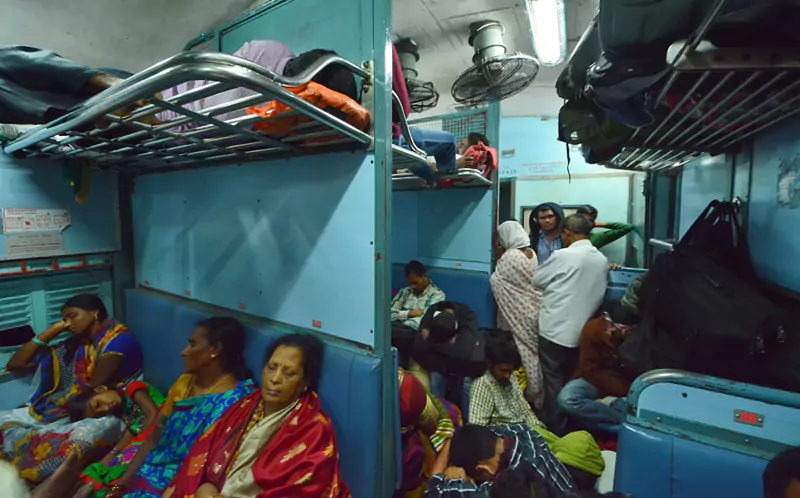
General Unreserved Coach

The General Unreserved coach is the most economical way to travel by train in India. Tickets do not require advance reservations, making it a convenient option for short-distance journeys. However, these coaches can become extremely crowded, especially during peak travel seasons and festivals.

General Unreserved is the most economical class, with no reserved seats and very basic facilities. Coaches are often crowded, especially on popular routes, making it a true local travel experience. This class is suitable for short-distance journeys or for travelers who don’t mind the hustle and bustle. Ticket prices typically range from β‚Ή50 to β‚Ή200.

  • Note: Prices can vary significantly depending on the distance, type of train (express, superfast), and season.
  • At the Railway Station:
    Arrive at least 45–60 minutes before your train’s departure, especially if you’re boarding from a major station or metro city. Platforms can change, and stations can be crowded, so keep your tickets and passport handy. Ignore touts offering assistance unless they are official railway staff.
  • Packing & What to Bring During Your Train Journey:
  • Onboard Etiquette & Safety:
    Remove your shoes when heading to your berth and keep your belongings close, ideally near your head. Toilets in lower classes on long routes may be less sanitary, so plan accordingly. Sleepers and lower berths tend to be more exposed, while upper berths offer a bit more privacy and seclusion.
  • Waitlist (WL):
    If your ticket is waitlisted, it means a confirmed seat is not yet assigned. You can check if your ticket clears before departure, as last-minute cancellations sometimes free up seats.
  • RAC (Reservation Against Cancellation):
    An RAC ticket guarantees you a seat, though it may be a shared berth. If other passengers cancel, your seat could be upgraded to a full berth before departure.
  • Running Status:
    You can track your train’s location and expected arrival using apps, websites, or by phone. Keep in mind that long-distance trains often experience delays, sometimes running several hours late.

Extra Tips for a Smooth Ride

  • Opt for upper berths in Sleeper or 3A classesβ€”they offer more privacy and are generally less disturbed by fellow passengers.
  • For solo women travelers, 1A, 2A, or 3A are safer and more comfortable; lower classes often draw curiosity from other passengers.
  • Download offline maps or travel apps, as mobile reception can be unreliable in remote areas.
  • Carry a power bank, since onboard charging points aren’t always dependable.
  • Stay flexible and embrace the journey’s unpredictabilityβ€”often, the most memorable experiences come from unexpected moments on the train.

Final Thoughts

Traveling by train in India is more than just getting from point A to Bβ€”it’s a journey in itself. It’s the ever-changing scenery, the people you meet, the aroma of chai from station stalls, the soft glow of dawn through your window, and the shared laughter in a crowded carriage. With a little preparation, your journey can be comfortable, safe, and truly memorable. So book your ticket, pack light, and get ready to experience India from the rails.

Chand Baori Tours from Jaipur

Ever wondered what it feels like to step into a centuries-old architectural marvel that looks straight out of a fantasy film? If you’re planning Chand Baori tours from Jaipur, you’re about to discover one of India’s most breathtaking hidden gems that has captivated travelers, filmmakers, and history buffs alike.

Picture this: You’re standing at the edge of a geometric wonder, gazing down at over 3,500 steps cascading down 13 stories in perfect symmetry. This isn’t just another tourist spot – it’s a journey back in time to witness the engineering brilliance of ancient India.

What Makes Chand Baori So Special?

Chand Baori is a stepwell built over a thousand years ago in the Abhaneri village of Rajasthan and is one of the largest stepwells in the world and also one of the most beautiful ones. But what exactly makes this place so extraordinary?

The Numbers Will Blow Your Mind:

  • Depth: 19.5 meters (64 feet) deep

  • Steps: Over 3,500 precisely carved steps

  • Levels: 13 stories of geometric perfection

  • Age: Built in the 9th-10th century AD

  • Purpose: Originally designed for water storage during droughts

The stepwell was built by King Chanda of the Nikumbha Dynasty, and every single step tells a story of incredible craftsmanship. The geometric precision creates an almost hypnotic visual rhythm where every angle and shadow tells a story of engineering brilliance and artistic expression from a thousand years ago.

Planning Your Chand Baori Tours from Jaipur: Everything You Need to Know

Distance and Travel Time

Chand Baori is situated 88 kms from Jaipur, making it perfect for a day trip. The stepwell is a 1.5-hour drive from Jaipur, which means you can easily visit and return the same day without any rush.

Best Route Options

By Private Car/Taxi (Recommended):

  • Duration: 1.5-2 hours one way

  • Route: Jaipur → Dausa → Abhaneri

  • Advantage: Flexibility to stop for photos and explore at your own pace

By Public Transport:

  • Take a bus from Sindhi Camp Bus Stand in Jaipur to Sikandra village

  • From Sikandra, catch a jeep to Abhaneri

  • Alternative: Train to Bandikui from Jaipur railway station, then bus/taxi to Abhaneri

What to Expect During Your Visit

Architecture That Defies Logic: The stepwell isn’t just about steps – it’s a masterpiece of ancient engineering. The structure served multiple purposes: water storage, community gathering space, and a cool retreat during scorching summers. The temperature at the bottom can be 5-6 degrees cooler than at the top!

Photography Paradise: Every corner offers Instagram-worthy shots. The interplay of light and shadow creates dramatic effects throughout the day. Early morning and late afternoon provide the best lighting for photography.

Beyond Chand Baori: Complete Abhaneri Experience

Harshat Mata Temple

Located just 100 meters from Chand Baori, this ancient temple complex adds spiritual depth to your visit. This 9th-10th century temple is dedicated to Harshat Mata, who is considered to be the goddess of joy and happiness for the whole village.

Though partially in ruins due to historical invasions, the scattered pillars and sculptures still showcase the artistic brilliance of ancient craftsmen.

The Village Culture Experience

Abhaneri village offers authentic rural Rajasthani experiences:

  • Local Handicrafts: Traditional pottery and textiles

  • Village Walks: Interact with friendly locals

  • Cultural Insights: Learn about traditional water conservation methods

Best Time to Visit Chand Baori

Ideal Months: October to March

  • Weather: Pleasant and comfortable for exploration

  • Temperature: 15-25°C during the day

  • Advantage: Perfect for photography and extended exploration

Avoid: May to August (extremely hot weather can make the visit uncomfortable)

Essential Tips for Your Chand Baori Tour

What to Bring

  • Comfortable walking shoes (lots of steps to navigate!)

  • Sun hat and sunscreen

  • Water bottles (stay hydrated)

  • Camera (you’ll regret not capturing these moments)

  • Light snacks (limited food options in the village)

Photography Guidelines

  • Drone restrictions: Check current regulations before bringing drones

  • Best shots: Wide-angle lenses capture the full grandeur

  • Golden hours: Early morning (7-9 AM) and late afternoon (4-6 PM)

Safety Considerations

  • Upper palace restricted: The upper palace of the stepwell is now restricted to tourists

  • Watch your step: Ancient steps can be uneven

  • Stay hydrated: Rajasthan heat can be intense

Combining Chand Baori with Other Attractions

Golden Triangle Extension

It is a nice place to visit on the way between Jaipur and Agra, with Chand Baori being a 2-hour drive from Fatehpur Sikri and less than 3-hour drive from Agra. This makes it perfect for adding to your Golden Triangle itinerary.

Nearby Attractions to Combine

  • Fatehpur Sikri: 2 hours away

  • Bharatpur Bird Sanctuary: 3 hours away

  • Ranthambore National Park: 4 hours away

How Janu Private Tours Transforms Your Chand Baori Experience

When it comes to exploring architectural marvels like Chand Baori, the difference between a good trip and an unforgettable journey lies in the details. Janu Private Tours brings over two decades of expertise to your Chand Baori adventure, ensuring every moment counts.

What Sets Them Apart:

Local Expertise That Matters: With their deep knowledge of Rajasthan’s hidden gems, their multilingual guides don’t just show you the stepwell – they unveil stories that guidebooks miss. From the engineering secrets behind the construction to local legends passed down through generations, you’ll gain insights that transform your visit from sightseeing to true cultural immersion.

Seamless Logistics: Their fleet of comfortable, air-conditioned vehicles makes the 88km journey from Jaipur a pleasant part of your adventure. No worrying about navigation, parking, or return logistics – they handle everything while you focus on the experience.

Flexible Itineraries: Whether you want to spend hours photographing every angle of the stepwell or prefer combining it with nearby attractions, their customizable approach means your tour adapts to your interests and pace.

24/7 Support: Their round-the-clock assistance ensures any unexpected situation is handled promptly, giving you peace of mind throughout your journey.

The result? Instead of rushing through a checklist of tourist spots, you’ll have time to truly appreciate the mathematical precision of those 3,500 steps and understand why this architectural marvel has survived for over a millennium.

Making the Most of Your Day Trip

Sample Itinerary for Chand Baori Tours from Jaipur

  • 7:00 AM: Departure from Jaipur

  • 8:30 AM: Arrival at Abhaneri, fresh morning light perfect for photography

  • 9:00 AM – 11:00 AM: Explore Chand Baori stepwell

  • 11:30 AM – 12:30 PM: Visit Harshat Mata Temple

  • 12:30 PM – 1:30 PM: Local Rajasthani lunch experience

  • 2:00 PM – 3:00 PM: Village walk and cultural interaction

  • 3:30 PM: Return journey to Jaipur

  • 5:00 PM: Arrival back in Jaipur

Budget Planning

  • Private Car Tour: ₹3,000-5,000 for the car (depending on vehicle type)

  • Entry Fees: Minimal (around ₹25-50 per person)

  • Meals: ₹200-400 per person for local lunch

  • Guide Fees: ₹500-1,000 for the day

  • Total per person: ₹1,500-2,500 (for a group of 4-6)

Cultural Significance and Historical Context

Chand Baori represents more than just architectural achievement – it’s a testament to ancient India’s sophisticated water management systems. During the medieval period, stepwells were lifelines for communities, especially during droughts.

Engineering Marvel: The precise geometric patterns aren’t just decorative – they serve functional purposes:

  • Temperature regulation: The depth creates natural cooling

  • Water conservation: Multiple levels ensure maximum water storage

  • Community space: Different levels served various social functions

Cinematic Fame: The stepwell has featured in several international films, including The Dark Knight Rises and The Best Exotic Marigold Hotel, bringing global recognition to this Indian masterpiece.

Conclusion

Your Chand Baori tours from Jaipur promise an experience that goes far beyond typical sightseeing. This isn’t just about clicking photos at another historical monument – it’s about witnessing human ingenuity that has survived centuries and continues to inspire architects and engineers worldwide.

From the moment you peer over the edge and see those thousands of steps creating mesmerizing patterns to the stories your guide shares about ancient engineering techniques, every moment becomes a memory worth treasuring.

Ready to step into history? The geometric precision of Chand Baori awaits, just a comfortable drive away from Jaipur. Whether you’re a history enthusiast, photography lover, or simply someone seeking unique experiences, this architectural wonder delivers on every front.

Don’t let this opportunity slip by – some experiences are too magnificent to miss, and Chand Baori tours from Jaipur definitely fall into that category.

Ready to explore the architectural wonder of Chand Baori? Contact Janu Private Tours today to plan your perfect day trip from Jaipur and discover why this ancient stepwell continues to mesmerize visitors from around the world!

Also Read:- how to celebrate girlfriend birthday

Frequently Asked Questions

Q: How long does a complete Chand Baori tour from Jaipur take?

A full day tour typically takes 8-10 hours including travel time. You’ll have 3-4 hours at the site itself to explore the stepwell, temple, and village, with comfortable travel time allowing for stops and photo opportunities along the way.

Q: Is Chand Baori suitable for elderly visitors or those with mobility issues?

While the stepwell has many stairs, you can appreciate its beauty from the top levels without descending. The main viewing areas are accessible, though exploring the deeper levels requires careful navigation of ancient stone steps that may be uneven.

Q: Can we combine Chand Baori with other attractions in a single day?

Absolutely! The stepwell works perfectly as part of a Golden Triangle extension. You can easily combine it with Fatehpur Sikri (2 hours away) or include it as a stop between Jaipur and Agra for a more comprehensive historical experience.

Q: What’s the best time of day to visit Chand Baori for photography?

Early morning (8-10 AM) and late afternoon (4-6 PM) offer the best lighting conditions. The interplay of shadows and geometric patterns creates stunning visual effects during these golden hours, making every shot worthy of your travel album.

Q: Are there any entry restrictions or photography fees at Chand Baori?

Entry fees are minimal (around ₹25-50 per person). Photography is generally allowed, but drone usage may have restrictions. The upper palace area is currently restricted to tourists for safety reasons, but the main stepwell remains fully accessible for exploration.

Heritage Walks in Jaipur


Have you ever wondered what secrets lie behind the pink sandstone walls of Jaipur’s bustling streets? Heritage walks in Jaipur reveal a treasure trove of untold stories, hidden courtyards, and architectural marvels that most tourists never discover. While the Amber Fort and City Palace grab all the Instagram attention, the real magic happens when you step off the beaten path and into the narrow gullies where history whispers from every corner.

The Pink City isn’t just about grand palaces and famous monuments, it’s about the living, breathing stories that connect centuries of culture, craft, and community. Let’s explore how these Jaipur hidden streets and stories can transform your understanding of this magnificent city.

Why Heritage Walks Beat Tourist Traps Every Time

Think about it when you visit Jaipur, you’re probably ticking off the same boxes everyone else does. Hawa Mahal? Check. Amber Fort? Double check. But what about the 300-year-old haveli where a master craftsman still creates traditional blue pottery using techniques passed down through seven generations?

Heritage walks in Jaipur offer something extraordinary: authentic encounters with the city’s soul. Instead of fighting crowds for the perfect selfie, you’re discovering:

  • Living heritage workshops where artisans create magic with their hands

  • Hidden temples tucked away in narrow lanes, known only to locals

  • Traditional bazaars selling everything from handwoven textiles to centuries-old recipes

  • Forgotten stories of maharajas, merchants, and everyday heroes who shaped the city

These walks aren’t just sightseeing, they’re time travel with a local guide who knows which door to knock on and which chai wallah serves the best brew.

The Art of Uncovering Jaipur’s Hidden Streets and Stories

Secret Lanes of the Old City

The walled city of Jaipur hides its best secrets in plain sight. Beyond the main roads lie labyrinthine streets where each turn reveals something unexpected. The Johari Bazaar isn’t just about jewelry shopping, it’s where you’ll find 400-year-old trading families still using traditional weighing scales and conducting business exactly as their ancestors did.

Walk through Kishanpole Bazaar, and you’ll stumble upon workshops where masters create intricate miniature paintings using brushes made from single squirrel hairs. These aren’t tourist attractions, they’re living pieces of heritage that most visitors never see.

Stories Written in Stone and Wood

Every carved door, painted fresco, and weathered wall tells a story in old Jaipur. Heritage walks in Jaipur decode these visual narratives for you.

That geometric pattern on a haveli wall? It’s not just decoration, it’s a symbol indicating the family’s trade or social status. The small shrine carved into a street corner? It marks where a significant historical event took place centuries ago.

Your guide becomes your storyteller, translator, and time machine all rolled into one.

Meeting the Keepers of Tradition

The most magical moments happen when you meet the people keeping Jaipur’s traditions alive. Picture this: sitting cross-legged in a tiny workshop while a master craftsman explains how block printing techniques haven’t changed in 200 years, or watching a third-generation puppet maker carve intricate kathputli dolls while sharing folk tales passed down through his family.

These encounters transform Jaipur hidden streets and stories from mere tourist activities into genuine cultural exchanges.

Neighbourhoods That Tell Different Tales

Brahmpuri: Where Scholars Once Gathered

This quiet neighbourhood once housed the city’s intellectual elite. Today, you’ll find remnants of traditional schools, libraries carved into havelis, and families who still practice ancient Vedic traditions. The narrow streets here whisper stories of scholarly debates and literary gatherings that shaped Rajasthani culture.

Chandni Chowk: The Merchant’s Paradise

Not to be confused with Delhi’s famous market, Jaipur’s Chandni Chowk has its own character. Here, heritage walks in Jaipur reveal how trade routes from Central Asia influenced local architecture, cuisine, and customs. You’ll taste fusion flavors that have existed for centuries and see architectural elements that blend Mughal and Rajput styles.

Ramganj Bazaar: Where Textiles Tell Tales

This area specializes in fabrics, but it’s also where you’ll learn about natural dyes, traditional weaving techniques, and the social significance of different patterns and colors in Rajasthani culture.

Beyond the Obvious: Hidden Gems You’ll Discover

Heritage walks in Jaipur excel at revealing what guidebooks miss:

1. Sacred Geometry in Architecture Learn how ancient builders used mathematical principles to create structures that naturally regulate temperature and acoustics.

2. Water Harvesting Systems Discover ingenious 500-year-old techniques for collecting and storing rainwater that modern cities are trying to replicate.

3. Community Spaces Explore traditional community halls, wells, and gathering spaces that reveal how social life was organized in medieval times.

4. Culinary Heritage Sample street foods with stories like ghevar sweets that were originally created to celebrate the monsoon, or dal baati churma that sustained desert traders on long journeys.

5. Language Evolution Notice how local dialects preserve ancient words and phrases that have disappeared elsewhere.

Planning Your Heritage Walk Experience

Best Times to Explore

Early mornings (7-10 AM) and late afternoons (4-7 PM) are ideal. The harsh midday sun makes walking uncomfortable, plus you’ll miss the golden hour lighting that makes those hidden courtyards absolutely magical for photography.

What to Expect

A typical heritage walk in Jaipur lasts 3-4 hours and covers 2-3 kilometers on foot. You’re not just walking, you’re stopping frequently to examine details, interact with locals, and absorb stories. Wear comfortable shoes and bring a water bottle.

Etiquette and Respect

Remember, these aren’t museum exhibits, they’re people’s homes and workplaces. Ask before photographing people, respect religious spaces, and consider purchasing something small from the artisans you meet.

Why Choose Professional Guides for Jaipur Hidden Streets and Stories

Anyone can walk through old city lanes, but understanding what you’re seeing requires expertise. Professional heritage walk guides bring:

  • Historical context that transforms random observations into meaningful stories

  • Local connections that open doors literally unavailable to independent travelers

  • Safety knowledge about navigating busy markets and narrow streets

  • Language skills to facilitate genuine interactions with artisans and shopkeepers

  • Cultural sensitivity to ensure respectful engagement with local communities

How Janu Private Tours Brings Heritage Walks to Life

With over two decades of experience exploring Rajasthan’s depths, Janu Private Tours understands that heritage walks in Jaipur aren’t just about seeing, they’re about connecting. Their team of multilingual guides doesn’t just know the history; they know the families, the stories behind the stories, and the secret spots that even other tour companies miss.

What sets them apart is their relationship-based approach. Instead of rushing through a checklist, their guides take time to ensure meaningful interactions. They’ve spent years building trust with local artisans, shopkeepers, and families, which means you get access to workshops, homes, and experiences that aren’t available to casual visitors.

Their heritage walks seamlessly blend education with emotion, ensuring you leave with both photographs and friendships. Plus, with their flexible booking system and round-the-clock support, you can customize your walk to match your interests, whether you’re fascinated by architecture, textiles, spirituality, or cuisine.

Also Read:- Best tourist places to visit in rajasthan

Making the Most of Your Heritage Walk

Come with curiosity rather than just cameras. Ask questions. Try to understand not just what you’re seeing, but why it developed that way.

Heritage walks in Jaipur work best when you engage all your senses. Listen to the sounds of traditional looms, smell the spices being ground fresh, feel the texture of hand-carved stone, taste the street foods, and really look at the details in the artwork and architecture.

Don’t rush. The beauty of Jaipur hidden streets and stories reveals itself slowly, in layers. Each conversation with a local artisan, each story shared by your guide, each moment of discovery builds on the previous one.

Conclusion

The real Jaipur isn’t found in the pages of guidebooks or the frames of Instagram posts. It lives in the narrow streets where children play cricket with makeshift bats, where grandmothers share gossip over evening tea, and where craftsmen continue traditions that connect us to centuries of human creativity and culture.

Heritage walks in Jaipur offer more than sightseeing; they offer sightseeing in the truest sense. They help you see beyond the surface to understand the human stories that created this incredible city. When you walk these hidden streets with knowledgeable guides, you’re not just touring; you’re participating in an ongoing conversation between past and present.

Ready to discover the Jaipur that most travelers never see? The hidden streets are waiting, the stories are eager to be told, and every step promises to reveal something extraordinary. Your journey into the heart of Jaipur’s hidden streets and stories begins with that first curious step off the main road.

Ready to discover the real Jaipur? Connect with experienced heritage walk guides who can unlock the secrets of the Pink City’s hidden streets and untold stories. Your authentic Jaipur adventure is just one conversation away.

Frequently Asked Questions

Q: How long do heritage walks in Jaipur typically last?

Most heritage walks take 3-4 hours, covering 2-3 kilometers at a relaxed pace with frequent stops for interactions and storytelling.

Q: Are Jaipur heritage walks suitable for children and elderly visitors?

Yes, walks can be customized for different fitness levels. Routes and pace are adjusted based on group needs and preferences.

Q: What should I wear during heritage walks in Jaipur’s old city?

Wear comfortable walking shoes, modest clothing covering shoulders and knees, and bring sun protection. Light, breathable fabrics work best.

Q: Can I take photographs during heritage walks in hidden streets?

Photography of architecture and streets is fine, but always ask permission before photographing people, especially in residential areas and workshops.

Q: What’s the best time of year for heritage walks in Jaipur?

October to March offers pleasant weather. Early morning (7-10 AM) or late afternoon (4-7 PM) slots are most comfortable year-round.

4-Day Bhuj and Kutch Tour from Rajasthan


Ever wondered why travellers from Rajasthan keep raving about Gujarat’s mystical Kutch region? The 4 days Bhuj and Kutch Tour from Rajsthan has become one of the most sought-after cross-state adventures for travellers already exploring rajasthan tour packages, offering a perfect blend of desert landscapes, rich culture, and architectural marvels that rival even Rajasthan’s grand palaces.

If you’re sitting in Jaipur, Udaipur, or any corner of Rajasthan wondering whether this Gujarat expedition is worth your time, you’re in for a treat. This isn’t just another tourist circuit – it’s a journey into India’s last frontier of authentic cultural experiences.

Why Bhuj and Kutch Should Be Your Next Adventure from Rajasthan

The beauty of a Kutch tour from Rajasthan lies in its stark contrast to what you already know. While Rajasthan dazzles with its golden sandstone and royal heritage, Kutch mesmerises with its white salt desert, vibrant handicrafts, and a completely different cultural tapestry.

Located just a comfortable drive away from Rajasthan’s border, Bhuj serves as the perfect gateway to explore the vast Kutch region. The distance from major Rajasthani cities makes it an ideal 4-day getaway:

  • From Jodhpur: Approximately 350 km (6-7 hours drive)

  • From Jaisalmer: About 400 km (7-8 hours drive)

  • From Udaipur: Around 520 km (9-10 hours drive)

  • From Jaipur: Roughly 650 km (11-12 hours drive)

The journey itself becomes part of the adventure as you witness the landscape gradually transforming from Rajasthan’s rocky terrain to Gujarat’s expansive salt marshes.

Day 1: Arrival in Bhuj – The Gateway to Kutch

Morning: Reaching Bhuj and Getting Oriented

Most Rajasthan to Kutch tour itineraries begin with an early morning arrival in Bhuj. Whether you’ve driven overnight or taken an early flight to Bhuj Airport, the city welcomes you with its unique blend of historical significance and modern accessibility.

Start your exploration with a hearty Gujarati breakfast – think dhokla, fafda, and the famous Kutchi dabeli that’s quite different from what you get in Rajasthan.

Afternoon: Bhuj City Sightseeing

Kutch Museum stands as your first major stop. As India’s oldest existing museum in Gujarat, it houses an incredible collection of Kutchi artifacts, ancient coins, and tribal costumes. The museum provides crucial context for understanding the region’s rich heritage.

Aina Mahal (Hall of Mirrors) comes next. This 18th-century palace showcases Indo-European architecture with its ornate mirrors, gilded decorations, and intricate tile work. The craftsmanship here offers interesting parallels to Rajasthani mirror work but with distinct Kutchi influences.

Prag Mahal completes your afternoon architectural tour. This 19th-century palace features Italian Gothic architecture – something completely unexpected in this part of India. The clock tower offers panoramic views of Bhuj city.

Evening: Local Markets and Cultural Immersion

Bhuj’s local markets offer a treasure trove of authentic Kutchi handicrafts. Unlike the touristy shops in Rajasthan, these markets cater primarily to locals, giving you genuine insight into regional preferences and pricing.

Look out for:

  • Kutchi embroidery (distinct from Rajasthani styles)

  • Silver jewelry with unique tribal designs

  • Ajrak prints that originated in this region

  • Lacquer work specific to Kutch

Day 2: The Great Rann of Kutch – Nature’s White Canvas

Early Morning: Journey to the White Rann

The Great Rann of Kutch experience begins before dawn. Located about 80 km from Bhuj, this journey takes you through an increasingly desolate yet beautiful landscape. The drive itself feels surreal as you leave behind all signs of civilization.

Unlike Rajasthan’s golden sands, the Rann presents an otherworldly expanse of white salt crystals stretching to the horizon. During winter months (October to March), this area transforms into a hard, walkable surface perfect for exploration.

Sunrise at the White Desert

Watching sunrise over the Rann remains one of India’s most underrated natural spectacles. The interplay of light on the white salt creates colours that shift from deep purple to vibrant orange – a photographer’s dream that rivals any Rajasthani sunrise.

The silence here is profound. Coming from Rajasthan’s bustling cities, this absolute quiet feels almost meditative. Many visitors describe it as a spiritual experience.

Afternoon: Kala Dungar (Black Hill)

Kala Dungar, Gujarat’s highest point, offers the perfect vantage point to comprehend the Rann’s vastness. The contrast between the black hills and white desert creates dramatic visual impact.

The India Bridge nearby marks the border with Pakistan – a sobering reminder of the region’s strategic importance and complex history.

Evening: Cultural Performances

If you’re travelling during the Rann Utsav season (December to February), evening brings traditional cultural performances. Local artists showcase Kutchi folk dances, music, and handicraft demonstrations under the star-lit sky.

For off-season visitors, the experience remains magical. The clear night sky in this pollution-free zone offers spectacular stargazing opportunities – something increasingly rare in Rajasthan’s cities.

Day 3: Mandvi Beach and Coastal Heritage

Morning: Drive to Mandvi

Day three introduces you to Gujarat’s coastline – something completely absent from landlocked Rajasthan. The 60 km drive from Bhuj to Mandvi takes you through changing landscapes and glimpses of rural Kutchi life.

Mandvi Beach offers a refreshing change from desert environments. The Arabian Sea stretches endlessly, providing a cooling breeze and completely different energy from Rajasthan’s arid atmosphere.

Afternoon: Vijay Vilas Palace

Vijay Vilas Palace showcases royal architecture that differs significantly from Rajasthani palaces. Built in the 1920s, this summer palace of the Kutch royalty combines Rajput and European architectural elements in unique ways.

The palace’s beach-front location, sprawling gardens, and distinctive domes create a romantic atmosphere that has attracted Bollywood filmmakers for decades. The contrast with Rajasthan’s fort-palaces is striking – where Rajasthani palaces emphasise defence and grandeur, Vijay Vilas prioritises leisure and coastal living.

Late Afternoon: Shipbuilding Heritage

Mandvi’s traditional shipbuilding industry offers insights into maritime heritage completely foreign to Rajasthan’s desert culture. Watching craftsmen build wooden ships using centuries-old techniques provides fascinating cultural contrast.

These ships, known as ‘dhows’, sail to Middle Eastern countries – connecting Gujarat to international trade routes that landlocked Rajasthan historically couldn’t access directly.

Also Read:- How to Travel India During Festivals:

Evening: Beach Relaxation

After days of intense sightseeing, Mandvi beach provides perfect relaxation. The sunset over the Arabian Sea offers a completely different experience from Rajasthani desert sunsets – equally beautiful but uniquely coastal.

Local beach activities include camel rides (yes, on the beach!), horse riding, and sampling fresh seafood – culinary experiences unavailable in vegetarian Rajasthan.

Day 4: Handicraft Villages and Return Journey

Morning: Bhujodi Village

Bhujodi village represents Gujarat’s textile heritage at its finest. Located just 8 km from Bhuj, this village specialises in traditional weaving techniques passed down through generations.

The Shrujan organisation here works with local artisans, particularly women, to preserve traditional crafts while providing sustainable livelihoods. Witnessing the creation of intricate shawls, bed covers, and dress materials offers insights into craftsmanship that rivals Rajasthan’s textile traditions.

Late Morning: Hiralakhan Memorial Craft Park

This craft park showcases various Kutchi handicrafts under one roof:

  • Rogan painting – a unique art form using oil-based paints

  • Leather work with distinctive Kutchi motifs

  • Pottery with geometric patterns

  • Metal work in copper and brass

Each craft has distinct characteristics that differentiate it from similar Rajasthani arts, showing how geography and culture influence artistic expression.

Afternoon: Departure Preparations

Your final afternoon allows for last-minute shopping and preparation for the return journey to Rajasthan. Bhuj’s markets offer excellent deals on authentic items without the tourist markup common in Rajasthani cities.

The 4 days Bhuj and Kutch tour from Rajsthan concludes with rich memories and unique experiences that complement rather than compete with Rajasthan’s offerings.

Best Time for Your Kutch Adventure from Rajasthan

Winter months (October to March) remain ideal for this tour. The weather stays pleasant, the White Rann becomes accessible, and if you’re lucky, you might catch the famous Rann Utsav festival.

Summer months (April to June) can be extremely harsh, with temperatures soaring above 45Β°C. However, this period offers complete solitude and dramatically lower accommodation costs.

Monsoon season (July to September) transforms the landscape but makes certain areas inaccessible. The White Rann becomes submerged, but the surrounding areas turn surprisingly green.

Transportation Options from Rajasthan

By Road

  • Private vehicle: Most flexible option, allowing stops at scenic locations

  • State transport buses: Budget-friendly but time-consuming

  • Taxi services: Comfortable but expensive for solo travellers

By Air

  • Bhuj Airport connects to major Indian cities with limited flights

  • Ahmedabad Airport (300 km away) offers more flight options

By Train

  • Bhuj Railway Station connects to major cities with convenient overnight trains

  • This option works well for travellers from eastern Rajasthan

Essential Packing Tips

Coming from Rajasthan’s dry climate to Gujarat’s coastal influence requires slight packing adjustments:

  • Light cotton clothes for day exploration

  • Warm layers for desert nights (surprisingly cold)

  • Comfortable walking shoes for various terrains

  • Sun protection (hat, sunglasses, sunscreen)

  • Camera with extra batteries (limited charging options in remote areas)

  • Water bottles and basic medications

How Janu Private Tours Elevates Your Kutch Experience

Planning a multi-state tour from Rajasthan to Gujarat requires local expertise that goes beyond typical tourist information. This is where specialized tour operators make the crucial difference.

With over two decades of experience in crafting memorable journeys across India, Janu Private Tours brings unique advantages to your 4 days Bhuj and Kutch tour from Rajsthan. Their team of 20+ travel professionals understands the intricate logistics involved in seamless cross-state travel.

What sets them apart for this particular route:

Deep Regional Knowledge: While many operators focus solely on Rajasthan’s golden triangle, Janu Private Tours extends their expertise to Gujarat’s hidden gems. Their guides possess intimate knowledge of both regions, enabling meaningful cultural comparisons and insights that solo travellers often miss.

Flexible Cancellation Policies: Understanding that travel plans can change, especially for cross-state tours involving weather-dependent destinations like the White Rann, they offer accommodating cancellation terms that protect your investment.

24/7 Ground Support: When you’re exploring remote areas like the Great Rann of Kutch, having round-the-clock assistance becomes invaluable. Their local network ensures help remains just a phone call away, even in areas with limited connectivity.

Customised Fleet Options: From comfortable SUVs for small groups to larger coaches for families, their diverse vehicle options ensure your journey between Rajasthan and Gujarat remains comfortable regardless of group size.

Cultural Integration: Rather than treating this as merely a sightseeing tour, they focus on creating authentic cultural exchanges. Their multilingual guides help bridge language barriers and facilitate meaningful interactions with local artisans and communities.

The expertise gained from hosting international celebrities and BBC personalities translates into attention to detail that transforms a simple tour into an extraordinary cultural immersion.

Budget Planning for Your 4-Day Adventure

Budget Range (Per Person):

  • Economy: β‚Ή8,000 – β‚Ή12,000

  • Mid-range: β‚Ή12,000 – β‚Ή20,000

  • Luxury: β‚Ή20,000 – β‚Ή35,000

Major Cost Components:

  • Transportation (varies greatly by starting city)

  • Accommodation (β‚Ή1,500 – β‚Ή8,000 per night)

  • Meals (β‚Ή300 – β‚Ή1,500 per day)

  • Entry fees (β‚Ή50 – β‚Ή300 per site)

  • Guide services (β‚Ή1,500 – β‚Ή3,000 per day)

  • Shopping budget (entirely personal choice)

Cultural Etiquette and Local Insights

Language: While Hindi works everywhere, learning basic Gujarati phrases enhances local interactions. Kem cho? (How are you?) and Dhanyawad (Thank you) go a long way.

Food Habits: Gujarat’s predominantly vegetarian culture means excellent vegetarian options but limited non-vegetarian choices. Coming from Rajasthan, this transition feels natural for most travellers.

Shopping Etiquette: Bargaining remains acceptable but less aggressive than in Rajasthani markets. Local artisans often quote fair prices, so excessive haggling can be counterproductive.

Photography: Always ask permission before photographing people, especially in villages. Many artisans appreciate recognition for their work and willingly pose with their creations.

Also Read:- Top 5 Desert Destinations in North India

Conclusion

The 4 days Bhuj and Kutch tour from Rajsthan offers an incredible opportunity to expand your Indian travel experiences beyond the familiar territories of the Land of Kings. This cross-state adventure provides cultural contrasts, natural wonders, and authentic experiences that complement your Rajasthani explorations perfectly.

From the otherworldly White Rann to the skilled artisan villages, from coastal beaches to ancient palaces, Kutch delivers experiences you simply cannot find within Rajasthan’s borders. The relatively short distance makes it an easily accessible addition to any Rajasthani itinerary.

Whether you’re seeking photography opportunities, cultural immersion, or simply a change of scenery, this tour provides all three in abundance. The memories you create during these four days will offer refreshing contrasts to your Rajasthani experiences, proving that India’s diversity truly shines when you venture beyond familiar territories.

Ready to explore beyond Rajasthan’s borders? Your 4 days Bhuj and Kutch tour from Rajsthan awaits, promising discoveries that will redefine your understanding of western India’s cultural richness.

Ready to explore Gujarat’s magical Kutch region from Rajasthan? Connect with experienced tour operators who understand cross-state travel logistics and can customize your 4-day adventure to match your preferences and budget. Or, if you’re still planning your Rajasthan leg, explore our rajasthan tour packages to build the perfect multi-state itinerary. Your journey beyond Rajasthan’s golden sands awaits!

Frequently Asked Questions

1. What’s the best route from Rajasthan to reach Bhuj for this 4-day tour?

The most convenient route depends on your starting city. From Jodhpur, take NH62 via Barmer and Radhanpur (350 km). From Jaisalmer, use NH11 to Pokhran, then NH62 (400 km). Both routes offer good road conditions and scenic views during the journey.

2. Is it safe to visit the White Rann at night, especially for families travelling from Rajasthan?

Yes, the White Rann area is completely safe for night visits during tourist season. Local authorities maintain security, and tour operators provide proper guidance. However, always travel with a local guide and inform your accommodation about your plans for safety.

3. How different are Kutchi handicrafts from Rajasthani crafts, and what should I buy?

Kutchi handicrafts have distinct characteristics – more geometric patterns, different colour palettes, and unique techniques like Rogan painting. Focus on authentic Ajrak prints, Kutchi embroidery, and silver jewelry with tribal motifs that you won’t find in Rajasthan.

4. Can I extend this 4-day tour to include other Gujarat destinations while returning to Rajasthan?

Absolutely! Many travelers add Dwarka-Somnath (2-3 days) or Gir National Park (2 days) to create a week-long Gujarat circuit before returning to Rajasthan. This maximizes your cross-state travel investment and provides comprehensive Gujarat experiences.

5. What accommodation options work best for Rajasthani travelers in Bhuj and surrounding areas?

Bhuj offers everything from budget guesthouses (β‚Ή1,500-3,000) to heritage hotels (β‚Ή5,000-12,000). For White Rann visits, tent accommodations during Rann Utsav provide authentic experiences. Book early, especially if traveling from Rajasthan during peak winter months.


Photography Tours in Jaipur & Rajasthan

Ever wondered why your smartphone gallery fills up faster during a Rajasthan trip than anywhere else? Photography tours in Jaipur & Rajasthan transform ordinary travellers into storytellers, capturing moments that regular sightseeing simply can’t match.

Rajasthan isn’t just India’s largest state, it’s a photographer’s playground where every corner whispers tales of maharajas, desert caravans, and timeless architecture. Whether you’re wielding a professional DSLR or relying on your trusty smartphone, the Pink City and its neighbouring wonders offer frame-worthy shots at every turn.

Why Choose Photography Tours Over Regular Sightseeing?

Think about it when you’re rushing through a standard tour checklist, you barely get time to notice the intricate carvings on palace walls or the way morning light dances across sandstone facades. Photography tours in Jaipur & Rajasthan slow things down, letting you discover details most tourists miss entirely.

The Magic Behind Professional Photography Guidance

Imagine having someone who knows exactly when the Amber Fort’s reflection hits Maota Lake perfectly, or which angle makes Hawa Mahal’s honeycombed windows look most dramatic. That’s what sets photography tours apart.

Key benefits include:

  • Golden hour expertise Your guide knows when soft lighting transforms ordinary monuments into masterpieces

  • Crowd-beating strategies Access popular spots before tourist buses arrive

  • Local insights Hidden viewpoints that even frequent visitors don’t know about

  • Technical support Learn composition techniques while exploring

Top Photography Destinations in Jaipur

Amber Fort: The Crown Jewel

Amber Fort stands as one of Jaipur’s top photo shoot spots, offering multiple perspectives from its massive courtyards to intricate mirror work in Sheesh Mahal.

Best shots:

  • Wide-angle captures from the ramparts overlooking Maota Lake

  • Detailed close-ups of carved elephant sculptures at the main entrance

  • Silhouette photography against the backdrop of Aravalli hills

The fort’s honey-coloured sandstone changes character throughout the day. Early morning brings soft, warm tones, while sunset creates dramatic shadows across its massive walls.

Hawa Mahal: The Instagram Favourite

Hawa Mahal’s honeycombed windows offer unique backdrops that have made it a social media sensation. But there’s more to this Palace of Winds than its famous facade.

Photography tips:

  • Position yourself across the street for the classic full-front shot

  • Climb to nearby rooftops for elevated angles (your guide will know the spots)

  • Capture details of individual windows each tells its own story

City Palace: Royal Grandeur Meets Modern Life

The living palace complex gives you a rare chance to photograph active royal traditions alongside historical architecture. City Palace ranks among Jaipur’s premier photography locations for its blend of Mughal and Rajputana architecture.

Also Read:- how can i travel the world for free

Beyond Jaipur: Rajasthan’s Photography Gems

Jodhpur: The Blue City’s Visual Symphony

Mehrangarh Fort in Jodhpur offers magnificent photography opportunities, with its imposing walls rising dramatically above the blue-painted old city.

The contrast between the fort’s red sandstone and the blue houses below creates compelling compositions that work beautifully in both colour and black-and-white photography.

Jaisalmer: Golden Desert Magic

Nothing beats photographing camel silhouettes against Sam Sand Dunes at sunset. The Thar Desert offers endless dunes, camel caravans, and magical sunsets that create once-in-a-lifetime shots.

Desert photography essentials:

  • Protect your gear from sand using appropriate covers

  • Capture motion with camel caravans creating leading lines

  • Play with scale by including people against vast dune landscapes

Udaipur: The Lake City’s Romantic Angles

Udaipur’s lakes and palaces offer reflection photography opportunities that few destinations can match. The Lake Palace seeming to float on Lake Pichola creates dreamy, ethereal images.

Essential Photography Tour Styles

Heritage and Architecture Focus

These tours concentrate on magnificent palaces and impregnable forts, perfect for photographers interested in historical architecture and intricate craftsmanship.

What you’ll photograph:

  • Detailed carvings and frescoes

  • Architectural elements like jharokhas (overhanging balconies)

  • Symmetrical compositions in courtyards and gardens

Cultural and Street Photography

Rajasthan’s vibrant markets, colourful festivals, and daily life provide endless opportunities for authentic cultural captures.

Jaipur Markets like Johari and Bapu offer unique backdrops where you can photograph everything from traditional textiles to street food vendors.

Desert and Landscape Tours

For photographers drawn to natural beauty, desert landscape tours focus on capturing Rajasthan’s raw, untamed wilderness alongside its cultural elements.

Practical Tips for Photography Tours

Best Time to Visit

October to March offers ideal weather conditions, with clear skies and comfortable temperatures for extended outdoor photography sessions.

Golden hours (sunrise and sunset) provide the most flattering light for both architecture and portraits. Most photography tours are timed around these crucial periods.

Equipment Recommendations

For smartphone photographers:

  • Portable tripod for stable shots

  • External power bank (photography drains batteries fast)

  • Lens cleaning cloth (dust is everywhere!)

For DSLR users:

  • Wide-angle lens for architecture

  • Telephoto lens for distant details and candid street shots

  • UV filters to protect against dust and harsh sunlight

Respecting Local Culture

Photography tours teach you appropriate etiquette when photographing people and religious sites. Always ask permission before photographing individuals, especially women and children.

How Janu Private Tours Elevates Your Photography Experience

With over 20 years in the travel industry, Janu Private Tours understands that photography tours require different pacing and expertise compared to standard sightseeing. Their team of seasoned professionals doesn’t just know where to go, they know when to go, how to position you for the best shots, and which hidden angles create truly memorable images.

What sets them apart is their local knowledge combined with technical understanding. Their guides have worked with everyone from Hollywood celebrities to BBC personalities, meaning they understand both the artistic and practical demands of serious photography.

Their photography tour advantages:

  • Flexible timing that works around optimal lighting conditions

  • Multilingual guides who can communicate with local subjects for authentic portraits

  • 24/7 support to handle equipment issues or weather changes

  • Fleet variety from compact cars for narrow old city lanes to larger vehicles for desert expeditions

Unlike generic tour operators, Janu Private Tours customises each photography tour based on your skill level, interests, and equipment. Whether you’re a smartphone enthusiast or a professional photographer, they adjust the pace and locations accordingly.

Their experience hosting distinguished international guests means they understand the difference between taking photos and creating lasting visual stories. They don’t just show you monuments, they help you capture the soul of Rajasthan.

Also Read:- how to celebrate girlfriend birthday

Planning Your Photography Adventure

Choosing the Right Duration

2-3 days work well for Jaipur-focused photography tours, allowing time to revisit locations under different lighting conditions.

7-10 days let you explore multiple Rajasthan cities, creating a comprehensive visual narrative of the region.

Budget Considerations

Photography tours typically cost more than standard tours due to specialized guiding, flexible scheduling, and smaller group sizes. However, the investment pays off in dramatically improved photo quality and unique access opportunities.

Consider factors like:

  • Guide expertise in photography techniques

  • Transportation flexibility for optimal timing

  • Accommodation location near photogenic areas

Conclusion

Photography tours in Jaipur & Rajasthan transform how you see and capture India’s most photogenic state. They’re not just about taking better pictures, they’re about understanding the stories behind every carved pillar, every weathered wall, every colourful turban in the marketplace.

Instead of returning home with hundreds of similar shots, you’ll have a carefully curated collection of images that truly represent Rajasthan’s essence. From the intricate patterns of Amber Fort to the vast emptiness of Thar Desert, professional guidance helps you capture both the grandeur and intimate details that make this region unforgettable.

Ready to transform your travel photography? Consider joining specialized photography tours in Jaipur & Rajasthan for an experience that combines adventure with artistry.

Ready to capture Rajasthan’s magic through your lens? Connect with experienced tour operators who understand that great travel photography combines perfect timing, local knowledge, and artistic vision. Your camera roll will thank you!

Frequently Asked Questions

1. What’s the best camera for Rajasthan photography tours?

Any camera works from smartphones to professional DSLRs. The key is understanding composition and lighting, which good photography tours teach regardless of your equipment.

2. Do photography tours work for beginners?

Absolutely! Most tours cater to all skill levels, offering technical guidance alongside location expertise. Beginners often show the most dramatic improvement during these focused experiences.

3. How many locations can we cover in a single day?

Quality photography tours typically focus on 3-4 locations per day, allowing sufficient time for proper exploration and multiple shots under different lighting conditions.

4. Are photography tours suitable for families with children?

Yes, but choose tours specifically designed for families. Children often enjoy the storytelling aspect of photography tours more than traditional sightseeing.

5. What should I do if weather conditions aren’t ideal?

Professional photography tour operators have backup indoor locations and know how to work with challenging weather. Monsoon shots and overcast skies can create moody, dramatic images.

Adventure Route Jaipur to Leh via Himachal

Ever wondered what it feels like to journey from the royal pink palaces of Rajasthan to the stark, breathtaking beauty of Ladakh’s moonscape? The Jaipur to Leh via Himachal adventure travel route is one of India’s most spectacular road trips, taking you through three distinct worlds in one epic journey.

Picture this: you start your morning sipping masala chai amid Jaipur’s bustling bazaars, and within days, you’re breathing thin mountain air at 11,500 feet, surrounded by snow-capped peaks that seem to touch the sky.

This isn’t just another road trip. It’s a complete transformation of landscapes, cultures, and experiences that will leave you with stories for a lifetime.

Also Read:- places to visit in jaipur at night

Why Choose the Jaipur to Leh Route via Himachal?

The Perfect Blend of Cultures and Landscapes

The Jaipur to Leh via Himachal adventure travel route offers something no other journey in India can match. You’ll witness:

  • Royal Rajasthani heritage in Jaipur’s magnificent forts and palaces

  • Spiritual serenity in Himachal’s mountain temples and monasteries

  • Rugged Ladakhi landscapes that look straight out of a sci-fi movie

Unlike the direct Delhi-Leh route that many tourists take, this path lets you acclimatize gradually while experiencing diverse Indian cultures.

Best Time to Travel This Route

May to September is the golden window for this adventure. Here’s why:

  • May-June: Perfect weather, clear roads, blooming valleys

  • July-August: Monsoon affects lower regions but mountains remain accessible

  • September: Post-monsoon clarity, fewer crowds, ideal temperatures

Avoid October to April when Himachal’s high passes remain snow-blocked.

Complete Itinerary: Jaipur to Leh Adventure Travel Route

Days 1-2: Jaipur – The Royal Beginning

Start your adventure in Rajasthan’s pink city. Essential stops include:

Must-Visit Attractions:

  • Amber Fort and its elephant rides

  • City Palace complex with stunning architecture

  • Hawa Mahal (Palace of Winds)

  • Jantar Mantar astronomical observatory

Local Experiences:

  • Shopping in Johari Bazaar for precious stones

  • Traditional Rajasthani thali dinner

  • Sunset views from Nahargarh Fort

Days 3-4: Jaipur to Shimla (342 km)

The first leg of your mountain journey begins here. The route takes you through:

Key Stops:

  • Neemrana Fort Palace – Perfect breakfast spot with heritage vibes

  • Dharuhera – Stretch your legs and grab local snacks

  • Solan – Known as the Mushroom City of India

Arrival in Shimla:

  • Check into heritage hotels on The Ridge

  • Evening stroll on Mall Road

  • Toy train ride to nearby stations

Days 5-6: Shimla to Manali (250 km)

This stretch offers some of the most scenic mountain driving in India.

Route Highlights:

  • Kullu Valley – Apple orchards and river rafting opportunities

  • Pandoh Dam – Stunning reservoir views

  • Mandi – Temple town with ancient architecture

Manali Adventures:

  • Solang Valley – Paragliding and cable car rides

  • Rohtang Pass (if open) – First taste of high-altitude landscapes

  • Old Manali – Hippie cafes and Israeli cuisine

Days 7-8: Manali to Keylong (115 km)

Now the real Himachal adventure travel begins as you enter Lahaul Valley.

Journey Highlights:

  • Rohtang Pass (13,050 ft) – Mandatory acclimatization stop

  • Koksar – First glimpse of Ladakhi-Buddhist culture

  • Sissu – Dramatic waterfalls and alpine scenery

Keylong Experience:

  • Overnight in this remote administrative center

  • Visit Kardang Monastery

  • Acclimatize to high altitude

Days 9-10: Keylong to Leh (335 km)

The final stretch – arguably the most spectacular drive in the world.

Epic Passes and Landscapes:

  • Baralacha Pass (16,040 ft) – Continental divide crossing

  • Nakee La Pass (15,547 ft) – Dramatic valley views

  • Tanglang La (17,582 ft) – One of world’s highest motorable roads

Arrival in Leh:

  • Complete rest for altitude acclimatization

  • Gentle exploration of Leh Market

  • Traditional Ladakhi cuisine

Essential Tips for Your Adventure Travel Route

Vehicle Requirements

Recommended Vehicles:

  • SUVs with high ground clearance (Innova Crysta, Fortuner)

  • Proper spare tires and repair kits

  • Snow chains (if traveling during shoulder seasons)

Permits and Documentation

Required Permits:

  • Inner Line Permit for certain Ladakh areas

  • Valid ID proofs for all travelers

  • Vehicle registration and insurance papers

Altitude Sickness Prevention

Smart Acclimatization Strategy:

  1. Gradual ascent – Don’t rush the journey

  2. Stay hydrated – 3-4 liters of water daily

  3. Avoid alcohol at high altitudes

  4. Carry basic medicines – Diamox, paracetamol, ORS packets

Packing Essentials

Clothing Must-Haves:

  • Layered clothing system (base, insulation, outer shell)

  • Warm woolen caps and gloves

  • Sturdy hiking boots

  • Sunglasses and sunscreen (mountain sun is intense)

Technical Gear:

  • Power banks and car chargers

  • First aid kit with altitude sickness medicines

  • Multi-tool and basic repair equipment

Cultural Experiences Along the Route

Also Read:- places to visit in jaipur for couples​

Rajasthani Heritage in Jaipur

Experience the royal lifestyle through:

  • Heritage hotel stays in converted palaces

  • Traditional puppet shows and folk performances

  • Cooking classes featuring dal baati churma and laal maas

Himachali Mountain Culture

Unique Cultural Elements:

  • Buddhist monasteries in Lahaul Valley

  • Apple farming communities in Kinnaur region

  • Traditional wooden architecture in mountain villages

Ladakhi Buddhist Traditions

Immersive Experiences:

  • Monastery visits with prayer wheel spinning

  • Traditional homestays with local families

  • Festival participation (if timing aligns with Hemis or Losar)

How Janu Private Tours Transforms Your Himachal Adventure Experience

After 20+ years of crafting memorable journeys across India, Janu Private Tours understands that the Jaipur to Leh via Himachal adventure travel route demands more than just transportation – it requires expertise, local knowledge, and genuine care for traveler safety.

What Sets Janu Apart for Mountain Adventures

Specialized Route Knowledge: Unlike generic tour operators, Janu’s team has extensive experience navigating Himalayan routes. They understand weather patterns, road conditions, and optimal timing for each segment of your journey.

Diverse Fleet for Mountain Terrain: From comfortable SUVs perfect for family adventures to spacious coaches for group expeditions, their air-conditioned fleet is specifically equipped for high-altitude travel with proper maintenance and safety equipment.

24/7 Ground Support: Mountain adventures can be unpredictable. Janu provides round-the-clock assistance with a dedicated team member available throughout your journey – crucial when traveling through remote Himachal and Ladakh regions.

Cultural Integration: With multilingual guides passionate about Rajasthan, Himachal, and Ladakh cultures, Janu ensures you don’t just see the landscapes – you understand the stories, traditions, and people that make each region special.

Flexible Itinerary Management: Weather delays, road blocks, and altitude issues are common on this route. Janu’s expertise in handling these challenges while maintaining journey quality makes the difference between a stressful trip and an adventure of a lifetime.

Their comprehensive travel assistance includes hotel reservations in remote mountain locations, permit arrangements for restricted areas, and coordination with local authorities – services that become invaluable when traveling through India’s most challenging yet rewarding adventure route.

Conclusion

The Jaipur to Leh via Himachal adventure travel route isn’t just about reaching a destination – it’s about transforming yourself through one of the world’s most diverse and challenging journeys. From royal palaces to ancient monasteries, from desert landscapes to snow-capped peaks, this route offers experiences that will stay with you forever.

Remember, successful completion of this adventure requires proper planning, gradual acclimatization, and reliable local support. The memories you’ll create – watching sunrise over Rohtang Pass, sharing meals with mountain families, feeling the thin air of world’s highest roads – are worth every challenging moment.

Ready to embark on this life-changing Jaipur to Leh via Himachal adventure travel route? Your Himalayan dreams are just one decision away.

Ready to experience the ultimate Himalayan adventure? Connect with experienced travel professionals who understand the nuances of mountain travel and can transform your Jaipur to Leh dreams into perfectly executed reality. Your adventure begins with the first step of proper planning.

Frequently Asked Questions

Q: How many days should I plan for the complete Jaipur to Leh via Himachal route?

Plan minimum 10-12 days for a comfortable journey with proper acclimatization stops. Rushing this route can lead to altitude sickness and missed experiences.

Q: What’s the total distance from Jaipur to Leh via Himachal Pradesh?

The complete route covers approximately 1,042 kilometers, passing through Shimla, Manali, and Keylong before reaching Leh.

Q: Is it safe to drive this route independently or should I hire a local driver?

While possible independently, hiring experienced mountain drivers is recommended. They know road conditions, weather patterns, and emergency procedures specific to Himalayan routes.

Q: What permits do I need for the Jaipur to Leh adventure travel route?

You’ll need Inner Line Permits for certain Ladakh regions, available online or at designated checkpoints. Carry multiple ID proofs and vehicle documents.

Q: When should I avoid traveling this route due to weather conditions?

Avoid October to April when heavy snowfall blocks high passes. July-August has monsoon risks in lower regions but remains generally passable.

15 Offbeat Travel Destinations in India


India’s tourism map is dominated by iconic destinations like the Taj Mahal, Goa’s beaches, and Rajasthan’s palaces. But what if we told you that some of the country’s most spectacular experiences lie off the beaten path? Beyond the crowded tourist circuits, India harbours extraordinary hidden gems that offer authentic cultural immersion, pristine natural beauty, and unforgettable adventures. Whether you’re seeking spiritual solitude, adventure thrills, or cultural authenticity, these 15 offbeat travel destinations in India promise experiences that mainstream tourism simply cannot match. Plan your journey alongside rajasthan tour packages to combine offbeat discoveries with Rajasthan’s iconic heritage.

Why Choose Offbeat Destinations Over Popular Tourist Spots?

Offbeat travel destinations offer several compelling advantages over conventional tourist hotspots. You’ll encounter authentic local cultures undiluted by commercial tourism, enjoy significantly lower costs, experience genuine hospitality from locals who rarely see foreign visitors, and create unique memories that standard itineraries cannot provide. Most importantly, these hidden treasures allow you to explore India’s incredible diversity without the crowds, queues, and commercialisation that often characterise popular destinations.

North India’s Secret Treasures

1. Mawlynnong, Meghalaya – Asia’s Cleanest Village

Located in the East Khasi Hills, Mawlynnong is known for its exceptional cleanliness and community-driven environmental conservation. This living root bridge village showcases Khasi tribal culture at its finest, with bamboo dustbins, flower-lined pathways, and tree houses offering panoramic views of Bangladesh plains. The village’s matrilineal society and eco-friendly practices make it a fascinating anthropological study.

The village offers unique experiences like walking across living root bridges, staying in traditional Khasi homes, and participating in community conservation activities. Local women serve organic meals on banana leaves, while children guide visitors through the village’s pristine lanes.

2. Ziro Valley, Arunachal Pradesh – Land of the Apatani Tribe

This is the Ziro Valley at the foothills of Eastern Himalayas, an idyllic place of greenery, village and traditional Apatani culture. The UNESCO World Heritage site candidate features unique agricultural practices, where rice and fish farming coexist in perfect harmony. The Apatani people have preserved their traditional lifestyle for centuries, with women sporting distinctive facial tattoos and nose plugs.

Visitors can experience the famous Ziro Music Festival, trek through pine forests, visit traditional bamboo houses, and learn about sustainable agriculture practices that have remained unchanged for generations.

3. Majuli Island, Assam – World’s Largest River Island

It is the largest river island in the world Majuli, situated in the mighty Brahmaputra River. This cultural capital of Assam houses numerous Vaishnavite monasteries called ‘Satras’, where ancient dance forms, music, and crafts are preserved. The island’s unique ecosystemΒ . The island’s unique ecosystem supports diverse bird species and traditional boat-making communities.

The island offers river cruises, mask-making workshops, traditional Assamese cuisine, and opportunities to witness age-old Sattriya dance performances that have been passed down through generations.

Central India’s Hidden Wonders

4. Gandikota, Andhra Pradesh – India’s Grand Canyon

Often called India’s Grand Canyon, Gandikota features dramatic red sandstone gorges carved by the Penna River. The 13th-century fort perched on the canyon rim offers breathtaking sunset views and ancient architectural marvels. The nearby Belum Caves add underground exploration to this geological wonderland.

Adventure enthusiasts can enjoy rappelling, rock climbing, camping under starlit skies, and photography expeditions capturing the canyon’s ever-changing colours throughout the day.

5. Hampi’s Surrounding Villages, Karnataka – Beyond the Ruins

While Hampi attracts tourists, the surrounding villages of Anegundi, Hippie Island, and Sanapur offer authentic experiences away from crowds. These settlements preserve traditional crafts, organic farming, and ancient customs that provide context to Hampi’s historical significance.

Visitors can participate in coracle rides, boulder climbing, traditional cooking classes, and interact with local artisans who continue age-old practices of stone carving and textile weaving.

6. Chettinad, Tamil Nadu – Architectural Heritage Haven

The Chettiars made Tamil Nadu’s Chettinad region famous for its magnificent mansions featuring unique architectural styles blending Indian, European, and East Asian influences. These palatial homes showcase intricate woodwork, Belgian glass, Italian marble, and Burmese teak.

The region offers heritage walks, traditional Chettinad cuisine experiences, antique shopping, and stays in converted palace hotels that transport visitors to an era of merchant princes and global trade connections.

Eastern India’s Cultural Gems

7. Kalimpong, West Bengal – Himalayan Hill Station Alternative

This serene hill station offers panoramic Himalayan views without Darjeeling’s commercialisation. Kalimpong’s Buddhist monasteries, flower nurseries, and traditional handicraft centres provide authentic mountain experiences. The town’s rich cultural heritage reflects influences from Nepal, Tibet, and Bengal.

Activities include monastery visits, flower market exploration, traditional weaving workshops, and scenic drives through tea gardens and cardamom plantations.

8. Cherrapunji’s Living Root Bridges, Meghalaya – Natural Engineering Marvels

Beyond Cherrapunji’s reputation for rainfall, the region harbours extraordinary living root bridges created by the Khasi people. These bio-engineered structures demonstrate sustainable construction techniques passed down through generations, with some bridges being over 500 years old.

Trekking to these bridges involves challenging jungle paths, river crossings, and cave explorations that reward adventurers with some of India’s most unique natural architecture.

Also Read – Top 15 list of tours and travels in india

Western India’s Coastal Secrets

9. Gokarna, Karnataka – Spiritual Beach Destination

Gokarna is a hidden gem in Karnataka. The state is otherwise known for its beautiful beaches, ancient temples, and breathtaking landscapes. Unlike commercialised beach destinations, Gokarna combines pristine coastline with significant religious importance, hosting ancient Shiva temples and traditional pilgrimage activities.

The town offers beach trekking, temple visits, yoga retreats, and opportunities to experience South Indian spiritual traditions in their authentic setting.

10. Dholavira, Gujarat – Harappan Civilisation Site

This archaeological marvel showcases one of the most well-preserved Indus Valley Civilisation cities. Dholavira’s sophisticated water management systems, town planning, and artefacts provide insights into 4,500-year-old urban civilisation.

Visitors can explore ancient stepwells, reservoirs, stadiums, and residential areas while learning about one of humanity’s earliest urban planning achievements.

Southern India’s Natural Wonders

11. Valley of Flowers, Uttarakhand – UNESCO Biodiversity Hotspot

The Valley of Flowers in Uttarakhand is one of the most beautiful offbeat places one can visit in the country. The entire valley is titled an UNESCO World Heritage Site. During monsoons, this alpine valley transforms into a carpet of endemic Himalayan flowers, creating one of nature’s most spectacular displays.

The challenging trek rewards visitors with rare flora, fauna, and landscapes that inspired mountaineers and botanists for decades.

12. Netrani Island, Karnataka – Underwater Paradise

This coral island off Karnataka’s coast offers India’s best scuba diving experiences. Crystal-clear waters, vibrant coral reefs, and diverse marine life make it a paradise for underwater enthusiasts seeking alternatives to expensive international diving destinations.

Activities include scuba diving, snorkelling, glass-bottom boat rides, and marine life photography in one of India’s most pristine marine ecosystems.

13. Tarkarli, Maharashtra – Pristine Konkan Coast

This unspoilt beach destination features white sand beaches, clear blue waters, and traditional Konkani culture. Unlike crowded Goan beaches, Tarkarli offers peaceful coastal experiences with water sports, dolphin watching, and authentic seafood.

The region combines beach relaxation with historical exploration through nearby Sindhudurg Fort and traditional Malvani cultural experiences.

Northeastern India’s Unexplored Territories

14. Mokokchung, Nagaland – Ao Tribal Heartland

This cultural centre of Ao Naga tribe offers insights into Northeast India’s rich tribal heritage. Traditional festivals, handicrafts, and agricultural practices provide authentic cultural immersion rarely available to tourists.

Visitors can participate in Moatsu festival celebrations, traditional weaving workshops, organic farming activities, and community interactions that showcase Naga hospitality and traditions.

15. Dawki, Meghalaya – Crystal Clear River Waters

The Umngot River at Dawki features waters so transparent that boats appear to float on air. This border town with Bangladesh offers unique photographic opportunities and peaceful river experiences away from tourist crowds.

Activities include river boating, border market exploration, limestone cave visits, and photography sessions capturing one of India’s most pristine river systems.

Planning Your Offbeat India Adventure

When planning visits to these 15 offbeat travel destinations in India, consider factors like seasonal accessibility, accommodation availability, local transportation, and cultural sensitivity. Many of these locations require advance planning, local guides, and flexible itineraries to ensure meaningful experiences.

For travellers seeking authentic cultural immersion and unique experiences, these hidden gems of India offer alternatives to mainstream tourism that create lasting memories and deeper understanding of India’s incredible diversity.

Whether you’re interested in cultural heritage exploration, adventure activities, or peaceful retreats, professional tour operators can help design customised itineraries that incorporate these offbeat destinations with popular attractions, ensuring comprehensive India experiences that balance comfort with authenticity. Ready to begin? Explore our Rajasthan tour packages for curated itineraries that blend popular landmarks with hidden gems.

Frequently Asked Questions

Q1: What makes these offbeat travel destinations in India special compared to popular tourist spots?

These hidden gems offer authentic cultural experiences, pristine natural beauty, and meaningful interactions with local communities without the crowds and commercialisation of mainstream destinations.

Q2: When is the best time to visit these offbeat destinations in India?

Timing varies by region, but generally October to March offers pleasant weather for most destinations, while monsoon season (June-September) is ideal for places like Valley of Flowers.

Q3: Are these offbeat destinations safe for solo travellers and families?

Most offbeat destinations are safe with proper planning and local guidance. It’s recommended to travel with experienced tour operators who understand local conditions and cultural sensitivities.

Q4: How can I plan customised tours to multiple offbeat destinations in India?

Professional tour operators can design tailored itineraries combining several offbeat destinations with popular attractions, ensuring proper logistics, accommodation, and local guidance throughout your journey.

Q5: What should I pack for visiting these offbeat travel destinations in India?

Pack weather-appropriate clothing, comfortable trekking shoes, basic medical supplies, camera equipment, and respect local customs by carrying modest clothing for cultural sites and rural areas.

Hidden Gems to Explore in Jaipur Old City

Imagine strolling through vibrant, narrow lanes where every corner whispers tales of royalty, culture, and timeless beauty. Jaipur’s Old City, fondly known as the Pink City, is a treasure trove of iconic landmarks like Hawa Mahal and City Palace, but its true charm lies in its lesser-known spots—hidden gems that offer authentic experiences away from the tourist crowds.

For couples, newlyweds, and families, these secret corners of Jaipur’s Old City promise unforgettable memories filled with romance, history, and cultural immersion. In this guide, we’ll uncover the top hidden gems to explore in Jaipur’s Old City, perfect for creating cherished moments with your loved ones.

With the expertise of Janu Private Tours, you can dive deeper into the heart of the Pink City, discovering its soul through personalized, hassle-free experiences.

Why Explore the Hidden Gems of Jaipur’s Old City?

Jaipur’s Old City, with its terracotta-pink facades, is a UNESCO World Heritage Site that blends Rajput and Mughal architecture with vibrant bazaars and serene temples. While popular attractions draw crowds, the hidden gems offer intimate, authentic experiences that resonate with couples seeking romance, newlyweds craving unique adventures, and families looking for enriching outings.

These offbeat spots reveal Jaipur’s rich heritage, from ancient stepwells to quaint cafes tucked in heritage lanes. By venturing beyond the usual tourist trail, you’ll uncover stories, craftsmanship, and tranquil escapes that make your trip truly special.

Let’s explore these hidden treasures, curated to delight every traveler.

1. Panna Meena Ka Kund: A Stepwell of Architectural Brilliance

Tucked near the majestic Amber Fort, Panna Meena Ka Kund is a 16th-century stepwell that’s a masterpiece of Rajasthani architecture. Its symmetrical staircases, crisscrossing in geometric patterns, lead to a serene pool, making it a perfect spot for couples and families to marvel at its beauty. The stepwell’s intricate design and historical significance as a community water source offer a glimpse into Jaipur’s past.

  • Why Visit? Ideal for romantic photos or family outings, the stepwell’s peaceful ambiance is a refreshing escape from crowded sites. Visit during sunrise for soft lighting that enhances its charm.

  • Family Tip: Kids will love exploring the staircases, but keep an eye on younger ones due to the steps.

  • Pro Tip: Pair your visit with a guided tour from Janu Private Tours to learn fascinating stories about the stepwell’s history.

2. Govind Dev Ji Temple: A Spiritual Oasis

Nestled in the heart of the Old City, Govind Dev Ji Temple is a serene haven dedicated to Lord Krishna. Unlike the bustling tourist spots, this temple offers a tranquil retreat with its marble pillars, ornate ceilings, and vibrant Aarti ceremonies. Couples can soak in the divine atmosphere, while families will appreciate the cultural immersion.

  • Why Visit? The temple’s evening Aarti, filled with chants and hymns, creates a magical experience for newlyweds seeking spiritual moments or families wanting to connect with local traditions.

  • Family Tip: Engage kids with the temple’s colorful decor and stories of Lord Krishna.

  • Pro Tip: Janu Private Tours can arrange a visit during the Aarti for an immersive experience, ensuring a seamless journey through Jaipur’s spiritual side.

3. Chandpole Bazaar: A Shopper’s Hidden Paradise

While Johari and Bapu Bazaars are famous, Chandpole Bazaar is a lesser-known gem offering an authentic shopping experience. This vibrant market, one of Jaipur’s oldest, is brimming with lac bangles, marble sculptures, and traditional mojari shoes. Couples can haggle for unique souvenirs, and families will enjoy the lively atmosphere and street food stalls.

  • Why Visit? Perfect for finding affordable, handcrafted keepsakes, from jewelry to textiles, that reflect Jaipur’s craftsmanship.

  • Family Tip: Let kids try local snacks like pyaaz kachori while you shop.

  • Pro Tip: With Janu Private Tours, explore Chandpole’s hidden lanes with a local guide who knows the best artisans for quality purchases.

4. Jawahar Kala Kendra: A Cultural Hub for Art Lovers

Designed by renowned architect Charles Correa, Jawahar Kala Kendra is a cultural center that celebrates Rajasthan’s artistic heritage. Tucked away in the Old City, it hosts art exhibitions, theatrical performances, and workshops, making it a delightful stop for couples and families interested in creativity.

  • Why Visit? Newlyweds can enjoy romantic evenings at open-air performances, while families can engage kids with interactive art displays.

  • Family Tip: Check the schedule for kid-friendly workshops or storytelling sessions.

  • Pro Tip: Janu Private Tours can tailor your visit to coincide with cultural events, ensuring a vibrant experience.

5. Anokhi Museum of Hand Printing: A Craft Lover’s Delight

Located near Amber Fort, the Anokhi Museum of Hand Printing is a hidden gem showcasing the art of block printing, a traditional Rajasthani craft. The museum’s collection of hand-printed textiles and interactive workshops offer a unique experience for couples and families alike.

  • Why Visit? Couples can bond over learning block printing, while kids will enjoy hands-on activities that bring Jaipur’s heritage to life.

  • Family Tip: Book a workshop for a fun, educational family activity.

  • Pro Tip: Combine your visit with a trip to nearby Panna Meena Ka Kund through Janu Private Tours for a seamless day of exploration.

6. Sargasuli Tower: Panoramic Views, Minus the Crowds

Also known as Isarlat Tower, Sargasuli Tower is a hidden vantage point near City Palace, offering breathtaking views of Jaipur’s Old City. Built in the 18th century, this seven-story tower is less crowded than Nahargarh Fort, making it ideal for couples seeking a romantic sunset or families wanting a relaxed outing.

  • Why Visit? The tower’s serene ambiance and panoramic vistas provide a perfect backdrop for photos and quiet moments.

  • Family Tip: Bring binoculars to spot landmarks with kids.

  • Pro Tip: Janu Private Tours can include Sargasuli in a customized itinerary, ensuring you capture the best views at the right time.

7. Dolls Museum at Albert Hall: A Quirky Cultural Stop

Tucked within the iconic Albert Hall Museum, the Dolls Museum is an offbeat delight showcasing dolls from various countries. This hidden gem is a hit with families, as kids are fascinated by the colorful displays, while couples can appreciate the craftsmanship and cultural diversity.

  • Why Visit? A quick, engaging stop that adds a unique twist to your Old City adventure.

  • Family Tip: Combine with a visit to Ram Niwas Garden for a picnic.

  • Pro Tip: Let Janu Private Tours guide you through Albert Hall’s highlights, including this charming museum.

8. Gaitore Ki Chhatriyan: A Royal Retreat

Gaitore Ki Chhatriyan, the royal cenotaphs of Jaipur’s Kachwaha rulers, is a serene site nestled near Nahargarh Fort. These intricately carved marble and sandstone structures offer a glimpse into Rajasthan’s regal past, perfect for history-loving couples and families.

  • Why Visit? The peaceful setting and architectural beauty make it a romantic and educational stop.

  • Family Tip: Share stories of Jaipur’s kings to spark kids’ curiosity.

  • Pro Tip: Janu Private Tours can provide expert guides to narrate the history behind each cenotaph, enhancing your visit.

9. Maniharon Ka Rasta: The Bangles Lane

Hidden in the Old City’s labyrinthine lanes, Maniharon Ka Rasta is a narrow alley dedicated to lac bangles, a traditional Rajasthani craft. This vibrant street is a paradise for couples and families looking for unique, colorful souvenirs.

  • Why Visit? The dazzling array of bangles and the chance to watch artisans at work create a memorable experience.

  • Family Tip: Let kids pick out bangles as keepsakes.

  • Pro Tip: A Janu Private Tours guide can lead you to the best artisans for authentic, high-quality bangles.

10. Kale Hanuman Ji Temple: A Unique Spiritual Stop

Located in Chandi Ki Taksal, Kale Hanuman Ji Temple is a hidden gem known for its rare black statue of Lord Hanuman. This tranquil temple offers a peaceful escape for couples and families seeking spiritual solace amidst the Old City’s bustle.

  • Why Visit? The unique statue and serene ambiance make it a special stop for cultural exploration.

  • Family Tip: Attend the evening Aarti for a family-friendly spiritual experience.

  • Pro Tip: Janu Private Tours can include this temple in a tailored spiritual tour of Jaipur.

Also Check:- Places to visit in jaipur for shopping

Tips for Exploring Jaipur’s Old City with Janu Private Tours

To make the most of your visit to these hidden gems, consider these practical tips:

  • Best Time to Visit: October to March offers pleasant weather, ideal for exploring the Old City’s outdoor sites.

  • Transportation: Opt for air-conditioned vehicles with Janu Private Tours for comfort and convenience, especially for families with kids or elderly members.

  • Guides: Local experts from Janu Private Tours provide in-depth knowledge, ensuring you uncover the stories behind each gem.

  • What to Pack: Comfortable footwear, sunscreen, water bottles, and a camera to capture the vibrant sights.

  • Start Early: Beat the crowds and heat by beginning your day early, especially for stepwells and temples.

Why Choose Janu Private Tours?

Exploring Jaipur’s Old City can be overwhelming without the right guidance. Janu Private Tours transforms your journey with personalized itineraries tailored to your interests, whether you’re a couple seeking romantic spots, newlyweds craving unique experiences, or a family wanting kid-friendly adventures. Their local expertise ensures you discover hidden gems like Panna Meena Ka Kund and Govind Dev Ji Temple, while their comfortable transportation and knowledgeable guides make your trip seamless and enriching. By choosing Janu Private Tours, you support sustainable tourism that benefits local communities and preserves Jaipur’s heritage.

Also Read:- Top 15 well known places in india

Conclusion

Jaipur’s Old City is more than its iconic forts and palaces—it’s a vibrant tapestry of hidden gems waiting to be explored. From the architectural marvel of Panna Meena Ka Kund to the spiritual serenity of Govind Dev Ji Temple, these offbeat spots offer couples, newlyweds, and families a chance to create lasting memories. Whether you’re seeking romance, cultural immersion, or family fun, these treasures reveal the authentic soul of the Pink City. Ready to uncover Jaipur’s secrets? Book a personalized tour with Janu Private Tours and embark on an unforgettable adventure through the heart of Rajasthan’s capital.

Plan your dream trip to Jaipur’s Old City with Janu Private Tours. Visit their website to customize your itinerary and discover the Pink City’s hidden gems like never before!

Desert Camps in Rajasthan for Night

Picture this: the sun sets over endless golden dunes, painting the sky in vibrant hues of orange and crimson. The gentle sound of traditional Rajasthani folk music fills the evening air as you sit around a crackling bonfire, sharing stories under a canopy of stars. This isn’t just a dream—it’s the magical reality of staying at desert camps in Rajasthan, where luxury meets wilderness in the most extraordinary way.

Whether you’re newlyweds seeking a romantic escape, a family looking for adventure, or a couple planning an unforgettable getaway, Rajasthan’s desert camps offer experiences that transform ordinary vacations into lifetime memories. The state’s vast Thar Desert provides the perfect backdrop for glamping experiences that combine royal hospitality with the raw beauty of the desert landscape.

Why Choose Desert Camping in Rajasthan?

Rajasthan’s desert camping scene has evolved dramatically over the years, offering visitors a unique blend of traditional Rajasthani culture and modern luxury. These camps aren’t just places to sleep, they’re immersive cultural experiences that showcase the best of desert life while providing comfort levels that rival five-star hotels.

The magic of desert camping lies in its ability to disconnect you from the digital world while connecting you deeply with nature and local traditions. From camel safaris at sunset to traditional dance performances under the stars, every moment becomes a photo-worthy memory that couples and families treasure forever.

Top Desert Camps in Rajasthan That Redefine Luxury

Jaisalmer: The Crown Jewel of Desert Camping

Jaisalmer, often called the Golden City, serves as the gateway to some of India’s most spectacular desert camping experiences. The city’s proximity to the Sam Sand Dunes makes it the perfect base for desert adventures.

Prince Desert Camp stands out as a family-friendly option that beautifully blends tradition with modern comfort. Located in the heart of the Thar Desert, this camp offers premium tents equipped with modern amenities while maintaining authentic Rajasthani aesthetics. The camp’s cultural evenings feature traditional folk dancers and musicians, creating magical moments that couples find particularly romantic.

Le Royal Camp caters to travelers seeking luxury in peaceful surroundings. Positioned strategically 4 kilometers from the bustling Sam Sand Dunes, it offers tranquility without sacrificing access to desert activities. The camp’s boutique approach ensures personalized attention for each guest, making it ideal for honeymooners and families seeking intimate experiences.

Damodra Desert Camp provides the ultimate boutique experience with only 10 luxury tents, ensuring exclusive attention for every guest. Located approximately 18 miles from Jaisalmer, this camp offers the perfect escape from crowds while providing easy access to the city’s attractions.

Beyond Jaisalmer: Hidden Desert Gems

While Jaisalmer dominates the desert camping scene, other locations in Rajasthan offer equally compelling experiences. The Shekhawati region provides desert camping with a cultural twist, featuring beautifully painted havelis and a different perspective on Rajasthani heritage.

Bikaner’s desert camps offer a more rugged, authentic experience, perfect for adventurous families and couples seeking to explore lesser-known territories. These camps often provide unique experiences like visits to local villages and interactions with desert communities.

What Makes Rajasthan Desert Camps Special?

Luxury Amenities in the Middle of Nowhere

Modern desert camps in Rajasthan have revolutionized the camping experience by offering hotel-like amenities in canvas accommodations. Premium tents come equipped with comfortable beds, private bathrooms, air conditioning, and even Wi-Fi connectivity for those who need to stay connected.

The dining experiences at these camps rival those of fine restaurants. Most camps serve authentic Rajasthani cuisine alongside international dishes, often featuring live cooking demonstrations and traditional serving styles that educate guests about local culinary traditions.

Cultural Immersion Programs

What sets Rajasthan’s desert camps apart is their commitment to cultural authenticity. Evening programs typically include folk dance performances, puppet shows, and traditional music concerts. Many camps also offer workshops where guests can learn traditional crafts, try their hand at turban tying, or participate in cooking classes.

For couples, these cultural programs provide romantic backdrops for special moments. Many camps can arrange private performances or special setups for proposals, anniversaries, or honeymoon celebrations.

Adventure Activities for Every Age

Desert camps cater to diverse interests and age groups through carefully curated activity programs. Camel safaris remain the most popular attraction, offering everything from short sunset rides to full-day expeditions into remote desert areas.

Jeep safaris provide faster-paced adventures, perfect for families with young children or elderly members who might find camel riding challenging. These safaris often include visits to abandoned villages, fossil sites, and scenic viewpoints that showcase the desert’s diverse landscape.

For the more adventurous, activities like quad biking, parasailing, and desert trekking add adrenaline-pumping elements to the experience. Many camps also offer stargazing sessions with telescopes, turning the clear desert nights into educational astronomy experiences.

Planning Your Desert Camp Experience

Best Time to Visit

The timing of your desert camping adventure significantly impacts your experience. The ideal period extends from October to March when temperatures remain comfortable for outdoor activities. November through February offers the most pleasant weather, with cool nights perfect for bonfire gatherings and warm days ideal for exploration.

Avoid the summer months (April to September) when temperatures can soar above 45°C, making outdoor activities uncomfortable and potentially dangerous. The monsoon season, though brief, can occasionally affect desert access and outdoor programs.

Duration and Itinerary Planning

Most desert camps offer packages ranging from one-night experiences to week-long adventures. For first-time visitors, a two to three-night stay provides sufficient time to experience the essential desert activities without feeling rushed.

Couples often prefer shorter, more intensive experiences that focus on romantic elements like private dinners, sunset camel rides, and cultural performances. Families typically benefit from longer stays that allow children to fully engage with various activities and cultural programs.

What to Pack for Desert Camping

Desert environments require specific preparation. Daytime temperatures can be warm, while nights often turn surprisingly cool, making layered clothing essential. Lightweight, long-sleeved shirts and pants protect against sun exposure and evening mosquitoes.

Essential items include sunscreen, sunglasses, comfortable walking shoes, and a good camera to capture the stunning landscapes. Many camps provide blankets and jackets for evening activities, but bringing your own ensures comfort according to personal preferences.

Choosing the Right Camp for Your Needs

For Romantic Getaways

Couples seeking romantic experiences should prioritize camps offering private dining options, couple-specific activities, and intimate tent accommodations. Look for camps that can arrange special setups like private bonfires, sunrise breakfast experiences, or exclusive cultural performances.

Many camps specialize in honeymoon packages that include decorative tent setups, special dining arrangements, and photography services to capture precious moments. These packages often include additional romantic touches like flower decorations, special welcome ceremonies, and personalized service.

For Family Adventures

Families should focus on camps offering diverse activity programs suitable for different age groups. Look for camps with spacious family tents, child-friendly meal options, and safety measures for various activities.

The best family camps provide educational components that make the experience enriching for children while remaining entertaining. Interactive cultural programs, wildlife spotting opportunities, and hands-on craft workshops keep younger guests engaged throughout their stay.

For Group Celebrations

Desert camps increasingly cater to group celebrations like destination weddings, corporate retreats, and milestone birthday parties. These events require camps with larger capacity, customizable program options, and professional event management capabilities.

Many camps offer special group packages that include exclusive use of facilities, customized cultural programs, and professional photography services for special occasions.

Making the Most of Your Desert Camp Experience

Embrace the Digital Detox

One of the greatest gifts of desert camping is the opportunity to disconnect from digital distractions and reconnect with nature and loved ones. While most camps offer Wi-Fi, consider limiting its use to truly immerse yourself in the experience.

Use this time to engage in meaningful conversations, participate fully in cultural programs, and appreciate the stunning natural beauty surrounding you. Many guests find that their best desert camp memories come from these unconnected moments.

Engage with Local Culture

The most rewarding desert camp experiences involve genuine engagement with local culture and communities. Participate enthusiastically in cultural programs, ask questions about traditions and customs, and show appreciation for the performers and staff who make these experiences possible.

Many camps can arrange visits to local villages where guests can interact with desert communities, learning about their lifestyle, crafts, and traditions. These interactions often become the most memorable aspects of the entire trip.

Capture Memories Responsibly

The desert landscape provides countless photography opportunities, from dramatic sunrise and sunset shots to cultural performance documentation. However, always ask permission before photographing local people and be respectful of their privacy and customs.

Consider hiring professional photographers offered by many camps for special occasions or important moments. These photographers understand the lighting conditions and the best locations within the camp area.

How Janu Private Tours Enhances Your Desert Experience

When planning your Rajasthan desert adventure, partnering with experienced local tour operators can transform a good trip into an extraordinary one. Janu Private Tours specializes in customized private tours that allow guests to discover Jaipur, surrounding cities, the Golden Triangle, and Rajasthan at their own pace, providing comfortable air-conditioned cars with professional drivers.

Their reputation for excellence is reflected in numerous positive reviews from travelers who have experienced their services across various Rajasthan destinations, including Jaisalmer, Jodhpur, and Udaipur. This expertise becomes invaluable when coordinating complex itineraries that combine desert camping with other Rajasthan attractions.

Professional tour operators understand the nuances of desert camp selection, helping match travelers with camps that best suit their specific preferences, budget, and group composition. They can also coordinate seamless transfers between different destinations, ensuring that your desert camping experience integrates smoothly with broader Rajasthan exploration.

Beyond the Camp: Exploring Rajasthan’s Desert Region

Day Trips and Excursions

Most desert camps serve as excellent bases for exploring surrounding attractions. Jaisalmer Fort, a UNESCO World Heritage site, provides fascinating insights into desert fortress architecture and medieval urban planning. The fort’s narrow lanes, ancient temples, and panoramic views create perfect day-trip opportunities.

Kuldhara, an abandoned village with mysterious legends, offers intriguing exploration opportunities for history enthusiasts. The village’s ruins tell stories of medieval desert life while providing dramatic backdrops for photography.

Shopping and Crafts

Desert regions specialize in unique handicrafts that make perfect souvenirs and gifts. Local markets offer everything from intricately embroidered textiles to traditional jewelry, leather goods, and decorative items.

Many camps can arrange visits to artisan workshops where guests can observe craftspeople creating traditional items. These visits often include opportunities to purchase directly from artisans, ensuring authentic products while supporting local communities.

Sustainability and Responsible Tourism

Environmental Considerations

The best desert camps prioritize environmental sustainability through water conservation, waste management, and renewable energy usage. When selecting camps, look for those demonstrating genuine commitment to protecting the fragile desert ecosystem.

Many camps now use solar power for electricity, implement water recycling systems, and maintain strict waste disposal protocols. Supporting these environmentally conscious camps helps preserve the desert environment for future generations.

Community Impact

Responsible desert camps contribute positively to local communities by employing local staff, sourcing supplies from regional vendors, and supporting traditional crafts and cultural practices. Your camp choice can directly impact local economic development and cultural preservation.

Look for camps that employ local guides, feature authentic cultural programs performed by community members, and maintain transparent relationships with surrounding villages.

Also Check:- Places to visit in jaipur at night

Conclusion: Your Desert Adventure Awaits

Rajasthan’s desert camps offer experiences that transcend ordinary travel, creating memories that last lifetimes. Whether you’re seeking romantic escapes, family adventures, or cultural immersion, the right desert camp provides the perfect foundation for extraordinary experiences.

The combination of luxury amenities, authentic cultural programs, and stunning natural beauty makes desert camping in Rajasthan suitable for diverse travelers with varying preferences and budgets. From intimate boutique camps to larger family-friendly facilities, options exist for every type of traveler.

As you plan your desert adventure, remember that the best experiences come from embracing the unique aspects of desert life—the silence, the vastness, the cultural richness, and the simple joy of sharing stories around evening bonfires under star-filled skies.

Ready to embark on your own desert adventure? Contact professional tour operators who can help customize your perfect Rajasthan experience, ensuring your desert camping adventure becomes everything you’ve dreamed of and more. The golden sands of Rajasthan await, promising experiences that will forever change how you think about travel and adventure.

Also Read:-Top 10 places to visit in winter in india

Best Things to Do in Jaisalmer


Golden sands, grand forts, vibrant bazaars, and the charm of the Thar Desert make Jaisalmer one of the most captivating destinations in Rajasthan. Known as the Golden City of India, it offers a perfect blend of history, culture, and adventure.

Whether you’re a first-time visitor or planning a detailed Rajasthan itinerary, this guide covers the most popular things to do in Jaisalmer, along with hidden gems and travel tips.

If you are looking to explore beyond a single destination, you can also plan a complete journey with a Golden Triangle with Jodhpur and Jaisalmer, combining India’s iconic cities with desert landscapes for a richer experience.

1. Visit Jaisalmer Fort – A Living Heritage Site

One of the most iconic places to visit in Jaisalmer, Jaisalmer Fort is a UNESCO World Heritage Site and among the few living forts in the world.

Inside the fort, you’ll find:

  • Ancient Jain temples
  • Narrow alleys filled with shops
  • Traditional houses and cafΓ©s

This fort is not just a monument but a living cultural hub.

2. Explore Patwon Ki Haveli

Patwon Ki Haveli is a collection of beautifully carved mansions that reflect the wealth and craftsmanship of Jaisalmer’s merchant families.

It is one of the most detailed architectural sites and a must-visit for history lovers.

3. Experience a Camel Safari in the Thar Desert

A camel safari in Jaisalmer is one of the most iconic desert experiences in India. Head to Sam Sand Dunes or Khuri Village for stunning sunset views.

Top experiences include:

  • Sunset camel rides
  • Cultural performances
  • Overnight desert camping

Many travelers enhance their Rajasthan trip by choosing to extend their Golden Triangle to Jodhpur and Jaisalmer, making the desert experience part of a larger itinerary.

4. Visit the Mysterious Kuldhara Village

Kuldhara is an abandoned village surrounded by legends and mystery. It is one of the most unique and intriguing tourist places in Jaisalmer.

5. Discover Bada Bagh Cenotaphs

Bada Bagh is known for its royal cenotaphs set against a scenic desert backdrop. It is especially popular for sunset photography.

6. Relax at Gadisar Lake

Built in the 14th century, Gadisar Lake is a peaceful retreat surrounded by temples and ghats.

Things to do:

  • Boating
  • Photography
  • Birdwatching

7. Attend the Jaisalmer Desert Festival

Held annually in February, this festival highlights the cultural richness of Rajasthan with:

  • Folk dances
  • Camel races
  • Traditional competitions

8. Explore Desert National Park

For wildlife enthusiasts, Desert National Park offers a chance to see rare species like the Great Indian Bustard.

A jeep safari is the best way to explore this vast desert ecosystem.

9. Stay at Suryagarh Palace

Suryagarh Palace offers a luxurious experience with traditional Rajasthani architecture and hospitality.

It is ideal for travelers looking for comfort and heritage together.

10. Shop at Sadar Bazaar

Sadar Bazaar is one of the best shopping destinations in Jaisalmer.

Popular items include:

  • Handicrafts
  • Embroidered textiles
  • Silver jewellery

11. Visit Salim Singh Ki Haveli

This haveli is known for its unique peacock-shaped roof and elegant design, making it one of the most distinctive landmarks in Jaisalmer.

12. Explore Khaba Fort

An offbeat destination, Khaba Fort offers panoramic desert views and a peaceful environment.

13. Taste Authentic Rajasthani Cuisine

Jaisalmer is a great place to try traditional dishes like:

  • Dal Baati Churma
  • Gatte ki Sabzi
  • Ker Sangri

Dining in desert camps adds an unforgettable cultural experience.

14. Visit Tanot Mata Temple & Longewala

Located near the Indo-Pak border, this site holds historical and spiritual significance.

15. Watch Sunset at Vyas Chhatri

Vyas Chhatri is one of the best sunset points in Jaisalmer, offering stunning views of sandstone cenotaphs.

Unique Experiences in Jaisalmer

Stay in a Desert Camp

Spending a night in a desert camp is one of the most memorable things to do in Jaisalmer. Enjoy cultural performances, bonfires, and stargazing.

Go for a Jeep Safari

Jeep safaris offer a thrilling way to explore the Thar Desert and nearby villages.

Explore Local Markets & Culture

Walk through local bazaars like Manak Chowk and discover authentic Rajasthani craftsmanship and daily life.

Best Time to Visit Jaisalmer

The best time to visit is from October to March, when the weather is pleasant for sightseeing and desert activities.

How to Reach Jaisalmer

  • By Air: Jaisalmer Airport or Jodhpur Airport
  • By Train: Well connected to major Indian cities
  • By Road: Accessible via highways from Jaipur, Jodhpur, and other cities

We highly recommend combining heritage cities with desert landscapes for a multi-destination trip. A well-curated Golden Triangle with Jodhpur and Jaisalmer itinerary allows you to explore Delhi, Agra, Jaipur, and Rajasthan’s desert cities in one seamless journey.

Final Thoughts

Jaisalmer offers a perfect mix of history, adventure, and culture. From exploring ancient forts to experiencing desert safaris, the best places to visit in Jaisalmer provide something for every traveler.

Plan your journey wisely, include nearby destinations, and immerse yourself in the timeless beauty of Rajasthan. Book the packages from Janu Private Tours.

Chat with Us