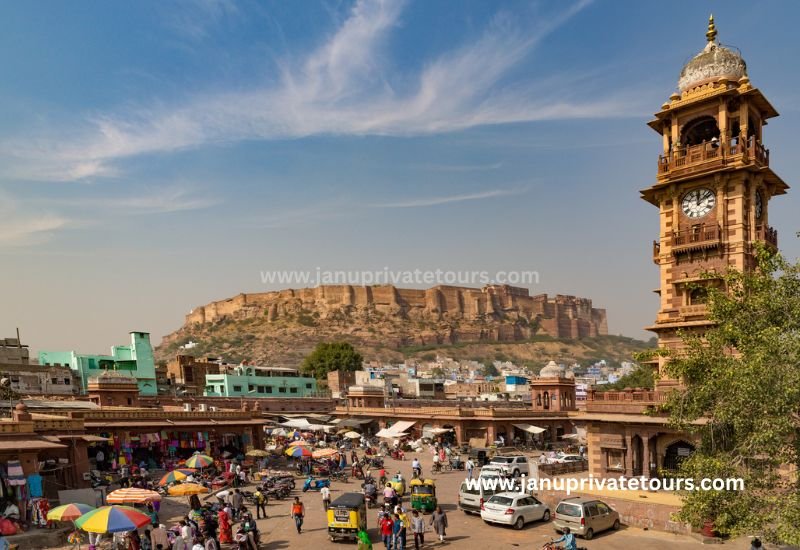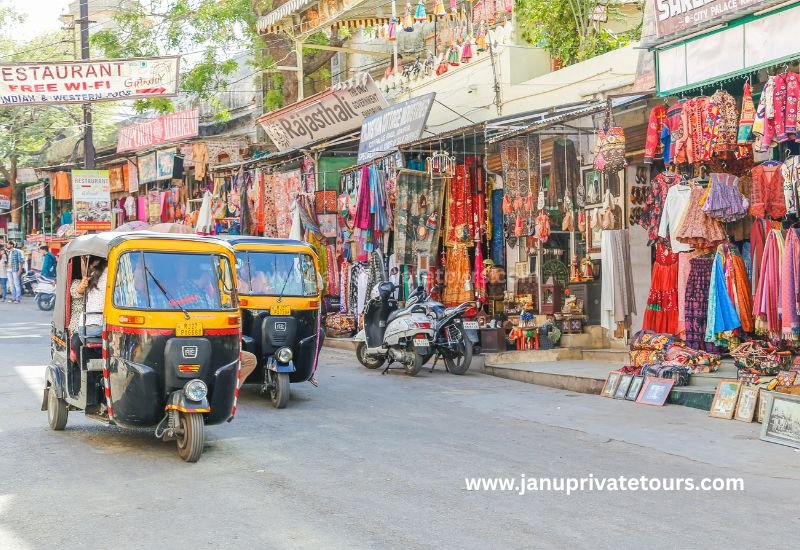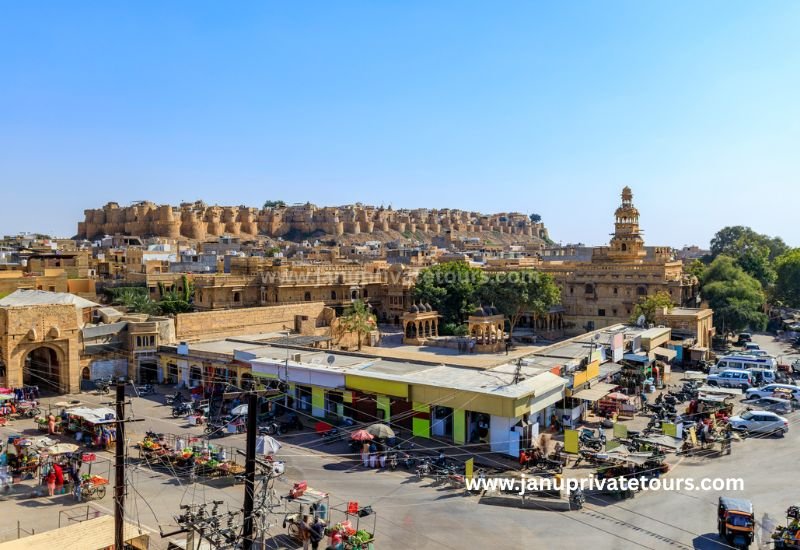

Discover India

Why Foreign Tourists Love Rajasthan’s Gangaur Festival


There’s a moment at Jaipur’s Gangaur procession — somewhere along Tripolia Bazaar — when the music stops making sense as separate instruments and becomes a single, physical thing you feel in your sternum. The elephant in front of you is draped in embroidered gold. The women behind it carry a gilded palanquin with the idol of Goddess Gauri, dressed in a crimson silk sari and jasmine garlands, swaying slightly with each step. The women lining the route throw rose petals from their balconies.

A client from Sydney messaged us three months after her Gangaur trip: I’ve done Diwali. I’ve done Holi. Gangaur is the one nobody talks about and the one I’ll remember for the rest of my life.

She’s not wrong. Gangaur is Rajasthan’s longest-running, most elaborate festival — 16 days of daily rituals building toward a single grand procession — and it draws far fewer international visitors than it deserves. Here’s everything you need to plan a trip around it.

Gangaur 2026 ran from March 4 to March 21, with the main procession day on March 21. For 2027, the festival will fall in late March to early April — exact dates follow the Hindu lunar calendar, so check the Rajasthan Tourism website closer to the time.


Why Is the Gangaur Festival Celebrated?

Gangaur is a love story, a harvest celebration, and a spring festival all folded into one — and understanding the mythology makes watching it unforgettable.

The name itself tells you everything. Gangaur combines two divine names: Gan (a name for Lord Shiva) and Gaur (Goddess Gauri, another name for Parvati). The festival honours the divine union of Shiva and Parvati — specifically the moment after their marriage when Gauri returned to her parental home for 18 days and blessed the women she met with happiness, marital bliss, and prosperity. Women reenact this visit every year by worshipping clay idols of Isar (Shiva) and Gauri for 18 consecutive days before the grand finale.

According to mythology, Goddess Parvati performed intense penance across multiple lifetimes to earn Lord Shiva’s love. Impressed by her devotion, Shiva finally accepted her as his wife. The festival celebrates that devotion — and by extension, every woman’s capacity for patience, persistence, and love.

For married women in Rajasthan, Gangaur is the most important festival of the year. They fast for their husbands’ longevity and family well-being. For unmarried girls, it’s a chance to pray for a good match. But for everyone in the street — including foreign visitors — it’s 16 days of music, colour, and a royal procession that has no equivalent anywhere else in India.

The Gangaur festival also coincides with spring’s arrival, making it a harvest celebration too. After the dry Rajasthani winter, the Chaitra month brings the first warmth and greenery — and Gangaur celebrates that renewal with flowers and fresh offerings to the goddess every morning.


In Which Season Is the Gangaur Festival Celebrated?

Gangaur falls in spring — and it’s the most pleasant time of year to be in Rajasthan. The festival begins the day after Holi (India’s colour festival, usually late February or early March) and runs for 16 days through the Hindu month of Chaitra (March–April).

Temperatures in Jaipur and Udaipur during Gangaur week typically sit between 22–32°C (72–90°F). Mornings are cool and comfortable; afternoons warm up. The sky is clear, the daylight is long, and the desert landscape starts showing green for the first time since the previous monsoon. Roses and marigolds are in full bloom — which is why the flower garlands, petal offerings, and floral decorations during Gangaur look so extraordinary. The flowers are at their peak and cost next to nothing at this time of year.

For international visitors, this timing is excellent. It’s past the busy November–February peak season, which means hotel rates are slightly lower and the major monuments (City Palace, Amber Fort) are more comfortable to explore. The Golden Triangle circuit is at its best in March — not too cold, not too hot, with excellent light for photography.


Where Is the Gangaur Festival Celebrated?

Gangaur is primarily a Rajasthan festival, but the celebration takes a different character in each city.

The festival is widely celebrated in Jaipur, Udaipur, Jodhpur, Jaisalmer, Bikaner, and Nathdwara within Rajasthan. Rajasthani communities in Kolkata (West Bengal) and Gujarat also celebrate Gangaur, keeping alive the traditions of their home state. But the most spectacular public celebrations — the ones worth building a trip around — are in Jaipur and Udaipur, for very different reasons.

Jaipur hosts the grandest, most publicly visible procession in India for this festival. The scale is royal in the literal sense — the celebrations are rooted in the patronage of Jaipur’s Rajput royal family, who organised Gangaur processions for centuries. The pageantry here is unmatched.

Udaipur is entirely different. The idols of Isar and Gauri are carried in boats across Lake Pichola, beginning from the City Palace Ghat and moving across the lake as the sun sets. Locals and tourists gather at Gangaur Ghat — a ghat named specifically for this festival — where the lakefront fills with lamps, flower garlands, and devotional music. The Rajasthan Tourism Department also organises the Mewar Festival in Udaipur concurrently, adding cultural performances and heritage events to the lake celebrations.

Jodhpur has the most unusual version. Here, Gangaur is called Dhinga Gavar — and it comes with a tradition unique to this city. Women patrol the streets holding sticks, and local belief holds that if any unmarried young man gets touched by the stick, he will be married soon. The festival here is called Baintmaar Teej in some traditions, and the playful, street-level energy is nothing like Jaipur’s royal formality.

Bikaner’s celebration is best viewed from the ramparts of Junagarh Fort, where the procession below takes on a cinematic quality against the desert city’s terracotta buildings.


What Does the Gangaur Procession in Jaipur Actually Look Like?

The Jaipur Gangaur procession is one of the most photographed events in Rajasthan — and the photographs still don’t prepare you for being there.

The procession begins at Zanani-Deodhi inside the City Palace and moves through Tripolia Bazaar, Chhoti Chaupar, Gangauri Bazaar, and Chaugan Stadium before reaching its final destination at Talkatora — a distance that takes several hours to cover. The route through Jaipur’s old city, flanked by the pink-stuccoed facades of the walled city’s buildings, creates a backdrop that no amount of stage design could replicate.

What you’ll actually see: women in embroidered lehenga-choli sets in crimson, green, and gold carry the Gangaur Mata idol in an ornate palanquin. Decorated elephants, caparisoned camels, royal chariots, and bullock carts accompany the procession. Musicians playing shehnai, dhol, and nagara set a rhythm that carries for several blocks in every direction. Folk dancers perform ghoomar — a swirling Rajasthani dance form — while moving. The entire procession can take 2–3 hours to pass a single vantage point.

The best viewing positions along Tripolia Bazaar fill up an hour before the procession begins. If you want the front row rather than the 12th row, positioning matters — and this is exactly the kind of logistical detail a local guide handles for you, while you focus on watching.


What Is the Difference Between Teej and Gangaur?

Both are women’s festivals in Rajasthan dedicated to the love of Shiva and Parvati. The confusion between them is completely understandable — but they’re different in season, mood, and scale.

Teej (primarily Haryali Teej) is a monsoon festival, celebrated in July–August when Rajasthan is green and rain-soaked. The dominant mood is of seasonal joy and renewal — swings hung from trees, folk songs in the rain, mehndi on hands, and a procession that celebrates the arrival of the rains. The Jaipur Teej procession is grand and royal, but the festival window is short — the main celebrations happen over 2–3 days.

Gangaur, by contrast, is a spring festival built over 16 continuous days of daily home rituals before the final procession. Where Teej is seasonal joy, Gangaur is devotional endurance — women worship clay idols every morning for more than two weeks before the grand culmination. The emotional weight of the final procession day is enormous because it follows 16 days of preparation.

Scale: Gangaur is generally considered the longer and more elaborate of the two for Rajasthan specifically. In terms of public spectacle, Jaipur’s Gangaur procession rivals Teej in grandeur.

Season: Teej = monsoon (July–August). Gangaur = spring (March–April). Both are worth experiencing; they’re different enough that visitors who’ve done one have strong reasons to return for the other.

Why Teej is celebrated: Teej marks the reunion of Goddess Parvati and Lord Shiva after a long separation, celebrated at the arrival of the monsoon. Married women fast without water (nirjala vrat) for their husbands’ longevity. Unmarried women pray for a good match. The mythology is essentially the same as Gangaur — but the seasonal context transforms the mood entirely.


What Food Is Associated with the Gangaur Festival?

Gangaur has its own food vocabulary, and ghevar is the word you need to know first.

Ghevar is the undisputed sweet of Gangaur — a honeycomb-textured disc of fried dough soaked in sugar syrup and topped with rabdi (thickened sweetened milk) or malai. You’ll find sweet shops in Jaipur stacking ghevar in the weeks before Gangaur — the Bapu Bazaar and Johari Bazaar mithai shops are the places to go. A good ghevar costs ₹80–350 depending on size (roughly USD 1–4). Get the rabdi version. The dry version is fine; the rabdi version is the reason for the trip.

Ghewar is also the gift of Gangaur — parents of married women send it as part of their blessing packages along with new clothes, mehndi, and bangles. Receiving a ghewar means someone is celebrating you. If a local family offers you one during the festival, eat it immediately. Declining is the one way to genuinely dampen the moment.

Panchkuta sabzi — a dry curry made from five desert ingredients: ker (a tart berry), sangri (dried beans), dried mango, seeds, and spices — is the traditional Gangaur lunch. It’s intensely flavoured, unlike anything you’ve eaten, and completely vegetarian. Malpua (sweet pancakes in sugar syrup, garnished with pistachios) and kheer (slow-cooked rice pudding with saffron and cardamom) round out the festival food table.

During the procession, street vendors along the route sell bhutte ki kees (spiced grated corn stir-fried with ghee), kachori (fried pastry with spiced filling), and chikki (sesame-jaggery brittle). Budget ₹50–150 (under USD 2) for a full street food circuit along Tripolia Bazaar.


What Should You Wear and Expect as a Foreign Visitor?

Gangaur is welcoming to international visitors — and a few small preparations dramatically improve the experience.

Wearing traditional Rajasthani attire is not required, but it’s appreciated and genuinely transforms how locals interact with you. Women in a bright lehenga-choli or salwar kameez (available in Jaipur’s Bapu Bazaar for USD 15–40, tailored overnight) will be warmly woven into the celebration by women along the procession route. Avoid white and black — the festival palette is red, green, yellow, and gold.

March in Jaipur means warm afternoons — 30–33°C (86–91°F) by 2 PM. The procession starts in the late afternoon and continues into the evening, so you’ll transition from warm sun to comfortable cool. Carry a hat, sunscreen, and a lightweight cotton shawl (useful for both sun coverage and entering any temple along the route).

Photography etiquette: ask before photographing women at close range during rituals. Most women are happy to be photographed in their Gangaur attire — especially if you show them the result on your camera screen. A smile and a gesture asking permission takes three seconds and means everything.


How to Plan Your Gangaur Festival Tour with Janu Private Tours

Gangaur is one of those festivals that works best when someone who knows Rajasthan has already solved the logistics. Here’s why that matters practically:

The procession route through Jaipur’s old city has several dozen vantage points of wildly different quality. Being at Tripolia Bazaar near the City Palace gates at the right moment — when the procession is still compact and the light is correct — versus being stuck behind a crowd at Chaugan Stadium an hour later is the difference between a defining photograph and a disappointing one. A local guide who has done this 10 times knows exactly where to be and when.

Gangaur pairs naturally with the Golden Triangle. Delhi → Agra (Taj Mahal) → Jaipur for the main Gangaur procession → Udaipur for the lake boat procession is a 10–12 day private itinerary that covers three of India’s most iconic sights and two completely different Gangaur experiences in a single trip.

For clients who want to combine Jaipur’s procession on the main day with Udaipur’s lake ceremony the following day, the drive between the two cities is 393 km — roughly 5 hours 20 minutes by private car. We schedule this as a morning departure after the Jaipur celebrations, arriving in Udaipur in time for the evening events.

Gangaur 2027 will fall in late March or early April — the exact dates follow the Hindu lunar calendar and are confirmed closer to the year. If you’re planning a spring India trip, late March is the window to hold.

Tell us your travel dates, group size, and whether you prefer Jaipur’s royal procession, Udaipur’s lake ceremony, or both. We’ll design the full Gangaur experience — correct vantage points, local family access, the Gangaur Ghat experience in Udaipur, and the right Rajasthan circuit around it.
Jim Corbett National Park – A Comprehensive Guide 2026


If spotting a wild Bengal tiger is on your India bucket list, this is where most travelers start. Jim Corbett National Park is India’s oldest national park and one of the few places where tiger sightings are relatively consistent, especially in the Dhikala and Bijrani zones.

I visited Corbett during a late-April safari, and the first thing I noticed wasn’t the tiger hype — it was the silence. One minute you hear langurs screaming warnings from sal trees, the next minute every jeep suddenly stops. Even without a tiger sighting, the atmosphere alone feels cinematic.

Why Is Jim Corbett National Park So Famous?

Corbett is famous for three reasons: Bengal tigers, diverse safari zones, and accessibility from Delhi. Unlike remote parks that require multiple flights, Corbett is roughly 260 km from Delhi — about 6–7 hours by road depending on traffic near Hapur and Moradabad.

The park was established in 1936 as Hailey National Park, making it India’s first national park. It was later renamed after Jim Corbett, who played a major role in wildlife conservation in the Kumaon region.

A few verified facts travelers often don’t know:

  • Corbett covers more than 1,300 sq km including buffer zones.
  • The park has over 230 recorded tiger sightings annually in tourism zones according to forest department data.
  • More than 600 bird species have been recorded here, making it surprisingly good for birdwatchers too.
  • Dhikala grasslands are among the best landscapes in India for elephant herds.
  • Corbett is part of the larger Corbett Tiger Reserve established under Project Tiger in 1973.

Which Are the Main Safari Zones in Corbett?

Most first-time visitors assume Corbett is one single safari route. It’s not. The park is divided into multiple tourism zones, and your experience depends heavily on which one you book.

Dhikala Zone – Best for Wildlife Density

Dhikala is the most famous zone and usually the toughest to book. The landscape changes dramatically here — dense forests suddenly open into massive grasslands with Ramganga River views.

You can only stay inside the forest lodge if you have a valid booking. Morning mist over the grasslands at 5:45 AM feels unreal, especially in winter.

Best for:

  • Tigers
  • Wild elephants
  • Landscape photography
  • Overnight forest stays

Bijrani Zone – Best for Tiger Sightings

Bijrani is popular because it’s closer to Ramnagar and often delivers faster sightings. Guides frequently track alarm calls from deer and langurs here.

If you only have one safari, many naturalists recommend Bijrani over less active zones.

Jhirna & Dhela – Open Year-Round

Unlike Dhikala, these zones remain open throughout the year unless weather conditions become risky.

These are decent options for travelers visiting during monsoon months.

Best Time to Visit Jim Corbett National Park

The best time to visit depends on what you want to experience.

November to February – Best Weather

This is the most comfortable season. Morning safaris can drop below 5°C, especially in Dhikala, so jackets are essential.

Ideal for:

  • Families
  • Birdwatching
  • Landscape photography
  • Pleasant weather

One downside? Tall winter grass can occasionally reduce tiger visibility.

March to June – Best Tiger Sightings

This is honestly the best wildlife season despite the heat.

As water sources shrink, animals move toward rivers and open areas. I’ve personally noticed safari drivers become much more alert during late May because tiger movement increases near watering points.

Temperatures can cross 38°C in May afternoons, but sightings improve significantly.

July to September – Monsoon Season

Core zones like Dhikala usually close during heavy monsoon due to road conditions and safety issues.

However, buffer zones may remain operational.

What Are the Safari Prices for Indians and Foreigners?

Safari costs change slightly every season depending on forest department revisions and vehicle type.

Jeep Safari Prices (Approx. 2026)

For Indian Travelers

  • Shared jeep safari: ₹1,500–₹2,500 per person
  • Full jeep booking: ₹6,500–₹9,000 per vehicle

For Foreign Travelers

  • Shared safari: ₹3,500–₹5,500 per person
  • Private jeep: ₹9,500–₹13,000 depending on zone

Prices generally include:

  • Forest permit
  • Gypsy vehicle
  • Driver fees
  • Nature guide charges

Dhikala bookings and Canter safaris usually cost differently.

One thing many foreigners don’t realize: passport details are mandatory during booking because forest permits are government-issued and non-transferable.

How Many Safaris Should You Book?

One safari is risky if spotting a tiger is your main goal.

Most experienced wildlife photographers book at least:

  • 2 safaris for casual travelers
  • 4–6 safaris for serious wildlife enthusiasts

Wildlife sightings depend on weather, luck, silence, and animal movement. Even top guides can’t guarantee a tiger.

Ironically, some visitors spot one within 15 minutes while others spend three days tracking pugmarks.

Where Should You Stay Near Corbett?

Ramnagar is the main gateway town. Most hotels and luxury resorts are spread around Dhikuli village along the Kosi River.

If your safari starts before sunrise, staying near your safari gate saves time.

A resort “10 minutes from the gate” may actually take 35 minutes during peak holiday traffic. Local road conditions matter more than Google Maps estimates.

What Should You Pack for a Corbett Safari?

Keep it practical, not fashionable.

Carry:

  • Neutral-colored clothes
  • Light jacket for morning safaris
  • Binoculars
  • Dust protection scarf
  • Power bank
  • Camera with zoom lens if possible

Avoid:

  • Bright red or neon clothing
  • Loud conversations
  • Strong perfume

Animals detect sound and movement surprisingly quickly.

Is Corbett Good for Foreign Travelers?

Absolutely. In fact, Corbett is often one of the easiest wildlife parks for international travelers visiting North India.

Why?

  • Well-connected by road and rail
  • Multiple accommodation categories
  • English-speaking guides available
  • Good safari infrastructure
  • Close to Delhi and the Golden Triangle route

Many travelers combine Corbett with Delhi, Agra, and Jaipur for a mixed wildlife and heritage itinerary.

Janu Private Tours Guides Recommendations

According to local naturalists and drivers frequently working with international guests, these tips genuinely improve your safari experience:

  • Choose morning safaris over afternoon drives for active wildlife movement.
  • Book Dhikala at least 45–60 days early during peak season.
  • Don’t obsess only over tigers — Corbett’s elephant herds and birdlife are world-class too.
  • Sit quietly during alarm calls instead of constantly moving for photos.
  • If possible, stay two nights minimum. Corbett feels rushed otherwise.

Final Thoughts on Visiting Jim Corbett in 2026

Jim Corbett National Park remains one of the best wildlife destinations in India for both beginners and experienced safari travelers.

The park offers a rare mix of accessibility, real tiger habitat, forest lodges, river landscapes, and surprisingly good tourism infrastructure. If you plan properly, choose the right safari zones, and stay patient, Corbett delivers experiences that feel far beyond a normal vacation.

Jawai Leopard Safari Booking – Price, Best Time & Safari Tips


The first time I visited Jawai, I expected a typical wildlife destination. Instead, I found granite hills glowing orange at sunset, leopards casually walking across rocky cliffs, and Rabari shepherds sipping tea while goats wandered nearby. It did not feel like a zoo-style safari zone. It felt raw, open, and surprisingly peaceful.

If you are planning a leopard safari in Rajasthan, this guide covers the best time to visit, Jawai leopard safari timings, safari prices for Indians and foreigners, and the exact booking process without the confusing tourist jargon.

Why Is Jawai Leopard Safari So Popular?

Jawai is famous because humans and leopards coexist here naturally. Unlike many national parks, these leopards live around villages and granite caves rather than deep forests.

Wildlife photographers often compare Jawai’s leopard sightings to some of the best safari zones in India because sightings are relatively frequent. According to Rajasthan tourism operators and safari camps, early morning and evening drives regularly report leopard movement around the granite hills.

A few things make Jawai different:

  • Leopards are the main attraction, not tigers
  • The terrain is rocky and cinematic
  • Safaris feel less crowded than Ranthambore
  • Rabari tribal culture adds a unique local experience

You are not just spotting wildlife here. You are seeing how wildlife and rural Rajasthan exist side by side.

Jawai Leopard Safari Best Time to Visit

The best time to visit Jawai Leopard Safari is from October to March when temperatures stay comfortable and leopard movement increases during cooler hours.

Summer safaris are still possible, but afternoon temperatures in Rajasthan can cross 41°C between May and June.

Best Seasons for Jawai Safari

October to February – Ideal Weather & Photography

This is the peak safari season. Morning temperatures can drop to around 11–14°C, which creates excellent conditions for leopard sightings and landscape photography. Sunrises over the granite hills look unreal during winter. If you enjoy wildlife photography, this is honestly the season I recommend most.

March to April – Good Leopard Activity

The weather gets warmer, but safari prices may be slightly lower compared to winter holidays. Leopards often become easier to spot near rocky caves during early mornings.

May to June – Hot but Strong Sighting Chances

Fewer tourists visit during peak summer, but experienced wildlife travelers still come because animals stay active near water sources.

You will need:

  • Light cotton clothes
  • Sunglasses
  • Plenty of water
  • Early morning safari slots only

Monsoon months (July to September) can affect safari accessibility due to slippery rocky terrain and uneven village roads.

Jawai Leopard Safari Timings

Jawai safaris usually operate twice daily:

  • Morning Safari: Around 5:30 AM – 8:30 AM
  • Evening Safari: Around 4:30 PM – 7:00 PM

Timings slightly change depending on sunrise and sunset during different seasons.

Which Safari Timing Is Better?

Most local guides prefer the early morning safari because:

  • Leopards are more active after sunrise
  • Temperatures stay cooler
  • Lighting is better for photography

Average Jawai Leopard Safari Price (2026)

Safari TypeIndian PriceForeigner Price
Shared Jeep Safari₹2,000–₹3,500 per person₹3,500–₹5,500 per person
Private Jeep Safari₹7,500–₹12,000 per jeep₹9,000–₹15,000 per jeep

Most jeeps accommodate 5–6 travelers comfortably.

Luxury camps near Jawai often bundle:

  • Accommodation
  • Meals
  • Leopard safari
  • Village tours
  • Birdwatching experiences

Before booking, always check:

  • Whether guide charges are included
  • Camera fees (if applicable)
  • Hotel pickup availability
  • Cancellation policy

Some camps advertise “cheap safari deals” but later add hidden vehicle or guide costs.

How to Book Jawai Safari

Booking a Jawai safari is relatively simple, but availability gets tight during winter weekends and holiday periods.

I strongly recommend booking at least 12–18 days in advance between November and February.

Step-by-Step Booking Process

1. Choose Your Travel Dates

  • Winter weekends fill quickly, especially around Christmas and New Year.
  • Midweek safaris are usually quieter.

2. Select Your Safari Type

Decide whether you want:

  • Shared safari
  • Private jeep safari
  • Luxury safari package

Couples and photographers usually prefer private jeeps for flexibility.

3. Pick a Trusted Safari Operator or Camp

Popular safari stays are located around:

  • Bera
  • Perwa
  • Sena village

Look for operators with:

  • Real Google reviews
  • Naturalist guides
  • Clear pricing
  • Verified contact details

4. Share ID Details

Most operators ask for:

  • Passport copy (foreign travelers)
  • Aadhaar or ID proof (Indian travelers)
  • Traveler names and age

5. Make Advance Payment

Advance deposits usually range between 30–50%.

Always request:

  • Booking confirmation
  • Safari timing details
  • Pickup instructions

6. Arrive 20–30 Minutes Early

Jawai safaris start on time because leopard movement is unpredictable.

Missing sunrise by even 18 minutes can affect sightings.

What Makes Jawai Different From Other Wildlife Safaris?

Unlike Ranthambore National Park or Bandhavgarh National Park, Jawai feels far less commercial. There are no huge tourist convoys or loud canter vehicles.

Instead, you get:

  • Quiet jeep drives
  • Rocky cave landscapes
  • Rural village interactions
  • Smaller safari groups

Birdwatchers also love Jawai because the reservoir attracts migratory birds including flamingos, cranes, and bar-headed geese during winter months.

Safari Tips Most First-Time Travelers Ignore

Wear Neutral Colors

Avoid bright red, yellow, or neon clothing.

Earthy shades work best for wildlife viewing.

Carry a Light Jacket in Winter

Morning safaris in December and January can feel surprisingly cold due to the open-jeep wind.

Mobile Networks Can Be Weak

Internet speeds around Jawai villages fluctuate often.

Download offline maps before arrival.

Do Not Expect 100% Leopard Sightings

Jawai has excellent sighting chances, but wildlife is still unpredictable.

That unpredictability is honestly part of the thrill.

Janu Private Tours Guides Recommendations

If you enjoy quieter wildlife experiences without massive tourist crowds, Jawai is one of Rajasthan’s most memorable safari destinations right now. Book your packages from Janu Private Tours.

Why the Teej Festival Is Perfect for Cultural Tourism in India


The evening before Teej in Jaipur, every courtyard in the old city smells the same — a mixture of rose water and henna paste. Women sit in circles having mehndi drawn up to their elbows while someone nearby plays a dhol and someone else sings a Teej folk song that her grandmother taught her. The streets are strung with marigold garlands. The sweet shops are stacking ghevar — Rajasthan’s honeycomb-textured festival sweet — three layers deep.

The next morning, a gilded palanquin carrying the idol of Goddess Teej Mata glides out through the gates of Jaipur’s City Palace, escorted by royal guards in red turbans, decorated elephants, and a percussion procession you feel in your chest before you hear it.

Most international visitors have never heard of Teej. The ones who time their Rajasthan trip around it never forget it.

Haryali Teej 2026 falls on Sunday, July 27 — the main public festival in Jaipur, marked by the royal procession from the City Palace. Hartalika Teej follows on August 26, 2026. If India is on your radar for 2026, the monsoon season just became a very good reason to go.


Why Is the Teej Festival Celebrated?

Teej is a love story that spans 108 lifetimes — and India celebrates it every monsoon. The mythology behind it is one of the most extraordinary tales in the Hindu tradition, and understanding it makes watching the festival a completely different experience.

According to the Shiva Purana, Goddess Parvati’s journey to reunite with Lord Shiva was not a single-lifetime effort. After her first incarnation as Sati, she underwent 107 successive rebirths, practising intense penance across each one, until Shiva finally accepted her. The day he gave his word to marry her — after she made a Shiva Lingam from sand and prayed through the night — became Hartalika Teej.

The term Hartalika is a combination of two Sanskrit words: harit (abduction) and aalika (female friend). Legend says Goddess Parvati’s father wanted her to marry Lord Vishnu, but she was devoted to Shiva. Her female friends helped her escape and hide in a forest so she could continue her penance undisturbed — and that act of friendship is honoured in the festival’s name.

The festivals celebrate the bounty of nature, the arrival of clouds and rain, and the renewal that monsoon brings. Beyond mythology, Teej marks the monsoon season in a desert state where rain is genuinely precious. In Rajasthan’s dry landscape, the first green of the Shravan month feels like a miracle — and Teej celebrates that too.

Married women observe Teej by fasting and praying for their husbands’ well-being. Unmarried women fast and pray for a good match. The men, for their part, send gifts. For foreign visitors, the festival is an open-air celebration of colour, music, and devotion that anyone can witness and — with a bit of local guidance — participate in.


Which States in India Celebrate the Teej Festival?

Teej is a North and West India phenomenon, with Rajasthan at the centre of the grandest celebrations. But the festival extends across several states, each with its own character.

The main areas of celebration are Rajasthan, Bihar, eastern Uttar Pradesh, Jharkhand, Uttarakhand, and Nepal. Hartalika Teej has also spread to parts of Madhya Pradesh and Chhattisgarh.

Rajasthan, specifically Jaipur, is where the festival reaches its most spectacular, publicly visible form. Unlike other parts of India, Jaipur’s Teej Festival is celebrated on a royal scale, with a spectacular Teej Mata procession where the deity of Goddess Parvati is taken out in a grand palanquin from the City Palace, accompanied by royal guards, chariots, decorated elephants, camels, and traditional musicians. For international visitors, this is the version worth building a trip around.

Bundi (2.5 hours from Jaipur) holds the famous Kajali Teej Mela — a fair specific to the Kajari Teej form of the festival, celebrated in this under-touristed old city with a river procession. Far fewer foreign tourists make it here, which makes the atmosphere more intimate and the access easier.

Uttar Pradesh and Bihar celebrate Teej with similar rituals — fasting, swings, folk songs — but without the royal procession element that defines Rajasthan’s version.

Nepal celebrates Teej as a major national festival, particularly in Kathmandu, where temples fill with women in red sarees for three days of prayer and fasting.

If you’re choosing a single base for Teej in India, Jaipur is the answer. The combination of the royal procession, the old city backdrop, and the sheer scale of public celebration makes it the most immersive Teej experience available to international visitors.


How Is the Teej Festival Actually Celebrated?

Teej unfolds over several days, each with a specific ritual — and the day before the main festival is one of the most atmospheric for visitors.

The day before Haryali Teej is celebrated as Sinjara, when women apply mehndi on their hands and feet. Parents of married women send a gift pack that includes bindi, vermilion, mehndi, bangles, ghevar (a special Rajasthani sweet), and lahariya (a multicoloured saree) as a symbol of their blessings. Walk through any neighbourhood the evening before Teej in Jaipur, and you’ll find women in every courtyard having intricate henna designs drawn up their forearms, while their children run between the mehndi artists and the mithai shops.

On the main festival day, married women observe the nirjala vrat, a strict fast without water, for the well-being and long life of their husbands. Unmarried girls fast and pray for a good match. This is a deeply personal devotional practice happening alongside the street celebrations — you’ll see women in beautiful green and red embroidered lehengas who have eaten nothing since the previous evening, completing the full procession route before breaking their fast at sunset.

The festivals for women include dancing, singing, getting together with friends and telling stories, dressing up with henna-coloured hands and feet, wearing red, green or orange clothes, sharing festive foods, and playing on swings hung from trees. The swings — jhoolas — decorated with flowers and hung from banyan or mango trees, are one of the most distinctive and photographed elements of Teej. Women take turns on them singing traditional Teej songs. The visual, with embroidered silk and monsoon greenery, is the kind of thing travel photographers plan entire trips around.


What Does the Teej Procession in Jaipur Actually Look Like?

Nothing in Rajasthan’s festival calendar looks quite like the Jaipur Teej procession — and that’s saying something. The high point is the magnificently decorated idol of Goddess Parvati, kept on a palanquin carried through the Pink City. Antique gilt palanquins, bullock carts pulling cannons, chariots, caparisoned elephants, camels, bands, and dance groups form part of the grand procession.

The pink-walled streets of Jaipur burst into life with folk dancers, shehnai melodies, ghoomar performers, and an infectious festive spirit. Locals line up along the route to witness this rare event — Teej Mata is brought out only once a year.

The procession starts from Tripolia Gate at the City Palace and moves through the old city. The route through the walled city — past the Hawa Mahal’s latticed pink facade, through the colour-soaked lanes of Johari Bazaar — takes several hours. The best viewing positions fill up early. A local guide who knows the route makes the difference between watching from 10 rows back and standing at the front as the elephant with the gold-draped palanquin passes three metres in front of you.

The procession is carried out over two consecutive days, and the dressed-up idol of Teej Mata finally ends her journey at Kanak Vrindavan — a garden complex at the foot of the Nahargarh hills, about 8 km from the old city. The arrival there, with the hills behind and the idol finally settled, is the emotional climax of the festival.


What Food Should You Try During Teej Festival?

Teej has its own food calendar, and ghevar is the centrepiece. Ghevar is the undisputed queen of Teej sweets — a honeycomb-textured disc of fried dough soaked in sugar syrup and topped with rabdi (thickened milk) or malai. It’s available throughout monsoon season but reaches its peak during Teej. Pick it up at LMB (Laxmi Misthan Bhandar) in Johari Bazaar, or any of the mithai shops along Bapu Bazaar. A single ghevar at a good shop costs ₹80–300 (roughly USD 1–3.50) depending on size and topping. Go for the rabdi version.

Parents of married women send Sinjara — a gift pack that includes ghevar — as a symbol of their blessings, alongside bangles, mehndi, and a lahariya saree. The sweet is so integral to the festival that receiving a ghevar means someone is celebrating you.

Balushahi is a flaky, deep-fried sweet with a glazed finish — similar to a glazed doughnut in concept but richer in flavour and much denser. Fenia is thin sweet vermicelli cooked in milk with saffron and cardamom, lighter and more delicate than most Rajasthani sweets. It’s the one to try if you have a low tolerance for sugar overload.

Laapsi is a sweet wheat porridge cooked with ghee, jaggery, and nuts — traditionally prepared as a festive offering to Goddess Parvati. You’ll find it at temple stalls on the main festival day, distributed as prasad (sacred food offering) to whoever is standing nearby. Accept it.

Once the fast breaks at sunset, the first food many women eat is savoury — kachori with spiced potato filling from the street stalls that line the old city. If you’ve been walking the procession route all day, you’ll understand why.


What Should You Wear to the Teej Festival?

Green is the colour of Teej — wearing it earns you instant goodwill from every woman you encounter. This isn’t a festival where foreign visitors are expected to dress traditionally, but making the effort is noticed and genuinely appreciated.

Women visitors in a green or red salwar kameez (tunic and trouser set, available in Jaipur markets from USD 12–30, tailored to your measurement in 24 hours) will be welcomed into the festival atmosphere in a way that western clothing simply doesn’t enable. Green symbolises the monsoon’s new growth — the season the entire festival is built around.

Men in a simple kurta (tunic over trousers or jeans) in any colour fit comfortably into the crowd without drawing attention. Comfortable shoes are essential — the procession route through the old city covers 4–5 km on uneven stone surfaces. The monsoon weather means humidity; lightweight, breathable fabric is far more comfortable than denim.

Carry a small umbrella. Jaipur in late July sits in active monsoon season — temperatures hover around 28–32°C (82–90°F) with periodic rain showers. The rain during Teej is considered auspicious. The locals celebrate it. You should too — but a compact umbrella keeps your camera dry.


Where Else in Rajasthan Is Teej Worth Seeing Beyond Jaipur?

Jaipur is the grand, publicly accessible version. These nearby cities offer something more intimate.

Bundi — 165 km from Jaipur (roughly 3 hours by car) — holds the Kajali Teej Mela, a riverside fair specific to this under-visited walled city. The procession here is smaller and genuinely neighbourhood-level, set against Bundi’s painted havelis and step-wells without any tourist infrastructure around it. If you’ve already done Jaipur’s procession on Day 1, Bundi on Kajari Teej (15 days later) is a second, entirely different experience.

Udaipur celebrates Teej with women swinging on flower-decorated jhoolas beside Lake Pichola — the combination of lake, white palace backdrop, and monsoon greenery is visually spectacular. Less public procession than Jaipur, but more romantic and photogenic.

Jodhpur’s Teej celebrations take place against the Blue City’s rooftops and Mehrangarh Fort’s dramatic silhouette. Like Udaipur, it’s more neighbourhood-level than Jaipur’s royal-scale event, but the setting is unmatched.

A Rajasthan circuit that combines Jaipur’s Teej procession with Udaipur or Bundi in a 6–8 day private itinerary covers the full range — from the large-scale royal event to the intimate, local version. This is exactly the kind of trip we design for our international clients.


How to Plan Your Teej Festival Tour to India with Janu Private Tours

Teej is genuinely one of Rajasthan’s most extraordinary experiences for international visitors — and one of the most underbooked. Most foreign tourists haven’t heard of it. The ones who come specifically for it tell us it changed how they think about India.

The practical realities: Jaipur hotels in the old city during Teej week book out fast, especially for the night before the procession (Sinjara evening) when the mehndi atmosphere is at its most beautiful. Rooms within walking distance of Tripolia Bazaar and the procession route should be booked 3–4 months ahead.

Teej pairs naturally with the Golden Triangle. Delhi → Agra (Taj Mahal) → Jaipur, arriving for the Teej procession on July 27, then extending into Rajasthan through Udaipur or Jodhpur — it’s a 10–12 day itinerary that combines India’s most iconic sights with one of its least-visited-by-foreigners festivals. We run this as a private circuit, with a local guide who positions you at the right point on the procession route and takes you into the mehndi lanes the evening before.

Haryali Teej 2026 is July 27. If your travel window includes late July, this is worth building around.

Tell us your travel dates, where you’re flying from, and your group size. We’ll design the full Teej experience — procession access, local family visit, Sinjara evening in the old city, and the right Rajasthan circuit before and after.

Interesting Facts About India’s Taj Mahal


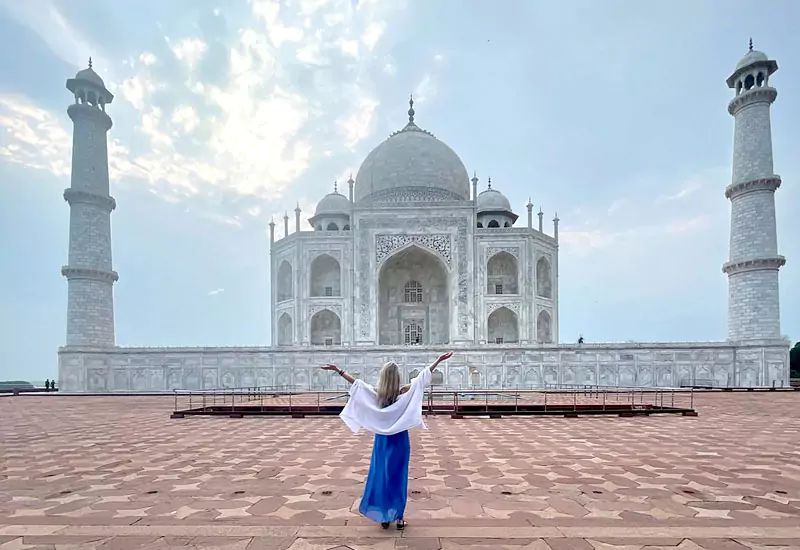
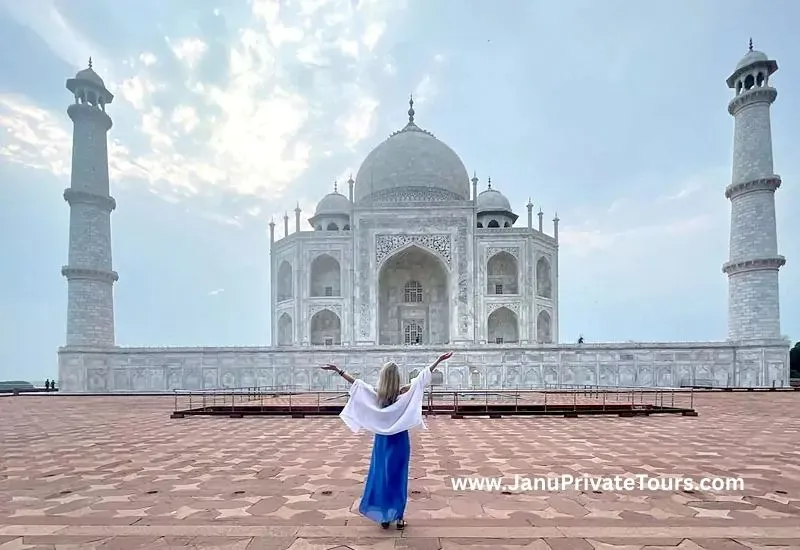
Most of us can recognize the Taj Mahal from photographs. Yet see it for the first time, and most people fall short of words. This is no ordinary monument but a 370-year-old testament to love, built by an emperor who lost everything, engineered by 20,000 artisans, and one that remains almost completely intact to this day. If you’re planning a trip, here are 10 facts about India’s most-visited site that will transform how you see it.

Taj Mahal at a Glance

FeatureDetails
LocationAgra, Uttar Pradesh, India
Built ByEmperor Shah Jahan
Built ForMumtaz Mahal
Year Completed1653
UNESCO StatusWorld Heritage Site (1983)
Primary MaterialWhite Makrana marble
Best Time to VisitSunrise
Closed OnFridays
Entry Fee (Foreign)Rs. 1,100 per person

Why is the Taj Mahal so famous worldwide?

The Taj Mahal is located in Agra, Uttar Pradesh, in northern India. Agra is roughly 230 kilometers south of Delhi and 240 kilometers east of Jaipur. That means it’s the centerpiece of the Golden Triangle tour, India’s most popular travel circuit, which links Delhi, Agra, and Jaipur.

But the Taj Mahal isn’t famous simply because it’s beautiful. It’s famous for what it represents. The Mughal Emperor Shah Jahan built it after his wife, Mumtaz Mahal, died in 1631 while giving birth to their 14th child. Shah Jahan was so heartbroken that he decided to build the greatest monument the Mughal Empire had ever seen, not a palace or a fort, but a tomb. A tomb to keep his beloved wife’s memory alive.

And what a monument the world got! The Taj Mahal Tours combines Persian, Islamic, and Indian architectural traditions in a way that has no real parallel anywhere in the world. UNESCO added it to the World Heritage List in 1983, and it is also among the Seven Wonders of the World. Today, over 7 million people visit it annually, making it the most popular tourist site in India.

10 Interesting Facts About the Taj Mahal

Here are 10 interesting facts about the Taj Mahal worth noting:

1. It Was Built as a Symbol of Love

Taj

Shah Jahan and Mumtaz Mahal were married in 1612. By all historical accounts, theirs was a genuinely close relationship. When Mumtaz died in 1631, Shah Jahan reportedly went into mourning for two years. Construction of the Taj Mahal began in 1632, just one year after her death, and the emperor is said to have supervised the project personally throughout its construction.

2. It Took Over 20 Years and 20,000 Workers to Complete

Construction began in 1632 and was completed in 1653, taking 21 years in total. At its peak, over 20,000 artisans, craftsmen, and laborers worked on the site simultaneously. Architects and craftsmen were brought in from Persia, Central Asia, and across the Indian subcontinent. The sheer scale of coordination required to build this structure in the 17th century, without modern machinery, is extraordinary.

3. The Marble Changes Color Throughout the Day

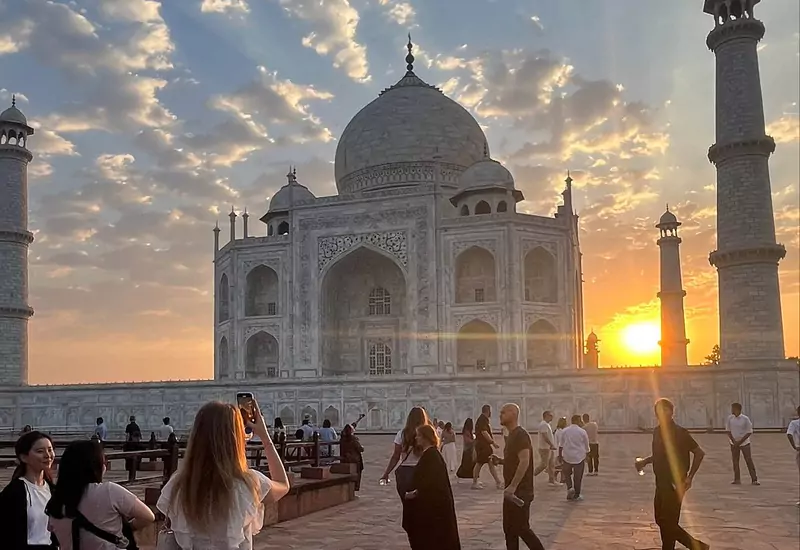
One of the most visually striking facts about the Taj Mahal is that it does not look the same at any two times of day. In the early morning light, the marble takes on a soft pink tone. By midday, it appears brilliant white. At sunset, it shifts to warm gold and amber. On full moon nights, it glows a pale silver. This is not an accident. The white Makrana marble from Rajasthan was specifically chosen for its translucent quality, which interacts with light in this way.

4. The Taj Mahal is Almost Perfectly Symmetrical

Every element of the Taj Mahal complex is mirrored on both sides of a central axis. The gardens, the reflecting pool, the mosque, the guest house, the minarets, all perfectly balanced. Architects and mathematicians have studied the proportions and found them to be extraordinarily precise for a pre-modern structure. There is, however, one deliberate exception.

5. Shah Jahan’s Tomb Breaks the Symmetry

Inside the main chamber, the cenotaphs of Mumtaz Mahal and Shah Jahan are placed side by side. Mumtaz’s cenotaph sits exactly at the center of the chamber, in perfect alignment with the building’s axis. Shah Jahan’s cenotaph, added after his death in 1666, sits slightly to the side, making it the only asymmetrical element in the entire structure. It was not planned. Shah Jahan had intended to build a second black marble mausoleum for himself across the river, but he was imprisoned by his son Aurangzeb before it could be built.

6. The Minarets Lean Slightly Outward

Look carefully at the four minarets surrounding the main dome, and you will notice they lean very slightly away from the central structure. This was intentional. The architects designed them this way so that in the event of an earthquake or structural collapse, the minarets would fall outward rather than onto the main tomb. A 17th-century engineering solution that still impresses structural engineers today.

7. Precious Stones Are Inlaid Directly into the Marble

width=800

The floral patterns and decorative motifs covering the Taj Mahal’s interior and exterior walls are not painted. They are inlaid using a technique called Pietra dura, where semi-precious stones are cut into precise shapes and set directly into the marble. The stones used include lapis lazuli from Afghanistan, turquoise from Tibet, jade from China, carnelian from Arabia, and mother of pearl from the Indian Ocean. Over 28 types of precious and semi-precious stones were used in total.

8. The Calligraphy Gets Larger as You Look Up

The Quranic verses inscribed around the main gateway and the tomb appear to be uniform in size. They are not. The calligrapher, Amanat Khan, deliberately made the letters progressively larger as they go higher up the wall. From ground level, the optical effect makes them appear perfectly uniform. It is one of the most sophisticated examples of visual correction in pre-modern architecture anywhere in the world.

9. It is One of the New Seven Wonders of the World

Seven

In 2007, the Taj Mahal was officially named one of the New Seven Wonders of the World following a global vote of over 100 million people. It joined the Great Wall of China, Machu Picchu, the Colosseum, Christ the Redeemer, Chichen Itza, and Petra. Of all seven, the Taj Mahal is consistently ranked among the top three most visited.

10. The Taj Mahal is Closed Every Friday

This is the most practically important fact for travelers. The Taj Mahal is closed to tourists every Friday for afternoon prayers at the mosque within the complex. If your itinerary has you arriving in Agra on a Friday, plan your visit for early morning before the closure or adjust your schedule accordingly. Missing this detail has ruined many a carefully planned trip.

Best Time to Visit the Taj Mahal

TimeExperience
SunriseSoft pink light, smallest crowds, most photogenic
Morning (8 am to 11 am)Good light, manageable crowds
MiddayBright white marble, very crowded, hot in summer
SunsetWarm golden tones, beautiful but busier
Full Moon NightRare ticketed experience, magical silver glow

Sunrise is the clear recommendation for first-time visitors. Gates open at 6 am, and the first hour offers the best light, the fewest crowds, and the most peaceful experience of the monument.

Entry Fees and Visiting Tips

Visitor TypeEntry Fee
Foreign NationalsRs. 1,100, optional ₹200 to enter the main mausoleum
Indian nationalsRs. 50
Children under 15Free

Book tickets online at the Archaeological Survey of India website to avoid queues at the gate. The Taj Mahal has strict security. No food, no tripods, no large bags, and no selfie sticks are permitted inside. Shoe covers are provided free at the marble plinth.

Things You Should NOT Do at the Taj Mahal

  • Do not bring food or drinks inside the complex
  • Do not use a tripod (confiscated at entry)
  • Do not engage with touts outside the gates offering official tickets
  • Do not wear revealing clothing; modest dress is expected
  • Do not visit on a Friday without checking the schedule
  • Do not book last-minute guides from outside the gate, use verified operators

How to Visit the Taj Mahal Easily?

From Delhi: The fastest option is the Gatimaan Express train, which covers Delhi to Agra in under two hours. By private car, the journey takes approximately three to four hours, depending on traffic. A day trip from Delhi is possible, but an overnight stay in Agra allows for both sunrise and sunset visits.

From Jaipur: Agra is approximately four to five hours by road from Jaipur. Most travelers on the Golden Triangle route stop in Agra between Jaipur and Delhi, which is the most logical and time-efficient sequence.

Why Visit the Taj Mahal with a Private Tour

Visiting the Taj Mahal independently is possible, but it comes with real friction. Queues at the ticket counter, touts at every entrance, guides with no credentials offering their services, and no one to explain what you are actually looking at.

A private tour removes all of that. Your guide handles tickets in advance, takes you through the less crowded entry points, explains the history and architecture in context, and ensures you are standing in the right spot at the right time for the best photographs. At Janu Private Tours, our Agra specialists have guided first-time foreign visitors through the Taj Mahal and know exactly how to make the experience memorable rather than stressful.

Wrapping Up

The Taj Mahal is one of those rare places that lives up to everything you have heard about it and then goes further. The story behind it, the engineering within it, and the experience of standing in front of it at sunrise are things that stay with travelers long after they leave India.

If you want to experience the Taj Mahal the right way, with expert guidance, pre-booked tickets, and a private driver who knows Agra inside out, plan your visit with Janu Private Tours. We handle every detail so you can simply be present for one of the world’s great travel experiences.

Desert Festival Jaisalmer

The golden city of Jaisalmer transforms into a vibrant cultural spectacle every year during the Desert Festival Jaisalmer. Set against the stunning backdrop of the Thar Desert, this annual celebration showcases Rajasthan’s rich heritage, folk traditions, music, dance, and desert lifestyle in the most colorful way possible.

Organized by the Rajasthan Tourism Department, the festival usually takes place in February, just before the Hindu festival of Holi. For three unforgettable days, the city comes alive with traditional performances, competitions, camel parades, and cultural events that attract travelers from across India and around the world.

If you are planning to witness Rajasthan at its most festive and authentic, this detailed guide will walk you through the highlights, major events, and essential travel tips for the Desert Festival Jaisalmer.

What is the Desert Festival Jaisalmer?

The Desert Festival Jaisalmer is an annual cultural celebration designed to promote the unique traditions of Rajasthan’s desert communities. Unlike typical music or art festivals, this event offers a full immersion into local customs, rural sports, folk storytelling, and desert life.

The festival reflects the resilience, creativity, and vibrancy of communities that have thrived for centuries in harsh desert conditions. From colorful turbans and embroidered costumes to rhythmic folk music and decorated camels, every element reflects the spirit of Rajasthan.

Major Highlights of Desert Festival Jaisalmer

1. Grand Opening Ceremony at Jaisalmer Fort

The festival typically begins near the iconic Jaisalmer Fort, one of the largest living forts in the world. The golden sandstone fort creates a dramatic setting as performers gather in traditional attire to inaugurate the event.

Local musicians play instruments like the dholak and algoza, while dancers perform traditional forms such as Kalbeliya and Ghoomar. The energy is infectious, and the opening procession sets the tone for the celebrations ahead.

2. Camel Parade and Camel Polo

Camels are central to desert life, and during the Desert Festival Jaisalmer, they take center stage. Decorated with colorful saddles, ornaments, and intricate patterns shaved into their fur, camels parade proudly through the festival grounds.

One of the most entertaining events is camel polo—a rare sport played on camelback. Visitors also witness camel dance performances, which display the surprising agility and training of these desert animals.

3. Turban Tying and Longest Moustache Competition

One of the most famous attractions of the Desert Festival Jaisalmer is the turban tying competition. Participants demonstrate how to wrap elaborate Rajasthani turbans in record time. Visitors are often invited to try tying one themselves.

Equally popular is the longest moustache competition. Rajasthan’s proud moustached men compete for the title, and the event draws huge crowds every year.

4. Folk Music and Dance Performances

Traditional Rajasthani music plays a crucial role throughout the festival. Folk artists perform ballads that narrate stories of valor, romance, and desert legends.

Kalbeliya dancers in flowing black costumes mesmerize audiences with their graceful movements, while Manganiyar musicians create soulful melodies under the open desert sky. Evening performances often take place at the Sam Sand Dunes, where cultural shows are followed by sunset views.

5. Mr. Desert Competition

The Mr. Desert contest is another crowd favorite. Contestants are judged on traditional attire, personality, confidence, and desert heritage representation. The winner is crowned “Mr. Desert,” symbolizing pride in Rajasthani culture.

6. Fire Dance and Acrobatic Shows

As night falls, the festival atmosphere becomes even more electrifying. Fire dancers perform dramatic acts, balancing pots of fire while dancing to rhythmic beats. Acrobats and puppeteers entertain visitors with traditional storytelling techniques.

7. Cultural Exhibitions and Handicraft Stalls

The Desert Festival Jaisalmer also features local handicrafts, textiles, jewelry, and souvenirs. Visitors can shop for:

  • Mirror-work embroidery

  • Bandhani (tie-dye) fabrics

  • Leather goods

  • Silver jewelry

  • Handmade artifacts

These stalls offer a chance to support local artisans while taking home authentic Rajasthani crafts.

Venue: Sam Sand Dunes

The grand finale of the Desert Festival Jaisalmer takes place at the Sam Sand Dunes, located about 40 km from the city. Here, golden dunes stretch endlessly under the sky, creating a magical setting for cultural performances and sunset photography.

Many visitors combine the festival with a desert safari experience, including camel rides and overnight camping in luxury tents.

Best Time and Duration

The Desert Festival Jaisalmer usually takes place in February, when the weather is pleasant and ideal for outdoor events. Temperatures remain comfortable during the day and cool at night.

The festival typically lasts three days, but travelers often extend their stay to explore the Golden Triangle tour with Jodhpur and Jaisalmer, and the desert landscapes.

Travel Tips for Desert Festival Jaisalmer

To make the most of your experience, consider the following tips:

1. Book Accommodation Early

Hotels and desert camps fill up quickly during the festival season. Advance booking is highly recommended.

2. Dress Comfortably

Daytime temperatures can be warm, but evenings in the desert are chilly. Carry light cotton clothing for the day and warm layers for nighttime events.

3. Carry Sun Protection

Sunscreen, sunglasses, and hats are essential for daytime festival activities.

4. Plan Transportation

Arrange reliable transportation to Sam Sand Dunes in advance, as traffic increases during the festival.

5. Respect Local Traditions

Participate respectfully in competitions and photography. Always ask before taking close-up pictures of performers.

Exploring Jaisalmer Beyond the Festival

While the Desert Festival Jaisalmer is the main attraction, the city itself offers several must-visit landmarks:

  • Jaisalmer Fort

  • Patwon Ki Haveli

  • Salim Singh Ki Haveli

  • Gadisar Lake

  • Desert National Park

Combining festival experiences with heritage sightseeing ensures a well-rounded journey.

Why is the Desert Festival in Jaisalmer Unique?

Unlike commercial music festivals, the Desert Festival Jaisalmer celebrates centuries-old traditions that are still alive today. The event captures the spirit of Rajasthan’s desert communities, blending music, art, sports, and storytelling in a natural desert setting.

The sight of vibrant costumes against golden sand dunes, the rhythm of folk music echoing across the desert, and the warmth of local hospitality create an unforgettable atmosphere.

Conclusion: Experience Desert Festival Jaisalmer with Janu Private Tours

Attending the Desert Festival Jaisalmer is more than just witnessing a cultural event—it is stepping into the heart of Rajasthan’s living heritage. From camel parades and folk performances to sunset celebrations at Sam Sand Dunes, every moment offers something extraordinary.

To truly enjoy the festival without the stress of planning logistics, expert guidance makes a significant difference. Janu Private Tours specializes in curated Rajasthan experiences, ensuring seamless travel arrangements, comfortable transportation, and knowledgeable local guides.

With Janu Private Tours, you can combine the Desert Festival Jaisalmer with visits to forts, havelis, desert safaris, and authentic cultural encounters. Their personalized itineraries allow you to explore at your own pace while gaining deeper insights into Rajasthan’s traditions.

If you are ready to experience the colors, music, and magic of the Desert Festival Jaisalmer, let Janu Private Tours craft a journey that turns your desert adventure into a truly unforgettable memory.

Things to do in Ranthambore


Ranthambore is not all about spotting tigers. It’s a place that combines wildlife, history, nature and slow travel very much in equilibrium. Lying in eastern Rajasthan, Sawai Madhopur, Ranthambore, displays raw forests, ruins as ancient as the hills themselves, lakes and village life that you wouldn’t think had heard of modern rush. In 2026, Ranthambore is still drawing tourists who are looking for more than a snap of crowded sightseeing.

Here’s a comprehensive list of the best things to do in Ranthambore that goes beyond safaris and will enable you to experience this region for all it is.

11 Best Things to Do in Ranthambore

Here are some of the best things that you don’t want to miss out on when you are here:

1. Go on a Tiger Safari in Ranthambore National Park

A wildlife safari is the heart of all the things to do in Ranthambore. The national park is one of the best places in India to view a Bengal tiger in its natural habitat. Thick forests, tall grasslands, lakes and rocky cliffs all come together to make sightings more likely than in many other reserves.

Morning safaris also present a different mood than the afternoon. Morning safaris are peaceful and cool, and afternoon game drives reveal animals congregating near water. Along with tigers, look for leopards, deer, wild boar, crocodiles and sloth bears here, as well as plenty of bird species.

2. Explore the Historic Ranthambore Fort

Inside the park is Ranthambore Fort, a UNESCO World Heritage site. Visiting the fort is one of the most interesting things to do in Ranthambore as it merges history with nature.

The fort’s origins are more than a thousand years old, and it provides panoramic views of forests and lakes below. In the fort, you will find old temples, stepwells, gates and ruined palaces that tell tales of Rajput kings and battles. Walking through the fort seems like entering another era, away from noise and wildlife. Overall, it is a surreal experience.

3. Visit Padam Talao and Jogi Mahal

Padam Talao is the biggest lake of Ranthambore, and it is also one of the most beautiful places in this park. It’s also one of the finest places in the world for wildlife photography.

Jogi Mahal, near the lake, has now been converted into a royal rest house. Today, tourists can admire its architecture and also take in a view of the lake where animals frequently approach to drink water. Watching the reflection of trees and birds on the still water is one of the most peaceful things to do in Ranthambore.

4. Enjoy Birdwatching Around Ranthambore

Ranthambore is a paradise for bird lovers. More than 300 bird species have been observed in these lands, and amongst these, birdwatching is one of the more silent but rewarding things to do in Ranthambore.

You can see kingfishers, painted storks and some owls, parakeets, vultures and migratory birds in winter. Bird watching is best early in the morning, when birds are most active. Lakeshore, forest edges and open grassland are preferable places for bird-sighting.

5. Experience Village Life Around Ranthambore

Beyond the park boundaries, villages in Ranthambore’s vicinity include a window into rural Rajasthan. It’s also one of the most rewarding things to do in Ranthambore for culture enthusiasts. You can meet locals, see traditional homes, observe farming techniques and learn how communities live alongside wildlife. Such visits usually include folk tales, simple food and honest discussions that leave lasting impressions.

6. Take a Nature Walk with a Naturalist

Guided nature walks around buffer zones and forest edges are becoming popular. These walks allow you to observe smaller wildlife, as well as plants, bugs and animal tracks.

A silent walk through the wilderness gives you a perspective of how beautifully intricate the surroundings can be, something that you often miss during jeep safaris. Understanding medicinal plants, trees, and animal behaviour makes this one of the most educational things to do in Ranthambore.

7. Relax at a Jungle Resort or Lodge

Ranthambore is famous for its luxurious, nature-immersed jungle resorts. Time spent at your resort is not time wasted; it’s part of the experience.

Relish slow mornings, sights and sounds of nature, views to the forest and evenings under a clear star-filled sky. Yoga classes, guided talks and bonfire evenings are offered by many resorts. Relaxation in itself also becomes one of the most underrated things to do at Ranthambore.

8. Try Wildlife Photography

From stunning scenery to varied wildlife, Ranthambore is a photographer’s paradise. The park’s open terrain makes for great shots, even for beginners.

Photography-centred safaris, early light conditions and landscapes add to the charm of this being one of the most creative things to do in Ranthambore. Tigers walking through ruins or birds reflected in lakes create unforgettable frames.

9. Visit Rajiv Gandhi Regional Museum of Natural History

This museum near the park entrance provides insightful context into Ranthambore’s wildlife and habitats. Exhibits range from animal models and environmental displays to information about conservation efforts.

Those who visit the museum before or after safaris have a better understanding of what they are seeing in the forest. It’s also one of the more educational things to do in Ranthambore for families, particularly.

10. Watch the Sunset Over the Forest

Ranthambore sunsets happen slowly and dramatically. The experience of watching the sky change color over forests and hills is both simple and profound. Sunsets, from a viewing point, fortress rampart or resort terrace, all serve to remind you why slow travel makes sense. These are the quietest moments and among the most soulful things to do in Ranthambore.

11. Learn About Conservation and Tiger Protection

Ranthambore is one of India’s most important tiger sanctuaries. It also enhances your visit to know something about these projects. A few lodges and guides share insights on tracking, conservation struggles and local community work. Learning about how the tourism industry aids in protecting wildlife makes this one of the most rewarding things to do in Ranthambore.

Best Time to Experience Things to Do in Ranthambore

Choosing the right season is a big part of how you experience Ranthambore. As Ranthambore is an animal-abundant region, the weather has a direct impact on the safaris and sightseeing comfort, as well as travel pace. Every season has something different to offer, depending on what kind of journey you’re looking for.

The ideal time to visit Ranthambore is between October and March. The weather is still perfect for jungle safaris, fort complexes, birding, and nature walks. Migratory birds arrive during winter, adding to the park’s biodiversity. This period suits families, senior travellers, and first-time visitors who prefer cooler temperatures and balanced wildlife activity.

The best time to visit is April through June, when animal sightings, especially of tigers, are at their peak. As the water dries, tigers are concentrated around lakes and attractions, making for good visibility. Temperatures may be high, but it is revered by wildlife photographers and wildlife-oriented enthusiasts for the sightings and not so much for comfort.

The monsoon season is from July to September, when the park remains closed.

Why is Ranthambore More Than a Wildlife Destination?

What makes Ranthambore special is the balance. It offers excitement through safaris, calm through nature, and depth through history. You don’t feel like you’re ticking boxes, you feel present.

The things to do in Ranthambore suit solo travellers, families, photographers, and nature lovers equally well.

Plan Your Ranthambore Experience with Janu Private Tours

To really experience the best things to do in Ranthambore, it’s all about doing a little planning. Ranthambore Tour packages itineraries are tailored by Janu Private Tours, whether it may be safaris, heritage, relaxation time or the local experience. From picking the best safari zones, to comfortable jungle stays and knowledgeable naturalists, Janu Private Tours will make sure that your journey in Ranthambore is smooth, ethical and incredibly enriching. So what are you waiting for? Let us help you plan a great safari experience. Contact us now.

Famous Festival in Rajasthan


Rajasthan celebrates life loud and colourful with a deep sense of pride. In every season here, there’s a reason to celebrate, dress up, sing, dance, and share stories that date back hundreds of years. Festivals are not just Dates on a Calendar in this state. These living expressions symbolize faith, history, royalty, and community life. Experiencing festivals of Rajasthan is all about getting closer to faith, history, royalty, and community life.

Rajasthan’s festivals reveal the essence of the state, showcasing its deep traditions through desert fairs, royal processions, spiritual gatherings, and folk festivals. This post will help you know about the most famous festivals of Rajasthan that must be included in your travel plans.

Why Are Festivals the Heart of Rajasthan?

Under royal patronage and strong community traditions, Rajasthan’s festivals grew. Kings promoted music, dance, crafts, and public celebrations to strengthen culture. Over the years, these events became annual milestones for whole regions. The festivities here are special because visitors are not involved. You are invited to processions, fairs, ceremonies, and performances. The celebrations feel open and human, clearly anchored in life.

Pushkar Camel Fair

The Pushkar Camel Fair in Rajasthan is amongst the most famous festivals in the state and one of the world’s largest livestock fairs. The holy town of Pushkar is also a place of trade and entertainment. Animals from far and wide arrive in Kamadia on foot. Tourists can enjoy the races, beauty contests, and folk performances on offer. As part of the fair, pilgrims take a dip in Pushkar Lake. This festival of Rajasthan perfectly blends commerce, culture, and faith.

Desert Festival, Jaisalmer

The Desert Festival celebrates life in the Thar Desert. Set against the shimmering golden sandstone of Jaisalmer, it celebrates the vibrant traditions of the desert. There are various events that take place, including tug-of-war, turban-tying competitions, moustache contests, camel races, and more. The dunes come alive with traditional music, particularly during evening programs. This festival provides a window into desert culture beyond forts and monuments.

Jaipur Literature Festival

Jaipur Literature Festival adds a contemporary cultural layer to the Rajasthan festival calendar. Writers, thinkers, poets, and readers from all over the world. Although not originally traditional, it has become an important event. Discussions occur about history, politics, fiction, art, etc. The heritage venue setting makes the event more charming than usual. Rajasthan adopts modern ideas without breaking from its traditions.

Gangaur Festival

Women of Rajasthan celebrate Gangaur Festival with much reverence and splendor. Dedicated to Goddess Gauri, it offers prayers for derogatory fertility, marital bliss, and devotion. Women wear colorful dresses and carry beautifully decorated idols through the city streets. Some processions will have music and song. Unmarried women pray for the best husbands, and married women pray for the long life of their husbands. Gangaur represents the emotional and spiritual richness of a festival of Rajasthan.

Teej Festival

The Teej festival of Rajasthan marks the onset of the monsoon. It holds a special importance for women. The festival is characterized by swings tied to trees, singing songs, and markets alive with green clothes, bangles, and markets full of sweets. Idol of Goddess Parvati is brought out in processions in many cities. Nature, reverence, and change adorn this festival.

Mewar Festival, Udaipur

The Mewar Festival marks the arrival of spring and pays tribute to the region’s royalty. The festival, which is held in Udaipur, includes cultural performances, boat processions, and fireworks held over the lakes. The City Palace area and Lake Pichola host traditional dances, music, and rituals. The festival boasts marvelous sights and a serene atmosphere. It shows how royal traditions still influence the festival of Rajasthan.

Elephant Festival, Jaipur

The Elephant Festival is a colourful event held around Holi. Elephants adorned with paint, jewels, and embroidered fabrics. The festival features parades, polo games, and cultural events. Even though its context has changed due to contemporary sensibilities, its visual spectacle signifies Jaipur’s festivity. It highlights Rajasthan’s historic association with elephants and royal processions.

Marwar Festival, Jodhpur

The Marwar Festival is a tribute to the folk heroes and warriors of the region. It celebrates music, dance, and bravery in Jodhpur. Performances often occur at the majestic Mehrangarh Fort venue. Folk singers narrate tales of surrender and bravery through ballads. This festival of Rajasthan keeps oral tradition alive.

Urs Festival, Ajmer

Held in honor of a saint to celebrate the saint’s life and work. Among the major spiritual congregations in the state of Rajasthan. People of different religions visit the Ajmer Sharif Dargah. The atmosphere is filled with rituals and prayers. Urs signifies inclusivity in Rajasthan’s culture.

Kite Festival

Makar Sankranti is celebrated as a kite festival to mark the movement of the sun into the northern hemisphere. Kites of different hues adorn the Rajasthan skies. Families gather on terraces, music plays, and special sweets are prepared. Competitions make the day more exciting. The festival is a bright, light-hearted, and joyful festival of Rajasthan.

Brij Holi and Royal Holi Celebrations

In Rajasthan, Holi festivals range from vibrant community celebrations to royal ones hosted at former palaces. In some areas, temple rituals and folk traditions prevail. People come together for music, lights, and food. These festivals show the capacity of Rajasthan to adapt Indian festivals into regional terms.

Dussehra and Vijayadashami

Dussehra signifies the triumph of goodness and truth over evil. People do various performances in Rajasthan that involve lots of processions. Many cities burn models of Ravana, while other cities perform ceremonies at the temples. This festival brings together our mythology and our moral stories.

Diwali in Rajasthan

Diwali illuminates cities, forts, and villages of Rajasthan. Homes are decorated, markets are lit up, and families pray together and feast. In some places, there are traditional shows too. Diwali over here feels intimate yet grand. It continues to be one of the most important festivals in the state.

Why Should You Plan Your Trip Around Festival of Rajasthan?

Experiencing the festival of Rajasthan lets you witness the state in its most vibrant form. Markets are fuller, performances are richer, and interactions feel sharper and more meaningful. Festivals allow us to experience crafts, food, and music in their own settings. Planning your trip around a festival adds an extra dimension to it.

Best Time to Experience Festival in Rajasthan

The ideal season to experience festivals in Rajasthan. Festivals usually take place from October to March since the weather is quite pleasant. There are summer festivals, though it can be hard because of the heat.

Tips for Enjoying Festival in Rajasthan

Experiencing festivals in Rajasthan can be unforgettable if you approach them with the right mindset and preparation. These celebrations date back to the earliest days of faith and community life. Taking some time to learn about the local culture and planning ahead gives you an enjoyable experience without discomfort or disrespect. Festivals here are vibrant, busy, and emotional, so being prepared before going can help a lot.

Helpful tips to keep in mind:

  • Book your trip in advance. Hotels and transport get booked at major festivals.

  • In case of a long day out, wear comfortable cotton clothes with covered shoulders and comfortable footwear.

  • Be respectful. Respect temple rules; take off footwear where necessary, and always check with people before taking their photo.

  • Get to the events on time: the processions and performances are usually very crowded. Arriving earlier provides a better view and fewer crowds.

  • Stay hydrated and pace yourself. Festivals in Rajasthan tend to be long and energy-consuming. Taking breaks and drinking enough water.

  • Whenever possible, choose guided experiences as local guides help understand local traditions and rules.

Conclusion

Festivals of Rajasthan keep the state alive. They embody love, laughter, creativity, and heritage, all in one. Every festival of Rajasthan, be it a desert fair or a spiritual gathering or a royal affair, presents a different perspective of the state’s soul. Janu Private Tours plans bespoke travels around festival calendars so you can experience Rajasthan’s festivities in a seamless manner with meaning. With accommodation, guides, and cultural access, we ensure you experience Rajasthan at its best. Why wait? Let us help you plan your trip. Contact us now.

Shopping in Rajasthan


Rajasthan offers unique shopping experiences that you’ll never forget. It is about knowing the state’s heritage and people, along with the craft traditions that have endured for ages. Each area possesses its unique style, materials, and stories. Shopping in Rajasthan is an immersion in living museums where artisans continue to exercise their crafts. From bright fabrics and handmade jewellery to blue pottery and leather goods, these vibrant offerings are sure to catch your eye.

In contrast to contemporary malls, the market here has an extraordinary personality. You’ll hear traders haggling, see craftsmen at work, and spot items that are often made in small batches. This Rajasthan shopping guide contains details on what to buy, where to shop, and other useful tips and tricks for you.

Why is Shopping in Rajasthan special?

Rajasthan’s crafts flourished with royal patronage. The kings and queens patronised local artisans, helping to uphold regional crafts such as weaving, metalwork, stone carving, and painting styles. These customs are still preserved and followed by many families today. Shopping in Rajasthan is culturally exclusive and authentic. You’re not looking for factory-made souvenirs. You will buy products that represent the local culture, climate, and lifestyle. Each region has something different. All regions offer a distinctive product shaped by their geography and history.

What to Buy in Rajasthan?

Here are some of the things you cannot miss buying when here:

Traditional Textiles

Handwoven and hand-dyed fabric is famous in Rajasthan. Bandhani, block prints, and leheriya patterns are well known. These textiles are used in sarees, dupattas, scarves, and home furnishings.

Made from the fiber of cotton plants, cotton fabric is versatile and breathable. Certain regions’ woollen shawls are in demand during the winter.

Handcrafted Jewellery

width=800

When going shopping in Rajasthan, one of the most sought-after items is silver jewellery. Regional designs for tribal style, gemstones, and meenakari work. The state offers a jewellery collection that varies from city to city, with different stones and motifs.

Blue Pottery and Ceramics

width=800

One of the most recognizable crafts of Rajasthan is Blue pottery. Recognized for their vivid blue, green, and white designs, the product range includes plates, tiles, vases, and decorative items. They are delicate yet beautiful, which is why they make for popular gifts.

Leather Goods

width=800

Rajasthan has a fantastically strong industry making goods such as juttis, bags, belts, and journals. They are mostly handmade and fairly cheap. Camel leather products are another unique product of the desert regions.

Paintings and Art

Stories from mythology and local legends are depicted in miniature paintings and folk art pieces. Natural pigments are often used in these artworks.

Best Cities for Shopping in Rajasthan

Every city in Rajasthan has something special to offer when you visit. This includes:

Jaipur

Jaipur is one of the best cities for shopping in Rajasthan. It has traditional bazaars and organized craft centres according to your choice. Items that are in great demand are jewelry, textiles, blue pottery, and gemstones. There are markets here that range from busy bazaars to government-run emporiums.

Jodhpur

Wooden furniture, handicrafts, and antiques make Jodhpur very famous. Shops here often focus on heritage-style decor and textiles. Local markets give a chance to buy things you would see people using.

Udaipur

Udaipur has miniature paintings, handloom textiles, and artistic crafts. The shopping scene is quiet, thanks in part to beautiful boutiques and lakeside market streets.

Jaisalmer

Jaisalmer is famous for its leather products, embroidered textiles, mirror work, and anything crafted from the desert sand. All these represent the desert and trade.

Bikaner

Shops in Bikaner sell wool products, leather goods, mojris, and other local sweets and snacks. Shopping here is much quieter and rooted in desert life.

Famous Shopping Markets in Rajasthan

While shopping in Rajasthan, here are some famous markets that cannot be missed.

Johari Bazaar, Jaipur

Johari Bazaar is a famous street of Jaipur and an important place for shopping in Rajasthan. This market is synonymous with traditional jewellery, and it is also famous for precious and semi-precious stones. Numerous shops here are run for generations by the family; vendors indulge in kundan, meenakari, and polki work. While prices may be higher than street markets, the quality and craftsmanship are usually dependable, making it ideal for buyers. Book Jaipur Shopping Tour with pickup package from Janu Private Tour to explore more places for shopping in jaipur, Rajasthan.

Bapu Bazaar, Jaipur

width=800

Bapu Bazaar is ideal for those looking for affordable, colorful shopping for souvenirs. You are in the midst of fancy shops that sell block-printed textiles, bandhani fabrics, mojris, handbags, scarves, and souvenirs. Many locals and tourists enjoy the place as it has a vibrant atmosphere. You will negotiate here and getting a good deal takes time. In this market, visitors get a real experience of daily shopping in Rajasthan.

Sardar Market, Jodhpur

Sardar Market is located next to Jodhpur’s well-known clock tower. It is the busiest trading area in Jodhpur. You can get spices, crafts, metal items, textiles, and local snacks in the market. If you walk through the narrow lanes, you’ll find vendors selling everything from chilli powders to embroidered fabrics. This is a wonderful spot to shop for practical and cultural items while watching local life in action.

Hathi Pol Bazaar, Udaipur

Art lovers and collectors love Hathi Pol Bazaar the most. This market mainly specializes in handicrafts, wooden items, miniature paintings, and ethnic wear. Many shops run by artists themselves, allowing for a better understanding of the craft and techniques one is involved with. The atmosphere here, in comparison to bigger bazaars, is calmer. You can roam around easily while enjoying the art of Udaipur.

Manak Chowk, Jaisalmer

Manak Chowk is a vibrant market that is located in the proximity of Jaisalmer Fort. Also, it represents the desert culture of the city. The place is renowned for its leather goods, embroidered textiles, mirror work, jewellery, and camel-leather products. In the evening, the shops are all open, and the markets are full of life. Prices are usually fair, and with some bargaining expected, it’s a popular stop for travellers exploring the desert regions of Rajasthan.

Street Shopping vs. Boutique Stores

Street shopping in Rajasthan is affordable as well as varied. Prices tend to fluctuate, so bargaining is welcome. Boutique shops and emporiums offer fixed prices, better quality control, and product information.

Tips for Smart Shopping in Rajasthan

  • In local markets, it is always good to bargain politely.

  • Before you purchase, compare it in various shops.

  • Inquire about the quality of materials and workmanship.

  • Stay Away from Impulse Buys in the First Shop

  • Be careful with fragile items.

Spending time browsing can improve shopping choices.

Shipping and Packing Tips

Most stores organize shipping, especially for big items such as furniture and pottery. Make sure it is packed properly and keep the receipt for customs clearance. Padded packaging is advised for small items.

Best Time for Shopping in Rajasthan

The period from October to March is the best time to visit Rajasthan for shopping. The weather is perfect, and the markets are bustling. It could be a hot summer month, which could affect market hours. During festival times, there are special collections and local fairs.

Conclusion

Shopping in Rajasthan is a journey into the state’s soul. Each textile, ornament, and handicraft reflects the hallmark of a bygone era. Shopping for souvenirs at bazaars or artisan studios is more than just the price tag. Janu Private Tours offers curated, personalized travel experiences for one of the finest shopping expeditions across Rajasthan, which includes the best markets, artisan interactions, and cultural insights. With us, you get the best shopping experience, with meaningful, comfortable, and authentic planning and local expertise.

Holi Celebration in Jaipur


Holi Celebration in Jaipur is one of the most unique and immersive ways to celebrate India’s festival of colours. Holi is widely celebrated across the country, but few places have the royal traditions, history, and scale of Jaipur’s festival. In 2026, the Pink City will be ready to welcome visitors and locals once again to celebrate Holi with colours, devotion, and music in the heart of Rajasthan.

During Holi, Jaipur fills with celebrations, pilgrims, visitors, music, and excitement. It is one of the best places to celebrate Holi if you want to experience both old-world traditions and the comfort of a world-class travel destination. Everything from temple rituals and community bonfires to organized Holi events and Holi parties in Jaipur happens in this city.

Here is a guide on what to expect during the Holi festival Celebration.

Holi in Jaipur: A Festival That Brings the City Together

India is a country of cultural richness and diversity, and its festivals reflect that. Holi is one such festival that crosses boundaries of religion, age, and background. Jaipur Holi festival is a unique celebration where everyone joins, from locals and families to neighbours and visitors. Families and communities welcome spring together and celebrate together. Streets, homes, temples, and neighbourhoods are cleaned and decorated.

The uniqueness of Holi Celebration in Jaipur lies in a perfect mix of rituals and royal traditions. Royal influences still form the way the city celebrates the festival of colors while music, organized activities, and huge crowds are all elements that modern Jaipur has added to the celebrations.

The Legend Behind Holi and Its Meaning

Holi Celebration in Jaipur becomes meaningful if one knows the story behind the festival. The most popular Holi legend is the tale of Holika and Prahlad. Prahlad was the son of a demon king, Hiranyakashipu, who was a great devotee of Lord Vishnu. Hiranyakashipu hated this devotion and made many attempts to kill Prahlad.

Holika, Hiranyakashipu’s sister, had a boon that made her immune to fire. She tried to burn Prahlad in the fire by sitting next to him. But her boon backfired, and she got burned instead, while Prahlad remained safe. This legend marks the victory of good over evil and is celebrated by lighting Holika Dahan, the bonfire, on the eve of Holi.

Holika Dahan is performed in devotion in the by-lanes of Jaipur with much respect to the legend.

Holi Festival in Jaipur: How the City Celebrates

Jaipur is a city that celebrates festivals with great enthusiasm. Rajasthan’s festivals are full of spirit and color; it has even been called “Rangeelo Rajasthan.” So any festival in Jaipur is sure to have a festive air. But during Holi, the whole city seems transformed.

Jaipur houses are decorated with flowers, colored fabrics, and traditional motifs. Sweet shops are packed with gujiya, malpua, papdi, and shakarpara. Markets have gulal, pichkaris, and water balloons for sale. Both young and old start planning for the coming days with excitement.

A visitor to Jaipur for Holi Celebration gets to experience how a living tradition is celebrated in a historic city. The streets are full of life but also welcoming, and, in most areas, the atmosphere remains festive rather than chaotic.

Holika Dahan and Dhulandi in Jaipur

Holi in Jaipur is celebrated over two main days.

Holika Dahan

On the first evening, people gather around neighbourhood bonfires. Holika Dahan symbolizes the burning of evil and the cleansing of negative energies. Families pray together, walk around the fire and ask for prosperity and protection.

Holika Dahan is a quieter and more reflective celebration, a chance for travelers to experience rituals from up close.

Dhulandi: The Day of Colours

On the day after, the city bursts into colors. As the tradition has it, people apply gulal, play with water and celebrate with music. Colleagues, friends and families meet to greet each other and exchange sweets.

In public spaces and residential areas around Jaipur, informal celebrations take place, while organised Holi events and Holi parties in Jaipur are widely hosted across private properties and hotels, offering travellers a premium experience through an Incredible India Holi Celebration.

Holi Celebration at Govind Dev Ji Temple

One of the largest and important religious celebrations during Holi is organized at Govind Dev Ji Temple dedicated to Lord Krishna. The festival of Holi is inseparable from Radha Krishna, and devotees visit this temple as a spiritual hub for celebration.

Temple festivities begin several days ahead of the main festival date. The temple is adorned with flowers and illuminated lights. Special prayers and cultural programs are also organized during this time. Devotees also participate in a Holi celebration with flowers, sandalwood powder, and soft colours with respect.

Raas Leela performances depicting the life of Krishna and Radha are held at the temple. If you are a traveller in search of the spiritual side of the Holi Celebration in Jaipur, then don’t forget to pay a visit to Govind Dev Ji Temple.

The Elephant Festival and Royal Traditions

Jaipur is famous for its royal celebrations. This extends to Holi, too, which was traditionally celebrated alongside the Elephant Festival. This included decorated elephants, folk performances, and processions. Elephants were adorned in colourful patterns, fabrics, and ornaments. Events included elephant polo, tug-of-war, and other sports and contests. While these days the festival has been regulated, elements of royal tradition and folk culture continue to influence the Jaipur Holi festival events. The inclusion of cultural performances, folk music, and heritage celebrations helps make Holi in Jaipur unique when compared to other cities.

Best Places to Celebrate Holi in Jaipur

Jaipur offers multiple settings to enjoy Holi, depending on your travel style.

  • Govind Dev Ji Temple for spiritual celebrations

  • Residential neighbourhoods for the local community Holi

  • Heritage hotels and palaces hosting private events

  • Resorts and open venues organising large Holi parties

  • Public grounds and clubs offering ticketed events

These locations make Jaipur one of the best places to celebrate Holi for both locals and visitors.

Holi Parties in Jaipur: Modern Celebrations

Jaipur is also a destination for organized Holi events and parties. In this context, modern celebrations involve DJs, live music, organic colours, traditional food, and controlled environments.

Holi parties in Jaipur are more popular with younger crowds and international travelers. This is because they offer a safe and more structured environment to enjoy the Holi festival in India.

Hotels and resorts often organize their own private Holi parties that combine traditional elements and music in a contained setting. Most of these require advance bookings, especially around the main Holi period.

Holi Tourism in Rajasthan and Jaipur’s Role

Rajasthan is one of the top states in India when it comes to festive tourism. Jaipur is the key destination that contributes to the popularity of the Holi festival in the region. Holi tourism in Rajasthan benefits from several factors.

The state has a number of heritage properties and cultural performers. It also offers easy connectivity and a range of organised experiences. Jaipur in particular offers hotel and resort packages for travelers and those looking for a base to explore the Holi celebrations in India.

Jaipur and its region have become a convenient option for visitors who want to combine locations. Pushkar, Udaipur, and Agra are nearby and popular destinations for international and domestic travelers during Holi.

Jaipur Travel Guide for Holi: Practical Tips

As with all celebrations, preparation is important for enjoying Holi in Jaipur. Here are some practical tips:

  • Book all accommodation well in advance

  • Confirm the type of Holi celebrations that interest you

  • Dress comfortably and in clothes that can be stained

  • Apply oil to protect your skin and hair

  • Keep valuables secure

  • Respect local customs and behaviour at religious sites

A well-planned Jaipur travel guide for Holi helps ensure a smooth and enjoyable experience.

Accommodation in Jaipur During Holi

Jaipur offers everything from heritage palace hotels to five-star luxury, boutique, and budget properties for guests to stay. During Holi, the city experiences peak demand, so availability can be difficult to secure.

Staying central or in or around the heritage zone is often the best option. This makes it easier to get to nearby events and temple Holi celebrations. Many guests also opt for hotels that offer in-house Holi celebrations for convenience and safety reasons.

Why Choose Jaipur for Holi in India?

Holi in India is celebrated in every corner of the country. But Jaipur is special as it offers a balance. The city offers tradition without being overwhelming and celebration without losing cultural meaning.

Temple rituals, community Holi, and organized Holi parties all come together in Jaipur for an authentic and full experience. The Holi Celebration in Jaipur also manages to capture the heart of Rajasthan. It is as colourful, welcoming, and steeped in history as the state itself.

Conclusion

The Holi Celebration in Jaipur 2026 is an experience of a lifetime, a true immersion into Rajasthan’s culture where tradition, color, devotion and community come together like nowhere else. From temple rituals and Holika Dahan to refined heritage celebrations and fun-filled Holi parties in Jaipur, you will surely have a fulfilling and meaningful Holi experience.

Want to experience Holi in Jaipur without the confusion, crowds or missed opportunities? Let Janu Private Tours show you the right way with curated itineraries, trusted local access and comfortable travel planning for an authentic, easy and memorable Holi celebration. Book now.

Chat with Us